Year: 1956
Runtime: 83 mins
Language: English
Director: Fielder Cook
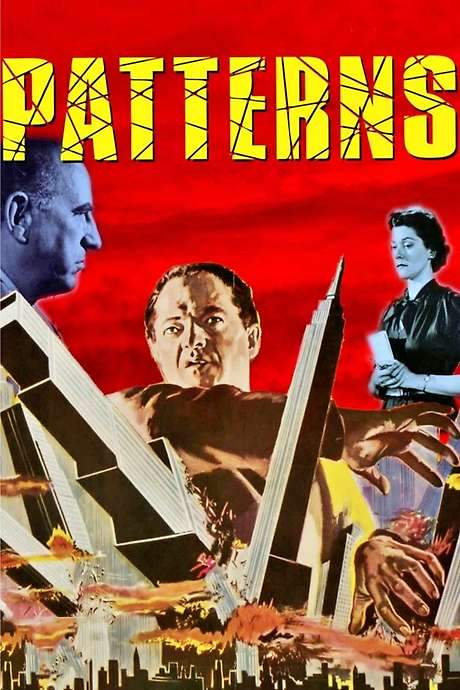
Ruthless men and ambitious women battle for control of a billion‑dollar empire. Ohio plant operator Staples is hired as an executive at Ramsey & Co. in New York, befriending longtime VP Briggs. CEO Walter Ramsey, who inherited the firm, eyes Staples as Briggs’s replacement but refuses to fire Briggs, humiliating and sabotaging him until he quits.
Warning: spoilers below!
Haven’t seen Patterns yet? This summary contains major spoilers. Bookmark the page, watch the movie, and come back for the full breakdown. If you're ready, scroll on and relive the story!
Read the complete plot breakdown of Patterns (1956), including all key story events, major twists, and the ending explained in detail. Discover what really happened—and what it all means.
Walter Ramsey is a ruthless force behind Ramsey & Company, a Manhattan-based industrial empire he inherited from his father. He brings Fred Staples, a young industrial engineer whose performance at an Ohio factory Ramsey recently acquired impressed him, into a top executive role at headquarters. Ramsey is quietly grooming Staples to replace the aging Bill Briggs as the second-in-command.
Briggs has spent forty years with the firm, having worked for and admired the company’s founder. He cares greatly about his work, regularly prioritizing it above spending time with his teenage son, but his people-centric approach clashes with Ramsey’s heartless “modern” method. Not wanting to fire Briggs outright, Ramsey does everything in his power to sabotage and humiliate Briggs into resigning. The old man stubbornly refuses to give in, but the stress takes its toll and he starts to drink, which does not help his already deteriorating health.
Staples is torn by the messy situation, his sympathy for Briggs in conflict with his own ambition, a tension that is shared by his wife, Nancy Staples. At a board meeting, while discussing a report Briggs and Staples wrote together, Ramsey praises Staples for turning Briggs’ old, well-intentioned but unworkable ideas practical, and there is a heated exchange. Shortly after leaving the room, Briggs collapses, and he soon dies in the hospital.
Fed up, Staples goes to tell Ramsey off and announce he is quitting. Ramsey rebukes him, asserting that a corporation like Ramsey & Company needs men with their talent in order to succeed. He offers Briggs’ job to Staples at double his present salary, double his stock options, and an unlimited expense account, but Staples resists. Undeterred, Ramsey increases the fever of his pitch, adding that Staples will never be able to reach his full potential anywhere else. When Staples counters that he hates Ramsey and would not be Ramsey’s whipping boy, but would constantly argue and fight and try to take the presidency for himself, Ramsey, seemingly energized by someone who can work at his level and challenge him, says he is willing to continue under these conditions. Staples leaves and tells his wife that he is staying on, as that way there is at least a chance he can influence things for the better.
Last Updated: December 10, 2025 at 12:33
Discover curated groups of movies connected by mood, themes, and story style. Browse collections built around emotion, atmosphere, and narrative focus to easily find films that match what you feel like watching right now.
Stories of ambition and moral decay within high-stakes business empires.If you were captivated by the cutthroat world of Patterns, explore more movies that dive into the dark side of corporate ambition. These films feature intense power struggles, moral compromises, and high-stakes psychological drama in the boardroom.
Stories in this thread typically follow an individual entering a powerful, established system, only to become entangled in a ruthless power struggle. The central conflict is often psychological, pitting personal integrity against institutional pressure, and culminating in a moral crisis or a bleak acceptance of the system's corrupt nature.
These movies are grouped by their shared focus on the dark, often soul-crushing nature of corporate life. They share a high-intensity, oppressive mood, a steady pacing that builds psychological pressure, and a heavy emotional weight derived from themes of manipulation, ambition, and ethical erosion.
Narratives where relentless psychological pressure forces impossible choices.For viewers who appreciated the unbearable tension and moral oppression of Patterns, this collection highlights movies with similar slow-building psychological pressure. These stories focus on characters facing systematic manipulation and heavy ethical choices.
The narrative pattern involves a character being subjected to steady, increasing psychological strain from a powerful antagonist or system. There are no physical escapes; the conflict is internal and moral, often resulting in the breakdown of a character's well-being or principles, and leaving the audience with a somber, mixed-feeling resolution.
These films are united by their ability to create a sustained, anxious mood through psychological tension rather than action. They share a dark tone, steady pacing that amplifies unease, straightforward storytelling focused on internal conflict, and a heavy emotional weight centered on moral dilemmas and their distressing consequences.
Don't stop at just watching — explore Patterns in full detail. From the complete plot summary and scene-by-scene timeline to character breakdowns, thematic analysis, and a deep dive into the ending — every page helps you truly understand what Patterns is all about. Plus, discover what's next after the movie.
Track the full timeline of Patterns with every major event arranged chronologically. Perfect for decoding non-linear storytelling, flashbacks, or parallel narratives with a clear scene-by-scene breakdown.
Discover the characters, locations, and core themes that shape Patterns. Get insights into symbolic elements, setting significance, and deeper narrative meaning — ideal for thematic analysis and movie breakdowns.
Get a quick, spoiler-free overview of Patterns that covers the main plot points and key details without revealing any major twists or spoilers. Perfect for those who want to know what to expect before diving in.
Visit What's After the Movie to explore more about Patterns: box office results, cast and crew info, production details, post-credit scenes, and external links — all in one place for movie fans and researchers.
Discover movies like Patterns that share similar genres, themes, and storytelling elements. Whether you’re drawn to the atmosphere, character arcs, or plot structure, these curated recommendations will help you explore more films you’ll love.
Patterns (1956) Scene-by-Scene Movie Timeline
Patterns (1956) Movie Characters, Themes & Settings
Patterns (1956) Spoiler-Free Summary & Key Flow
Movies Like Patterns – Similar Titles You’ll Enjoy
Test Pattern (2021) Movie Recap & Themes
Human Capital (2020) Spoiler-Packed Plot Recap
Wall Street (1987) Story Summary & Characters
People I Know (2003) Complete Plot Breakdown
Power (1986) Spoiler-Packed Plot Recap
Kept Husbands (1931) Movie Recap & Themes
Ruthless (1948) Plot Summary & Ending Explained
Executive Suite (1954) Detailed Story Recap
The Ordinary People (2009) Spoiler-Packed Plot Recap
All the King’s Men (1949) Spoiler-Packed Plot Recap
All My Sons (1948) Story Summary & Characters
Ransom! (1956) Movie Recap & Themes
Joe (1970) Plot Summary & Ending Explained
A Man in Full (1000) Full Movie Breakdown
The Carpetbaggers (1964) Full Summary & Key Details