
















Plot Explained Spoilers guaranteed!
Plot Explained

Browse by genre

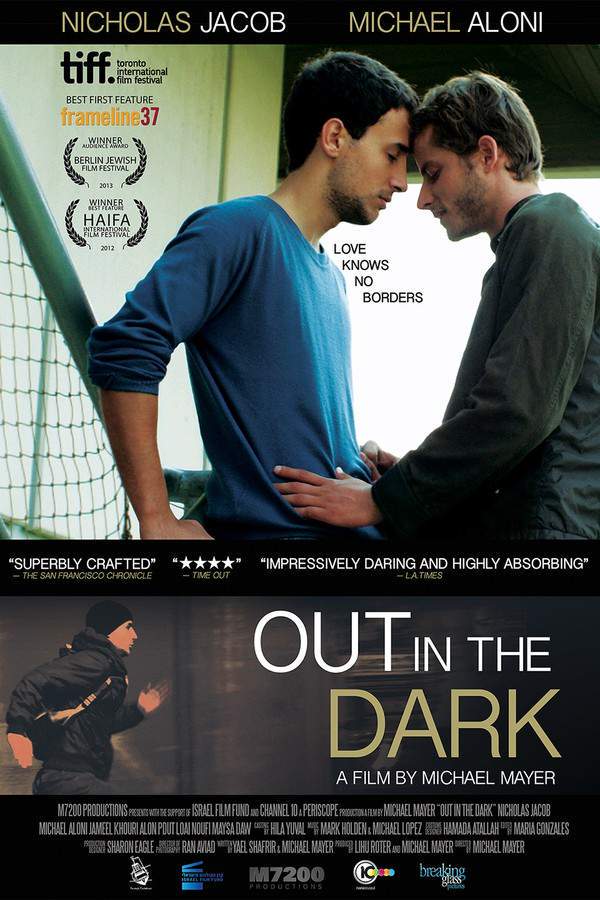
Out in the Dark (2013) movie poster

Plot Summary

Out in the Dark (2013) Plot Summary Explained

Release, runtime and language
2013 · 96 min · Hebrew
JustWatch #12,454 11
Directed by
Michael Mayer

A Palestinian student's journey of self-discovery and forbidden love is challenged by conflicting loyalties and cultural expectations. Nimer grapples with family obligations, national identity, and the complexities of his relationships as he pursues a passionate but difficult connection. When a devastating event impacts his community, he faces a profound moral dilemma, forcing him to confront the harsh realities of his world and ultimately choose between personal freedom and the safety of those he loves.

On this page (6)
  1. 1 Where to watch
  2. 2 What happens: full plot
  3. 3 Plot questions answered
  4. 4 Movie threads
  5. 5 Movies like Out in the Dark
  6. 6 Every angle

Where to watch

Where to Watch Out in the Dark (2013)

Where can you watch Out in the Dark? Stream, rent or buy it in the US, including on Amazon Prime Video, Fandor and MUBI: current JustWatch availability with up-to-date prices.

Streaming availability powered by JustWatch

Full plot summary · contains spoilers

What Happens in Out in the Dark: Full Plot Summary

The whole story of Out in the Dark (2013) explained, from the opening scene to the final frame: every key event, every twist and what it all adds up to. Read it as a quick recap before the sequel, to check a scene you missed, or to finally understand what really happened.

The story unfolds in the complex backdrop of Israel and Palestine, centering on Nimer Mashrawi, a Palestinian student portrayed by Nicholas Jacob. As Nimer heads to Tel Aviv to meet his friend Mustafa N'amnais, played by Loai Nofi, at a lively gay bar, his life takes an unexpected turn. At this bar, he encounters Roy Scheffer, a Jewish lawyer brought to life by Michael Aloni. What begins as a friendship quickly blossoms into love; however, Nimer grapples with the complicated implications of their relationship amidst cultural and societal pressures.

The tension escalates when Nimer faces rejection from his own Palestinian community due to his sexual orientation, while at the same time the Israeli society he seeks acceptance from rejects him for his nationality. This painful duality deepens when Nimer discovers that his brother Nabil Mashrawi, played by Jamil Khoury, is involved in dangerous dealings, hiding a stash of weapons for his militant associates.

As Nimer secures a student visa to study at an Israeli university, he finds himself with more chances to see Roy. However, this joy is short-lived as he encounters the Israeli Secret Service, who threaten to revoke his visa unless he cooperates as an informant. Defiantly, Nimer refuses their demands, resulting in the cancellation of his visa. Meanwhile, Mustafa, living clandestinely in Tel Aviv under similar precarious circumstances, faces dire consequences when he can no longer supply information, leading to his forcible deportation back to the West Bank. Tragically, Nimer is forced to witness the brutal torture and execution of Mustafa for being both homosexual and an informant.

Further complicating his situation, Nabil and his associates discover Nimer's photo on Mustafa's phone. In an unexpected turn of events, Nabil allows Nimer to flee, sparing his life despite the overarching conflict. Nimer finds temporary refuge at Roy's home, as the threat looms larger when Nabil's weapons cache is uncovered, leading to his arrest and the authorities’ search for Nimer as a suspected accomplice.

As the danger closes in, Roy devises a plan to have Nimer smuggled to France through his connections with an underworld figure tied to his law firm. Despite promising to reunite in the future, Roy sacrifices his freedom, distracting the police to enable Nimer's escape. Nimer makes it aboard a ship, setting sail towards an uncertain future, completely unaware of the fate that has befallen his beloved Roy.

Last updated: November 15, 2024 at 18:32

Was this helpful?

Plot questions answered

Out in the Dark Plot Explained: Your Questions Answered

The questions people ask most about Out in the Dark (2013): what happens in the confusing scenes, why the characters do what they do, the twists, hidden details and what the ending means. Each answer contains spoilers.

Q1

Why does Nimer refuse to work as an informant for the Israeli Secret Service?

Nimer refuses because he views becoming an informant as a betrayal of his Palestinian community. The Secret Service threatens to revoke his student visa unless he cooperates, but Nimer chooses his integrity over his legal status. This decision leads to his visa being cancelled, forcing him deeper into an already dangerous situation.

Foreshadowing: Earlier, Nimer is already struggling with conflicting loyalties between his Palestinian identity and his growing relationship with Roy, making his refusal a principled stand against further compromise.

  • informant
  • secret service
  • visa
  • refusal
  • palestinian
Q2

Why does Nimer's brother Nabil let him escape despite finding his photo?

Despite discovering Nimer's photo on Mustafa's phone and learning about his relationship with a Jewish man, Nabil chooses familial loyalty over ideological anger. This moment reveals the复杂内部冲突 of brotherly love against the backdrop of political and militant identities. Nabil allows Nimer to flee, though this decision ultimately leads to Nabil's own arrest when the weapons cache is discovered.

Foreshadowing: The revelation earlier that Nabil is involved with militants establishes his dangerous world, making his choice to spare Nimer even more significant.

  • nabil
  • brother
  • escape
  • family loyalty
  • militant
Q3

What happens to Mustafa in the movie and why is his death important?

Mustafa, Nimer's friend living clandestinely in Tel Aviv, is forcibly deported back to the West Bank after failing to supply information to his handlers. Later, Nimer witnesses Mustafa's brutal torture and execution because he is both homosexual and an informant. This tragic event demonstrates the deadly dangers faced by LGBTQ individuals in conflict zones and shatters Nimer emotionally, driving home the extreme stakes of his own situation.

Foreshadowing: The earlier timeline note about Mustafa living under precarious circumstances foreshadows his grim fate.

  • mustafa
  • torture
  • execution
  • deportation
  • death
Q4

Why is Nimer rejected by both the Palestinian and Israeli communities?

Nimer faces rejection from two sides for different reasons. His Palestinian community rejects him because he is gay, viewing his sexual orientation as shameful and incompatible with their cultural and religious values. At the same time, Israeli society rejects him because of his Palestinian identity and nationality. This painful duality leaves Nimer belonging nowhere, trapped between two worlds that both reject fundamental parts of who he is.

Foreshadowing: This dual rejection begins as soon as Nimer's relationship with Roy becomes known, creating immediate social conflict.

  • rejection
  • palestinian
  • israeli
  • community
  • identity
  • homophobia
Q5

How does Roy help Nimer escape to France?

Roy devises a plan using his connections as a lawyer to an underworld figure tied to his law firm. He arranges for Nimer to be smuggled out of Israel through illegal channels. In the final act, Roy distracts the police by drawing their attention to himself, allowing Nimer to reach the ship bound for France. This sacrifice costs Roy his freedom but gives Nimer a chance at survival and physical freedom.

Foreshadowing: The earlier establishment of Roy as a lawyer with underworld connections makes this escape plan plausible.

  • escape
  • france
  • roy
  • smuggling
  • plan
Q6

What happens to Roy at the end of the movie?

Roy distracts the police to enable Nimer's escape, sacrificing his own freedom in the process. While Nimer boards a ship to France, Roy remains behind and is presumably arrested. The film ends with Nimer unaware of Roy's fate, sailing toward an uncertain future in France while Roy faces the consequences of his actions in Israel.

Foreshadowing: Roy's earlier decision to help Nimer despite knowing the risks sets up this sacrifice as a natural culmination of his love.

  • roy
  • sacrifice
  • arrest
  • police
  • ending
Q7

Why does Nimer's student visa get revoked?

Nimer's student visa is revoked after he refuses to cooperate with the Israeli Secret Service as an informant. When confronted by the Secret Service, Nimer defies their demands to spy on his Palestinian contacts in exchange for maintaining his legal status. As a result, they cancel his visa, leaving him vulnerable to deportation and further endangering his already precarious situation.

Foreshadowing: The timeline builds tension toward this moment through Nimer's growing relationship with Roy and his brother's dangerous activities.

  • visa
  • revocation
  • secret service
  • informant
  • cancelled
Q8

How does Nimer meet Roy and how does their relationship develop?

Nimer travels from the West Bank to Tel Aviv to meet his friend Mustafa at a gay bar. At this bar, he encounters Roy Scheffer, a Jewish lawyer. What begins as a casual friendship at the bar evolves into a deep romantic relationship. Their connection develops despite the significant cultural, religious, and political differences between them, with Nimer's identity as a Palestinian gay man creating constant tension throughout their love story.

Foreshadowing: The contrast between Nimer's anticipation of nightlife freedom and the dangerous realities that follow hints at the complexity of this relationship.

  • roy
  • meeting
  • gay bar
  • relationship
  • romance
Q9

Why is Nimer's brother Nabil involved with militants and hiding weapons?

Nabil, Nimer's older brother, is involved with Palestinian militant associates, hiding a stash of weapons for them. This involvement puts Nimer in extreme danger later when the weapons cache is discovered by authorities, making Nimer a suspected accomplice. Nabil's militant activities represent the violent political world that Nimer desperately wants to escape through his education and relationship with Roy.

Foreshadowing: The revelation of Nabil's weapons creates immediate danger that escalates throughout the second half of the film.

  • nabil
  • weapons
  • militants
  • brother
  • danger
Q10

Why does Mustafa get deported back to the West Bank?

Mustafa is living clandestinely in Tel Aviv, likely under an expired visa or without legal status. When he can no longer supply information to whoever is pressuring him for intelligence, he becomes vulnerable to authorities. He is forcibly deported back to the West Bank, where his status as both gay and an informant ultimately leads to his torture and execution.

Foreshadowing: The timeline establishes Mustafa's precarious living situation early, making his deportation a logical tragic consequence.

  • mustafa
  • deportation
  • west bank
  • clandestine
Q11

What forces Nimer to flee Israel at the end of the movie?

Multiple threats converge to force Nimer's escape. The Israeli authorities search for him as a suspected accomplice in his brother Nabil's weapons case. Additionally, Nabil's militant associates know about Nimer's photo on Mustafa's phone, making him a target from both Israeli authorities and Palestinian militants. With his life in imminent danger from multiple directions, Roy arranges his escape to France as the only viable option for survival.

Foreshadowing: The earlier threats from the Secret Service, Nabil's associates, and the authorities all build toward this final exodus.

  • flee
  • israel
  • danger
  • escape
  • threats
Q12

Why does Nimer continue his relationship with Roy despite knowing the dangers?

Nimer's relationship with Roy represents both genuine love and his struggle for personal freedom. Despite the dangers of being a Palestinian gay man in such a politically charged environment, Nimer chooses to pursue the relationship because it offers him emotional fulfillment and a connection that transcends the cultural boundaries trapping him. The romance becomes his refuge and his reason for hoping for a different life, even as external pressures threaten to destroy everything.

Foreshadowing: From their first meeting at the gay bar, the narrative establishes this relationship as both beautiful and dangerously transgressive.

  • relationship
  • danger
  • love
  • roy
  • cultural conflict

Movie threads

More Movies Like Out in the Dark, by Mood & Story

Curated lists built around what makes Out in the Dark tick: the same mood, the same kind of story or the same emotional payoff. Each list explains why these movies belong together.

Movies about forbidden romance like Out in the Dark

Passionate loves that must survive against oppressive social or political forces. If you were captivated by the dangerous love story in Out in the Dark, this thread features movies like it. Discover other powerful dramas and romance films where characters risk everything for a forbidden connection amidst hostile political or social landscapes.

  • forbidden
  • tense
  • clandestine
  • desperate
  • heart-wrenching
  • oppressive
  • Tone: dark, tense, heart-wrenching
  • Pacing: steady, building dread
Why these movies?

The story pattern: These stories typically follow characters who find love in circumstances where their relationship is taboo or illegal. The central conflict arises from the clash between their private passion and the oppressive forces of society, family, or the state, often forcing them into clandestine meetings and desperate choices.

Why they belong together: These movies are grouped together because they share a core focus on a love story that is intrinsically tied to risk and oppression. They generate a similar mood of tense, heart-wrenching desperation, where moments of intimacy are precious and fraught with danger, leading to emotionally heavy and often bittersweet conclusions.

Movies with heavy moral dilemmas like Out in the Dark

Characters forced into impossible choices between personal freedom and loyalty. For viewers who appreciated the heavy moral choices in Out in the Dark, this list collects similar intense dramas. Explore movies about survival and impossible decisions where characters face betrayals and must choose between personal freedom and the safety of loved ones.

  • tense
  • tragic
  • oppressive
  • desperate
  • anxious
  • heart-wrenching
  • Tone: dark, tragic, oppressive
  • Pacing: steady, relentless pressure
Why these movies?

The story pattern: The narrative pattern involves a protagonist living under extreme pressure, often from multiple fronts. A catalyst event shatters their precarious balance, presenting a choice with no good outcomes. The journey is defined by the psychological weight of this decision, ultimately leading to a survival that is physically achieved but emotionally costly.

Why they belong together: These films share a core experience of placing the viewer in an ethically complex and emotionally draining scenario. They are united by a high intensity, a dark and oppressive tone, and a focus on the brutal cost of survival, creating a coherent vibe of tragic inevitability and heavy consequence.

If you liked this

Movies Like Out in the Dark

Similar movies to Out in the Dark: the same genre, themes or kind of story. Each one comes with its own plot summary, timeline and ending explained.

Browse all movie summaries

Every angle

Out in the Dark (2013) Explained: Plot, Timeline & Characters

Everything about Out in the Dark in one place: what happens in the plot summary, the timeline in chronological order, the characters and meaning and a spoiler-free summary. What's After the Movie adds the cast, box office and post-credit scenes.

Coming soon on iOS and Android

The Plot Explained Movie Summary App

Plot summaries, endings explained and timelines on your phone. Catch up on any movie in minutes, save your favorites and never miss a twist again.

Be the first to know when we launch. Your email stays private, always.

Learn more about the app