Plot Explained Spoilers guaranteed!
Plot Explained

Browse by genre

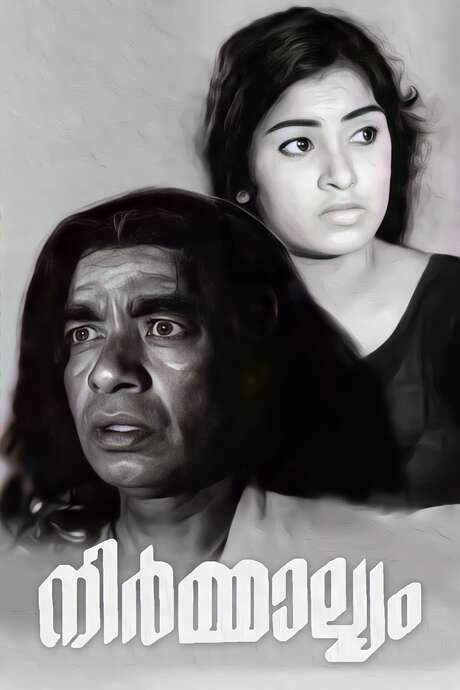
Nirmalyam (1973) movie poster

Plot Summary

Nirmalyam (1973) Plot Summary Explained

Release, runtime and language
1973 · 128 mins · Malayalam
Loading streaming availability…
Directed by
M T Vasudevan Nair
Starring
Sumithra, Kaviyoor Ponnamma, Santha Devi, Ravi Menon, Sankaradi, Sukumaran

Set against a crumbling ancient temple, the only caretaker is the village oracle, the Velichappadu. When the priest takes leave, a young outsider steps in to perform the rites and, during his duties, becomes close to the Velichappadu’s daughter, forging a tender relationship amid the temple’s decline.

On this page (6)
  1. 1 Where to watch
  2. 2 What happens: full plot
  3. 3 Plot questions answered
  4. 4 Movie threads
  5. 5 Movies like Nirmalyam
  6. 6 Every angle
Loading streaming availability…

Full plot summary · contains spoilers

What Happens in Nirmalyam: Full Plot Summary

The whole story of Nirmalyam (1973) explained, from the opening scene to the final frame: every key event, every twist and what it all adds up to. Read it as a quick recap before the sequel, to check a scene you missed, or to finally understand what really happened.

The film centers on a neglected temple and the people who depend on its fading rituals. Velichappadu [P. J. Antony] is the temple’s devoted caretaker, keeping ceremonies alive even as hardship grows. His wife, Narayani [Kaviyoor Ponnamma], runs the household on the temple’s meager income, while their son Appu [Sukumaran] is educated but unemployed, and this fuels his growing doubt in the temple and the goddess. Velichappadu’s daughter Ammini [Sumithra] helps him perform the rituals, maintaining a fragile link to tradition.

A change comes when the priest quits and a new priest, Brahmadattan Namboothiri [Ravi Menon], arrives from a neighboring village. He is eager to secure a government job, driven by trouble at home and the marriages of his younger sisters. He seduces Ammini and then leaves the village, plunging the family deeper into hardship. In response to grinding poverty, Velichappadu is driven to beg for alms.

Meanwhile, a smallpox outbreak sweeps the village, and Variyar [Kottarakkara Sreedharan Nair]’s wife is among the first to be affected. The illness sharpens the villagers’ focus on the temple and its rituals, and they decide to stage a festival for the Goddess, pooling money from all corners of the community. On the day of the festival, Velichappadu uncovers a devastating betrayal: his wife Narayani [Kaviyoor Ponnamma] is having an affair with a local moneylender [Kunjandi], leaving him utterly shattered. The narrative builds toward a brutal, uncompromising finale: the oracle dances before the goddess and, with the sacred sword pressed to his forehead, collapses and dies.

Last updated: February 18, 2026 at 23:47

Was this helpful?

Plot questions answered

Nirmalyam Plot Explained: Your Questions Answered

The questions people ask most about Nirmalyam (1973): what happens in the confusing scenes, why the characters do what they do, the twists, hidden details and what the ending means. Each answer contains spoilers.

Q1

Why did Brahmadattan Namboothiri seduce Ammini and abandon the temple?

Brahmadattan was driven by practical desperation rather than genuine attraction. He came from a neighboring village seeking a stable income to secure a government job, partly because his younger sisters needed to be married and his family faced financial trouble at home. He saw the temple position as temporary and opportunistic, and when he seduced Ammini, it was likely an act of taking advantage of the vulnerable situation rather than any real emotional connection. After fulfilling his momentary desires, he left without regard for the consequences his abandonment would have on the family.

Foreshadowing: His eagerness to secure a government job and his arrival motivated by his own family's needs hints at his self-serving nature from the start.

  • brahmadattan
  • ammini
  • seduction
  • abandonment
  • temple priest
Q2

Why was Velichappadu forced to beg for alms?

After Brahmadattan abandoned the temple, the family's income virtually disappeared. The temple's already meager earnings could not sustain them, and with no other source of livelihood and debts mounting, Velichappadu had no choice but to resort to begging to keep his family alive. The grinding poverty that followed the priest's departure left him with no dignity-preserving alternatives.

Foreshadowing: The temple's neglected state and minimal income were established early, showing how precarious their situation was even before the crisis.

  • velichappadu
  • begging
  • poverty
  • financial hardship
  • family survival
Q3

Why did Appu attempt to pawn the sacred sword?

Appu had grown disillusioned with the temple and the goddess because he was educated but unemployed, leading him to lose faith in divine providence. Desperate to survive the harsh economic conditions and seeing no value in religious symbols, he tried to sell the sacred sword for money. This act represented both his practical desperation and his complete rejection of the temple's spiritual significance.

Foreshadowing: Appu's growing doubt and disillusionment with the temple were established from the beginning of the film as he struggled with unemployment and lost faith.

  • appu
  • sacred sword
  • pawn
  • loss of faith
  • unemployment
Q4

Why did Velichappadu banish his son Appu from home?

When Velichappadu discovered that Appu had tried to pawn the sacred sword, it was the ultimate betrayal. The sword was not just an object but a sacred symbol of their spiritual duty and the goddess's presence in their lives. Appu's attempt to sell it represented not only financial desperation but a complete abandonment of faith and family responsibility, which devastated Velichappadu. In his eyes, this act was unforgivable, leading him to cast out his own son.

Foreshadowing: Appu's earlier expressions of doubt about the temple and goddess foreshadowed this breaking point in their relationship.

  • appu
  • velichappadu
  • banishment
  • sacred sword
  • family rupture
Q5

Why did the villagers decide to organize a Goddess festival during the smallpox outbreak?

The smallpox outbreak created intense fear in the village, and the villagers turned to religious ritual for protection and salvation. With Variyar's wife among the first to fall ill, the community became desperate to appease the goddess and seek divine intervention against the disease. The festival was their way of collectively confronting the crisis through faith, pooling money from all corners of the village to fund the ceremony.

Foreshadowing: The smallpox outbreak was positioned as a turning point that would renew focus on temple rituals and collective action.

  • smallpox
  • festival
  • goddess
  • village
  • religious ritual
  • outbreak
Q6

Why was Velichappadu so devastated to discover his wife's affair?

Velichappadu had devoted his entire life to the temple and the goddess, sacrificing personal comfort for his spiritual duties. His wife Narayani's affair with the moneylender represented the final destruction of whatever dignity and meaning he had left. After enduring the priest's betrayal, his son's loss of faith, and grinding poverty that drove him to beg, discovering this personal betrayal broke him completely. It was not just about infidelity but about the collapse of his entire world, his family, his faith, and his identity as the temple's devoted caretaker.

Foreshadowing: The gradual pile-up of betrayals, the priest leaving, Appu's disbelief, the poverty, had been wearing down Velichappadu throughout the narrative.

  • velichappadu
  • narayani
  • affair
  • moneylender
  • betrayal
  • devastation
Q7

Why did Velichappadu kill himself during the festival?

Velichappadu's ritual suicide was the final act of a man whose entire existence had been destroyed. After discovering his wife's affair on what was supposed to be a sacred festival day, he experienced complete spiritual and emotional collapse. His lifelong devotion to the goddess had meant everything to him, and with his family broken, his faith shattered, and his dignity gone, he could see no other way out. By pressing the sacred sword to his forehead during the ritual dance, he chose to end his life in a sacred manner rather than live in a world where both his spiritual and personal life had been betrayed.

Foreshadowing: The temple's decline, the series of betrayals, and the symbolic weight of the sacred sword all built toward this tragic climax.

  • velichappadu
  • ritual suicide
  • sacred sword
  • festival
  • death
  • despair
Q8

What happened to Ammini after Brahmadattan abandoned her?

After Brahmadattan seduced her and left the village, Ammini was left vulnerable and abandoned. The seduction and subsequent abandonment deepened the family's misery during an already desperate time. Her role as the one who helped maintain the temple's rituals became even more poignant given this personal betrayal, though the summary does not detail her specific fate, only that she was left behind when the priest departed.

Foreshadowing: The power imbalance between the priest and Ammini as a young woman in a declining household was present from the moment Brahmadattan arrived.

  • ammini
  • brahmadattan
  • abandonment
  • seduction
  • temple duties
Q9

Why was the temple in such a neglected state?

The temple was declining due to a combination of factors: minimal income from sparse devotees, the village's own economic struggles, and a lack of support for maintaining the sacred rituals. Velichappadu served as the devoted caretaker even as the ceremonies dwindled, but the temple's decay reflected both the community's financial hardship and perhaps a broader loss of faith in traditional institutions.

Foreshadowing: The opening establishes the temple's neglected state from the very beginning, showing the difficult conditions Velichappadu worked under.

  • temple
  • decline
  • neglect
  • poverty
  • rituals
  • velichappadu
Q10

What caused the family's deepening poverty throughout the film?

The family's poverty stemmed from multiple interconnected factors: the temple's meager and unreliable income, Brahmadattan's departure that stopped whatever small payments the priest provided, Appu's unemployment despite his education, and the general economic hardship of the village. These pressures combined to push Velichappadu to the desperate act of begging, highlighting how a single income source tied to the temple's fortunes left them utterly vulnerable.

Foreshadowing: Appu's unemployment and disillusionment were established early, showing the family's precarious financial foundation.

  • poverty
  • family
  • economic hardship
  • unemployment
  • temple income
Q11

What is the significance of Velichappadu's death at the festival?

Velichappadu's death at the festival represents the ultimate tragedy of a man who lost everything, his son's faith, his priest's responsibility, his wife's loyalty, and ultimately his own will to live. By dying during the sacred ritual, he transforms a celebration of the goddess into a devastating statement about the emptiness of faith when faced with real human suffering and betrayal. His death marks the end of the temple's fragile equilibrium and symbolizes how accumulated personal and spiritual losses can destroy even the most devoted believer.

Foreshadowing: The slow build of tragedies throughout the film, from the priest's departure to the smallpox, from Appu's betrayal to the affair, inexorably led to this moment.

  • velichappadu
  • death
  • festival
  • significance
  • faith
  • betrayal
  • tragedy

Movie threads

More Movies Like Nirmalyam, by Mood & Story

Curated lists built around what makes Nirmalyam tick: the same mood, the same kind of story or the same emotional payoff. Each list explains why these movies belong together.

Movies about familial collapse like Nirmalyam

Stories where family bonds crumble under the weight of poverty and desperation. If you were moved by the tragic breakdown of the family in Nirmalyam, discover other movies that similarly depict families torn apart by desperation, poverty, and moral compromise.

  • tragic
  • devastating
  • oppressive
  • desperate
  • somber
  • family drama
  • Tone: bleak, tragic, melancholic
  • Pacing: slow, deliberate
Why these movies?

The story pattern: These narratives typically follow a downward spiral, often starting from a point of fragile stability. Conflict arises from the characters' inability to withstand crushing external pressures, leading to acts of betrayal, loss of faith, or sacrifice that ultimately destroy the family from within.

Why they belong together: Movies are grouped here because they share a profound focus on the family as the central casualty of a larger tragedy. They deliver a heavy emotional experience centered on loyalty, survival, and the devastating consequences of a broken social fabric.

Slow burn tragedies with bleak endings like Nirmalyam

Narratives of inevitable decline where hope is methodically extinguished. For viewers who appreciated the slow, crushing inevitability of Nirmalyam, this section finds movies with a similar deliberate pace and an overwhelming sense of tragic fate.

  • bleak
  • somber
  • melancholic
  • slow burn
  • inevitable
  • tragic
  • Tone: bleak, somber, melancholic
  • Pacing: slow, deliberate, gradual
Why these movies?

The story pattern: The plot unfolds not with sudden shocks, but with a grinding, step-by-step progression towards a foretold tragedy. The pacing allows the audience to fully absorb the weight of each small misfortune, making the final outcome feel both devastating and unavoidable.

Why they belong together: These films are united by their methodical approach to tragedy. The slow pacing is not a lack of action, but a powerful narrative tool that amplifies the emotional impact, creating a deeply immersive and somber viewing experience.

If you liked this

Movies Like Nirmalyam

Similar movies to Nirmalyam: the same genre, themes or kind of story. Each one comes with its own plot summary, timeline and ending explained.

Browse all movie summaries

Every angle

Nirmalyam (1973) Explained: Plot, Timeline & Characters

Everything about Nirmalyam in one place: what happens in the plot summary, the timeline in chronological order, the characters and meaning and a spoiler-free summary. What's After the Movie adds the cast, box office and post-credit scenes.

Coming soon on iOS and Android

The Plot Explained Movie Summary App

Plot summaries, endings explained and timelines on your phone. Catch up on any movie in minutes, save your favorites and never miss a twist again.

Be the first to know when we launch. Your email stays private, always.

Learn more about the app