Plot Explained Spoilers guaranteed!
Plot Explained

Browse by genre

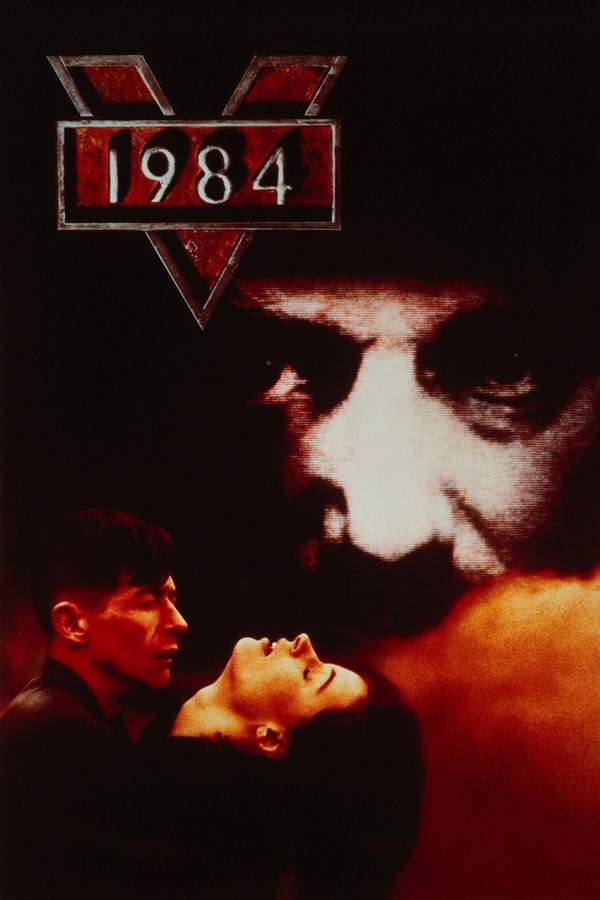
Nineteen Eighty-Four (1984) movie poster

Characters & Themes

Nineteen Eighty-Four (1984) Characters, Setting & Themes Explained

Release, runtime and language
1984 · 113 mins · English
Loading streaming availability…
Directed by
Michael Radford
Starring
John Hurt, Cyril Cusack, Garry Cooper, Richard Burton, John Hughes, Andrew Wilde

A stark adaptation of Orwell’s classic, portraying a bleak totalitarian state where the Ministry of Truth constantly rewrites the past. Winston Smith, a diligent records‑alterer, secretly yearns for freedom, finding rebellion in a forbidden love affair that threatens the Party’s absolute control.

On this page (8)
  1. 1 Where to watch
  2. 2 Characters explained (6)
  3. 3 Where & when it takes place
  4. 4 Themes & meaning (3)
  5. 5 Character & meaning questions
  6. 6 Movie threads
  7. 7 Movies like Nineteen Eighty-Four
  8. 8 Every angle
Loading streaming availability…

6 main characters · contains spoilers

Nineteen Eighty-Four Characters Explained: Who Is Who

The main characters of Nineteen Eighty-Four (1984), heroes and villains: what drives them, how they change over the course of the story and what each of them reveals about the film's bigger ideas.

  • Winston Smith (John Hurt)

    A low-level clerk at the Ministry of Truth who secretly questions the Party. He keeps a diary of forbidden thoughts, seeking truth and personal autonomy in a world built on lies. Cautious, introspective, and increasingly disillusioned, he longs to preserve memory and individuality.

    • 🧭 Rebellious
    • 🔒 Secretive
    • 💡 Thoughtful
  • Julia (Suzanna Hamilton)

    A bold, free-spirited mechanic who works with printing. She pursues personal freedom and romantic rebellion against the Party. Her pragmatism and fearless attitude help propel Winston into dangerous acts of defiance.

    • 💃 Free-spirited
    • 🪶 Independent
  • O'Brien (Richard Burton)

    An Inner Party member who appears to guide Winston but ultimately betrays him through manipulation and torture. He embodies the Party’s philosophy and executes its brutal rehabilitation program.

    • 🧰 Manipulative
    • 🏛️ Authoritative
  • Mr. Charrington (Cyril Cusack)

    A kindly pawn shop owner who covertly facilitates Winston and Julia's meetings, while secretly working for the Thought Police. He embodies the regime's capacity for deception.

    • 🕰️ Ambiguous
    • 🪟 Deceptive
  • Goldstein (John Boswall)

    The figurehead of opposition used by the Party to justify oppression; the supposed leader of the resistance against Big Brother. He embodies the regime's use of fear and enemy iconography.

    • 📜 Propaganda
    • 🗺️ Opposition
  • Parsons (Gregor Fisher)

    Winston's coworker and neighbor, a zealous but gullible adherent of Party doctrine who embodies the consequence of uncritical conformity.

    • 🤝 Conformist
    • 👤 Obliging

Last updated: October 04, 2025 at 13:05

Was this helpful?

Setting

Where and When Does Nineteen Eighty-Four Take Place?

The setting of Nineteen Eighty-Four (1984): the year and time period, the places and locations, and how they shape the characters, the mood and the tension of the story.

Time period

1984

The story takes place in the fictional year 1984 within a world ruled by a pervasive and oppressive regime. Telescreens monitor citizens constantly, and the Thought Police enforce loyalty through fear. History is manipulated to serve the Party's needs, erasing truth and memory. The setting emphasizes a stagnant, war-torn society where personal autonomy is crushed.

Location

London, Airstrip One, Victory Square, Ministry of Truth, Chestnut Tree Café, Proletarian area

The action unfolds in London, the capital of Airstrip One in the totalitarian Oceania. Victory Square hosts mandatory rallies where propaganda is shown to unite the people under Big Brother. The Ministry of Truth dominates with history rewritten to fit the Party, while the proletarian quarter and a pawn shop above it give Winston and Julia a rare private space amid the regime's control.

  • 🏙️ Dystopian City
  • 🔒 Surveillance State
  • 🗞️ Propaganda Hub

Last updated: October 04, 2025 at 13:05

Was this helpful?

3 major themes

Nineteen Eighty-Four Meaning: Themes & Message Explained

What is Nineteen Eighty-Four (1984) really about? The emotional, social and philosophical themes the film keeps returning to, its symbolism and the message beneath the surface.

  • Surveillance

    A constant watch over every citizen defines daily life, with telescreens and informants ensuring obedience. Winston lives under omnipresent scrutiny, hiding his private thoughts and forbidden diary. Fear of detection shapes choices and stifles personal freedom throughout the narrative.

  • History Rewrite

    The regime maintains power by fabricating and altering the past through the Ministry of Truth. Doublethink is taught as a tool to accept contradictions as truth. Memory becomes a weapon and a vulnerability, making rebellion increasingly difficult and dangerous.

  • Love

    Winston and Julia’s forbidden relationship stands as a rare beacon of private humanity amid total control. Their bond challenges the state's domination of intimate life and creates a fragile sanctuary for personal longing. Love becomes a quiet form of resistance, even as it faces ruthless suppression.

Last updated: October 04, 2025 at 13:05

Was this helpful?

Character & theme questions

Nineteen Eighty-Four Characters & Meaning: Your Questions Answered

The questions people ask about Nineteen Eighty-Four (1984): who the characters really are, their relationships, what the symbols mean, where it takes place and what the movie is really about. Each answer contains spoilers.

Q1

What is Airstrip One and where is it located?

Airstrip One is the name given to Britain in the dystopian world of Oceania, serving as a province of the totalitarian superstate. The story unfolds primarily in London, the capital of Airstrip One, which has been transformed into a bleak, surveillance-dominated city where the Party exercises absolute control over every aspect of life.

Foreshadowing: The film establishes the extent of the Party's reach from the opening scenes, showing how even the geography has been reconfigured to serve propaganda.

  • airstrip one
  • london
  • oceania
  • setting
  • dystopia
Q2

What year is the story set in and why is it significant?

The story is set in the fictional year 1984, a time period chosen by Orwell to emphasize the extreme end of totalitarian control. The setting depicts a perpetually war-torn world where the regime maintains power by manipulating history, monitoring citizens through telescreens, and using the Thought Police to suppress any form of dissent or independent thought.

Foreshadowing: The constant state of war and the manipulated historical records hint at the regime's need for perpetual conflict to control the population.

  • 1984
  • year
  • totalitarianism
  • oceania
  • time period
Q3

What is the Ministry of Truth and what does it do?

The Ministry of Truth is the government agency responsible for rewriting history to serve the Party's interests. Winston Smith works there as a low-level clerk, altering historical records so that the Party's past statements and promises always appear accurate, no matter how many times they contradict earlier versions. This systematic erasure of truth is fundamental to maintaining the Party's power.

Foreshadowing: Winston's daily work at the Ministry establishes the film's central theme of truth as a malleable tool of oppression.

  • ministry of truth
  • winston smith
  • history rewrite
  • propaganda
  • doublethink
Q4

How does surveillance work in Oceania?

Surveillance in Oceania is absolute and omnipresent, primarily through telescreens that monitor citizens in their homes and public spaces. These devices broadcast constant propaganda while simultaneously watching every movement and listening to every word. The Thought Police supplement this by infiltrating neighborhoods and using informants, creating an atmosphere where even a facial expression can betray thoughtcrime and result in arrest.

Foreshadowing: The telescreens are visible from the opening scenes, establishing the pervasive fear that shapes every character's behavior.

  • telescreens
  • surveillance
  • thought police
  • big brother
  • monitoring
Q5

Who is Winston Smith and what does he want?

Winston Smith is a low-level clerk at the Ministry of Truth who secretly harbors doubts about the Party. He keeps a forbidden diary to record his true thoughts, seeking to preserve some sense of individual truth and memory in a world built on lies. His fundamental desire is for personal autonomy and authentic human connection in a society that demands complete submission to the collective.

Foreshadowing: Winston's act of writing in the diary, knowing the extreme danger it poses, establishes his inner rebellion from the very beginning.

  • winston smith
  • protagonist
  • rebellion
  • freedom
  • individualism
Q6

Who is Julia and what is her role in the story?

Julia is a young mechanic who works with printing equipment and becomes Winston's lover in secret. Unlike Winston's intellectual rebellion, Julia's defiance is more personal and pragmatic, she seeks physical pleasure and private moments of freedom rather than political overthrow. Her role represents a form of resistance through humanity and personal choice, even if she lacks Winston's desire to understand the Party's deeper motivations.

Foreshadowing: Julia's initial coldness toward Winston in public, contrasted with her boldness in private, hints at the careful duplicity required to survive.

  • julia
  • winston
  • love
  • rebellion
  • romance
  • resistance
Q7

Who is O'Brien and what is his position in the Party?

O'Brien is a member of the Inner Party, the highest ruling caste within the Party structure. He appears to Winston as a potential ally and intellectual equal, secretly meeting with him to discuss rebellion. However, O'Brien ultimately reveals himself as the Party's most devoted enforcer, personally overseeing Winston's torture and psychological destruction in the Ministry of Love. He embodies the Party's true philosophy: power is the ultimate goal, and truth is merely a tool.

Foreshadowing: O'Brien's ambiguous conversations with Winston early on hint at his true role, though his betrayal is devastating.

  • obrien
  • inner party
  • torture
  • manipulation
  • room 101
  • party philosophy
Q8

What is Big Brother and what does the symbol represent?

Big Brother is the face of the Party's regime, displayed on posters everywhere with the caption 'Big Brother Is Watching You.' While the film never confirms whether Big Brother is a real person or purely a construct, the symbol represents the Party's demand for absolute loyalty and submission. It serves as a constant reminder that every citizen is being watched, making self-censorship a reflex and genuine private thought impossible.

Foreshadowing: The omnipresent posters and images of Big Brother set the visual tone of oppression from the opening frames.

  • big brother
  • party
  • symbol
  • propaganda
  • control
  • loyalty
Q9

What is doublethink and how does it function in Oceania?

Doublethink is the Party's psychological technique of holding two contradictory beliefs simultaneously and accepting both as true. Citizens must believe that the Party is always right, even when presented with clear evidence to the contrary, such as accepting that Oceania switched enemies in the middle of a war without recognizing the contradiction. This mental manipulation ensures that no one can trust their own memory or judgment, making rebellion intellectually impossible.

Foreshadowing: Winston's work at the Ministry of Truth directly demonstrates doublethink in action as he alters historical records.

  • doublethink
  • memory
  • truth
  • psychology
  • party doctrine
  • belief
Q10

What is the Chestnut Tree Café and what happens there?

The Chestnut Tree Café is a grim establishment in London where citizens gather to drink gin and stare at the Victory Square telescreens. It represents the final stages of the Party's complete domination, the point where broken individuals simply accept their fate. This is where Winston is finally seen after his rehabilitation, sitting hollow-eyed, playing chess against a telescreen that tells him his moves are wrong.

Foreshadowing: The café appears briefly early in the film as a symbol of defeated humanity, making its return at the end devastating.

  • chestnut tree cafe
  • gin
  • victory square
  • defeat
  • psychological destruction
Q11

What is the proletarian area and why is it important?

The proletarian area is the rundown quarter of London where the working-class majority lives, relatively free from the intense surveillance of the Inner Party zones. Above a pawn shop in this area, Winston and Julia are able to rent a secret room, something impossible in the more heavily monitored districts. The area represents the few remaining spaces where some privacy and human connection can exist, though it remains vulnerable to infiltration by the Thought Police.

Foreshadowing: Winston's search for privacy leads him to this area, establishing it as the only viable space for rebellion.

  • proletarian
  • london
  • pawn shop
  • privacy
  • secret room
  • escape
Q12

What are the main themes in the film?

The film explores three interconnected themes: surveillance, as telescreens and the Thought Police create a society where no private thought is safe; history rewrite, where the Ministry of Truth fabricates and alters the past to serve the Party's needs; and love, as Winston and Julia's forbidden relationship represents the last refuge of genuine human connection and resistance against total control. These themes work together to show how totalitarianism destroys every aspect of individual human life.

Foreshadowing: Each theme is introduced progressively, building toward the devastating conclusion where all three are systematically destroyed.

  • themes
  • surveillance
  • history
  • love
  • totalitarianism
  • resistance
  • oppression
Q13

What is thoughtcrime in Oceania?

Thoughtcrime is the most severe offense in Oceania, the crime of holding independent thoughts or emotions that contradict Party doctrine. It includes keeping secrets from the Party, dreaming, and feeling emotions like love or doubt. Thoughtcrime is detected through facial expressions, involuntary reactions, and informants. The mere possibility of thoughtcrime is enough to justify arrest, and the punishment extends beyond death to include erasure from existence through memory alteration.

Foreshadowing: Winston's日记 and his inner thoughts throughout the film are all acts of thoughtcrime, building tension toward his inevitable capture.

  • thoughtcrime
  • thought police
  • crime
  • punishment
  • rebellion
  • arrest

Movie threads

More Movies Like Nineteen Eighty-Four, by Mood & Story

Curated lists built around what makes Nineteen Eighty-Four tick: the same mood, the same kind of story or the same emotional payoff. Each list explains why these movies belong together.

Dystopian Thrillers of Oppressive Control like in Nineteen Eighty-Four

Stories of individuals crushed by monolithic, all-seeing authoritarian systems. If you were captivated by the chilling world of Nineteen Eighty-Four, explore more movies like it that depict societies under absolute control. These similar sci-fi and political dramas feature themes of mass surveillance, propaganda, and the crushing weight of totalitarianism on the individual soul.

  • dystopian
  • oppressive
  • paranoid
  • claustrophobic
  • grim
  • hopeless
  • Tone: bleak, oppressive, paranoid
  • Pacing: slow, deliberate, grinding
Why these movies?

The story pattern: The narrative typically follows a protagonist who dares to question or rebel against an all-powerful system. Their journey is a linear descent from quiet defiance to systematic psychological dismantling, often culminating in their complete assimilation or destruction by the state machinery they sought to challenge.

Why they belong together: These films are grouped by their shared depiction of meticulously crafted, inhumanly efficient authoritarian worlds. They provoke a similar feeling of claustrophobic dread and explore the terrifying ease with which individuality can be extinguished, making the viewer confront uncomfortable questions about power, control, and conformity.
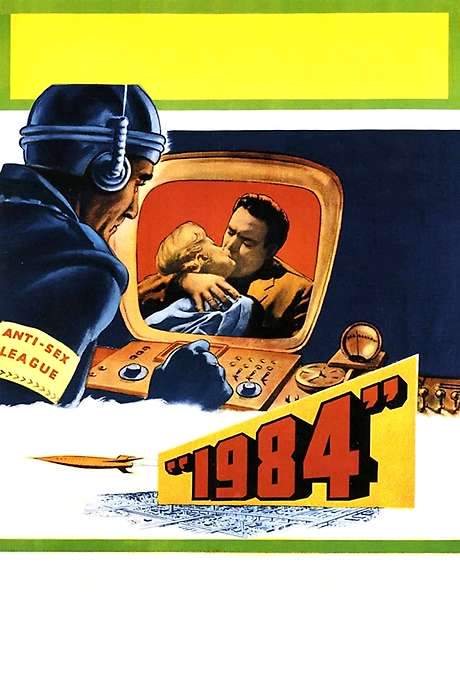
Slow Burn Bleak Dramas with Heavy Endings like Nineteen Eighty-Four

Deliberate narratives where hope is systematically extinguished under immense pressure. For viewers who appreciated the relentless, slow-burn dread and devastating conclusion of Nineteen Eighty-Four, this list compiles similar movies with a heavy emotional weight. These dramas and thrillers share a deliberate pacing that builds to an intense, hopeless finale, focusing on themes of defeat and psychological subjugation.

  • slow burn
  • bleak
  • hopeless
  • melancholic
  • grim
  • heavy
  • Tone: bleak, melancholic, grim
  • Pacing: slow burn, deliberate, monotonous
Why these movies?

The story pattern: Stories in this thread unfold with a deliberate, often slow pace that mirrors the grinding inevitability of the protagonist's fate. The plot is typically straightforward, avoiding complex twists, in order to focus intensely on the emotional journey from fragile hope to absolute despair, often through a process of psychological breaking.

Why they belong together: They are united by a specific mix of pacing, tone, and emotional outcome. The slow pacing allows dread to accumulate authentically, the bleak tone prevents any false hope, and the heavy emotional weight ensures the story's impact lingers long after the credits roll, creating a cohesive experience of profound melancholy.

If you liked this

Movies Like Nineteen Eighty-Four

Similar movies to Nineteen Eighty-Four: the same genre, themes or kind of story. Each one comes with its own plot summary, timeline and ending explained.

Browse all movie summaries

Every angle

Nineteen Eighty-Four (1984) Explained: Plot, Timeline & Characters

Everything about Nineteen Eighty-Four in one place: what happens in the plot summary, the timeline in chronological order, the characters and meaning and a spoiler-free summary. What's After the Movie adds the cast, box office and post-credit scenes.

Coming soon on iOS and Android

The Plot Explained Movie Summary App

Plot summaries, endings explained and timelines on your phone. Catch up on any movie in minutes, save your favorites and never miss a twist again.

Be the first to know when we launch. Your email stays private, always.

Learn more about the app