Plot Explained Spoilers guaranteed!
Plot Explained

Browse by genre

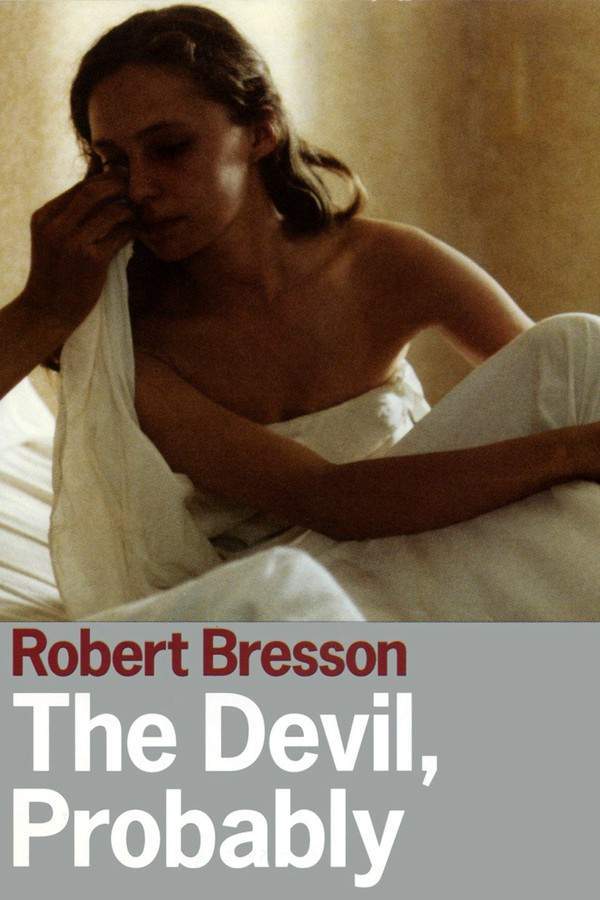
The Devil, Probably (1977) movie poster

Plot Summary

The Devil, Probably (1977) Plot Summary Explained

Release, runtime and language
1977 · 97 mins · French
Directed by
Robert Bresson
Starring
Henri de Maublanc, Antoine Monnier, Nicolas Deguy, Tina Irissari, Laetitia Carcano, Régis Hanrion

Charles drifts through politics, religion and psychoanalysis, rejecting each one. As his disgust deepens over the moral and physical decay of the society around him, he becomes convinced that suicide is his only escape, a bleak, nihilistic contemplation of existence.

On this page (5)
  1. 1 What happens: full plot
  2. 2 Plot questions answered
  3. 3 Movie threads
  4. 4 Movies like The Devil, Probably
  5. 5 Every angle

Full plot summary · contains spoilers

What Happens in The Devil, Probably: Full Plot Summary

The whole story of The Devil, Probably (1977) explained, from the opening scene to the final frame: every key event, every twist and what it all adds up to. Read it as a quick recap before the sequel, to check a scene you missed, or to finally understand what really happened.

The film opens with two contradictory newspaper headlines about Charles's death, set against the quiet backdrop of Père Lachaise Cemetery. Six months earlier, the narrative unfolds through flashbacks and the perspectives of those closest to him, notably Michel, Alberte, and Edwige.

Charles is a disillusioned student living in Paris, detached from society and wrestling with a growing sense of alienation. The people around him, including his girlfriend and other friends, struggle to understand his inner turmoil. He finds little inspiration from left-wing politics or religion, nor from the work of his environmental activist friend, Michel. There is a void in his intimate life, not only with Alberte but in casual encounters as well. Psychoanalysis fails to repair his nihilistic outlook. He increasingly watches the world with unease and horror, and expresses a profound dissatisfaction with it.

He becomes more fixated on the idea of suicide. During a bus conversation, a passenger asks:

> Who made this mockery of humanity? Who’s leading us by the nose?

>

> The devil probably.

Finally, Charles makes an arrangement with his drug-addicted friend Valentin to end his life with a handgun.

The film thus traces how a young man’s disaffection blossoms into a fatal plan, seen through multiple perspectives and a mood that blends detachment with a quiet sense of dread. The closing scenes invite viewers to reflect on the fragility of meaning in a world that can feel indifferent, and on how personal despair can intersect with choices that alter lives.

Last updated: February 18, 2026 at 23:46

Was this helpful?

Plot questions answered

The Devil, Probably Plot Explained: Your Questions Answered

The questions people ask most about The Devil, Probably (1977): what happens in the confusing scenes, why the characters do what they do, the twists, hidden details and what the ending means. Each answer contains spoilers.

Q1

Why does Charles reject politics, religion, and psychoanalysis?

Charles finds all three avenues hollow and incapable of providing genuine meaning. He dismisses left-wing politics as insufficient, views religion as offering no real answers, and discovers that psychoanalysis cannot repair his fundamental nihilistic outlook. Each failed attempt deepens his conviction that no external system or relationship can fill the void he feels.

Foreshadowing: Earlier scenes establish his deep detachment from conventional sources of meaning before he explicitly rejects each one.

  • nihilism
  • meaninglessness
  • political disillusionment
  • religious skepticism
  • psychoanalysis failure
Q2

What does the bus conversation about "the devil probably" mean?

During a bus ride, a passenger asks who made this "mockery of humanity" and who is "leading us by the nose," to which another passenger responds "The devil probably." This exchange crystallizes Charles's view of reality as a manipulated, cruel system with no benevolent oversight. It validates his perception that humanity is controlled by malevolent forces, reinforcing his decision that escape is necessary.

Foreshadowing: This moment occurs mid-film and directly precedes Charles's arrangement with Valentin to end his life.

  • devil probably
  • bus scene
  • nihilism
  • humanity critique
  • despair
Q3

Why does Charles decide to end his life?

Charles's suicide results from his complete failure to find meaning in any aspect of existence. He rejects politics, religion, psychoanalysis, romantic relationships, casual sex, and environmental activism as sources of genuine connection or purpose. The accumulated emptiness and horror he feels toward the world leaves him convinced that death is his only logical escape.

Foreshadowing: The film opens with contradictory headlines about his death, establishing the outcome before showing how he arrived at that decision.

  • suicide
  • nihilism
  • despair
  • meaninglessness
  • escape
Q4

Why can't Alberte's relationship with Charles save him?

Despite being Charles's girlfriend, Alberte cannot provide the meaning he seeks. The summary notes a void in their intimate life - sex offers no relief, and their connection fails to fill his internal emptiness. His disconnection extends beyond any single relationship, making it impossible for any person to anchor him to life.

Foreshadowing: Early scenes show Alberte's attempts to connect with Charles, highlighting her failure to reach him.

  • Alberte
  • relationship failure
  • emotional detachment
  • intimacy
  • void
Q5

Why does the film use flashbacks to tell Charles's story?

The film opens with contradictory newspaper headlines about Charles's death at Père Lachaise Cemetery, then flashes back six months to show the events leading to that outcome. The narrative is told through the perspectives of his friends Michel, Alberte, and Edwige, each offering their interpretation of his growing alienation. This structure creates dramatic irony since viewers know the conclusion before learning the causes.

Foreshadowing: The opening headlines at Père Lachaise directly foreshadow the final scene where Charles dies.

  • flashback
  • pere lachaise
  • newspaper headlines
  • structural meaning
  • multiple perspectives
Q6

What role does Valentin play in Charles's plan?

Valentin is Charles's drug-addicted friend who arranges to end his life with a handgun. Unlike the others who try to help Charles find meaning, Valentin becomes the instrument of Charles's death. This选取 highlights how Charles, after rejecting all conventional paths to meaning, turns to the most destructive option available.

Foreshadowing: The plan with Valentin represents the culmination of everything that came before it in the six-month period.

  • Valentin
  • suicide method
  • drug addiction
  • final decision
Q7

Why doesn't Michel's environmental activism give Charles hope?

Charles's friend Michel is an environmental activist, but Charles finds no inspiration in this work. Even activism aimed at saving the world fails to provide Charles with personal meaning. This demonstrates the depth of his disconnection - he cannot find purpose even in causes that objectively aim to improve humanity's future.

Foreshadowing: Michel appears early in the timeline as someone offering Charles a potential path, which Charles explicitly rejects.

  • Michel
  • environmental activism
  • hopelessness
  • failed inspiration
Q8

What is the significance of the contradictory newspaper headlines?

The film opens with two contradictory newspaper headlines announcing Charles's death, set against Père Lachaise Cemetery. This ambiguity serves the film's contemplative tone - it suggests uncertainty about how Charles died and perhaps about the meaning of his death itself. The headlines anchor the mystery that the flashbacks will explore.

Foreshadowing: These headlines appear in the opening frame, before any narrative content, establishing that Charles's death is the central mystery.

  • newspaper headlines
  • pere lachaise
  • death ambiguity
  • opening scene
Q9

Why does psychoanalysis fail to help Charles?

Psychoanalysis cannot repair Charles's nihilistic outlook because his despair stems from a fundamental rejection of meaning itself, not from a psychological issue that can be treated. Therapeutic approaches assume that meaning can be found and repaired, but Charles has already concluded that no such meaning exists. This failure represents one more avenue closing for him.

Foreshadowing: Scenes of therapeutic attempts occur before Charles becomes fixated on suicide.

  • psychoanalysis
  • treatment failure
  • psychology
  • nihilism therapeutic
Q10

Why does the film end at Père Lachaise Cemetery?

Père Lachaise Cemetery is where Charles ultimately dies by handgun, as shown in the closing scenes. The film opens and closes at this famous Parisian cemetery, creating a circular structure. This location is significant because it is where many notable figures are buried, adding a layer of existential weight to Charles's choice to end his life there.

Foreshadowing: The opening headlines at Père Lachaise directly set up the final scene.

  • pere lachaise
  • cemetery
  • final scene
  • paris
  • death location

Movie threads

More Movies Like The Devil, Probably, by Mood & Story

Curated lists built around what makes The Devil, Probably tick: the same mood, the same kind of story or the same emotional payoff. Each list explains why these movies belong together.

Existential drift and nihilistic despair like in The Devil, Probably

Characters confronting the void, searching for meaning in a world devoid of it. A collection of films that explore existential drift and nihilistic despair, much like The Devil, Probably. If you were captivated by the bleak contemplation of a meaningless world, you'll find similar movies here that delve into alienation and the search for purpose.

  • existential dread
  • alienated
  • pessimistic
  • despairing
  • apathetic
  • melancholic
  • Tone: bleak, nihilistic, melancholic
  • Pacing: slow, contemplative
Why these movies?

The story pattern: Narratives in this thread are often character-driven studies rather than plot-heavy arcs. The focus is on a protagonist's internal journey as they reject conventional paths like love, politics, or religion, leading them deeper into a state of apathy and alienation, often culminating in a bleak or tragic resolution.

Why they belong together: These movies are grouped by their shared exploration of nihilism and existential dread. They feature a consistent, heavy tone, slow pacing that allows for contemplation, and a central character whose disillusionment with the world creates a powerful, emotionally taxing experience for the viewer.

Slow-burn psychological descent like in The Devil, Probably

A gradual, unflinching immersion into a character's psychological unraveling. Discover movies that share the slow-burn psychological descent found in The Devil, Probably. If you appreciated the film's methodical pacing and intense focus on a character's crumbling mental state, this list offers similar immersive and heavy dramas.

  • slow burn
  • psychological
  • despairing
  • heavy
  • immersive
  • dread
  • Tone: bleak, oppressive, despairing
  • Pacing: slow burn, observational
Why these movies?

The story pattern: The narrative pattern is a downward spiral, charted through quiet observation rather than dramatic events. The plot is secondary to the atmosphere and the protagonist's deteriorating mental state, which is conveyed through behavior, environment, and a pervasive sense of doom that builds to an inevitable, often grim, conclusion.

Why they belong together: These films are united by their commitment to a slow, deliberate pace and a high-intensity focus on psychological turmoil. The combination of a heavy emotional weight, a bleak tone, and a contemplative structure creates a specific, immersive viewing experience centered on internal despair.

If you liked this

Movies Like The Devil, Probably

Similar movies to The Devil, Probably: the same genre, themes or kind of story. Each one comes with its own plot summary, timeline and ending explained.

Browse all movie summaries

Every angle

The Devil, Probably (1977) Explained: Plot, Timeline & Characters

Everything about The Devil, Probably in one place: what happens in the plot summary, the timeline in chronological order, the characters and meaning and a spoiler-free summary. What's After the Movie adds the cast, box office and post-credit scenes.

Coming soon on iOS and Android

The Plot Explained Movie Summary App

Plot summaries, endings explained and timelines on your phone. Catch up on any movie in minutes, save your favorites and never miss a twist again.

Be the first to know when we launch. Your email stays private, always.

Learn more about the app