Plot Explained Spoilers guaranteed!
Plot Explained

Browse by genre

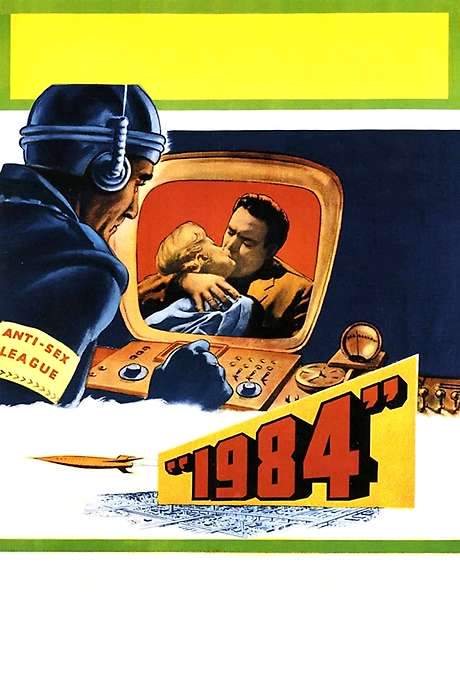
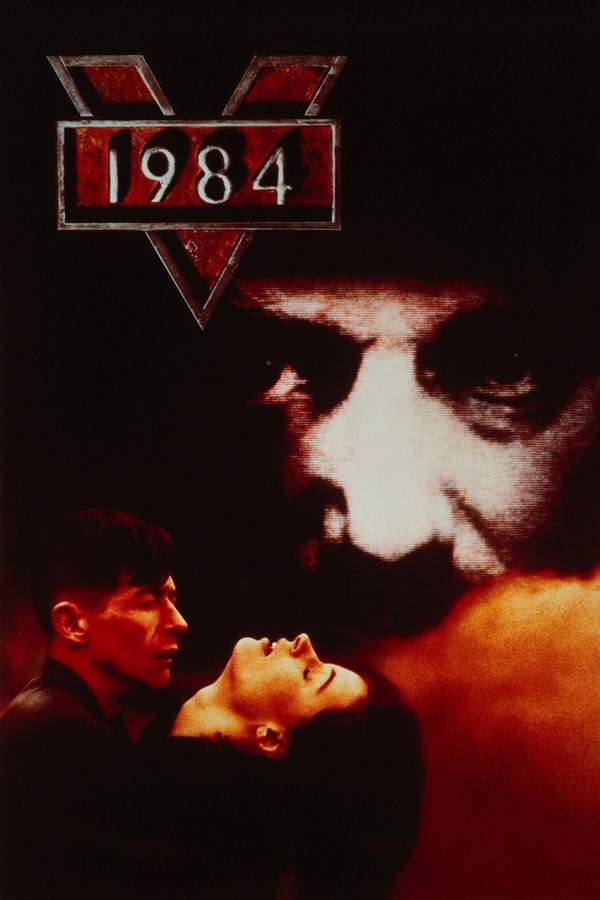
Nineteen Eighty-Four (1984) movie poster

Timeline

Nineteen Eighty-Four (1984) Timeline Explained – Every Event in Order

Release, runtime and language
1984 · 113 mins · English
Loading streaming availability…
Directed by
Michael Radford
Starring
John Hurt, Cyril Cusack, Garry Cooper, Richard Burton, John Hughes, Andrew Wilde

A stark adaptation of Orwell’s classic, portraying a bleak totalitarian state where the Ministry of Truth constantly rewrites the past. Winston Smith, a diligent records‑alterer, secretly yearns for freedom, finding rebellion in a forbidden love affair that threatens the Party’s absolute control.

On this page (6)
  1. 1 Where to watch
  2. 2 Events in order (15)
  3. 3 Timeline questions answered
  4. 4 Movie threads
  5. 5 Movies like Nineteen Eighty-Four
  6. 6 Every angle
Loading streaming availability…

15 events in order · contains spoilers

Nineteen Eighty-Four Timeline: Events in Chronological Order

Every key event of Nineteen Eighty-Four (1984) in order, scene by scene, with when and where it takes place. Use it to untangle flashbacks, time jumps and parallel storylines, to refresh your memory before the sequel or to find the exact scene you are thinking of.

  1. Winston's bleak life under surveillance

    Winston Smith endures a squalid life in London, the capital of Airstrip One, under the constant watch of the Thought Police. He works in a small cubicle at the Ministry of Truth, where he rewrites history to fit the Party's propaganda. Telescreens loom over him, making private thought nearly impossible.

    When
    1984, under Party rule
    Where
    London, Airstrip One, Oceania
  2. Ministry of Truth duties

    Within the Ministry of Truth, Winston constantly erases and fabricates past events to align with Big Brother's narratives. He grapples with memories the Party denies and learns that truth can be engineered. The job reinforces the Party's control over memory and reality.

    When
    Office hours
    Where
    Ministry of Truth, London
  3. Rallies at Victory Square

    Winston attends mandatory public rallies at Victory Square where propaganda films about the current war are shown. The crowd chants loyalty to Big Brother while the state pushes contradictory news to unify the population. The atmosphere blends fervor with manufactured fear.

    When
    Public gatherings during the day
    Where
    Victory Square, London
  4. Winston keeps a secret diary

    Winston secretly commits his forbidden thoughts to a diary, creating a record of his skepticism and desires. He clings to private memories of childhood that contradict the Party's official history. The diary becomes dangerous evidence of thoughtcrime, kept hidden from the telescreens.

    When
    Night
    Where
    Winston's flat, London
  5. First meeting with Julia

    In the remote countryside, Winston meets Julia, a bold and free-spirited coworker who challenges the Party's restrictions. They exchange subversive ideas and begin an illicit, passionate affair. The meeting marks a turning point as he discovers a space of personal freedom.

    When
    First meeting
    Where
    Remote countryside, outside London
  6. Secret room above a pawn shop

    Winston rents a room above a pawn shop to escape the watchful eyes of the state. He and Julia continue their liaison in private, savoring moments of privacy away from telescreens. The room becomes a fragile sanctuary for their relationship.

    When
    Shortly after first meeting
    Where
    Room above pawn shop, Proletarian district
  7. Contraband life

    Julia procures contraband food and clothing on the black market, helping them sustain their illicit life. Their days in relative freedom feel almost normal, even as fear of discovery hovers constantly. The black market supplies fuel for their forbidden bond.

    When
    During their affair
    Where
    Black market in London, Proletarian districts
  8. Arrest and Charrington's betrayal

    One evening, the Thought Police raid Winston and Julia's flat and arrest them. The elderly pawn shop owner, Mr. Charrington, is revealed as a covert agent who has recorded their transgressions with a hidden telescreen. The couple's safe haven collapses in an instant.

    When
    Evening arrest
    Where
    Winston and Julia's flat; pawn shop
  9. Detention and Ministry of Love

    Winston and Julia are separated and taken to the Ministry of Love for questioning and rehabilitation. The state begins its brutal process of breaking will and eradicating disobedience. The environment is cold, controlled, and designed to crush personal loyalties.

    When
    Post-arrest detention
    Where
    Ministry of Love
  10. O'Brien's catechism and doublethink

    O'Brien confronts Winston and lectures him on the Party's true purpose, introducing the doctrine of doublethink. Winston endures psychological and physical pressure as he is taught to accept contradictory beliefs. The lessons aim to redefine truth and allegiance to the Party.

    When
    During rehabilitation
    Where
    O'Brien's quarters, Ministry of Love
  11. Room 101 and the worst fear

    In Room 101, Winston confronts his greatest fear—rats—and his resistance finally collapses. He betrays Julia to save himself, abandoning any remaining personal loyalties. The moment marks his complete submission to the Party.

    When
    Final rehabilitation session
    Where
    Room 101, Ministry of Love
  12. Release and return to public life

    Winston is released back into society, physically restored but emotionally broken. He revisits the Chestnut Tree Café, where previously rehabilitated thoughtcriminals are now unpersons in memory. He begins to drift back into a hollow routine, haunted by the past.

    When
    After release
    Where
    Chestnut Tree Café, London
  13. Julia's rehabilitation and uneasy reunion

    Julia appears as a rehabilitated figure at the Chestnut Tree Café, and they share a bottle of Victory Gin while acknowledging they betrayed each other. Their uneasy reunion underscores the fragility of human bonds under the regime. The past relationship is replaced by a hollow, practical connection.

    When
    Post-release
    Where
    Chestnut Tree Café
  14. Winston's televised confession

    Winston watches a broadcast of himself confessing his crimes on a large telescreen, seeking forgiveness from the populace. The confession seals his new, compliant identity. He accepts the state's version of reality without resistance.

    When
    After confession aired
    Where
    Chestnut Tree Café, then telescreen
  15. Final moment: I love you and Big Brother

    As a news report proclaims a military victory, Winston looks at the image of Big Brother and then turns toward Julia with tears in his eyes. The whispered I love you marks the destruction of his rebellious self, ending with him empty but emotionally dependent. He tilts away from Big Brother and toward the memory of Julia, a pale glimmer of humanity left.

    When
    End of film
    Where
    Telescreen, London

Last updated: October 09, 2025 at 14:47

Was this helpful?

Timeline questions answered

Nineteen Eighty-Four Timeline Explained: Your Questions Answered

When does it happen, and why in that order? The questions people ask about the chronology of Nineteen Eighty-Four (1984): time jumps, flashbacks, cause and effect between scenes and the correct order of events, each answered with spoilers.

Q1

Why does Winston keep a secret diary in 1984?

Winston keeps a diary as an act of private rebellion against the Party's total control. After years of silently accepting the Party's lies, he needs to preserve evidence of the truth, his own memories and thoughts, that exist independently of the Party's constantly rewritten history. The diary represents the one space where his inner life can remain uncorrupted, making it both a dangerous thoughtcrime and his only hope of retaining any authentic sense of self.

Foreshadowing: Earlier, Winston quietly corrects a fabricated headline at work, showing his first small act of dissent before committing to the diary.

  • diary
  • thoughtcrime
  • rebellion
  • winston smith
  • ministry of truth
Q2

How does Winston meet Julia in the movie?

Winston meets Julia in the remote countryside outside London during one of the mandatory rallies. Unlike Winston's cautious, intellectual approach to dissent, Julia is bold and pragmatic, she simply refuses to obey rules that serve no purpose to her personally. She passes Winston a note reading 'I love you' during the rally, initiating their clandestine relationship. This meeting marks the turning point where Winston's solitary rebellion becomes a shared, physical act of resistance.

Foreshadowing: The rally at Victory Square, designed to manufacture loyalty, ironically becomes the birthplace of their forbidden love.

  • julia
  • winston
  • countryside
  • love affair
  • first meeting
Q3

Why is Mr. Charrington a traitor in 1984?

Mr. Charrington, the elderly pawn shop proprietor, is revealed to be a covert agent of the Thought Police who has been monitoring Winston and Julia through a hidden telescreen behind a picture in their rented room. His friendly, grandfatherly appearance was entirely an act to lure dissidents into a false sense of security. His betrayal leads directly to their arrest, demonstrating how the Party infiltrates every level of society and how even the most seemingly trustworthy people can be weapons of surveillance.

Foreshadowing: Charrington suspiciously offers them the room at a low price and reminds them to close the curtains, actions that seem helpful but actually serve to isolate them from witnesses.

  • mr charrington
  • thought police
  • betrayal
  • arrest
  • pawn shop
Q4

What is doublethink in 1984?

Doublethink is the Party's doctrine requiring citizens to hold two contradictory beliefs simultaneously and accept both as true. O'Brien explains to Winston that it means the power to hold two opposed beliefs in one's mind simultaneously, and to accept both of them. Examples include believing the Party is always right while acknowledging that past facts have been changed, or believing that Oceania is at war with Eastasia one day and Eurasia the next, without recognizing the contradiction. This mental discipline ensures no one can ever expose the Party's lies because they are trained to believe whatever the Party declares.

Foreshadowing: Winston already practices a form of doublethink at work, knowing the records he alters are false while simultaneously accepting the corrections as truth.

  • doublethink
  • party
  • o'brien
  • ministry of truth
  • psychology
Q5

Why does Winston betray Julia in Room 101?

Winston betrays Julia because Room 101 is designed to exploit his deepest, most personal fear, rats. O'Brien straps a cage of rats directly to Winston's face, threatening to let them devour him. Winston's resistance breaks completely; he cannot endure the psychological torture any longer. He screams for Julia to be subjected to the rats instead of himself, effectively betraying his love to save himself. This moment represents the Party's ultimate goal: destroying the last private bond that could give Winston hope or resistance, proving that even the most intimate human connections can be obliterated under sufficient pressure.

Foreshadowing: Earlier, Winston tells Julia that he would do anything to protect her, but the Party systematically dismantles this resolve through targeted psychological torture.

  • room 101
  • rats
  • betrayal
  • torture
  • winston julia
Q6

What happens to Winston at the end of 1984?

Winston is released from the Ministry of Love after being fully rehabilitated, meaning his spirit and capacity for rebellion have been completely crushed. He returns to a hollow routine, spending his days at the Chestnut Tree Café drinking Victory Gin. He has genuinely learned to love Big Brother and accepts the Party's version of reality without resistance. In the final scene, he watches his own televised confession and weeps, not from sorrow, but from what appears to be genuine love for the Party. He tells Julia 'I love you' as a broadcast celebrates a military victory, but these words now carry no rebellious meaning, only empty conformity.

Foreshadowing: O'Brien warned Winston that the Party would make him 'love Big Brother' as the ultimate form of surrender, which comes to pass.

  • winston ending
  • big brother
  • rehabilitation
  • chestnut tree cafe
  • defeat
Q7

Is Big Brother real in 1984?

Big Brother's physical existence remains ambiguous throughout the film, he appears only on posters, billboards, and telescreens, never in person. The Party uses his image as a symbolic figure of authority and surveillance rather than necessarily being a real individual. Whether Big Brother is a single person, a collective entity, or entirely fictional is deliberately unclear; what matters is that citizens believe in his omnipresence and watchfulness. The regime functions through the concept of Big Brother rather than any actual person, making the distinction almost irrelevant to how the Party operates.

Foreshadowing: The Party never confirms or denies Big Brother's existence, maintaining deliberate ambiguity that serves its control.

  • big brother
  • party
  • surveillance
  • ministry of truth
  • oceania
Q8

Why does the Party rewrite history in 1984?

The Party rewrites history because control of the past equals control of the present and future. By constantly altering records, the Party ensures that no verifiable truth exists outside of the Party's current declarations. This allows them to deny their own previous statements, change enemies from Eastasia to Eurasia at will, and eliminate former Party members from memory entirely through 'vaporization.' Winston's job at the Ministry of Truth is to execute this process mechanically, he deletes or fabricates articles, photographs, and statistics so that the Party is always right, historically speaking. Without a verifiable past, citizens cannot compare present claims to reality, making independent thought impossible.

Foreshadowing: Winston's early memories of a time before the Party contradict official history, which is precisely why the Party must erase such memories.

  • history
  • ministry of truth
  • propaganda
  • party
  • rewriting
Q9

What is the Ministry of Love in 1984?

The Ministry of Love is the branch of the Party responsible for interrogation, torture, and 'rehabilitation' of thoughtcriminals. Unlike the Ministry of Truth (which handles propaganda), the Ministry of Love handles punishment and psychological destruction. It is a place where prisoners are beaten, psychologically broken, and taught to accept the Party's reality through methods like doublethink and the personalized horrors of Room 101. The building itself is grim, windowless, and deliberately devoid of comfort, physical proof that love for the Party is enforced through terror rather than genuine feeling.

Foreshadowing: Winston's capture leads directly here, where he discovers O'Brien is not a resistance ally but a high-ranking torturer.

  • ministry of love
  • torture
  • rehabilitation
  • o'brien
  • room 101
Q10

Why does Julia betray Winston in 1984?

Julia betrays Winston during her own interrogation at the Ministry of Love. While the film does not show her specific breaking point, the text implies she faced analogous psychological pressure to Winston's Room 101 ordeal. When Winston and Julia reunite at the Chestnut Tree Café after their releases, Julia admits she betrayed him too, not out of malice, but because the regime made it impossible to maintain their bond. Both have been 'rehabilitated' to the point where their former love has been replaced by a hollow compliance, showing that the Party's torture successfully destroyed even their capacity for genuine human connection.

Foreshadowing: The Party's method is to destroy personal loyalty absolutely; if Winston could break, Julia's stronger pragmatism could also be overcome.

  • julia
  • betrayal
  • interrogation
  • ministry of love
  • rehabilitation

Movie threads

More Movies Like Nineteen Eighty-Four, by Mood & Story

Curated lists built around what makes Nineteen Eighty-Four tick: the same mood, the same kind of story or the same emotional payoff. Each list explains why these movies belong together.

Dystopian Thrillers of Oppressive Control like in Nineteen Eighty-Four

Stories of individuals crushed by monolithic, all-seeing authoritarian systems. If you were captivated by the chilling world of Nineteen Eighty-Four, explore more movies like it that depict societies under absolute control. These similar sci-fi and political dramas feature themes of mass surveillance, propaganda, and the crushing weight of totalitarianism on the individual soul.

  • dystopian
  • oppressive
  • paranoid
  • claustrophobic
  • grim
  • hopeless
  • Tone: bleak, oppressive, paranoid
  • Pacing: slow, deliberate, grinding
Why these movies?

The story pattern: The narrative typically follows a protagonist who dares to question or rebel against an all-powerful system. Their journey is a linear descent from quiet defiance to systematic psychological dismantling, often culminating in their complete assimilation or destruction by the state machinery they sought to challenge.

Why they belong together: These films are grouped by their shared depiction of meticulously crafted, inhumanly efficient authoritarian worlds. They provoke a similar feeling of claustrophobic dread and explore the terrifying ease with which individuality can be extinguished, making the viewer confront uncomfortable questions about power, control, and conformity.
Slow Burn Bleak Dramas with Heavy Endings like Nineteen Eighty-Four

Deliberate narratives where hope is systematically extinguished under immense pressure. For viewers who appreciated the relentless, slow-burn dread and devastating conclusion of Nineteen Eighty-Four, this list compiles similar movies with a heavy emotional weight. These dramas and thrillers share a deliberate pacing that builds to an intense, hopeless finale, focusing on themes of defeat and psychological subjugation.

  • slow burn
  • bleak
  • hopeless
  • melancholic
  • grim
  • heavy
  • Tone: bleak, melancholic, grim
  • Pacing: slow burn, deliberate, monotonous
Why these movies?

The story pattern: Stories in this thread unfold with a deliberate, often slow pace that mirrors the grinding inevitability of the protagonist's fate. The plot is typically straightforward, avoiding complex twists, in order to focus intensely on the emotional journey from fragile hope to absolute despair, often through a process of psychological breaking.

Why they belong together: They are united by a specific mix of pacing, tone, and emotional outcome. The slow pacing allows dread to accumulate authentically, the bleak tone prevents any false hope, and the heavy emotional weight ensures the story's impact lingers long after the credits roll, creating a cohesive experience of profound melancholy.

If you liked this

Movies Like Nineteen Eighty-Four

Similar movies to Nineteen Eighty-Four: the same genre, themes or kind of story. Each one comes with its own plot summary, timeline and ending explained.

Browse all movie summaries

Every angle

Nineteen Eighty-Four (1984) Explained: Plot, Timeline & Characters

Everything about Nineteen Eighty-Four in one place: what happens in the plot summary, the timeline in chronological order, the characters and meaning and a spoiler-free summary. What's After the Movie adds the cast, box office and post-credit scenes.

Coming soon on iOS and Android

The Plot Explained Movie Summary App

Plot summaries, endings explained and timelines on your phone. Catch up on any movie in minutes, save your favorites and never miss a twist again.

Be the first to know when we launch. Your email stays private, always.

Learn more about the app