Plot Explained Spoilers guaranteed!
Plot Explained

Browse by genre

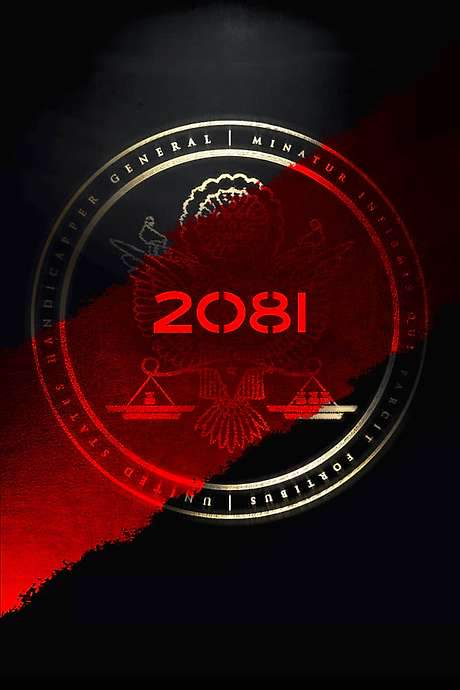
2081 (2009) movie poster

Plot Summary

2081 (2009) Plot Summary Explained

Release, runtime and language
2009 · 25 mins · English
Directed by
Chandler Tuttle
Starring
Armie Hammer, Patricia Clarkson, Julie Hagerty, James Cosmo, David Healy, James C. Burns

In a bleak future the 212th Amendment to the Constitution and the relentless oversight of the United States Handicapper General have forced society into enforced equality. The physically strong are burdened with heavy weights, the conventionally beautiful must conceal themselves behind masks, and the intellectually gifted are fitted with earpieces that emit loud noises whenever they attempt to think ahead, preventing any perceived advantage.

On this page (5)
  1. 1 What happens: full plot
  2. 2 Plot questions answered
  3. 3 Movie threads
  4. 4 Movies like 2081
  5. 5 Every angle

Full plot summary · contains spoilers

What Happens in 2081: Full Plot Summary

The whole story of 2081 (2009) explained, from the opening scene to the final frame: every key event, every twist and what it all adds up to. Read it as a quick recap before the sequel, to check a scene you missed, or to finally understand what really happened.

In 2081, the United States sits inside a rigid, dystopian order where extreme equality is enforced by law and the all‑powerful Handicapper General keeps watch over every deviation. The government rewrites fairness as a guarantee that no one stands out, a philosophy carried out with devices called handicaps. Physical weights slow the strong, masks disguise beauty, and loud earpieces emit noises to blunt any excess brilliance. The result is a society that trades individual gifts for a hollow sameness, promising peace at the cost of personal difference.

In the Bergeron household, the tension of this system is lived out every day. George Bergeron, [James Cosmo], and Hazel Bergeron, [Julie Hagerty], sit together in their living room and watch The Sleeping Beauty on television. George bears heavy weights and an earpiece to curb his intellect and strength, while Hazel—who is perfectly average and capable of only short bursts of thought—wears none. Six years prior, Harrison Bergeron, [Armie Hammer], was taken from their home in a raid conducted by the Handicapper General’s SWAT team, a moment that lingers in memory but rarely surfaces in thought.

As the current broadcast unfolds, a government news report—delivered by a stuttering anchor— interrupts the ballet to describe the escaped rebel. The scene moves from the television screen to a theater where the stage is populated by ballerinas held back by their own restraints, their movements tethered to the average. Then Harrison bursts into the moment, stepping onto the venue with a bold, defiant presence that defies the very devices meant to curb him. He announces a bomb under the stage, though the detonator he holds is a trick, and he calls for a volunteer to join him in a shared, unfettered moment of grace.

The crowd watches in stunned silence as Harrison sheds his handicaps and chooses a partner from the ranks of the dancers. They dance together, a striking display of unrestrained poise and beauty that briefly transcends the rules that bind them. The enforcers move in, cutting the video feed as the Handicapper General herself, Diana Moon Glampers, [Tammy Bruce], comes down the aisle with a shotgun. In a calculated moment, Harrison presses his signal, but the device only reopens the feed long enough for the public to witness the chilling truth of oppression. The fatal shot rings out, killing Harrison and his chosen dancer, an act broadcast to the audience before the feed is once again blocked. The shocked silence of the viewers stretches as the program resumes its prerecorded lull, and George’s gaze remains fixed on the screen, a mixture of heartbreak and resignation coloring his normally muted thoughts.

Beyond the stage, the world returns to its orderly routine, as if nothing had happened. Yet the brief, forbidden moment of shared freedom leaves a lasting imprint on those who witnessed it, especially a father who cannot quite escape the ache of loss. The story lingers on the tension between enforced equality and the human impulse to be uniquely oneself, a tension that ripples through the Bergeron family and the broader society.

In a single, faithful thread to Kurt Vonnegut’s vision, the tale invites viewers to reflect on what is sacrificed in the pursuit of absolute equality, and at what cost the human spirit can be stifled when difference is deemed a danger to the social order. The dance, the defiance, and the tragedy all converge to reveal the fragile balance between collective harmony and individual humanity, a balance that remains perilously delicate in a world that prizes sameness above all else.
Last updated: October 09, 2025 at 10:52

Was this helpful?

Plot questions answered

2081 Plot Explained: Your Questions Answered

The questions people ask most about 2081 (2009): what happens in the confusing scenes, why the characters do what they do, the twists, hidden details and what the ending means. Each answer contains spoilers.

Q1

Why does Harrison Bergeron decide to rebel against the system?

Harrison Bergeron escapes from captivity after six years of being taken by the Handicapper General's forces. His rebellion is a direct act of defiance against the oppressive equality that has forced him to suppress his intelligence, strength, and potential. By breaking into the theater and publicly removing his handicaps, Harrison seeks to reclaim his individuality and inspire others to do the same, even knowing the fatal consequences.

Foreshadowing: Earlier scenes establish that Harrison was taken as a child, suggesting years of oppression led to his desperate act of public defiance.

  • harrison bergeron rebellion
  • escape
  • defiance
  • handicap system
Q2

What happens at the end of the movie?

The Handicapper General Diana Moon Glampers enters the theater with a shotgun and kills both Harrison Bergeron and the ballerina who volunteered to dance with him. The execution is broadcast briefly before the feed is cut. George's earpiece suppresses his ability to process the grief, while Hazel remains unable to fully comprehend the tragedy. The world returns to its enforced normalcy, with the system remaining intact.

Foreshadowing: The earlier news report about Harrison being an escaped rebel establishes that the regime treats him as a dangerous threat.

  • ending
  • execution
  • diana moon glampers
  • harrison death
Q3

Why doesn't George Bergeron help his own son during the rebellion?

George is physically burdened with heavy weights and intellectually suppressed by an earpiece that emits loud noises whenever he attempts to think ahead. While he watches his son on television, the earpiece prevents him from fully processing the moment or taking action. His emotional response is muted by both the technological handicaps and the regime's conditioning, leaving him paralyzed with heartbreak he cannot fully express.

Foreshadowing: The opening scenes show George struggling with his earpiece even during normal conversation, establishing how the devices control his thoughts and actions.

  • george bergeron
  • earpiece
  • suppression
  • father
Q4

What are the handicaps and how do they work?

The handicaps are state-mandated devices that suppress individual excellence to ensure absolute equality. Physically strong people wear heavy weights that slow their movements. Conventionally beautiful people must wear masks to hide their appearance. Intellectually gifted individuals wear earpieces that emit deafening noises whenever they attempt to think or use their intelligence. These devices are enforced by the 212th Amendment and overseen by the Handicapper General.

Foreshadowing: The opening establishes the handicap system as the foundation of the dystopian society, showing George wearing his weights and earpiece at home.

  • handicaps
  • weights
  • earpiece
  • masks
  • equality amendment
Q5

Was Harrison's bomb real?

The detonator Harrison carries is a trick. He announces a bomb under the stage but uses the device to override the video feed block rather than cause an explosion. The fake bomb serves as a psychological tool to command attention and create the brief window where the world sees the dance of unhandicapped beauty before the regime can cut the broadcast.

Foreshadowing: Harrison's dramatic entrance with the detonator is presented as a theatrical challenge to the regime's control over information.

  • bomb
  • detonator
  • trick
  • broadcast override
Q6

Why doesn't Hazel wear any handicaps?

Hazel Bergeron is described as perfectly average in every way - intellectually, physically, and emotionally. Because she lacks any outstanding qualities that would make her superior to others, the state does not require her to wear any handicaps. She is capable only of short bursts of thought, which the regime considers harmless. Her average nature makes her immune to the oppression that afflicts her husband and son.

Foreshadowing: The opening scene shows Hazel sitting comfortably without any weights or devices while George struggles under his burdens.

  • hazel bergeron
  • average
  • no handicaps
Q7

Who is Diana Moon Glampers and what is her role?

Diana Moon Glampers is the Handicapper General, the highest authority enforcing the equality laws. She oversees the handicap system and personally leads the crackdown against Harrison's rebellion. She enters the theater with a shotgun and executes both Harrison and the ballerina, then orders the broadcast to be restored to the government's control. She represents the brutal enforcement of enforced equality.

Foreshadowing: The news report at the beginning establishes the Handicapper General's authority over citizens who deviate from the norm.

  • diana moon glampers
  • handicapper general
  • authority
  • government
Q8

Why does Harrison choose a ballerina to dance with him?

Harrison selects a ballerina from among the other dancers to demonstrate what true equality could look like - not the forced sameness of the regime, but the freedom for individuals to express their talents together. By removing her handicaps as well, he creates a brief moment where both individuals can dance at their full potential, showing the audience what humanity loses through enforced equality. The dance becomes a symbolic act of freedom.

Foreshadowing: The earlier scene shows ballerinas performing with their own restraints, establishing the oppressive conditions Harrison is fighting against.

  • ballerina
  • dance
  • freedom
  • talent
  • choice
Q9

What happens when Harrison presses the detonator at the end?

When Harrison presses the detonator, it doesn't cause an explosion but instead overrides the video block, briefly restoring the broadcast. This allows the outside world to witness Diana Moon Glampers execute him and the ballerina. Harrison smiles as he is seen, achieving his goal of exposing the regime's violence to the public, even though the feed is quickly cut again.

Foreshadowing: Harrison's earlier announcement of a bomb and his smile when pressing the button suggest he planned this as a final act of revelation.

  • detonator
  • broadcast
  • exposure
  • final act
Q10

Why was Harrison taken from his family?

Six years before the main events, Harrison Bergeron was taken from his home in a raid conducted by the Handicapper General's SWAT team. His 'crime' was being intellectually, physically, and potentially emotionally superior - traits the regime considers dangerous to enforced equality. Children with exceptional qualities are taken to be 'equalized' and prevented from ever developing their natural advantages.

Foreshadowing: George struggles to recall details about the raid, with his earpiece disrupting his memories - showing how the system erases even the memory of resistance.

  • harrison taken
  • raid
  • swat
  • childhood
  • separation
Q11

What is the main theme or message of the movie?

The movie explores the danger of enforced equality that suppresses individual talent, intelligence, and beauty. It suggests that forced sameness destroys human potential and creates a hollow society. Harrison's brief moment of freedom and subsequent execution illustrates the cost of rebelling against oppressive conformity, while the结尾 shows a world that quickly returns to its oppressive routine, leaving the system unbroken.

Foreshadowing: The opening establishes the regime's philosophy of trading individual gifts for hollow sameness, setting up the tragic exploration of this theme.

  • theme
  • equality
  • individuality
  • freedom
  • oppression
  • vonnegut

Movie threads

More Movies Like 2081, by Mood & Story

Curated lists built around what makes 2081 tick: the same mood, the same kind of story or the same emotional payoff. Each list explains why these movies belong together.

Movies about futile dystopian rebellion like 2081

Stories of individual defiance inevitably crushed by an unyielding system. Explore films like 2081 where characters enact brave but ultimately doomed rebellions against omnipotent oppressive systems. These movies share a bleak tone, heavy emotional weight, and a focus on the tragic cost of defiance. If you liked the tragic climax of 2081, you'll find similar stories of symbolic resistance here.

  • oppressive
  • defiant
  • tragic
  • futile
  • somber
  • dystopian
  • Tone: bleak, tragic, defiant
  • Pacing: steady, deliberate build
Why these movies?

The story pattern: These stories typically follow a protagonist who becomes aware of the injustice of their society and commits a singular, powerful act of rebellion. The narrative builds steadily towards this climax, which often results in their capture or death, serving to reinforce the system's absolute power while highlighting the enduring value of individual will.

Why they belong together: Movies are grouped here based on their shared focus on a specific type of dystopian conflict: one where rebellion is not about winning, but about making a statement. They are united by a bleak tone, high intensity, heavy emotional weight stemming from sacrifice, and an ending that leaves the oppressive status quo intact.

Bleak allegorical sci-fi movies like 2081

Heavy, straightforward narratives that use extreme worlds to critique society. Find films similar to 2081 that use science fiction and dystopian settings as a direct allegory for social and political issues. These movies are straightforward in their messaging, feature high emotional stakes, and culminate in bleak endings that reinforce their critical point. If you appreciated 2081's sharp critique of enforced equality, this thread is for you.

  • allegorical
  • cautionary
  • thought-provoking
  • somber
  • dystopian
  • social critique
  • Tone: bleak, serious, cautionary
  • Pacing: steady, focused
Why these movies?

The story pattern: The narrative pattern is often simple and direct, prioritizing thematic clarity over complex plotting. A core societal flaw is taken to its logical extreme within the film's world, and the story follows a character who confronts this system, leading to a climax that tragically illustrates the allegory's central warning.

Why they belong together: These films are united by their primary function as social commentary. They share a straightforward complexity that makes the allegory accessible, a bleak tone that underscores the seriousness of the subject, and a high intensity that comes from the high-stakes conflict between the individual and a flawed ideology.

If you liked this

Movies Like 2081

Similar movies to 2081: the same genre, themes or kind of story. Each one comes with its own plot summary, timeline and ending explained.

Browse all movie summaries

Every angle

2081 (2009) Explained: Plot, Timeline & Characters

Everything about 2081 in one place: what happens in the plot summary, the timeline in chronological order, the characters and meaning and a spoiler-free summary. What's After the Movie adds the cast, box office and post-credit scenes.

Coming soon on iOS and Android

The Plot Explained Movie Summary App

Plot summaries, endings explained and timelines on your phone. Catch up on any movie in minutes, save your favorites and never miss a twist again.

Be the first to know when we launch. Your email stays private, always.

Learn more about the app