Year: 1985
Runtime: 113 min
Language: English
Director: Michael Radford
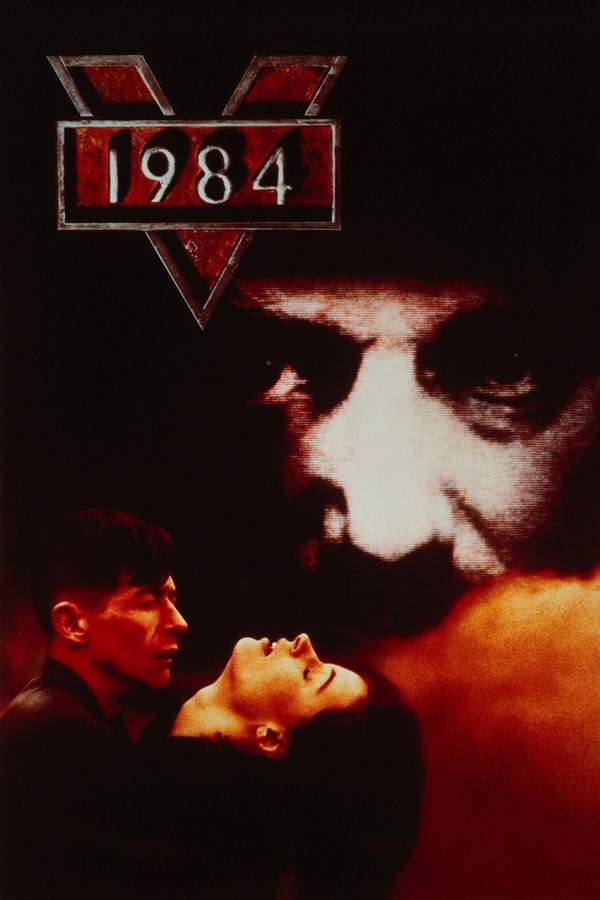
In a chilling dystopian future, Winston Smith struggles against an oppressive regime led by the omnipresent Big Brother. As a low-ranking Party member, Winston works at the Ministry of Truth, where he alters historical records to align with the Party's current propaganda. Dissatisfied with his existence and yearning for freedom, he begins a forbidden love affair with Julia, finding temporary solace in their rebellion. However, in a society where every action and thought is monitored, their defiance risks severe consequences and a confrontation with the Party's iron grip.
Warning: spoilers below!
Haven’t seen 1984 yet? This summary contains major spoilers. Bookmark the page, watch the movie, and come back for the full breakdown. If you're ready, scroll on and relive the story!
Read the complete plot breakdown of 1984 (1985), including all key story events, major twists, and the ending explained in detail. Discover what really happened—and what it all means.
Set in the oppressive climate of April 1984, this dystopian narrative unfolds in a world that has seen the aftermath of a devastating Second World War and the devastating Atomic Wars. At the center of it all is Winston Smith, portrayed by John Hurt, a middle-aged man living in the totalitarian state of Oceania, where every action and thought is surveilled by the omnipresent Thought Police. The backdrop is the crumbling city of London, which is now the capital of Airstrip One (once known as Great Britain). As a lowly official in the Ministry of Propaganda, Winston leads a grim existence, tucked away in a filthy flat and confined to a cramped office cubicle just like countless others at the Ministry of Truth. Here, he undertakes the dreary task of altering historical records, ensuring that any individual who opposes the Party is effectively erased from history as if they never existed—referred to as “unpersons.”
Every day, under the unblinking gaze of the “telescreens” that monitor citizens, Winston drifts through his life. He attends public gatherings in Victory Square, where the Party disseminates propaganda films and false news updates about the ongoing war, portraying a façade of strength and unity under the rule of their enigmatic leader, Big Brother (Bob Flag). His neighbor, Parsons, played by Gregor Fisher, epitomizes the compliant citizen, content with submitting to the regime’s laws and expectations. However, Winston is not so easily placated; he grapples with the shadows of a troubled childhood and his own restless desires, prompting him to keep a secret diary—an act of rebellion that constitutes a thoughtcrime, a direct challenge to the Party’s ideology.
Then, a significant twist occurs when he encounters Julia—a bold, mysterious co-worker played by Suzanna Hamilton—who also works in the Ministry of Truth. The two embark on a clandestine affair, their first secret meeting occurring in the serene countryside away from constant watch. Together, they trade forbidden ideas and indulge in their growing passion in a hidden room above a pawn shop, only to discover that the innocent-looking place is under the watch of a member of the Thought Police. This brief interlude of joy comes to a cruel end when the Thought Police invade their sanctuary, revealing a hidden telescreen and arresting them both.
Winston is taken to the Ministry of Love—a cold, intimidating structure where he undergoes systematic torture at the hands of O’Brien, whose role as a high-ranking member of the Inner Party, portrayed by Richard Burton, was initially perceived as a potential ally. In a chilling turn of events, O’Brien instructs Winston about the principles of “doublethink,” a doctrinal mechanism that allows one to accept two contradictory beliefs simultaneously. Winston’s reality crumbles when he is presented to Room 101, which delivers the ultimate psychological torment catered to his individual fears—an encounter with a cage of ferocious rodents. In that moment of terror, even his loyalties to Julia are cast aside, and he succumbs completely to the Party’s will.
Once physically rehabilitated and released back into society, Winston returns to the Chestnut Tree Café, a place rife with broken souls like him who have been “vaporized” and transformed into unpersons. Here, he encounters Julia, also a victim of the Party’s reconditioning, and they exchange hollow words over a bottle of Victory Gin, each aware of their betrayal of one another. Following her departure, Winston is confronted by a television broadcast that features him confessing to crimes against the state, pleading for the populace’s forgiveness in a tone reminiscent of a repentant sinner.
Finally, as the news reports celebrate the Oceanian army’s victory in a recent conflict, Winston is filled with conflicting emotions and tears as he expresses unconditional love and gratitude towards Big Brother. Deprived of autonomy and reduced to a mere shadow of his former self, he resigns himself to the fate awaiting him—celebrating the indomitable power of the state with an eerie final declaration of love, fully devoted to the unyielding presence of Big Brother, whispering his acceptance to the watching telescreen.
Last Updated: May 26, 2025 at 22:02
Discover curated groups of movies connected by mood, themes, and story style. Browse collections built around emotion, atmosphere, and narrative focus to easily find films that match what you feel like watching right now.
Stories where oppressive systems crush the human spirit with chilling precision.If you were gripped by the psychological horror of 1984, this list features movies like it that explore themes of totalitarianism, mass surveillance, and the crushing of rebellion. These films share a bleak tone and heavy emotional weight, creating a similar feeling of claustrophobic despair.
Narratives in this thread typically follow a protagonist who awakens to the injustices of their society and attempts a small act of defiance. This rebellion is inevitably discovered by the omnipresent system, leading to their capture, psychological breakdown, and forced acceptance of the very power they sought to escape. The arc is one of tragic, inevitable defeat.
Movies are grouped here based on their shared focus on the mechanics of absolute power and the psychological destruction of dissent. They create a cohesive experience through a consistently bleak tone, high intensity, and a narrative structure that offers no hope, leaving the viewer with a profound sense of despair.
Stories where the fight for freedom is destined to fail from the start.For viewers who appreciated the tragic narrative of rebellion in 1984, this collection gathers movies with similar stories of hopeless defiance. These films share a steady pacing that builds to an inevitable, bleak conclusion, exploring the heavy themes of fighting a battle that cannot be won.
The narrative pattern involves a character finding a spark of humanity or defiance—often through a forbidden relationship—in an inhuman world. This spark leads them to challenge the status quo, but their efforts are quickly uncovered. The conflict culminates not in a heroic last stand, but in their utter psychological and physical subjugation, reinforcing the system's invincibility.
These movies are united by the core narrative of a futile struggle. They share a profoundly bleak ending feel, a heavy emotional weight, and a steady, inevitable pacing that makes the protagonist's defeat feel unavoidable. The emotional resonance comes from the tragedy of hope being systematically extinguished.
Don't stop at just watching — explore 1984 in full detail. From the complete plot summary and scene-by-scene timeline to character breakdowns, thematic analysis, and a deep dive into the ending — every page helps you truly understand what 1984 is all about. Plus, discover what's next after the movie.
Track the full timeline of 1984 with every major event arranged chronologically. Perfect for decoding non-linear storytelling, flashbacks, or parallel narratives with a clear scene-by-scene breakdown.
Discover the characters, locations, and core themes that shape 1984. Get insights into symbolic elements, setting significance, and deeper narrative meaning — ideal for thematic analysis and movie breakdowns.
Get a quick, spoiler-free overview of 1984 that covers the main plot points and key details without revealing any major twists or spoilers. Perfect for those who want to know what to expect before diving in.
Visit What's After the Movie to explore more about 1984: box office results, cast and crew info, production details, post-credit scenes, and external links — all in one place for movie fans and researchers.
Discover movies like 1984 that share similar genres, themes, and storytelling elements. Whether you’re drawn to the atmosphere, character arcs, or plot structure, these curated recommendations will help you explore more films you’ll love.
1984 (1985) Scene-by-Scene Movie Timeline
1984 (1985) Movie Characters, Themes & Settings
1984 (1985) Spoiler-Free Summary & Key Flow
Movies Like 1984 – Similar Titles You’ll Enjoy
A Clockwork Orange (1971) Full Summary & Key Details
New Order (2021) Spoiler-Packed Plot Recap
The Handmaid's Tale (1990) Movie Recap & Themes
THX 1138 (1971) Film Overview & Timeline
Logan's Run (1976) Plot Summary & Ending Explained
Nineteen Eighty-Four (1984) Spoiler-Packed Plot Recap
Quarantine (1989) Complete Plot Breakdown
We (1982) Detailed Story Recap
1984 (2023) Full Movie Breakdown
The World of George Orwell: 1984 (1965) Movie Recap & Themes
Brave New World (1998) Film Overview & Timeline
2081 (2009) Full Summary & Key Details
Nineteen Eighty-Four (1954) Full Summary & Key Details
1984 (1953) Spoiler-Packed Plot Recap
1984 (1956) Detailed Story Recap