Plot Explained Spoilers guaranteed!
Plot Explained

Browse by genre

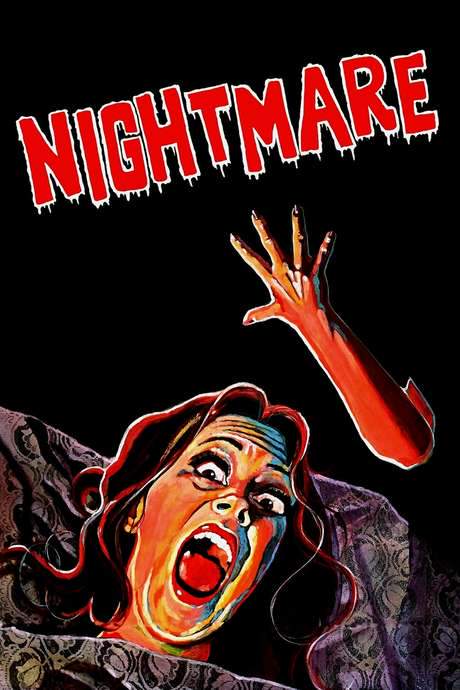
Nightmare (1981) movie poster

Characters & Themes

Nightmare (1981) Characters, Setting & Themes Explained

Release, runtime and language
1981 · 99 mins · English
Loading streaming availability…
Directed by
Romano Scavolini
Starring
Sharon Smith, Bill Milling, William Kirksey, Mik Cribben, Baird Stafford, Kathleen Ferguson

The Dream You Can’t Escape ALIVE! A drug-treated schizophrenic plagued by horrible nightmares is released from the hospital and goes on a killing spree.

On this page (8)
  1. 1 Where to watch
  2. 2 Characters explained (10)
  3. 3 Where & when it takes place
  4. 4 Themes & meaning (3)
  5. 5 Character & meaning questions
  6. 6 Movie threads
  7. 7 Movies like Nightmare
  8. 8 Every angle
Loading streaming availability…

10 main characters · contains spoilers

Nightmare Characters Explained: Who Is Who

The main characters of Nightmare (1981), heroes and villains: what drives them, how they change over the course of the story and what each of them reveals about the film's bigger ideas.

  • George Tatum (Baird Stafford)

    A man reprogrammed by an experimental procedure, outwardly respectable but haunted by a violent, unresolved past. His fragile mental state, marked by nightmares and memory gaps, repeatedly pushes him toward murderous impulses. The character embodies a chilling tension between reform and relapse as he pursues his former family.

    • 🧠 Mind
    • 🔪 Violence
  • Susan Temper (Sharon Smith)

    George’s former wife and the mother figure at the center of the Florida segment. She juggles single motherhood, a new relationship, and mounting fear as disturbing calls invade her life. Her instinct to protect Kim, Tammy, and C.J. anchors the family’s struggle to endure the threat.

    • 🏠 Family life
    • 📞 Danger
    • 💬 Phone calls
  • C.J. Temper (CJ Cooke)

    played by C.J. Cooke

    The mischievous young son who becomes an inadvertent link between the past and the present danger. He experiences paranoia of being followed, yet his actions culminate in defending his family when confronted by the killer. His perspective highlights how childhood innocence collides with brutal reality.

    • 🧒 Child
    • 🛡️ Defense
  • Tammy Temper (Tammy Patterson)

    One of Susan’s daughters, living in the Florida home. Tammy represents the vulnerable family member whose safety is jeopardized by the intrusions of a violent past made present. Her presence intensifies the protective instincts of the adults around her.

    • 👧 Daughter
    • 🏡 Florida
  • Kim Temper (Kim Patterson)

    Susan’s other daughter who shares the Florida home and the danger it attracts. Kim’s experience mirrors the family’s fragile balance between normal life and a creeping threat, underscoring the stakes of keeping children safe.

    • 👧 Daughter
    • 🏡 Florida
  • Bob Rosen (Mik Cribben)

    Susan’s boyfriend in Florida, providing a complicated adult relationship amid the household’s turmoil. His presence adds another layer to the domestic dynamics and the strain of maintaining stability under crisis.

    • 💑 Partner
    • 🏡 Domestic life
  • Kathy the Babysitter (Danny Ronan)

    The babysitter who becomes entangled in the night’s danger as the killer closes in on the children. Her role heightens the sense of vulnerability in the household and the fragility of safety in unfamiliar environments.

    • 👩‍🍼 Babysitter
    • ⚠️ Danger
  • George's Father (William Kirksey)

    A figure from George’s memory who embodies the coercive, abusive past. The memory of his father’s actions, including a brutal murder, catalyzes George’s violent trajectory and reveals the roots of his trauma.

    • 👨 Father
    • 🩸 Abuse
  • George's Mother (Christina Keefe)

    George’s mother, a recalled presence in his childhood that underscores the family’s troubled history. Her character contributes to the exploration of family dynamics and the origins of George’s pathology.

    • 👩 Mother
    • 🕰️ Memory
  • Young George (Scott Praetorius)

    A younger version of George that appears in flashbacks, illustrating the formative events that shape his later behavior. The portrayal provides context for the film’s exploration of trauma and identity.

    • 🧒 Young George

Last updated: October 04, 2025 at 14:01

Was this helpful?

Setting

Where and When Does Nightmare Take Place?

The setting of Nightmare (1981): the year and time period, the places and locations, and how they shape the characters, the mood and the tension of the story.

Time period

Location

New York City, Times Square, Myrtle Beach, Florida

The action begins in New York City, with a psychiatric institution and a grim peep-show scene in Times Square anchoring the protagonist’s troubled past. The story then shifts to the Florida home of Susan Temper and her children, grounding the film in a suburban, domestic setting under threat. A detour to Myrtle Beach, South Carolina provides a temporary road-trip backdrop that heightens the tension before the pursuit returns to Florida.

  • 🏙️ Urban
  • 🧠 Crime
  • 🌴 Florida setting

Last updated: October 04, 2025 at 14:01

Was this helpful?

3 major themes

Nightmare Meaning: Themes & Message Explained

What is Nightmare (1981) really about? The emotional, social and philosophical themes the film keeps returning to, its symbolism and the message beneath the surface.

  • Memory and Trauma

    George carries a traumatic childhood memory that resurfaces as nightmares after his brain is allegedly reprogrammed. The film probes how unresolved past violence continues to shape present actions. Flashbacks gradually reveal the origin of his murderous impulses, suggesting memory as both a burden and a weapon.

  • Violence

    Violence punctuates every location—from a bar, to an abandoned house, to the family home—driving the plot forward. The killings escalate as George pursues his victims across states, forcing others to confront the danger he embodies. The climactic confrontation tests whether violence can be stopped or merely transferred to new victims.

  • Family and Protection

    The core conflict concerns family safety under siege: a mother trying to shield her children, a son unwillingly stepping into a protective role, and the memory of a father who betrayed that protection. The narrative frames family bonds as both a motive for survival and a vulnerability exploited by a predator. The ending centers on the children’s attempt to end the threat and reclaim their sense of safety.

Last updated: October 04, 2025 at 14:01

Was this helpful?

Character & theme questions

Nightmare Characters & Meaning: Your Questions Answered

The questions people ask about Nightmare (1981): who the characters really are, their relationships, what the symbols mean, where it takes place and what the movie is really about. Each answer contains spoilers.

Q1

Where does the movie take place?

The film is set across several locations in the United States, starting in New York City, specifically at a psychiatric institution and Times Square, before shifting to a Florida suburban home where the main family lives. A brief detour to Myrtle Beach, South Carolina occurs during the killer's cross-state pursuit.

  • new york city
  • times square
  • florida
  • myrtle beach
  • setting
  • locations
Q2

When is the movie set?

The film does not specify an exact year, but the 1981 release and the era-appropriate technology shown, peep-shows, landline phones, and other period details, suggest a contemporary setting to that decade.

  • time period
  • 1980s
  • era
  • setting
Q3

What is the main theme about mental illness?

The film explores how untreated or inadequately treated mental illness leads to devastating consequences. George Tatum, a schizophrenic who undergoes an experimental brain procedure, is released from a psychiatric hospital only to resume killing, suggesting the failure of psychiatric treatment to address deep-seated violence.

  • mental illness
  • schizophrenia
  • psychiatric treatment
  • brainwashing
  • reprogramming
Q4

How does the film explore memory and trauma?

George carries a traumatic childhood memory involving his abusive father, which resurfaces as violent nightmares after his brain is reprogrammed. The film uses flashbacks to reveal how unresolved past violence continues to shape his present actions, presenting memory as both a burden and a trigger for his murderous impulses.

  • memory
  • trauma
  • childhood
  • flashbacks
  • nightmares
Q5

What role does family play in the story?

The central conflict centers on family safety under siege. Susan Temper, a single mother, tries to protect her children from George, her former husband who has escaped psychiatric care. The narrative frames family bonds as both a motive for survival and a vulnerability exploited by a violent predator.

  • family
  • protection
  • mother
  • children
  • survival
Q6

How is violence portrayed in the film?

Violence escalates as George pursues victims across multiple states, from a bar, to an abandoned house, to the family home. The film presents violence as the primary driver of the plot, with each killing raising the stakes until the climactic confrontation tests whether the cycle of violence can be stopped.

  • violence
  • killings
  • murder
  • escalation
  • slasher
Q7

Who is George Tatum?

George Tatum is the film's antagonist, a man who underwent an experimental brain-reprogramming procedure at a psychiatric institution. Outwardly respectable, he is haunted by a violent past rooted in childhood trauma. His nightmares and memory gaps repeatedly trigger murderous impulses as he targets his former family.

  • george tatum
  • baird stafford
  • killer
  • antagonist
  • psychopath
Q8

Who is Susan Temper?

Susan Temper is George’s former wife and the mother figure at the center of the Florida segment. As a single mother with two daughters and a son, she must juggle a new relationship while protecting her children from threatening phone calls and the return of her dangerous ex-husband.

  • susan temper
  • sharon smith
  • mother
  • protagonist
  • victim
Q9

Who is C.J. Temper?

C.J. Temper is Susan’s young son who becomes an inadvertent link between the past and present danger. He experiences paranoia about being followed and ultimately takes a defensive role when confronting the killer, representing childhood innocence colliding with brutal reality.

  • c.j. temper
  • cj cooke
  • son
  • child
  • protection
Q10

What makes the ending so bleak?

While the immediate threat is neutralized, the ending offers no real closure or safety. The final image of a child winking at the camera suggests a disturbing legacy of trauma passed to the next generation, implying that the psychological damage inflicted by violence and mental illness cannot be simply overcome.

Foreshadowing: The film's steady pacing and mounting violence foreshadow that the resolution will not bring peace, but rather leave lasting psychological scars.

  • ending
  • final scene
  • trauma
  • bleak
  • child
  • legacy

Movie threads

More Movies Like Nightmare, by Mood & Story

Curated lists built around what makes Nightmare tick: the same mood, the same kind of story or the same emotional payoff. Each list explains why these movies belong together.

Bleak Slasher Stories like Nightmare

Unflinching stories of killers whose psychological trauma erupts in relentless violence. If you liked the gritty and psychological descent of Nightmare, this collection features movies with similar slasher horror. Explore films where a traumatized protagonist becomes an unstoppable killer, marked by graphic violence, a steady pacing that builds dread, and a profoundly bleak ending that offers no hope.

  • brutal
  • unsettling
  • gritty
  • anxious
  • nightmarish
  • disturbing
  • Tone: dark, bleak
  • Pacing: steady, methodical
Why these movies?

The story pattern: The narrative typically follows a linear, straightforward path, charting a protagonist's decline from a troubled state to full-blown homicidal mania. Often triggered by past trauma or the failure of treatment, the story is a relentless procession of stalking and violence, culminating in a final rampage and a conclusion that emphasizes the permanence of the damage caused.

Why they belong together: These films are grouped by their shared commitment to a dark, psychologically-grounded slasher formula. They prioritize a heavy emotional weight, stemming from themes of incurable mental illness and the slaughter of innocents, over camp or supernatural elements. The similarity lies in the gritty, anxious, and ultimately hopeless atmosphere they cultivate.


Psychological Home Invasion Movies like Nightmare

Intense horror where the threat is human, the violence is personal, and safety is shattered. Fans of the final, brutal home invasion in Nightmare will find similar tension in these films. Discover movies that feature a human threat stalking and attacking a family in their own home, creating a feeling of inescapable anxiety and gritty realism, often with a heavy emotional impact.

  • anxious
  • brutal
  • unsettling
  • gritty
  • claustrophobic
  • tense
  • Tone: dark, tense
  • Pacing: steady build, intense climax
Why these movies?

The story pattern: These stories typically build towards a climactic siege on a domestic space. The narrative establishes a palpable threat that methodically closes in on its victims, making the audience complicit in the growing dread. The conflict is intensely personal and grounded, focusing on the primal fear of being hunted in a place that should be safe, resulting in profound trauma for survivors.

Why they belong together: They are united by the specific, gut-wrenching fear of home invasion. The similarity comes from the combination of a gritty, realistic tone, high-intensity violence, and the focus on the psychological devastation inflicted upon the victims. The experience is one of sustained anxiety and a deep sense of vulnerability.

If you liked this

Movies Like Nightmare

Similar movies to Nightmare: the same genre, themes or kind of story. Each one comes with its own plot summary, timeline and ending explained.

Browse all movie summaries

Every angle

Nightmare (1981) Explained: Plot, Timeline & Characters

Everything about Nightmare in one place: what happens in the plot summary, the timeline in chronological order, the characters and meaning and a spoiler-free summary. What's After the Movie adds the cast, box office and post-credit scenes.

Coming soon on iOS and Android

The Plot Explained Movie Summary App

Plot summaries, endings explained and timelines on your phone. Catch up on any movie in minutes, save your favorites and never miss a twist again.

Be the first to know when we launch. Your email stays private, always.

Learn more about the app