Plot Explained Spoilers guaranteed!
Plot Explained

Browse by genre

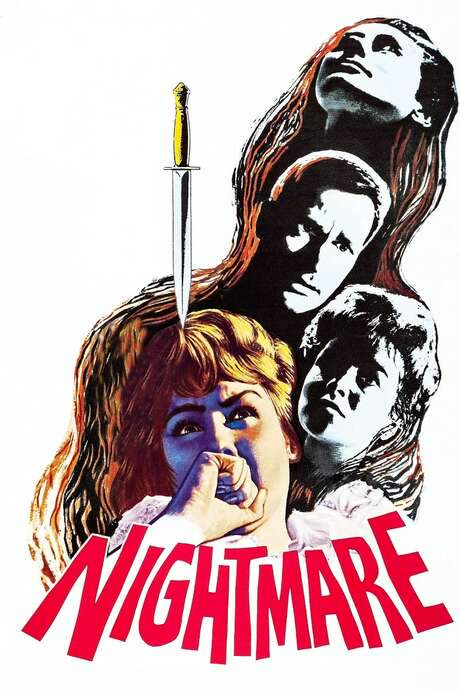
Nightmare (1981) movie poster

Timeline

Nightmare (1981) Timeline Explained – Every Event in Order

Release, runtime and language
1981 · 99 mins · English
Loading streaming availability…
Directed by
Romano Scavolini
Starring
Sharon Smith, Bill Milling, William Kirksey, Mik Cribben, Baird Stafford, Kathleen Ferguson

The Dream You Can’t Escape ALIVE! A drug-treated schizophrenic plagued by horrible nightmares is released from the hospital and goes on a killing spree.

On this page (6)
  1. 1 Where to watch
  2. 2 Events in order (14)
  3. 3 Timeline questions answered
  4. 4 Movie threads
  5. 5 Movies like Nightmare
  6. 6 Every angle
Loading streaming availability…

14 events in order · contains spoilers

Nightmare Timeline: Events in Chronological Order

Every key event of Nightmare (1981) in order, scene by scene, with when and where it takes place. Use it to untangle flashbacks, time jumps and parallel storylines, to refresh your memory before the sequel or to find the exact scene you are thinking of.

  1. Incarceration and brain reprogramming

    George Tatum is incarcerated in a New York City psychiatric institution for years after sexually mutilating and murdering a family in Brooklyn. Diagnosed with schizophrenia, amnesia, and epilepsy, he undergoes an experimental procedure that 'reprograms' his brain, supposedly reforming him into an upstanding citizen.

    When
    during incarceration (before release)
    Where
    New York City
  2. Release and triggering memories

    Following the procedure, George is released and visits a Times Square peep show, triggering hazy flashbacks of his father's murder. The encounter unsettles him as memories of past violence resurface.

    When
    shortly after release
    Where
    Times Square, New York City
  3. Leaving NYC for Florida

    George obtains a car and drives south toward his ex-wife Susan Temper's Florida home, seeking to reconnect with his family. This road trip marks a break from rehabilitation and sets the stage for new acts of violence.

    When
    early on the trip
    Where
    On the road from New York to Florida
  4. Car breakdown in Myrtle Beach

    En route, his car breaks down in Myrtle Beach, South Carolina, and he is stranded overnight. The isolation leaves him with time to act on violent impulses.

    When
    overnight
    Where
    Myrtle Beach, South Carolina
  5. Myrtle Beach murder

    While stranded, George follows a woman home from a local bar and brutally slashes her to death. The killing demonstrates that he remains dangerous and capable of murderous acts despite his earlier reconditioning.

    When
    night
    Where
    Myrtle Beach
  6. Psychiatrists track him

    Back in New York, George's psychiatrists discover he has fled the city and begin tracking his movements. They mobilize to monitor his route and anticipate his next target.

    When
    after the escape
    Where
    New York City
  7. Disturbing phone calls begin in Florida

    In Florida, Susan's house begins receiving numerous disturbing phone calls that go unanswered by the family. Unbeknownst to them, George is the caller.

    When
    ongoing while he travels
    Where
    Florida
  8. C.J. believes he's being followed

    C.J. begins insisting that a strange man—his father George—is following him, but Susan dismisses it as another prank. The family remains unaware of the danger closing in.

    When
    during the events
    Where
    Florida
  9. Murders of Tony and Candy

    George murders Tony, a classmate of C.J., and Candy, a teenage girl, in an abandoned house during a game of hide-and-seek. These killings intensify the danger looming over the Florida family.

    When
    during the events
    Where
    Florida
  10. Kathy babysits and is murdered

    Kathy agrees to babysit the children the following day while Susan attends a party. During the night, George infiltrates the house and murders Kathy and her boyfriend with a rock pick.

    When
    night
    Where
    Susan's Florida home
  11. The chase inside the house

    After donning one of C.J.'s Halloween masks, an old man George pursues the children, who barricade themselves in the upstairs bedrooms. The tense pursuit heightens the fear and danger in the home.

    When
    night
    Where
    Susan's Florida home
  12. C.J.'s counterattack

    C.J. obtains a revolver from his mother's dresser and shoots George eight times, ending the immediate threat. The child emerges as the unlikely savior in a moment of brutal violence.

    When
    night
    Where
    Susan's Florida home
  13. George's dying memory

    In his dying moments, George has a full recollection of his childhood, including witnessing his father engaging in sadomasochistic sex with another woman and murdering them with a felling axe. The memory reveals the source of his own violent urges.

    When
    dying moment
    Where
    Florida
  14. Ending and aftermath

    Susan returns home to find police removing George's body and hysterically identifies him as her husband. The film ends with C.J. sitting in a police car, winking knowingly at the camera.

    When
    ending
    Where
    Florida

Last updated: October 09, 2025 at 14:19

Was this helpful?

Timeline questions answered

Nightmare Timeline Explained: Your Questions Answered

When does it happen, and why in that order? The questions people ask about the chronology of Nightmare (1981): time jumps, flashbacks, cause and effect between scenes and the correct order of events, each answered with spoilers.

Q1

Why was George released from the psychiatric hospital?

George was released after undergoing an experimental brain reprogramming procedure that was supposed to reform him into an upstanding citizen. The psychiatrists believed the procedure had successfully treated his schizophrenia, amnesia, and violent tendencies, so they approved his release. However, the treatment clearly failed, as George immediately resumed violent behavior upon his release.

Foreshadowing: Earlier in the film, George visits a Times Square peep show which triggers hazy nightmares of his childhood violence, showing the procedure was not effective.

  • george tatum
  • psychiatric hospital release
  • brain reprogramming
  • failed treatment
  • schizophrenia
Q2

What childhood memory did George recover at the end?

As George lay dying, he finally remembered witnessing his father William Kirksey engaged in sadomasochistic acts with another woman. In a violent reaction, George murdered both his father and the woman with a felling axe. This childhood trauma of witnessing and committing murder became the source of his own violent impulses, which the brain procedure failed to fully suppress.

Foreshadowing: Throughout the film, George has hazy nightmares and flashbacks to his father's murder, hinting that this repressed memory was always present.

  • childhood memory
  • william kirksey
  • felling axe
  • father murder
  • trauma origin
  • repressed memory
Q3

Why did George travel to Florida to see his family?

After his release, George drove from New York to Florida to visit his ex-wife Susan Temper and their children. Despite his violent past, he apparently wanted to reconnect with his family. However, his visit resulted in further murders, including Tony (C.J.'s classmate), Candy (a teenage girl), and the babysitter Kathy with her boyfriend.

Foreshadowing: The disturbing phone calls to Susan's house begin while George is traveling, indicating he was already tracking and preparing to confront his family.

  • george florida
  • ex-wife susan
  • family visit
  • killings
  • motivation
Q4

Why did C.J. wink at the end of the movie?

The ending shows C.J. sitting in a police car, winking knowingly at the camera. This ambiguous and disturbing final image suggests that C.J. may have inherited something from his father George, perhaps a similar capacity for violence or a disturbing awareness. It implies the trauma and violent legacy may continue through the family line, leaving the audience deeply unsettled.

Foreshadowing: C.J. was the only one who sensed danger and believed his father was following him, showing an unusual perceptiveness that the wink suggests may be more sinister.

  • c.j. wink
  • ending
  • police car
  • disturbing legacy
  • cycle of violence
  • psychological horror
Q5

How was George making the phone calls to Susan's house?

George was making the disturbing phone calls to Susan's Florida home while traveling south from New York. The calls began when he was on the road, and they continued as he approached Florida. The family had no idea the calls were coming from George, the man who had vanished from New York City and was being tracked by psychiatrists.

Foreshadowing: The timeline shows the phone calls began at the same time George was traveling, with C.J. claiming he was being followed by a strange man, his father.

  • phone calls
  • stalking
  • surveillance
  • george跟踪 family
  • psychological terror
Q6

Why did George kill the woman in Myrtle Beach?

While stranded overnight in Myrtle Beach when his car broke down, George followed a woman home from a local bar and brutally slashed her to death. This murder demonstrates that the brain reprogramming had completely failed, his violent impulses remained intact and emerged when he was isolated and away from supervision.

Foreshadowing: Earlier, visiting the Times Square peep show already triggered flashbacks to his father's murder, showing violent thoughts were resurfacing.

  • myrtle beach murder
  • woman killed
  • car breakdown
  • isolated
  • first murder after release
Q7

How did George kill Kathy the babysitter?

George infiltrated Susan's home while Kathy was babysitting the children. He murdered Kathy and her boyfriend with a rock pick, a brutal and methodical killing. He then disguised himself by wearing one of C.J.'s Halloween masks (an old man mask) to pursue the children through the house.

Foreshadowing: The family had been receiving threatening phone calls and C.J. insisted a strange man was following him, foreshadowing George's infiltration.

  • kathy babysitter
  • murdered
  • rock pick
  • halloween mask
  • home invasion
  • children in danger
Q8

Why couldn't the psychiatrists stop George?

After George fled New York, his psychiatrists realized he had escaped and began tracking his movements across state lines. However, they were always one step behind. By the time they located him, George had already committed multiple murders in Florida, including the killings at Susan's home. Their experimental treatment had failed, and their monitoring was insufficient to prevent the tragedy.

Foreshadowing: The psychiatrists' decision to release George in the first place, despite knowing his violent history, set the stage for their failure to protect anyone.

  • psychiatrists
  • tracking
  • failure
  • new york
  • escape
  • failed treatment
Q9

Why did C.J. shoot George eight times?

C.J. barricaded himself and his siblings in the upstairs bedroom as George pursued them wearing an old man Halloween mask. C.J. managed to reach his mother's dresser, obtain a revolver, and fire eight shots at George, killing him. The excessive number of shots reflects the child's terror and desperate attempt to ensure the threat was completely stopped.

Foreshadowing: C.J. had been claiming he saw his father following him, showing he understood the danger better than the adults.

  • c.j. shooting
  • eight shots
  • self defense
  • children attacked
  • final confrontation
Q10

What was the experimental brain procedure George underwent?

George underwent an experimental brain reprogramming procedure while incarcerated in the New York psychiatric facility. The doctors claimed it could reform violent offenders by restructuring the brain. However, the procedure clearly failed to eliminate George's violent urges, as he resumed killing immediately after release. The film presents this as a dangerous oversimplification of treating severe mental illness and trauma.

Foreshadowing: The film opens with George's release after this procedure, then immediately shows him experiencing violent flashbacks, demonstrating its failure.

  • brain procedure
  • experimental treatment
  • reprogramming
  • psychiatric facility
  • new york
  • inmate
Q11

Why didn't Susan believe C.J. when he said George was following him?

Susan dismissed C.J.'s claims that a strange man (his father George) was following him as one of his pranks. She had no reason to believe her violent ex-husband had escaped the psychiatric facility and was traveling to Florida. The family was unaware of George's escape and the psychiatrists' efforts to track him, leaving C.J.'s warnings unrecognized as real danger.

Foreshadowing: C.J. was the only family member who perceived the threat, while the adults attributed his concerns to imagination or games.

  • susan temper
  • c.j. warnings
  • dismissed
  • family danger
  • unaware
Q12

How did George escape from the psychiatric facility?

George was officially released from the psychiatric facility after undergoing the experimental brain reprogramming procedure. He was not escaping in the traditional sense, he was let go by doctors who believed the treatment had worked. The psychiatrists later realized he had fled when they noticed he was no longer in the city, but by then he was already on his way to Florida.

Foreshadowing: The film's opening establishes George as a released patient, not a fugitive, making his subsequent killings a result of failed medical intervention rather than escape.

  • escape
  • released
  • psychiatric facility
  • new york
  • procedure failure

Movie threads

More Movies Like Nightmare, by Mood & Story

Curated lists built around what makes Nightmare tick: the same mood, the same kind of story or the same emotional payoff. Each list explains why these movies belong together.

Bleak Slasher Stories like Nightmare

Unflinching stories of killers whose psychological trauma erupts in relentless violence. If you liked the gritty and psychological descent of Nightmare, this collection features movies with similar slasher horror. Explore films where a traumatized protagonist becomes an unstoppable killer, marked by graphic violence, a steady pacing that builds dread, and a profoundly bleak ending that offers no hope.

  • brutal
  • unsettling
  • gritty
  • anxious
  • nightmarish
  • disturbing
  • Tone: dark, bleak
  • Pacing: steady, methodical
Why these movies?

The story pattern: The narrative typically follows a linear, straightforward path, charting a protagonist's decline from a troubled state to full-blown homicidal mania. Often triggered by past trauma or the failure of treatment, the story is a relentless procession of stalking and violence, culminating in a final rampage and a conclusion that emphasizes the permanence of the damage caused.

Why they belong together: These films are grouped by their shared commitment to a dark, psychologically-grounded slasher formula. They prioritize a heavy emotional weight, stemming from themes of incurable mental illness and the slaughter of innocents, over camp or supernatural elements. The similarity lies in the gritty, anxious, and ultimately hopeless atmosphere they cultivate.


Psychological Home Invasion Movies like Nightmare

Intense horror where the threat is human, the violence is personal, and safety is shattered. Fans of the final, brutal home invasion in Nightmare will find similar tension in these films. Discover movies that feature a human threat stalking and attacking a family in their own home, creating a feeling of inescapable anxiety and gritty realism, often with a heavy emotional impact.

  • anxious
  • brutal
  • unsettling
  • gritty
  • claustrophobic
  • tense
  • Tone: dark, tense
  • Pacing: steady build, intense climax
Why these movies?

The story pattern: These stories typically build towards a climactic siege on a domestic space. The narrative establishes a palpable threat that methodically closes in on its victims, making the audience complicit in the growing dread. The conflict is intensely personal and grounded, focusing on the primal fear of being hunted in a place that should be safe, resulting in profound trauma for survivors.

Why they belong together: They are united by the specific, gut-wrenching fear of home invasion. The similarity comes from the combination of a gritty, realistic tone, high-intensity violence, and the focus on the psychological devastation inflicted upon the victims. The experience is one of sustained anxiety and a deep sense of vulnerability.

If you liked this

Movies Like Nightmare

Similar movies to Nightmare: the same genre, themes or kind of story. Each one comes with its own plot summary, timeline and ending explained.

Browse all movie summaries

Every angle

Nightmare (1981) Explained: Plot, Timeline & Characters

Everything about Nightmare in one place: what happens in the plot summary, the timeline in chronological order, the characters and meaning and a spoiler-free summary. What's After the Movie adds the cast, box office and post-credit scenes.

Coming soon on iOS and Android

The Plot Explained Movie Summary App

Plot summaries, endings explained and timelines on your phone. Catch up on any movie in minutes, save your favorites and never miss a twist again.

Be the first to know when we launch. Your email stays private, always.

Learn more about the app