Plot Explained Spoilers guaranteed!
Plot Explained

Browse by genre

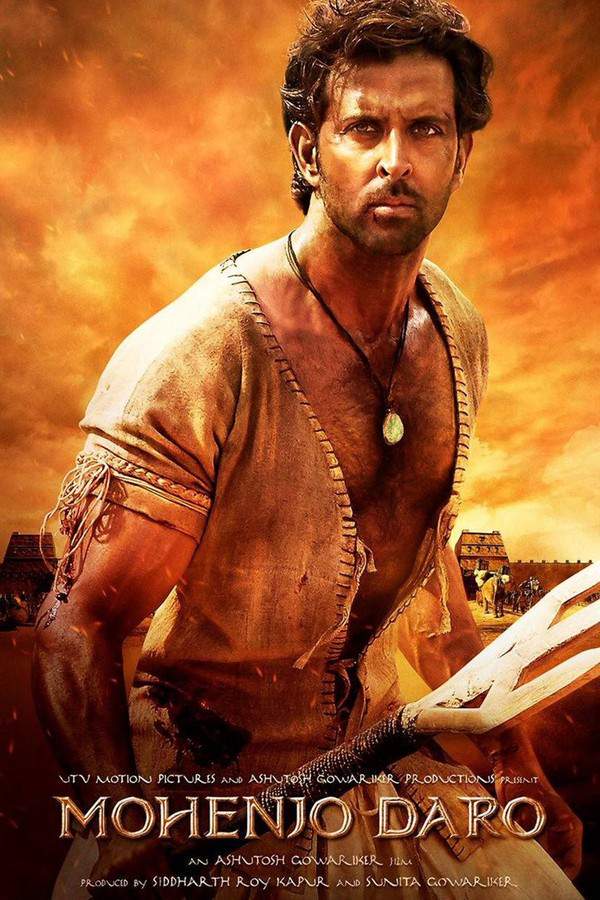
Mohenjo Daro (2016) movie poster

Plot Summary

Mohenjo Daro (2016) Plot Summary Explained

Release, runtime and language
2016 · 155 min · Hindi
Directed by
Ashutosh Gowariker

In 2016 BC, Sarman, a young indigo farmer, journeys to the ancient city of Mohenjo Daro and becomes immersed in its mysteries. He finds himself drawn into a complex world of secrets and deception while pursuing his love for Chaani, the Priest’s daughter. As their relationship deepens, Sarman uncovers surprising truths about Chaani, the city's history, and his own forgotten origins, leading him on a perilous quest.

On this page (6)
  1. 1 Where to watch
  2. 2 What happens: full plot
  3. 3 Plot questions answered
  4. 4 Movie threads
  5. 5 Movies like Mohenjo Daro
  6. 6 Every angle

Where to watch

Where to Watch Mohenjo Daro (2016)

Where can you watch Mohenjo Daro? Stream, rent or buy it in the US, including on Apple TV Store: current JustWatch availability with up-to-date prices.

Streaming availability powered by JustWatch

Full plot summary · contains spoilers

What Happens in Mohenjo Daro: Full Plot Summary

The whole story of Mohenjo Daro (2016) explained, from the opening scene to the final frame: every key event, every twist and what it all adds up to. Read it as a quick recap before the sequel, to check a scene you missed, or to finally understand what really happened.

The film begins in 2016 B.C., introducing us to Sarman (Hrithik Roshan), a young man from the ancient village of Amri, who tragically lost his parents in his youth. Upon receiving an amulet from his uncle, which features an inscription of a unicorn—the creature that appears in Sarman's dreams—he sets out for Mohenjo Daro to trade his goods.

Upon his arrival, Sarman discovers that the city is under the oppressive rule of the tyrant chief Maham (Kabir Bedi) and his malevolent son Moonja (Arunoday Singh). Maham proposes an unbearable new tax on the farmers, prompting Sarman to champion their cause in a bid to prevent their families from starvation. Armed with his uncle's amulet, he gains entry to the upper city and quickly falls for Chaani (Pooja Hegde), the daughter of the head priest of Mohenjo Daro. Unbeknownst to Sarman, Chaani is already betrothed against her will to Moonja.

Realizing the deep connection between Sarman and Chaani, Maham becomes increasingly threatened. He then issues Sarman the Bakar-Zokhar challenge, betting that if Sarman wins, Chaani would be freed from her engagement. This challenge is accepted with much anticipation.

The head priest unveils the dark history behind Maham's rise to power; he was banished from Harappa for illegal dealings with the Sumerians. Under the guise of a trader, Maham took control of Mohenjo Daro, discovering the wealth hidden within the Sindhu River. Determined to extract the gold, Maham dammed the river, defying the wise Senate Chief Srujan (Sharad Kelkar), who opposed his greed. Framed by Maham's treachery, Srujan met a tragic fate, allowing Maham to assume his position. In a shocking twist, the head priest reveals that Sarman is indeed Srujan's son, tasked with ending Maham's reign of terror.

In a gripping arena duel, Sarman confronts the fearsome mountain cannibals, Bakar and Zokhar. After a fierce battle, he defeats one but chooses to spare the other, galvanizing the people of Mohenjo Daro to rally behind him. In a fit of rage, Maham incites Moonja to eliminate Chaani and the priest. He manages to kill the priest, but Sarman intervenes just in time to save Chaani and avenge the priest by taking Moonja's life.

Chaani reveals Maham's sinister plans to exploit the gold from the Sindhu for his own gain and smuggle in weapons. This revelation unites the chiefs against Maham, and in a moment of great honor, the citizens elect Sarman as their new chief. However, Sarman humbly advises that the city doesn't need a sovereign rule, advocating instead for a people's government.

As the threat escalates, Sarman foresees the imminent disaster of the bursting dam, which will flood the city. He spontaneously organizes the citizens to bind together their boats into a makeshift floating bridge, enabling a mass evacuation across the river. As they escape, the dam collapses, drowning the treacherous Maham, who is shackled in the square. With the mighty Mohenjo Daro succumbing to the waters, Sarman leads the surviving community to a new beginning, giving the river a new name: Ganga.

Last updated: November 03, 2024 at 14:05

Was this helpful?

Plot questions answered

Mohenjo Daro Plot Explained: Your Questions Answered

The questions people ask most about Mohenjo Daro (2016): what happens in the confusing scenes, why the characters do what they do, the twists, hidden details and what the ending means. Each answer contains spoilers.

Q1

Why did Maham dam the Sindhu River?

Maham dammed the Sindhu River to extract the gold hidden within it. After being banished from Harappa for illegal dealings with the Sumerians, he took control of Mohenjo Daro and discovered the wealth concealed in the river. Greed drove him to defy Senate Chief Srujan's warnings and construct the dam, prioritizing personal gain over the city's wellbeing.

Foreshadowing: Earlier, the film establishes Maham's ruthless ambition through his oppressive taxation of farmers, hinting at his willingness to exploit any resource for power.

  • maham
  • sindhu river
  • gold
  • dam
  • harappa
  • sumerians
Q2

Who is Sarman really?

Sarman is the son of Srujan, the wise Senate Chief of Mohenjo Daro. After Srujan was framed and killed by Maham's treachery, the infant Sarman was rescued and taken to the village of Amri by his uncle. He grew up unaware of his true heritage until the head priest revealed his identity, tasking him with ending Maham's reign of terror.

Foreshadowing: Sarman's recurring dreams of a unicorn and his possession of the amulet containing the unicorn symbol hint at his noble lineage throughout the film.

  • sarman
  • srujan
  • father
  • identity
  • amulet
  • lineage
Q3

What is the Bakar-Zokhar challenge?

The Bakar-Zokhar is a deadly challenge issued by Maham to Sarman, pitting him against two fearsome mountain cannibals named Bakar and Zokhar. Maham wagered that if Sarman won the duel, Chaani would be freed from her forced engagement to Moonja. The challenge was designed as a near-impossible task to eliminate Sarman, but he ultimately defeated one cannibal and spared the other, winning the people's support.

Foreshadowing: Maham's threat to Sarman earlier in the film establishes his desperation to remove the young farmer as a rival for Chaani's affection.

  • bakar
  • zokhar
  • challenge
  • arena
  • duel
  • moonja
Q4

Why did Sarman spare one of the cannibals?

Sarman chose to spare one of the cannibals after defeating him because he believed in mercy over revenge. This act of compassion galvanized the people of Mohenjo Daro, who saw his kindness as a sign of worthy leadership. The spared cannibal's loyalty later contributed to the community's unity against Maham.

Foreshadowing: Sarman's earlier advocacy for the farmers demonstrates his compassionate nature, which prepared viewers for this pivotal decision.

  • cannibal
  • mercy
  • sparing
  • arena
  • leadership
  • people
Q5

How did Maham come to power in Mohenjo Daro?

Maham seized power through deception and violence. He was originally banished from Harappa for illegal dealings with the Sumerians. Under the guise of a trader, he entered Mohenjo Daro and discovered the gold in the Sindhu River. He convinced the Senate Chief Srujan to allow him to dam the river, then framed Srujan for treachery, resulting in his death. With Srujan out of the way, Maham assumed leadership and imposed his tyrannical rule.

Foreshadowing: The film's opening establishes the oppressive atmosphere of Mohenjo Daro under Maham's rule, hinting at a violent rise to power.

  • maham
  • power
  • harappa
  • srujan
  • betrayal
  • senate chief
Q6

Why did Sarman reject becoming the chief?

After defeating Moonja and exposing Maham's crimes, the citizens elected Sarman as their new chief. However, Sarman humbly declined, advocating instead for a people's government where the community ruled collectively rather than under a single sovereign. He believed the city didn't need another ruler but rather a system of shared leadership.

Foreshadowing: Sarman's consistent championing of farmers throughout the film demonstrates his preference for collective welfare over personal power.

  • sarman
  • chief
  • people government
  • leadership
  • sovereignty
  • collective
Q7

What caused the dam to break and flood Mohenjo Daro?

Maham had constructed the dam on the Sindhu River to extract gold, but the construction was flawed and dangerous. Sarman foresaw the impending disaster when he realized the dam's structural weakness. He organized the citizens to evacuate by binding their boats together into a floating bridge. As they crossed, the dam collapsed, sending floodwaters that destroyed Mohenjo Daro and drowned the shackled Maham in the town square.

Foreshadowing: The film's depiction of Maham's rushed, greedy dam construction earlier hints at the inevitable structural failure.

  • dam
  • flood
  • sindhu river
  • evacuation
  • boats
  • disaster
Q8

Why was Chaani betrothed to Moonja against her will?

Chaani was forced into engagement with Moonja by Maham, who sought to strengthen his family's control over Mohenjo Daro. The marriage was a political move to unite Moonja with the priest's daughter, giving Maham greater authority over religious and civil matters. Chaani had no choice in the matter until Sarman challenged the arrangement through the Bakar-Zokhar.

Foreshadowing: The power dynamic between Maham and the head priest is established early, showing Maham's willingness to use family connections for political gain.

  • chaani
  • moonja
  • betrothal
  • engagement
  • forced marriage
  • maham
Q9

What happened to Srujan, Sarman's father?

Srujan was the wise Senate Chief of Mohenjo Daro who opposed Maham's plan to dam the Sindhu River for gold extraction. Maham framed Srujan for treachery, and the innocent chief was killed, allowing Maham to assume his position. Srujan's infant son Sarman was secretly rescued and taken to Amri, where he grew up unaware of his true identity until the head priest revealed it.

Foreshadowing: The amulet Sarman carries, featuring the unicorn symbol, serves as the link connecting him to his father's legacy.

  • srujan
  • father
  • death
  • framed
  • maham
  • senate chief
Q10

Why did Sarman rename the river to Ganga?

After leading the surviving citizens to safety across the floodwaters, Sarman renamed the Sindhu River to Ganga, symbolizing rebirth and a fresh start for the survivors. The new name represented hope and a new beginning for the community, marking the end of Mohenjo Daro's era and the dawn of a brighter future.

Foreshadowing: The film's hopeful ending tone aligns with this symbolic act of renewal and transformation.

  • ganga
  • river
  • renamed
  • new beginning
  • survival
  • rebirth
Q11

What was the significance of Sarman's amulet?

Sarman's amulet, given to him by his uncle, featured a unicorn symbol that had been haunting Sarman's dreams. The amulet served as proof of his lineage connecting him to his father Srujan. It also granted Sarman entry into the upper city of Mohenjo Daro, acting as both a key to opportunity and a link to his forgotten origins.

Foreshadowing: The recurring unicorn imagery in Sarman's dreams throughout the film foreshadows the amulet's importance to his identity.

  • amulet
  • unicorn
  • symbol
  • dreams
  • lineage
  • entry
Q12

How did Maham die?

Maham met his death when the dam he had constructed burst, flooding Mohenjo Daro. He was chained in the town square, either by his own guards or as punishment after his crimes were exposed. As the floodwaters rose, Maham drowned, meeting his end while trapped in chains as the city he had tyrannically ruled was destroyed.

Foreshadowing: The film establishes Maham's fate early through the foreshadowing of the dam's inevitable collapse due to his greedy, flawed construction.

  • maham
  • death
  • dam
  • flood
  • drowned
  • chains

Movie threads

More Movies Like Mohenjo Daro, by Mood & Story

Curated lists built around what makes Mohenjo Daro tick: the same mood, the same kind of story or the same emotional payoff. Each list explains why these movies belong together.

Epic disaster movies in ancient worlds like Mohenjo Daro

Sweeping historical adventures where civilizations face cataclysmic natural threats. Discover movies like Mohenjo Daro that feature thrilling races against time in historical settings. These films blend action, adventure, and romance with the spectacle of ancient civilizations facing earthquakes, floods, or volcanic eruptions. If you enjoyed the high-stakes survival and heroic journey in Mohenjo Daro, you'll find similar epic stories here.

  • epic
  • tense
  • adventurous
  • heroic
  • disaster
  • hopeful
  • Tone: tense, epic, heroic
  • Pacing: fast, driven by action and survival
Why these movies?

The story pattern: These stories typically follow a hero or group navigating the political and social structures of a sophisticated ancient society, only to have their personal journey become intertwined with a catastrophic, world-ending event. The climax often involves a desperate escape or a fight for survival against overwhelming natural forces.

Why they belong together: They are grouped by their shared setting in a meticulously built historical world, a fast-paced plot driven by survival, and the intense, tense atmosphere created by the juxtaposition of human drama with immense natural power. The experience is defined by spectacle, adventure, and a hopeful resolution emerging from destruction.

Movies about rebellion against tyranny like Mohenjo Daro

Underdog heroes rise to challenge corrupt rulers in oppressive societies. Find action-packed dramas similar to Mohenjo Daro, where a hero uncovers their true origin and rallies the people against a cruel ruler. These films feature political corruption, arena battles, and a triumphant uprising. If you liked the themes of justice and self-discovery in Mohenjo Daro, explore these stories of heroic rebellion.

  • heroic
  • tense
  • hopeful
  • political
  • adventurous
  • dramatic
  • Tone: tense, hopeful, dramatic
  • Pacing: fast, action-oriented
Why these movies?

The story pattern: The narrative pattern involves an ordinary protagonist entering a complex, oppressive society, uncovering a personal secret (often related to their lineage), and realizing their destiny is to challenge the status quo. Through a series of conflicts and revelations, they inspire a populace to rise up, leading to a final confrontation that restores justice.

Why they belong together: These movies share a core plot structure of rebellion, a tense and fast-paced tone driven by conflict, and a mix of action and political drama. The emotional journey is centered on hope and empowerment, with a clear villain and a heroic arc that provides a satisfying, uplifting conclusion.

If you liked this

Movies Like Mohenjo Daro

Similar movies to Mohenjo Daro: the same genre, themes or kind of story. Each one comes with its own plot summary, timeline and ending explained.

Browse all movie summaries

Every angle

Mohenjo Daro (2016) Explained: Plot, Timeline & Characters

Everything about Mohenjo Daro in one place: what happens in the plot summary, the timeline in chronological order, the characters and meaning and a spoiler-free summary. What's After the Movie adds the cast, box office and post-credit scenes.

Coming soon on iOS and Android

The Plot Explained Movie Summary App

Plot summaries, endings explained and timelines on your phone. Catch up on any movie in minutes, save your favorites and never miss a twist again.

Be the first to know when we launch. Your email stays private, always.

Learn more about the app