Plot Explained Spoilers guaranteed!
Plot Explained

Browse by genre

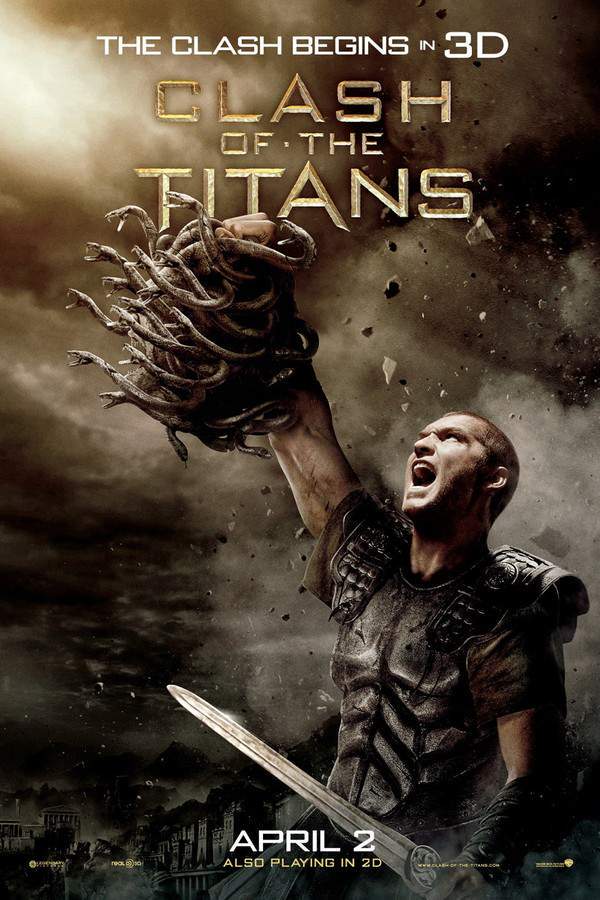
Clash of the Titans (1981) movie poster

Plot Summary

Clash of the Titans (1981) Plot Summary Explained

Release, runtime and language
1981 · 118 min · English
Directed by
Desmond Davis
Starring
Pat Roach, Burgess Meredith, Maggie Smith, Claire Bloom, Laurence Olivier, Susan Fleetwood

A conflict between immortal beings threatens humanity, and Zeus's demigod son, Perseus, must confront his divine lineage while striving to shield his family. The god of the underworld, Hades, seeks to destroy the Earth, plunging Olympus into turmoil. Perseus undertakes a dangerous quest, facing mythical creatures and formidable foes, to prevent the destruction of the world and protect those he loves.

On this page (6)
  1. 1 Where to watch
  2. 2 What happens: full plot
  3. 3 Plot questions answered
  4. 4 Movie threads
  5. 5 Movies like Clash of the Titans
  6. 6 Every angle

Where to watch

Where to Watch Clash of the Titans (1981)

Where can you watch Clash of the Titans? Stream, rent or buy it in the US, including on Amazon Video, Apple TV Store and Fandango At Home: current JustWatch availability with up-to-date prices.

Streaming availability powered by JustWatch

Full plot summary · contains spoilers

What Happens in Clash of the Titans: Full Plot Summary

The whole story of Clash of the Titans (1981) explained, from the opening scene to the final frame: every key event, every twist and what it all adds up to. Read it as a quick recap before the sequel, to check a scene you missed, or to finally understand what really happened.

In the Ancient Greek era, the power-hungry King Acrisius of Argos, portrayed by Donald Houston, locks away his daughter Danaë (played by Vida Taylor) to prevent the prophecy that foretells his demise should she bear a son. Yet, in a twist of divine fate, the mighty Zeus, embodied by Laurence Olivier, manages to impregnate her, despite her confinement. Once Acrisius learns of the pregnancy, he hastily casts both Danaë and her newborn son, Perseus, out to sea in a wooden coffin, believing he can escape his doomed future. In retaliation for Acrisius's actions, Zeus commands Poseidon (portrayed by Jack Gwillim) to unleash the monstrous Kraken upon Argos, wreaking havoc and fulfilling the dark prophecy.

As the destruction unfolds atop Mount Olympus, Zeus, in a fit of divine retribution, crushes a clay figurine representing Acrisius in his grasp, sealing the tyrant's fate. Miraculously, Poseidon ensures that Danaë and baby Perseus safely drift to the shores of the idyllic island of Seriphos. Fast forward several years, and the once vulnerable infant Perseus (now played by Harry Hamlin) has grown into a strikingly handsome young man, ready to carve out his destiny.

In the kingdom of Joppa, a sinister figure emerges: Calibos, magnificently brought to life by Neil McCarthy. This youth, son of the sea goddess Thetis (portrayed by Maggie Smith), once stood on the brink of marrying the beautiful Princess Andromeda (played by Judi Bowker), the cherished scion of Queen Cassiopeia (Sian Phillips). However, Calibos, facing the wrath of Zeus for his malicious deeds—most notably, the destruction of Zeus's sacred flying horses—has been cursed into a grotesque, satyr-like creature, cast away to live in the swamps next to Joppa.

Driven by anger over her son's fate, Thetis swears that if Calibos cannot wed Andromeda, no other man will be allowed to do so. With Zeus's blind favoritism of his son and Thetis's wrath brewing, she magically transports Perseus from the idyllic Seriphos to the tumultuous realm of Joppa. There, he encounters Ammon, an elderly scholar and playwright, personified by Burgess Meredith, who enlightens him about the cruel fate befalling Andromeda. Every suitor must answer a riddle to win her heart, and those who fail are doomed to burn at the stake. As fate intertwines their paths, Perseus reveals to Ammon his royal lineage and his longing to reclaim his title in Argos, capturing the scholar's intrigue.

Realizing the dangers faced by his son, Zeus intervenes from the celestial realm, equipping Perseus with gifts: a helmet granting invisibility, a sword sharp enough to cut through rock, and a golden shield to protect him. So undeterred, Perseus stealthily visits Andromeda's quarters, using his helmet as a cloak of invisibility. During these nightly excursions, he discovers that a monstrous vulture spirit abducts Andromeda, whisking her away to the east. Determined to save her, Perseus captures the last of Zeus's sacred stallion, Pegasus, and follows the spirit to learn Calibos's riddle. Engaging in a fierce duel against the outcast, Perseus barely escapes with his life but loses his precious helmet in the chaos.

When the time comes for the next suitor's challenge, Perseus boldly steps forth. Clenching Calibos's severed hand—recognizable by a pearl and gold ring as the solution to the riddle—Perseus successfully claims Andromeda's hand. However, his graciousness extends to Calibos, as he implores Joppa for mercy towards the deformed prince, hoping for an end to the curse. Meanwhile, in a moment of vengeance, Calibos's mother, Thetis, conspires against the city, igniting rage within her son at Perseus’s triumph. During the wedding festivities, Queen Cassiopeia foolishly compares Andromeda's beauty to Thetis, igniting the goddess's wrath once more.

In a display of divine fury, Thetis commands that Andromeda be sacrificed to the Kraken within thirty days; otherwise, Joppa will face annihilation. Charged with the mission to vanquish this monstrous entity, Perseus rallies a brave band of soldiers, joined by Andromeda and Ammon, to embark on a perilous journey. Seeking counsel from the Stygian Witches—three ancient, blind seers (played by Flora Robson, Anna Manahan, and Freda Jackson)—Ammon proposes they explore this obscure territory.

However, calamity strikes when Calibos captures Pegasus, leading to a challenging quest filled with both physical tests and grim adventures. Throughout this chaos, Zeus dispatches Athena (embodied by Susan Fleetwood) to provide assistance in the form of a mechanical counterpart to Bubo, her cherished owl.

Finally, during a fraught encounter with the Stygian Witches, Perseus cunningly acquires their magical eye, which grants him the guidance he needs to confront the fearsome Medusa, a creature once beautiful, now transformed into a monstrosity by the jealous goddess Aphrodite (portrayed by Ursula Andress). It is said that seeing her gaze turns even the mightiest beings to stone. With courage and determination, Perseus banishes the Witches' lingering hold on him and sets off for the underworld, ready to face Medusa in her temple.

Through treacherous paths and fierce battles, Perseus's determination shines; yet, many of his companions meet grim fates at the hands of Medusa and her vile kin. With bravery, he manages to slay the fearsome guardian Dioskilos and ultimately faces Medusa herself, utilizing the reflective properties of his shield to avoid her petrifying gaze, finally collecting her head.

As he bravely returns, tragedy strikes when Calibos interrupts their camp, unleashing a swarm of giant scorpions from the spilled blood of Medusa. In a test of wills, Perseus manages to triumph over Calibos, using Aphrodite's sword to strike down his nemesis before racing to rescue Andromeda from the clutches of doom.

Back in Joppa, Perseus arrives just in time, battling through strenuous trials to turn the tide against the Kraken. Bubo, once again proving his allegiance, aids him until at last, Perseus wields the head of Medusa to stymie the colossal Kraken, solidifying his legend as the hero of a generation.

In a majestic finality, the gods bear witness to the victorious outcome, affirming that Perseus and Andromeda shall lead happy lives while inspiring countless tales of valor and virtue. Their likeness, alongside Pegasus and Cassiopeia, shall remain immortalized in the stars—a perpetual reminder of heroism and the indomitable spirit of love and sacrifice.

Last updated: January 18, 2025 at 14:36

Was this helpful?

Plot questions answered

Clash of the Titans Plot Explained: Your Questions Answered

The questions people ask most about Clash of the Titans (1981): what happens in the confusing scenes, why the characters do what they do, the twists, hidden details and what the ending means. Each answer contains spoilers.

Q1

Why did Zeus destroy Argos with the Kraken?

Zeus unleashed the Kraken on Argos as punishment for King Acrisius casting his daughter Danaë and grandson Perseus out to sea in a wooden coffin. Acrisius had imprisoned Danaë to prevent a prophecy predicting his death at her son's hands, but Zeus still managed to impregnate her. The destruction fulfilled the prophecy, with Zeus crushing a clay figurine representing Acrisius as the city burned.

Foreshadowing: The prophecy was introduced when Danaë was first locked away, establishing that Zeus's plans cannot be thwarted by mortal hands.

  • kraken
  • zeus
  • argos
  • prophecy
  • danaë
  • acrius
Q2

Why was Calibos turned into a monster?

Zeus cursed Calibos because he destroyed Zeus's sacred flying horses, which were prized possessions of the gods. As punishment, Calibos was transformed into a grotesque, satyr-like creature and banished to the swamps near Joppa. His mother, the sea goddess Thetis, was furious and sought revenge by ensuring no man could marry Princess Andromeda.

Foreshadowing: The destruction of Zeus's horses is mentioned early, establishing divine retribution as a recurring theme in the film.

  • calibos
  • zeus
  • cursed
  • monster
  • pegasus
  • horses
Q3

How did Perseus solve Calibos's riddle to win Andromeda?

Perseus didn't solve the riddle through intellect, he obtained the answer by force. During a duel with the cursed Calibos, Perseus cut off Calibos's hand, which bore a distinctive pearl and gold ring. He recognized the ring and realized the answer to the riddle was literally in his hand, allowing him to claim Andromeda as his bride.

Foreshadowing: The riddle is presented as an impossible challenge, making Perseus's unconventional solution surprising but fitting.

  • perseus
  • calibos
  • riddle
  • andromeda
  • ring
  • hand
Q4

How did Perseus defeat Medusa without turning to stone?

Perseus defeated Medusa by using his golden shield as a mirror. Instead of looking directly at her, he watched her reflection, which prevented her petrifying gaze from affecting him. He then approached carefully and decapitated her while she slept, using the shield to guide his strikes without risking direct eye contact.

Foreshadowing: The Stygian Witches warned Perseus about Medusa's gaze, setting up the necessity of the shield as a survival tool.

  • medusa
  • shield
  • reflection
  • petrify
  • gorgon
  • stone
Q5

Why was Andromeda supposed to be sacrificed to the Kraken?

Queen Cassiopeia compared Andromeda's beauty to that of the sea goddess Thetis, calling her more beautiful than the Nereids. Thetis was furious at this mortal presumption and declared that if Andromeda could not marry Calibos, she would marry no one. When Perseus won Andromeda's hand instead, Thetis cursed the city and demanded Andromeda be sacrificed to the Kraken within thirty days.

Foreshadowing: Thetis's earlier vow that if Calibos couldn't have Andromeda, no man could, established her hostile intent toward the princess.

  • andromeda
  • thetis
  • kraken
  • sacrifice
  • cassiopeia
  • joppa
Q6

How did Perseus capture Pegasus?

Perseus captured Pegasus, the last of Zeus's sacred flying horses, by approaching him calmly without fear. Pegasus was initially wild and appeared only to those pure of heart. While Calibos had previously captured Pegasus as part of his scheme, Perseus managed to free and befriend the winged horse, using it to travel to the Stygian Witches' lair.

Foreshadowing: The sacred horses were introduced when Zeus cursed Calibos for destroying them, showing their significance to the gods.

  • pegasus
  • horse
  • flying
  • winged
  • capture
  • perseus
Q7

How did Perseus defeat the Kraken?

Perseus defeated the Kraken by using the head of Medusa. When the massive sea monster emerged to claim Andromeda, Perseus unveiled the Gorgon's severed head. The Kraken's gaze met Medusa's gaze, turning the massive creature to stone. The statue of the Kraken still stands as a monument to Perseus's victory.

Foreshadowing: The quest to obtain Medusa's head was driven by the specific purpose of defeating the Kraken, which was established early in the story.

  • kraken
  • medusa
  • head
  • stone
  • defeat
  • andromeda
Q8

Why did giant scorpions attack Perseus's camp?

The giant scorpions were created from the blood of Medusa when it was spilled on the ground during Perseus's battle with Calibos. When Calibos attacked the camp and knocked over the vessel containing Medusa's head, the blood mixed with the earth and spawned numerous giant scorpions that attacked Perseus's remaining men.

Foreshadowing: Medusa's blood was established as magically potent when Perseus collected her head, foreshadowing its dangerous properties.

  • scorpions
  • medusa
  • blood
  • calibos
  • camp
  • attack
Q9

Why did Thetis transport Perseus to Joppa?

Thetis transported Perseus from Seriphos to Joppa as part of her revenge scheme. Furious that her son Calibos was cursed and unable to marry Andromeda, Thetis wanted Perseus to fail at the deadly riddle challenge or die trying. She manipulated events so that Perseus would become another victim in her vendetta against the city.

Foreshadowing: Thetis's anger over her son's curse was established when Calibos's transformation was revealed.

  • thetis
  • perseus
  • joppa
  • transport
  • magic
  • calibos
Q10

Why were Perseus and Andromeda turned into constellations?

The gods immortalized Perseus, Andromeda, Pegasus, and Queen Cassiopeia as constellations as a reward for their heroism and to serve as eternal reminders of mortal virtue. Perseus's bravery, Andromeda's sacrifice, and even Cassiopeia's vanity (represented by her being placed in the sky tied to a chair) were meant to inspire humanity for generations.

Foreshadowing: The film establishes early that the gods frequently intervene in mortal affairs and reward or punish based on their actions.

  • constellations
  • stars
  • perseus
  • andromeda
  • pegasus
  • immortal
Q11

What gifts did Zeus give Perseus to help him?

Zeus gave Perseus three magical items to aid his quest: an invisibility helmet that rendered him unseen, a sword capable of cutting through rock, and a golden shield. These gifts were essential to Perseus's survival against Medusa, Calibos, and the Kraken. Athena also assisted by providing a mechanical owl named Bubo.

Foreshadowing: Zeus's involvement with Perseus was established from birth, showing his continued interest in his demigod son's fate.

  • zeus
  • gifts
  • helmet
  • invisibili
  • sword
  • shield
  • bubo
Q12

Why did Perseus lose his invisibility helmet?

Perseus lost his helmet during his brutal duel with Calibos in the swamp. While fighting the cursed prince, Perseus was knocked into the water and his helmet was lost. He was unable to retrieve it before being forced to retreat, leaving him without his invisibility advantage for much of his journey.

Foreshadowing: The helmet was used to secretly visit Andromeda, establishing its importance to Perseus's early success.

  • helmet
  • invisibility
  • lost
  • calibos
  • duel
  • swamp

Movie threads

More Movies Like Clash of the Titans, by Mood & Story

Curated lists built around what makes Clash of the Titans tick: the same mood, the same kind of story or the same emotional payoff. Each list explains why these movies belong together.

Epic Mythological Quest Movies like Clash of the Titans

Heroes battle gods and monsters in grand, world-saving adventures. If you liked the grand scale and mythological action of Clash of the Titans, you'll enjoy these movies. Discover other epic fantasy adventures where heroes face divine challenges, mythical beasts, and embark on world-saving quests, delivering a thrilling and hopeful cinematic experience.

  • epic
  • heroic
  • mythic
  • thrilling
  • grand
  • optimistic
  • Tone: hopeful, heroic
  • Pacing: fast, action-driven
Why these movies?

The story pattern: These stories follow a classic hero's journey, often involving a protagonist with a special destiny who must prove their worth. The plot is driven by a series of formidable challenges and spectacular monster battles, building to a climactic confrontation where the fate of the world hangs in the balance.

Why they belong together: Movies in this thread share a core DNA of high-stakes fantasy, grand world-building based on mythology, and a narrative centered on a virtuous hero overcoming impossible odds. They deliver a consistent mix of awe-inspiring spectacle and triumphant, accessible storytelling.

Classic Hero's Journey Adventure Movies like Clash of the Titans

Relentless adventures where an underdog hero rises to fulfill their destiny. Fans of Perseus's straightforward, action-packed quest in Clash of the Titans will love these movies. This collection gathers films with a similar classic hero's journey structure: a clear good vs. evil conflict, relentless pacing, thrilling set-pieces, and an ultimately satisfying victory for the hero.

  • adventurous
  • heroic
  • thrilling
  • optimistic
  • action-packed
  • triumphant
  • Tone: hopeful, adventurous
  • Pacing: fast, relentless
Why these movies?

The story pattern: The narrative is linear and propelled by action, moving the hero decisively from one challenge to the next. Character development happens through deeds rather than deep introspection. The conflict is morally unambiguous, focusing on a virtuous protagonist against a powerful, evil force.

Why they belong together: These movies are grouped by their shared structure of a clear, fast-paced heroic adventure. They prioritize thrilling action and a sense of classic adventure over moral ambiguity or complex plotting, offering a satisfying and uplifting escape where good triumphantly prevails.

If you liked this

Movies Like Clash of the Titans

Similar movies to Clash of the Titans: the same genre, themes or kind of story. Each one comes with its own plot summary, timeline and ending explained.

Browse all movie summaries

Every angle

Clash of the Titans (1981) Explained: Plot, Timeline & Characters

Everything about Clash of the Titans in one place: what happens in the plot summary, the timeline in chronological order, the characters and meaning and a spoiler-free summary. What's After the Movie adds the cast, box office and post-credit scenes.

Coming soon on iOS and Android

The Plot Explained Movie Summary App

Plot summaries, endings explained and timelines on your phone. Catch up on any movie in minutes, save your favorites and never miss a twist again.

Be the first to know when we launch. Your email stays private, always.

Learn more about the app