Plot Explained Spoilers guaranteed!
Plot Explained

Browse by genre

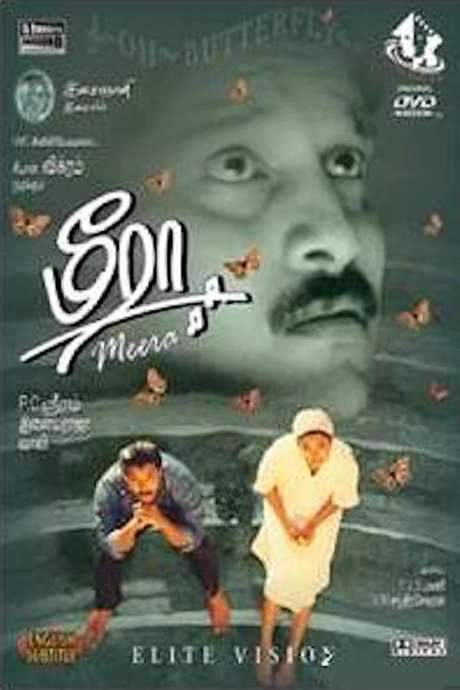
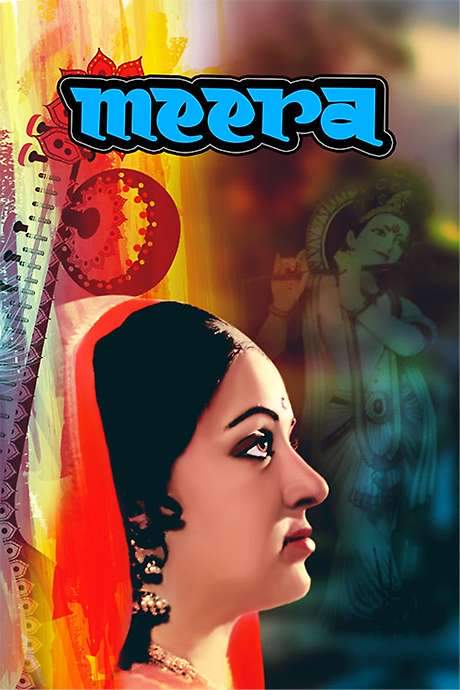
Meera (1979) movie poster

Plot Summary

Meera (1979) Plot Summary Explained

Release, runtime and language
1979 · 139 mins · Hindi
Loading streaming availability…
Directed by
Gulzar
Starring
Dina Pathak, Vinod Khanna, Hema Malini, A.K. Hangal, Shammi Kapoor, Shreeram Lagoo

Meera, a devout follower of Lord Krishna, regards the deity as her husband and refuses an arranged marriage to a Rajput prince. Defying family and societal expectations, her unwavering spirituality subjects her to relentless hardship and persecution, yet she persists in her divine love and poetic devotion.

On this page (6)
  1. 1 Where to watch
  2. 2 What happens: full plot
  3. 3 Plot questions answered
  4. 4 Movie threads
  5. 5 Movies like Meera
  6. 6 Every angle
Loading streaming availability…

Full plot summary · contains spoilers

What Happens in Meera: Full Plot Summary

The whole story of Meera (1979) explained, from the opening scene to the final frame: every key event, every twist and what it all adds up to. Read it as a quick recap before the sequel, to check a scene you missed, or to finally understand what really happened.

Set around 1480, in the era of King Akbar, the story unfolds in Medta, a Rajasthan province ruled by Biramdev Rathod, [Shreeram Lagoo], a king who governs with a blend of lineage duty and personal conviction. He has two daughters, Meera [Hema Malini] and Krishna [Vidya Sinha], and a son, Jaimal [Dinesh Thakur]. Kunwarbai, Biramdev's wife and Meera's mother, [Dina Pathak], brings a steady, practical voice to a family swept up in politics and faith.

Meera is quietly consumed by a spiritual devotion to Lord Krishna, whom she believes is her true husband. This intense, personal love sits in stark contrast to the arranged world around her, where royal alliances and duties pull at her life. The court and palace swirl with advisers, saints, and musicians, shaping a time when religion and power mingle as tightly as duty and desire.

To strengthen Medta’s position against the growing strength of Akbar, Medta forges an alliance with Raja Vikramjeet Singh Sesodia, [Shammi Kapoor]. As part of this political bargain, Meera is married (against her wishes) to Rana Bhojraj Sesodia, [Vinod Khanna], Vikramjeet’s son. Despite the match and the expected duties of a wife, Meera continues to live by her own ideals, her devotion to Krishna undimmed and increasingly at odds with Bhojraj’s expectations and the strict norms of his family. The court’s spiritual undercurrents—embodied by figures like Saint Raidas, [A.K. Hangal], and the musical magnificence surrounding Tansen, [Bharat Bhushan]—frame a social world that confronts Meera’s courage head-on. Kunwarbai and other mentors stand by her in different ways, and the palace itself becomes a stage where faith, love, and power clash.

When Meera’s stance is interpreted as a betrayal of her duties—to husband, family, and society—she is branded an outcast and traitor. A public trial is ordered, and the verdict seems sealed in a climate of harsh judgment and rigid codes. Yet her inner fortress of spirituality remains unshaken, and she faces the ordeal with a quiet defiance that doesn’t bend to fear or humiliation. The threat of death looms as she is sentenced to drink a cup of venom in front of the crowd, a ritual meant to seal her fate.

In a moment that tests the boundary between earthly punishment and divine devotion, the venom fails to crush her spirit. After drinking it, she walks out of the royal court singing the praises of Lord Krishna. The city follows her in a wave of devotion, a living emblem of faith that transcends punishment. She enters the Krishna temple and, in a final, luminous fusion of lover and divine, becomes one with Krishna, leaving a community forever moved by the power of unwavering belief.
Last updated: February 18, 2026 at 23:46

Was this helpful?

Plot questions answered

Meera Plot Explained: Your Questions Answered

The questions people ask most about Meera (1979): what happens in the confusing scenes, why the characters do what they do, the twists, hidden details and what the ending means. Each answer contains spoilers.

Q1

Why does Meera refuse to accept Rana Bhojraj as her husband?

Meera refuses to accept Rana Bhojraj as her husband because she considers Lord Krishna to be her true husband. Her devotion to Krishna is not merely spiritual but is perceived by her as a sacred marital bond. She believes she is already married to Krishna, making any earthly marriage impossible for her to accept. This belief forms the foundation of her defiance against the arranged marriage and subsequent persecution.

Foreshadowing: Early in the film, Meera is shown in her chamber engaged in deep devotion to Krishna, making her commitment to him unmistakably clear before the marriage occurs.

  • meera
  • rana bhojraj
  • krishna
  • arranged marriage
  • devotion
Q2

Why is Meera considered a traitor and outcast by the royal family?

Meera is branded a traitor and outcast because she refuses to fulfill her wifely duties to Rana Bhojraj. Instead of accepting her role as a wife and bearing children for the Sesodia family, she continues her devoted practices to Krishna, which the court interprets as a betrayal of her marital obligations. Her defiance is seen as a direct challenge to family honor and societal norms, leading the court to declare her an enemy of the household and a traitor to her duty.

Foreshadowing: The tension in Bhojraj's household is established early, as Meera's ideals clash with the family's expectations from the moment she arrives.

  • meera
  • outcast
  • traitor
  • royal family
  • wifely duties
Q3

Why doesn't the venom kill Meera after she drinks it?

The venom does not kill Meera because of her unwavering and pure devotion to Lord Krishna. According to the narrative, her faith acts as a divine shield that protects her from the poison. After drinking the venom in front of the gathered crowd, she emerges unharmed and continues to chant Krishna's praises. This miraculous survival is presented as a testament to the power of true spiritual devotion, demonstrating that her faith has rendered the poison powerless.

Foreshadowing: The temple setting and Meera's steadfast spiritual resolve throughout the film establish her as someone whose faith transcends ordinary human limitations.

  • meera
  • venom
  • poison
  • krishna
  • miracle
  • devotion
Q4

What happens after Meera drinks the venom in court?

After Meera drinks the venom, she does not die or fall ill. Instead, she rises to her feet and walks out of the royal court while singing kirtans in praise of Lord Krishna. The crowd watches in stunned silence as her spiritual strength overcomes what should have been a fatal outcome. This moment marks a dramatic turning point where the public perception shifts from judgment to awe, setting the stage for her subsequent veneration.

Foreshadowing: Her calm and defiant demeanor during the trial, when she faces her sentence without fear, foreshadows her ability to withstand the poison.

  • meera
  • venom
  • court
  • walks out
  • kirtan
  • krishna
Q5

Why do the townspeople start following Meera after her trial?

The townspeople start following Meera because they witness her miraculous survival after drinking venom. What was intended as a public execution becomes a demonstration of divine protection, converting the crowd from observers of a punishment into believers in her spiritual power. News of the miracle spreads rapidly, and people pour into the streets, drawn by her devotion. The shift from a hostile audience to a devoted following represents the transformation of public opinion in favor of Meera and her faith.

Foreshadowing: The buildup of tension throughout the trial and the sudden, unexpected outcome plant the seeds for this dramatic reversal of public sentiment.

  • meera
  • townspeople
  • crowd
  • devotion
  • following
  • miracle
Q6

What happens when Meera reaches the Krishna temple at the end?

When Meera reaches the Krishna temple, she experiences a transcendent spiritual union with Lord Krishna. The narrative describes her becoming one with the divine, with the boundaries between devotee and deity blurring as her soul merges with Krishna. This mystical union represents the culmination of her lifelong devotion, where she achieves the spiritual marriage she has always believed in. The temple becomes the sacred space where her earthly journey transforms into eternal spiritual fulfillment.

Foreshadowing: Throughout the film, Meera's constant devotion and her belief that Krishna is her true husband build toward this ultimate union.

  • meera
  • krishna
  • temple
  • union
  • divine
  • spiritual marriage
Q7

Why is Meera married to Rana Bhojraj despite her protests?

Meera is married to Rana Bhojraj as part of a political alliance between Medta and the Sesodia kingdom. As Akbar's power grows and threatens smaller provinces, Medta's ruler Biramdev Rathod forges an alliance with Raja Vikramjeet Singh Sesodia to strengthen Medta's position. The marriage is a political bargain designed to unite the two kingdoms against the common threat, with Meera's personal wishes completely secondary to these strategic calculations.

Foreshadowing: The opening timeline establishes Akbar's rising threat and the need for alliances before introducing Meera's marriage.

  • meera
  • rana bhojraj
  • political alliance
  • medta
  • akbar
  • marriage
Q8

What is Saint Raidas's role in Meera's story?

Saint Raidas serves as a spiritual mentor and guide to Meera, embodying the Bhakti movement's emphasis on devotion and divine love. He represents the spiritual undercurrents running through the palace and court, offering Meera guidance and validation for her unconventional piety. His presence underscores the film's themes of spiritual devotion transcending social hierarchies and reinforces that true faith can be found even within the royal court.

Foreshadowing: Saint Raidas appears in the palace context, suggesting his influence on Meera's spiritual development is present before her major trials.

  • saint raidas
  • spiritual guide
  • bhakti
  • mentor
  • devotion
Q9

Why does Meera's mother Kunwarbai support her daughter despite the controversy?

Kunwarbai, Meera's mother, provides a steady and practical voice throughout the crisis. Despite the controversy surrounding Meera's defiance, Kunwarbai continues to support her daughter in different ways, reflecting a mother's unconditional love that transcends societal expectations. She brings a balanced perspective to the family, trying to navigate between duty to tradition and loyalty to her child. Her support represents the personal and emotional dimension that exists alongside the political and religious conflicts.

Foreshadowing: Kunwarbai is introduced as a practical voice in the family from the beginning, suggesting her role as a moderating influence.

  • kunwarbai
  • mother
  • support
  • family
  • meera
Q10

Why is Meera sentenced to drink venom as punishment?

Meera is sentenced to drink venom as a form of ritualistic execution ordered by the royal court. The sentence is pronounced after her public trial, where she is found guilty of betraying her duties as a wife and refusing to conform to societal expectations. The venom cup is a ceremonial punishment meant to seal her fate publicly, serving both as a method of execution and a display of the court's power. The court intends this to be a definitive end to her defiance, a public spectacle meant to discourage others from similar behavior.

Foreshadowing: The public trial is presented as a major turning point where Meera's fate seems sealed, with the verdict appearing predetermined.

  • meera
  • venom
  • sentence
  • trial
  • punishment
  • court

Movie threads

More Movies Like Meera, by Mood & Story

Curated lists built around what makes Meera tick: the same mood, the same kind of story or the same emotional payoff. Each list explains why these movies belong together.

Films about spiritual defiance like Meera

Profiles of unwavering faith that defy societal norms and lead to persecution. If you were moved by the story of Meera, explore movies that showcase similar journeys of spiritual martyrdom. This collection features powerful dramas about protagonists whose unwavering faith leads them to defy societal expectations, facing persecution with profound courage and finding a transcendent resolution.

  • devotional
  • defiant
  • tragic
  • solemn
  • transcendent
  • oppressive
  • Tone: melancholic, solemn, transcendent
  • Pacing: steady, deliberate
Why these movies?

The story pattern: These narratives typically follow a protagonist's journey from initial spiritual awakening to open conflict with established norms. The plot is driven by escalating external pressure, leading to persecution, suffering, and often a tragic yet spiritually victorious ending. The emotional arc moves from defiance through suffering to a form of transcendence.

Why they belong together: These films are grouped together because they share a heavy emotional weight, a melancholic tone, and a focus on the high-stakes conflict between personal faith and societal power. They are united by the powerful theme of martyrdom for a belief, creating a deeply affecting and thought-provoking viewing experience.

Melancholic period dramas with tragic heroines like Meera

Historical dramas about women whose rebellion against tradition ends in sorrow. For viewers who appreciated the poignant story of Meera, this selection features similar movies about women defying tradition in historical settings. Discover powerful films where strong-willed female protagonists face immense societal pressure, leading to emotionally heavy narratives with bittersweet or tragic conclusions.

  • historical
  • tragic
  • defiant
  • oppressive
  • solemn
  • female protagonist
  • Tone: melancholic, tragic, oppressive
  • Pacing: steady, character-driven
Why these movies?

The story pattern: The story follows a clear arc: a woman in a restrictive historical society identifies a personal truth that conflicts with her duty. Her refusal to conform escalates the tension, leading to her alienation and persecution. The pacing is steady and deliberate, building towards a emotionally resonant, often tragic conclusion that highlights the cost of her defiance.

Why they belong together: These films share a potent combination of a historical setting, a melancholic atmosphere, and a focus on the tragic cost of female rebellion. The similarity lies in the specific emotional cocktail of admiration for the protagonist's strength and the sorrow of her inevitable suffering, all delivered with a heavy, steady intensity.

If you liked this

Movies Like Meera

Similar movies to Meera: the same genre, themes or kind of story. Each one comes with its own plot summary, timeline and ending explained.

Browse all movie summaries

Every angle

Meera (1979) Explained: Plot, Timeline & Characters

Everything about Meera in one place: what happens in the plot summary, the timeline in chronological order, the characters and meaning and a spoiler-free summary. What's After the Movie adds the cast, box office and post-credit scenes.

Coming soon on iOS and Android

The Plot Explained Movie Summary App

Plot summaries, endings explained and timelines on your phone. Catch up on any movie in minutes, save your favorites and never miss a twist again.

Be the first to know when we launch. Your email stays private, always.

Learn more about the app