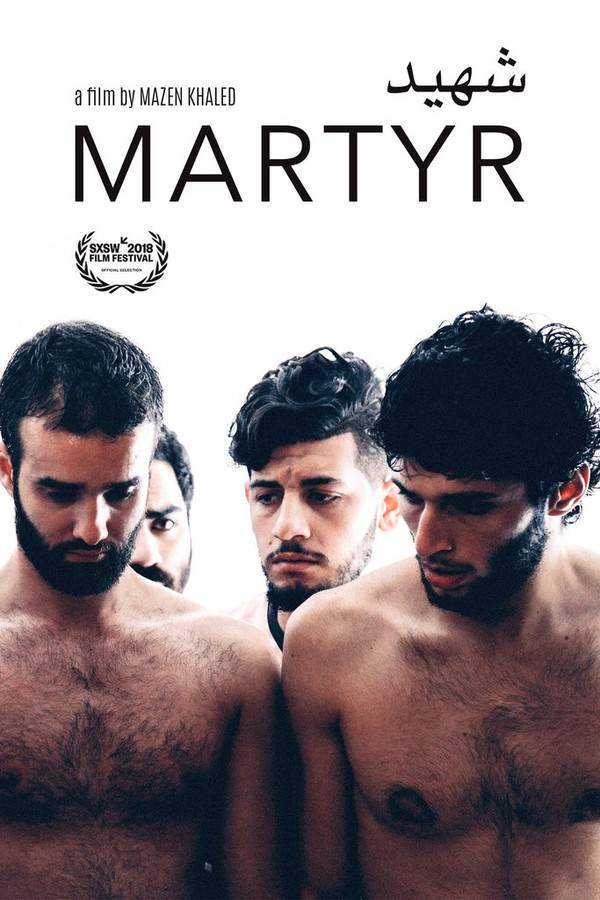
Cyrus is a queer poet living in Indiana, recently stepping back from alcohol and drug use as he pieces together a life shaped by memory, loss, and longing. He carries the belief that his mother was killed on Iran Air Flight 655, a tragedy tied to the Iran-Iraq war, and that his own sense of self has grown out of a long history of displacement. The memory of his father, an Iranian migrant worker who spent years on a rural Indiana farm, threads through his introspection, coloring how he understands belonging, trauma, and the passage from youth into a more fragile adulthood. As Cyrus searches for purpose, he becomes consumed by the idea of martyrdom, turning this concept into a project he calls a book of martyrs. The book becomes a lens through which he tests the line between sacrifice and self-destruction, pondering whether an act of personal meaning can ever redeem the scars of a hard-won past.
Cyrus’ artistic curiosity leads him to the possibility of a grand encounter beyond the borders of his ordinary life. He hears of an Iranian performance artist named Orkideh, who is facing terminal breast cancer and has chosen to spend her final days within the stark, ceremonial space of the Brooklyn Museum as part of a performance piece evocatively titled Death-Speak. The piece draws comparisons to the endurance and ritual of Marina Abramović, inviting viewers to confront death, memory, and the endurance of the body. Compelled by the chance to meet someone who embodies a living intersection of illness, art, and political history, Cyrus travels to New York City with his roommate Zee, a presence in his life whose feelings for Cyrus run deep even as their relationship remains permeated by ambiguity and tension. Zee’s affection both sustains and unsettles Cyrus, adding a layer of emotional complexity to a journey that is already charged with intellectual and existential stakes.
The narrative unfolds through a shifting mosaic of time frames and viewpoints. Within the book that Cyrus is assembling, chapters slip from his current life into intimate recordings of his mother’s past in Iran, where she maintained a secret, lifelong lesbian relationship, and into the wartime memories of an uncle who served in the Iran-Iraq war. This uncle recounts being ordered to dress as an “angel” on horseback to comfort dying Iranian soldiers on the battlefield, a detail that highlights the tenderness and terror interwoven into families shaped by conflict, duty, and cultural upheaval. The structure mirrors Cyrus’ own search for understanding—how to hold together a sense of self with histories that refuse to stay neatly contained in one era or voice.
As the days in New York sharpen into a singular moment of revelation, the relationship between art, memory, and kinship comes to a critical hinge. Orkideh’s performance becomes a crucible in which Cyrus tests the limits of his own mortality and the ethical meanings of martyrdom. When Orkideh dies, a confidant named Sang—Orkideh’s gallerist and former partner—discloses a devastating truth: Orkideh was really Cyrus’ mother, Roya. Roya had swapped passports with her lover Leila in order to escape Iran, and Leila herself perished in the plane disaster. The revelation casts Cyrus’ travels and his book of martyrs in a new, piercing light, reframing his lifelong questions about belonging, sacrifice, and the forces that pull a family apart across borders and time.
In the wake of this startling truth, the story slides into a dreamlike final sequence. Cyrus experiences a reconciling moment with Zee, a delicate moment of emotional clarity that hints at a future where the ache of distance and the weight of memory might begin to loosen just enough for healing to take root. The closing image is poetic and luminous: Cyrus steps toward a pool of golden light, a symbolic threshold that suggests transformation, memory, and the possibility of moving beyond the pain that has shaped him. The film’s cadence lingers on this luminous exit, leaving the viewer with a quiet sense of ambiguity about what comes next while underscoring the enduring pull of family, art, and the perilous beauty of seeking meaning in a world fractured by history.
Throughout this story, themes of diaspora, intergenerational trauma, and the porous boundaries between art and life are explored with a restrained, empathetic voice. The Indiana ground gives way to New York’s vast cultural stage, while intimate memories from Iran, carried by Cyrus’s mother and uncle, illuminate how personal stories become political ones. The characters move like careful notes in a score—Cyrus, the book of martyrs he composes, Orkideh and her final act, Roya and Leila’s perilous flight, and Zee’s unwavering but unsettled devotion. The result is a tale that does not seek sensational closure but instead asks how memory persists, how love survives the revelations that fracture families, and how art can hold the tension between witnessing trauma and offering a path toward grace.
If you’re looking for a story that treats resilience with quiet gravity, that treats the language of sacrifice and memory with curiosity rather than swagger, this narrative offers a thoughtful, multi-layered examination of identity, kinship, and the ways we keep faith with those who mattered most—even when the truth arrives as both gift and rupture.