Plot Explained Spoilers guaranteed!
Plot Explained

Browse by genre

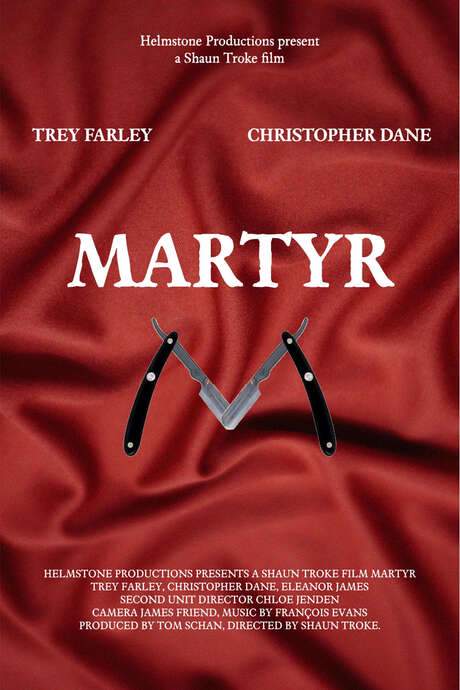
Martyr (2006) movie poster

Plot Summary

Martyr (2006) Plot Summary Explained

Release, runtime and language
2006 · 73 mins · English
Loading streaming availability…
Directed by
Shaun Troke
Starring
Les Loveday, Nathan Robinson, Pano Masti, Christopher Dane, Tony Bowden, Trey Farley

It follows an innocent man who, despite his unwavering faith, finds himself condemned by God and tormented by relentless persecution. Drawing from the biblical Book of Job, the controversial horror drama explores divine justice, suffering and the limits of belief. The film probes silence, creating an unsettling mood that challenges viewers' faith.

On this page (6)
  1. 1 Where to watch
  2. 2 What happens: full plot
  3. 3 Plot questions answered
  4. 4 Movie threads
  5. 5 Movies like Martyr
  6. 6 Every angle
Loading streaming availability…

Full plot summary · contains spoilers

What Happens in Martyr: Full Plot Summary

The whole story of Martyr (2006) explained, from the opening scene to the final frame: every key event, every twist and what it all adds up to. Read it as a quick recap before the sequel, to check a scene you missed, or to finally understand what really happened.

Cyrus is a queer poet living in rural Indiana, quietly rebuilding his life after a difficult struggle with alcohol and drugs. He carries the weight of a family history that stretches back to Iran and beyond, including a father, Ali, who worked as a migrant laborer on a chicken farm and is now gone, and a mother, Roya, whom Cyrus believes died when Iran Air Flight 655 was shot down during the closing days of the Iran–Iraq War. The tragedy shapes Cyrus’s imagination as he becomes fascinated with the idea of martyrdom, even conceiving a personal “book of martyrs” and contemplating his own potential death as a form of sacrifice. In the margins of his thinking, he confronts questions about belonging, memory, and the ways a life can be refracted through myth and history.

To explore these questions, Cyrus sets out on a journey that takes him from the quiet of his homeland to the buzzing streets of New York City. He travels with his roommate Zee, a presence in his life whose feelings for Cyrus are real even as their relationship remains complicated and unstable. In the city, Cyrus seeks out Orkideh, an Iranian performance artist who is spending her final days in a Brooklyn Museum installation called Death-Speak, a stark endurance work that echoes the legendary performances of artists like Marina Abramović. The encounter is not merely a meeting of minds but a collision of worlds: Cyrius’s inward search for meaning, Orkideh’s outward, public act of art, and Zee’s desire to be seen and valued within this shifting dynamic.

The narrative unfolds through shifting times and viewpoints, broadening the lens beyond Cyrus’s present. It sketches a history of Cyrus’s mother, Roya, who was involved in a secret lesbian relationship in Iran, and it adds a memory of his uncle, who in the Iran–Iraq War was asked to perform a symbolic role—dressing as an angel on horseback to comfort dying soldiers—an image that lingers as a quiet emblem of protection and myth. These vignettes deepen the sense that individual lives are inseparable from the political and cultural pressures around them, and that memory can shelter its own kinds of truth as well as illusion.

When Orkideh dies, a jolt of new information rearranges Cyrus’s understanding of his family’s past. Years earlier, Roya had attempted to flee Iran with her lover Leila, swapping passports in the process. On Iran Air Flight 655, the passenger who disappeared from Roya’s life was actually Leila, not Roya. Roya herself survived this catastrophe, eventually immigrating to the United States and reinventing herself as the artist Orkideh. The revelation unsettles the foundations of Cyrus’s personal myth: the figure of his mother’s supposed sacrifice has been reframed, and the idea of martyrdom—once a guiding light—is compelled to answer to a more complicated history of survival, resilience, and reinvention.

Armed with this new truth, Cyrus reconsiders the stories he has been telling himself about family, memory, and identity. The late revelation does not simply overturn a single fact; it invites a broader reexamination of what it means to be connected to a place, a past, and a set of choices that echo across generations. The act of storytelling itself becomes a way to process the dissonance between the loved ones Cyrus thought he knew and the hidden lives that surface later, forcing him to confront how historical events and personal loyalties can converge in intimate, unexpected ways.

In the book’s final, dreamlike sequence, Cyrus appears to find a fragile reconciliation with Zee, a moment that crystallizes the tension between memory and possibility. The ending unfolds as a luminous, almost ceremonial passage: Cyrus steps forward, guided by an inner light, and walks into a pool of golden light that suggests at once purification, renewal, and the closing of a long, searching arc. The transformation is not merely a personal catharsis but a quiet confirmation that truth, art, and love can endure even when the narratives we rely on shift dramatically beneath us.

Throughout the work, themes of diaspora and belonging, the power of art to bear witness, and the delicate balance between private longing and public history run like threads through the fabric of the story. The prose treats memory with care, choosing to illuminate rather than simplify, to preserve complexity while still inviting readers to feel a sense of hopeful possibility. By weaving together intimate portraits, historical context, and the charged atmosphere of performance and art, the narrative presents a thoughtful meditation on how people seek meaning when the lines between myth, history, and personal truth blur.
Last updated: April 07, 2026 at 21:05

Was this helpful?

Plot questions answered

Martyr Plot Explained: Your Questions Answered

The questions people ask most about Martyr (2006): what happens in the confusing scenes, why the characters do what they do, the twists, hidden details and what the ending means. Each answer contains spoilers.

Q1

What is the book of martyrs that Cyrus writes?

Cyrus begins writing a personal 'book of martyrs' as a creative project that blends his own struggles with the broader concept of sacrifice. Initially inspired by his belief that his mother died aboard Iran Air Flight 655, the project becomes his way of processing family tragedy and exploring what martyrdom means. After learning the truth about his mother, the book transforms into a meditation on survival and identity rather than pure sacrifice.

Foreshadowing: Cyrus's fascination with martyrdom is introduced early, rooted in his family history and his own recovery from addiction.

  • book of martyrs
  • cyrus
  • poet
  • sacrifice
  • creative project
Q2

Who is Orkideh and how is she connected to Cyrus?

Orkideh is the stage name of Cyrus's mother Roya, who he believed died on Iran Air Flight 655 in 1988. In reality, Roya survived the plane crash after swapping passports with her lover Leila, who died in her place. Roya immigrated to the United States and reinvented herself as the artist Orkideh, eventually performing her final installation called Death-Speak in Brooklyn.

Foreshadowing: Orkideh's performance work echoes themes of endurance and sacrifice that Cyrus explores in his own writing.

  • orkideh
  • roya
  • mother
  • identity
  • artist
  • death-speak
Q3

What really happened to Cyrus's mother on Iran Air Flight 655?

Cyrus's mother Roya did not die on Iran Air Flight 655. She had planned to flee Iran with her lover Leila and they swapped passports to escape. When the plane was shot down, the passenger using Roya's name was actually Leila, who died. Roya survived and eventually emigrated to the United States, where she became the artist Orkideh.

Foreshadowing: The earlier scenes establish Roya's secret life in Iran, hinting at the escape plan that makes the revelation possible.

  • iran air flight 655
  • roya
  • leila
  • plane crash
  • passport swap
Q4

Why did Roya swap passports with Leila?

Roya and Leila were secret lovers in Iran where homosexuality was dangerous. They planned to escape together and swapped passports as part of their bid for safety and a new life. The swap was necessary to hide their true identities during the escape, but it meant that when the plane was shot down, Leila died using Roya's name while Roya survived under Leila's identity.

Foreshadowing: The secret lesbian relationship is introduced earlier, establishing the risk that drove their escape attempt.

  • roya
  • leila
  • passport swap
  • iran
  • escape
  • lesbian relationship
Q5

What is the nature of Cyrus and Zee's relationship?

Zee is Cyrus's roommate who travels with him to New York. Zee has genuine romantic feelings for Cyrus, but their relationship remains complicated and unstable. Cyrus does not fully reciprocate these feelings, creating tension throughout the journey. The emotional dynamic adds weight to the story's exploration of connection and belonging.

Foreshadowing: Zee's feelings are established early, creating tension that builds throughout their journey to New York.

  • zee
  • cyrus
  • roommate
  • relationship
  • feelings
  • complicated
Q6

What is the Death-Speak installation at the Brooklyn Museum?

Death-Speak is Orkideh's final performance installation at the Brooklyn Museum, created as she is dying of terminal cancer. The stark endurance work echoes legendary performance art pieces by artists like Marina Abramović. It represents her public act of bearing witness to mortality, blending art with her own approaching death.

Foreshadowing: The installation's theme of endurance connects to the broader themes of suffering and sacrifice Cyrus explores.

  • death-speak
  • installation
  • brooklyn museum
  • performance art
  • marina abramovic
  • terminal cancer
Q7

Why does Cyrus become obsessed with martyrdom?

Cyrus becomes fascinated with martyrdom primarily because he believes his mother died as a symbol of sacrifice on Iran Air Flight 655. The tragedy shaped his imagination and provided a framework for understanding suffering and death. His own struggles with addiction and recovery also inform this obsession, as he contemplates his potential death as a form of sacrifice.

Foreshadowing: The opening establishes Cyrus drafting his book of martyrs, showing his preoccupation from the start.

  • cyrus
  • martyrdom
  • obsession
  • flight 655
  • sacrifice
  • poet
Q8

What does the ending with the pool of golden light mean?

In the dreamlike final sequence, Cyrus reconciles with Zee before walking into a pool of golden light. The luminous passage represents purification, renewal, and the closing of his long searching arc. It suggests transformation and forgiveness after the devastating revelations about his mother's true identity, offering a bittersweet sense of peace.

Foreshadowing: The entire journey has been building toward this moment of reconciliation and truth.

  • ending
  • golden light
  • reconciliation
  • pool
  • dream sequence
  • transformation
Q9

Who was Cyrus's father Ali and what happened to him?

Cyrus's father Ali was a migrant laborer who worked on a chicken farm in rural Indiana. He has since died, leaving a gap in family life that shapes Cyrus's sense of belonging. The memory of his father lingers in Cyrus's poetry and daily routines, representing another layer of loss in his complicated family history.

Foreshadowing: Ali is mentioned early in the timeline, establishing the pattern of absence and memory that defines Cyrus's life.

  • ali
  • father
  • migrant worker
  • chicken farm
  • death
  • roya
Q10

What is the significance of Cyrus's uncle dressing as an angel on horseback?

Cyrus's uncle was asked during the Iran-Iraq War to perform a symbolic role, dressing as an angel on horseback to comfort dying soldiers. This image functions as a quiet emblem of protection and myth within the family's history. It connects to the themes of martyrdom and sacrifice that run through Cyrus's own artistic work.

Foreshadowing: This vignette appears earlier in the narrative, adding depth to the family's mythological tapestry.

  • uncle
  • angel
  • horseback
  • iran-iraq war
  • soldiers
  • myth
  • comfort
Q11

How does the revelation about Roya affect Cyrus's identity?

Learning that his mother survived and became Orkideh fundamentally reframes Cyrus's understanding of his family, heritage, and personal myth. The truth about his mother's survival rather than martyrdom forces him to reconsider everything he believed about sacrifice, memory, and belonging. He must reconcile the complicated history of a mother who chose to reinvent herself rather than remain in his life.

Foreshadowing: The revelation directly challenges Cyrus's entire artistic project and sense of self.

  • cyrus
  • identity
  • heritage
  • roya
  • orkideh
  • memory
  • family history

Movie threads

More Movies Like Martyr, by Mood & Story

Curated lists built around what makes Martyr tick: the same mood, the same kind of story or the same emotional payoff. Each list explains why these movies belong together.

Movies about Divine Torment and Suffering like Martyr

Stories where unwavering belief is met with divine silence and profound suffering. Explore movies like Martyr that delve into profound questions of faith, divine justice, and human suffering. If you were captivated by its exploration of persecution and the silence of God, this collection of heavy, contemplative dramas and horror films offers a similar experience.

  • unsettling
  • oppressive
  • contemplative
  • melancholic
  • anxious
  • existential
  • Tone: dark, unsettling, contemplative
  • Pacing: slow, deliberate, variable
Why these movies?

The story pattern: These narratives often follow a protagonist of deep faith who is subjected to inexplicable and relentless torment, forcing them to question the very foundations of their belief system. The journey is one of psychological and spiritual unraveling, often structured around a test of conviction that pushes characters to their absolute limits.

Why they belong together: They are grouped by their shared thematic focus on existential religious crisis, a dark and oppressive tone, and a heavy emotional weight derived from exploring divine injustice and the nature of suffering. The pacing is often deliberate, allowing the psychological and spiritual dread to fully saturate the viewer.

Movies with Traumatic Family Secrets like Martyr

Journeys into a painful past where hidden truths shatter the present. Discover films similar to Martyr that revolve around the slow, painful uncovering of a devastating family secret. If you were drawn to its nonlinear narrative and the heavy impact of its revelations, these complex dramas and psychological thrillers deliver a comparable bittersweet and contemplative experience.

  • melancholic
  • unsettling
  • contemplative
  • dreamlike
  • anxious
  • oppressive
  • Tone: melancholic, bittersweet, unsettling
  • Pacing: variable, contemplative
Why these movies?

The story pattern: The narrative pattern involves a character, often in a vulnerable state, piecing together clues from the past through nonlinear storytelling. The central conflict is the confrontation with a hidden truth—such as a hidden identity, a covered-up trauma, or a buried sin—that forces a painful but necessary re-evaluation of their family and self.

Why they belong together: They share a complex, often nonlinear narrative structure, a focus on grief and loss, and a bittersweet emotional resolution. The mood is consistently melancholic, dreamlike, and anxious, driven by the oppressive weight of the secret and the psychological impact of its unveiling.

If you liked this

Movies Like Martyr

Similar movies to Martyr: the same genre, themes or kind of story. Each one comes with its own plot summary, timeline and ending explained.

Browse all movie summaries

Every angle

Martyr (2006) Explained: Plot, Timeline & Characters

Everything about Martyr in one place: what happens in the plot summary, the timeline in chronological order, the characters and meaning and a spoiler-free summary. What's After the Movie adds the cast, box office and post-credit scenes.

Coming soon on iOS and Android

The Plot Explained Movie Summary App

Plot summaries, endings explained and timelines on your phone. Catch up on any movie in minutes, save your favorites and never miss a twist again.

Be the first to know when we launch. Your email stays private, always.

Learn more about the app