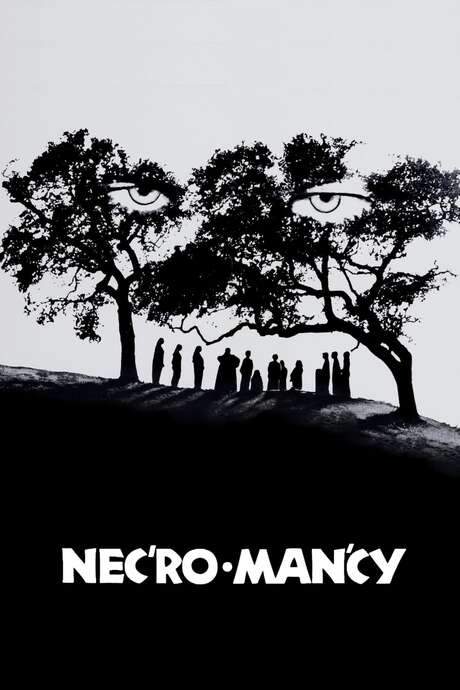
At a tranquil lakeside ceremony, Billy Joe [Michael Sugich], a self-styled Christlike cult leader, declares that a traitor hides among his teenage followers. His proclamation sets off a chilling moment as he points to a girl who bolts in fear, only to be chased down by a hooded figure known as the Atoner and ultimately drowned. The scene opens the door to a world where ritual, fear, and fanaticism intertwine, casting a long shadow over everyone connected to the group.
Across town, in a dilapidated neighborhood, Fanny Pierce [Jeanne Crain], the reverend’s wife, endures a rough living and a familiar ache of worry. A homeless man steals her groceries, but she presses on toward the church kitchen while her husband Willis [Alex Nicol] dispenses coffee to the destitute gathered for a free meal. She confides her growing unhappiness to him, and though he offers soft assurances that things will improve, he quietly says he’s rented a quality hall for an upcoming revival, hinting at brighter days ahead.
On the ride toward that revival, the couple’s gaze is drawn to the gas station where their giant cross on the pickup becomes a surreal magnet for attention. Billy Joe, riding by on the back of a motorcycle with his ally Tennessee [Miller Pettit], climbs into the back of the truck and reclines on the cross. The Christ-like figure compliments Willis on the cross itself and probes what he plans to do with it, extending an invitation to the men to attend the evening’s revival. Billy Joe’s interest seems real, even as Tennessee makes troubling passes toward Fanny. Willis brushes off the sight, dismissing the cultist as a fringe figure.
That evening, Willis delivers his sermon and calls for donations to sustain the mission. Paul, a deacon, tallies the offerings, keeping a wary eye on the silent Atoner who carries the tall cruciform staff. Outside, Fanny pours out her heart again, sharing the couple’s precarious finances and fears, while inside the church, the atmosphere grows tense with the notion that someone is watching. The mood grows more ominous when the Atoner appears, and Willis’s fate takes a brutal turn as he is crucified in a brutal, cinematic echo of the earlier lakeside tragedy. The community reels, and a verdict follows: Billy Joe [Michael Sugich], Tennessee [Miller Pettit], and Izzy [Richard Smedley] are sentenced to death for Willis’s murder, while the Atoner remains at large.
A year passes, and Fanny enters a very different life as the housekeeper for Judge Coogan [Stewart Bradley] and his wife, a role that puts her among the judge’s four teenage children: Peter [Dan Spelling], Nancy [Barbara Hancock], Sharon [Dawn Cleary], and Jimmy [Gary Morgan]. When the judge and his wife plan a long weekend away, they trust Fanny to supervise the house and keep the kids close, a demand that tests her patience and resolve. The teenagers, annoyed by the limit on their freedoms, push back against the arrangement as they sense something unsettling looming over the quiet house.
From the moment the judge and his wife depart, the tension in the house escalates. The kids spot someone in the yard, and Fanny discovers a stuffed dummy with a note reading “vengeance”—a chilling taunt she hides from the others. A threatening phone call follows, and the fear spikes as the children whisper that a hooded presence lurks nearby. Peter claims to have seen a hooded figure in the yard, warning that Fanny’s presence may put the family in danger. The lights flicker, and the home becomes a maze of shadows and whispers, punctuated by the recurring cry of “God is on our side.”
In a terrifying real-time game of cat and mouse, a hooded intruder invades the house, triggering screams and chaos as the children are hunted one by one. Jimmy bolts to a neighbor’s house in a moment of panic, only to vanish from view as the danger closes in. When Peter discovers the “vengeance” note and confronts Fanny, the tension deepens, and a second wave of fear sets in. A hooded figure slips through the back door and roams the corridors, while Fanny frantically moves from room to room to protect the children and herself. In the heat of the struggle, she finds Peter’s body in a closet, and the house plunges into darkness as she barricades herself in a room, fearing for everyone's safety.
The horror crescendos as the truth Dawns: the hooded figure is revealed to be Peter, who, along with his siblings, has staged the entire night of terror to frighten Fanny into leaving and to free them to participate in their planned activities. The supposed “murdered” Sharon later rises, and the siblings debate how to spin a plausible story to tell the police. Just as the tension peaks, the phone rings again, and Peter answers with a chilling line from an unseen voice: “the sentence is death on Judge Coogan’s children and the execution is tonight.” In front of the house, the Atoner stands watch with the cruciform staff, and as the windows flicker from brightness to darkness, a male voice cries from inside—leaving the fate of the family and the house shrouded in an ominous, unresolved menace.
Ultimately, the film weaves together themes of manipulation, faith, and the fragility of safety, building a slow-burn dread that culminates in a revelation about motive, power, and the cost of fear. The cast’s shared performances underscore a tense, chilling atmosphere, where the boundaries between real danger and staged terror blur, and where the cost of family loyalty—and of silencing truth—becomes tragically clear.