














Plot Explained Spoilers guaranteed!
Plot Explained

Browse by genre

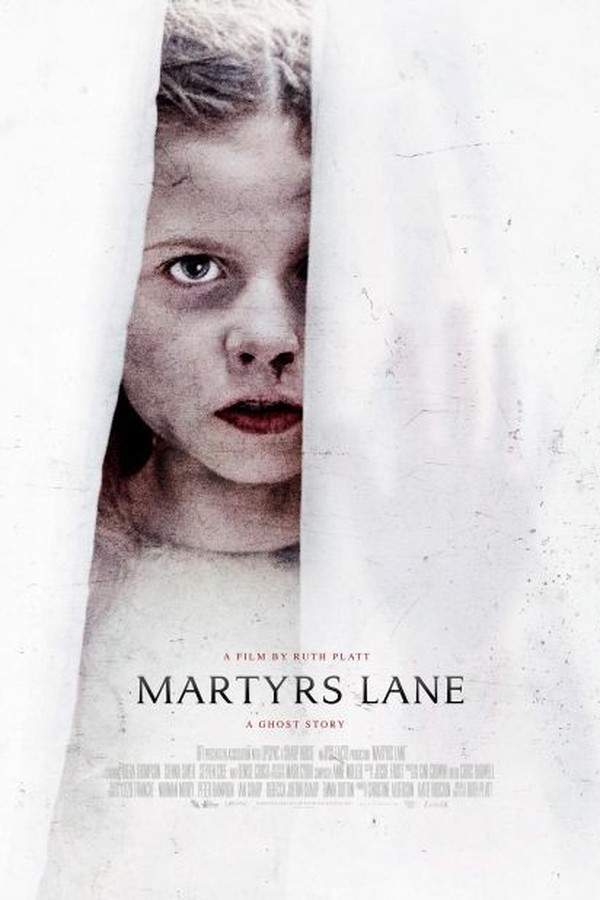
Martyrs Lane (2021) movie poster

Plot Summary

Martyrs Lane (2021) Plot Summary & Ending Explained

Release, runtime and language
2021 · 96 min · English
Echo score 80
JustWatch #6,409 2
Directed by
Ruth Platt
Starring
Steven Cree, Hannah Rae, Denise Gough, Anastasia Hille, Catherine Terris, Charlie Rix

Within the decaying walls of her family's home, ten-year-old Leah lives a life veiled in secrets. As darkness descends, a mysterious figure begins to visit, offering fragmented answers about her mother's detachment. These unsettling encounters slowly unravel a complex puzzle, revealing disturbing truths and blurring the boundary between Leah’s dreams and the unsettling reality she faces.

On this page (7)
  1. 1 Where to watch
  2. 2 What happens: full plot
  3. 3 Plot questions answered
  4. 4 How it ends
  5. 5 Movie threads
  6. 6 Movies like Martyrs Lane
  7. 7 Every angle

Where to watch

Where to Watch Martyrs Lane (2021)

Where can you watch Martyrs Lane? Stream, rent or buy it in the US, including on AMC+, Philo and Shudder: current JustWatch availability with up-to-date prices.

Streaming availability powered by JustWatch

Full plot summary · contains spoilers

What Happens in Martyrs Lane: Full Plot Summary

The whole story of Martyrs Lane (2021) explained, from the opening scene to the final frame: every key event, every twist and what it all adds up to. Read it as a quick recap before the sequel, to check a scene you missed, or to finally understand what really happened.

A ten-year-old girl named Leah resides in a large vicarage in England, where she is frequently visited by a mysterious guest who imparts secrets and knowledge to her during the night.

Act 1: The Setup and The Secret

Living in a chilly UK vicarage, Leah shares her home with her older sister Bex, her preoccupied father Thomas, a priest, and her emotionally distant mother Sarah. Sarah seems to either resent or intentionally avoid Leah, wearing a locket that seemingly holds sentimental value. Upon opening the locket, Leah discovers a lock of blonde hair, which stands out since the family's hair is predominantly dark. However, after accidentally dropping the hair out of a window, Sarah's devastation is palpable. Leah's nights are haunted by distressing dreams and asthma issues, revealing an unsettling tension within their family unit. The arrival of a young mother and her teething baby further complicates the already tumultuous environment of the household.

Act 2: The Nightly Visitor and The Game

One night, Leah encounters a ghostly girl, who appears at her window dressed in a white gown and adorned with makeshift angel wings. This spectral visitor, who remains unnamed, introduces Leah to a haunting game of "two truths and a lie." This game morphs into a twisted scavenger hunt, compelling Leah to uncover various hidden objects around the vicarage and its grounds, such as spelling blocks and a loose button. Eager for a connection and understanding, Leah engages in the game, yet her actions inadvertently create chaos; for instance, she clumsily sews the ghost's button onto Sarah's sweater, resulting in the button falling off and causing the visiting baby to choke, ultimately resulting in the departure of their guests. As the game progresses, the ghost's condition worsens, appearing increasingly filthy and displaying bloody marks. Bex cautions Leah about probing into the traumatic past, fully aware that their mother’s fragile mental state cannot withstand the burden of uncovering buried secrets.

Act 3: The Truth and The Tragedy

The unfolding scavenger hunt unveils repressed family trauma and uncovers items tied to the name "Rachel." Leah learns that Rachel was her older sister, tragically killed by a joyrider while riding her bicycle before Leah was born. This loss has weighed heavily on Sarah, who never managed to fully process her grief; she has effectively erased Rachel's name and history from the home while secretly cherishing her memory, symbolized by the lock of hair. This unresolved sorrow contributes to Sarah's emotional neglect of her two living daughters.

The Ending

Ultimately, the ghost represents Rachel's spirit, yearning for recognition and acknowledgment within the family. As Leah exposes all hidden truths, the psychological burden becomes too heavy for Sarah to bear. Rather than finding healing, Sarah succumbs to her sorrow, leading to a heart-wrenching climax where Leah observes her mother leaving the vicarage with Rachel's spirit, choosing the departed daughter over her own living child. In the closing moments, Thomas directs movers to pack the house, instructing them to leave the piano. Leah catches a glimpse of Sarah and Rachel appearing together at the piano, strongly suggesting that Sarah, overwhelmed by her anguish, may have taken her own life to reunite with Rachel in the afterlife. This decision irrevocably fractures the family, illustrating that the trauma endured remained unresolved, ultimately consuming Sarah entirely.

Last updated: September 18, 2026 at 08:59

Was this helpful?

Plot questions answered

Martyrs Lane Plot Explained: Your Questions Answered

The questions people ask most about Martyrs Lane (2021): what happens in the confusing scenes, why the characters do what they do, the twists, hidden details and what the ending means. Each answer contains spoilers.

Q1

Who is the ghost visiting Leah at night?

The ghost is Rachel, Leah's older sister who was killed by a joyrider while riding her bicycle before Leah was born. Rachel's spirit returns because she wants her existence acknowledged by the family that has erased her memory. Her identity is gradually revealed through the scavenger hunt, which leads Leah to find hidden items tied to Rachel's name around the vicarage.

Foreshadowing: The ghost first appears wearing white and makeshift angel wings, hinting at her status as a deceased child seeking recognition.

  • ghost identity
  • rachel
  • spirit
  • dead sister
Q2

Why is Sarah so emotionally distant from Leah?

Sarah's detachment from Leah is rooted in unresolved grief over Rachel's death. Having lost one daughter in a tragic bicycle accident, Sarah can neither process the loss nor attach to Leah, who may unconsciously remind her of Rachel or simply cannot replace her. The pain is so consuming that Sarah channels it into emotional neglect rather than confronting her sorrow.

Foreshadowing: Sarah's reaction to the dropped lock of hair signals early on that her detachment is grief-driven, not simply poor parenting.

  • sarah
  • emotional neglect
  • maternal distance
  • grief
Q3

What does the locket with the blonde hair mean?

The locket contains a lock of Rachel's blonde hair, which Sarah has secretly kept as a private memorial. Because the family's surviving members all have dark hair, the blonde strand immediately signals it belongs to someone outside the living family. Sarah's devastation when Leah drops it reveals how deeply the keepsake is tied to her suppressed grief for Rachel.

Foreshadowing: The contrast between the blonde hair and the family's dark hair foreshadows that the keepsake belongs to someone whose memory has been deliberately concealed.

  • locket
  • blonde hair
  • keepsake
  • rachel memorial
Q4

Why did Sarah erase Rachel from the family's life?

After Rachel was killed, Sarah was unable to face the trauma and instead chose to remove every trace of her daughter's existence from the vicarage. Erasing Rachel became Sarah's way of avoiding grief, even though she privately clung to a relic of Rachel through the locket. This contradiction, public denial paired with private devotion, shows that her grief was never truly processed, only buried.

Foreshadowing: The absence of any visible photos or mementos of Rachel in the home, despite Sarah secretly owning the locket, hints early on at a deliberate erasure.

  • rachel
  • erasure
  • denial
  • suppressed grief
Q5

How did Rachel die?

Rachel was killed by a joyrider while she was riding her bicycle, an accident that occurred before Leah was born. The sudden, senseless nature of the death left the family without closure, which is why Sarah was never able to come to terms with the loss. Rachel's death is the central wound that the rest of the story circles around.

  • rachel death
  • joyrider
  • bicycle accident
Q6

What does the 'two truths and a lie' game and scavenger hunt represent?

The game is Rachel's mechanism for forcing Leah to piece together the family's hidden history. Each object Leah finds, spelling blocks, a loose button, items linked to Rachel's name, acts as a clue that brings suppressed truth to the surface. The game is not harmless play; it is a deliberate haunting designed to make the family finally acknowledge Rachel rather than continue pretending she never existed.

Foreshadowing: The game's progression from playful riddle to disturbing scavenger hunt mirrors the gradual deterioration of Rachel's ghostly appearance, signaling rising stakes.

  • two truths and a lie
  • scavenger hunt
  • hidden objects
Q7

Why does the ghost's appearance worsen as the game continues?

As Leah digs closer to the truth, Rachel's spirit becomes increasingly dirty and marked with bloody injuries. This visual decline reflects how the family's unresolved trauma intensifies the longer it is stirred but never addressed. Rachel's deterioration is not random; it mirrors Sarah's crumbling mental state and signals that the buried grief is finally breaking through the surface.

  • ghost appearance
  • bloody marks
  • deteriorating spirit
Q8

Why does Bex tell Leah to stop investigating?

Bex warns Leah because she understands that their mother's fragile mental state cannot survive the resurfacing of Rachel's history. Bex has grown up managing Sarah's instability and knows that forcing the truth will not bring healing, it will push Sarah past her breaking point. Her caution is protective, aimed at preserving whatever fragile balance remains in the household.

Foreshadowing: Bex's quiet awareness of Beth's triggers foreshadows that she has long been the one quietly shielding the family from Sarah's fragility.

  • bex
  • warning
  • fragile mental state
  • protection
Q9

What happens to Sarah at the end of the film?

Sarah leaves the vicarage walking alongside Rachel's spirit, choosing her dead daughter over her living children. The closing vision of Sarah and Rachel playing the piano together, while Thomas instructs movers to leave the piano behind, strongly implies that Sarah has taken her own life in order to reunite with Rachel in death. The family is left permanently fractured, with no healing achieved.

Foreshadowing: Sarah's emotional abandonment of Leah throughout the film foreshadows her eventual choice to walk away entirely with Rachel rather than remain with her living children.

  • sarah ending
  • suicide
  • reunion
  • rachel
  • climax
Q10

What does the final piano scene between Sarah and Rachel mean?

The closing image of Sarah and Rachel joyfully playing the piano together is presented as a vision seen by Leah, not a literal scene in the present. It suggests Sarah has crossed into death to be with Rachel, finding the peace she could not achieve in life. The fact that Thomas tells the movers to leave the piano behind reinforces that this instrument now belongs to the memory of the two of them rather than to the surviving family.

Foreshadowing: The piano's prominence in the vicarage throughout the film subtly foreshadows its role as the final symbol of the bond between Sarah and Rachel.

  • piano scene
  • sarah and rachel
  • vision
  • afterlife
Q11

Why does Sarah choose Rachel over Leah and Bex?

Sarah's choice is the culmination of years of unresolved grief that she refused to face. Once Leah forces the truth about Rachel into the open, Sarah can no longer maintain the fragile denial she has been living under. Overwhelmed, she gravitates toward the daughter she lost rather than the daughters still with her, because reuniting with Rachel is the only resolution her grief will allow.

Foreshadowing: Sarah's earlier attachment to the locket, paired with her inability to bond with Leah, foreshadows that her loyalty has always remained with Rachel.

  • sarah choice
  • rachel
  • abandonment
  • grief resolution
Q12

Why does Leah accidentally cause the visiting baby to choke?

While completing the scavenger hunt, Leah sews a loose button from the ghost onto Sarah's sweater. Because the button is poorly attached, it falls off and the visiting baby, who is teething, puts it in her mouth and begins to choke. The incident is not malicious; it is a consequence of Leah treating the haunting as a game rather than realizing the objects she is moving are part of a real family's buried trauma.

Foreshadowing: The scavenger hunt's instruction to find a loose button sets up this incident, showing that the ghost's 'game' carries real-world consequences.

  • button incident
  • baby choking
  • scavenger hunt consequences

Ending explained

What Happens at the End of Martyrs Lane?

How Martyrs Lane (2021) ends, in short: the final scene, the last twist and what it means for the characters. The full ending explained, with every spoiler, lives on its own page.

Read the full ending explained

After Leah's family is haunted by the presence of a mysterious girl named Rachel, it becomes clear that Rachel's apparition is a manifestation of Sarah's overwhelming grief over the loss of her daughter. The film reveals that Sarah's daughter Rachel died in a tragic car accident, and Sarah has never truly been able to let go of her grief. Rachel's ghost appears to Leah, guiding her to understand that her mother’s actions are driven by unresolved sorrow, which causes her to lash out or behave strangely. Eventually, Leah encourages her mother to confront her pain, leading Sarah to realize she cannot control or undo what happened and must instead find a way to let go of the past. The presence of Rachel is thus a symbol of Sarah’s inability to move on from her tragedy.

The ghostly girl also interacts with Leah directly, hinting that her death was accidental and conveying the message that suffering isn't permanent. As Leah uncovers the truth, she sees that Rachel’s spirit is not evil or vengeful but a child stuck in the liminal space between life and death. With her guidance, Sarah begins to accept her loss, and this acceptance allows the family to start healing. In the end, Leah and her mother are able to find peace, freeing themselves from the haunting presence of Rachel. The film leaves viewers with a poignant message about grief, acceptance, and the importance of confronting the pain of loss rather than letting it consume you. Ultimately, Martyrs Lane is a meditation on how unresolved grief can manifest as supernatural hauntings, and how facing our deepest sorrows can lead to liberation and renewal.

Martyrs Lane ending explained in full

Movie threads

More Movies Like Martyrs Lane, by Mood & Story

Curated lists built around what makes Martyrs Lane tick: the same mood, the same kind of story or the same emotional payoff. Each list explains why these movies belong together.

Child's-eye ghost stories of family grief like Martyrs Lane

A child senses what adults refuse to see, as haunting visitations unlock buried family sorrows. Explore atmospheric horror movies like Martyrs Lane where a young protagonist encounters a mysterious visitor and uncovers devastating family secrets. These haunting supernatural dramas use ghostly visitations to explore grief, repressed trauma, and the silent sorrows that haunt a household. Perfect for fans of slow-burn ghost stories told through innocent, vulnerable eyes.

  • haunting
  • child protagonist
  • family grief
  • ghostly
  • sorrowful
  • eerie
  • Tone: melancholic, eerie
  • Pacing: slow burn
Why these movies?

The story pattern: These films often begin with a child experiencing unexplained phenomena within the family home, while parents remain distant, distracted, or actively dismissive. The narrative unfolds through small clues and nightly encounters, building a scavenger hunt of meaning that gradually reveals a buried family loss. The ghost serves as both messenger and mirror, reflecting the child's unprocessed grief while forcing the adults to confront what they have tried to suppress. The journey moves from quiet confusion toward devastating revelation, often leaving the child to carry emotional truths the adults cannot bear.

Why they belong together: These movies share a focus on childhood perception as a vehicle for horror, where the supernatural manifests as a guide through unresolved family trauma. They favor slow atmospheric pacing, emotional weight over jump scares, and child protagonists whose innocence heightens the dread. The ghostly encounters function as metaphors for grief, guilt, and the unspoken, creating stories that feel more like spectral family dramas than traditional hauntings.

Domestic grief horror movies like Martyrs Lane

A family's home becomes a crypt of unspoken sorrow, where secrets surface with devastating weight. Discover haunting horror movies like Martyrs Lane where grief and family secrets consume a household from within. These slow-burn atmospheric horror films prioritize psychological disturbance over graphic violence, building dread through silence, repression, and devastating revelations. Ideal for viewers seeking horror that feels like a sorrowful family drama, where the real monster is loss itself.

  • atmospheric
  • family secrets
  • grief
  • domestic
  • haunting
  • bleak
  • Tone: dark, melancholic
  • Pacing: slow burn
Why these movies?

The story pattern: These films typically begin with a household in quiet disarray, where something feels deeply wrong but remains unspoken. Tension builds through subtle behavioral shifts, unexplained sounds, and the gradual surfacing of clues that point to a long-buried tragedy, often the death of a child or the fracturing of a mother. The narrative uses a confined domestic setting to mirror psychological confinement, with characters trapped by their inability to grieve, forgive, or speak. As the truth emerges, the home itself becomes a character, holding the weight of memory and sorrow, and the story resolves in bleak or devastating ways that offer no clean escape.

Why they belong together: These movies share a commitment to atmospheric dread over visceral horror, heavy emotional weight, and the use of family homes as pressure cookers of unresolved grief. They favor slow pacing, psychological disturbance rather than graphic violence, and endings that lean bleak or ambiguous. Recurring themes include motherhood strained by loss, parental absence, the ghost of a child, and the way repression slowly destroys a family from within, making horror a vessel for mourning.

If you liked this

Movies Like Martyrs Lane

Similar movies to Martyrs Lane: the same genre, themes or kind of story. Each one comes with its own plot summary, timeline and ending explained.

Browse all movie summaries

Every angle

Martyrs Lane (2021) Explained: Plot, Ending, Timeline & Characters

Everything about Martyrs Lane in one place: what happens in the plot summary, the timeline in chronological order, the characters and meaning, the ending explained and a spoiler-free summary. What's After the Movie adds the cast, box office and post-credit scenes.

Coming soon on iOS and Android

The Plot Explained Movie Summary App

Plot summaries, endings explained and timelines on your phone. Catch up on any movie in minutes, save your favorites and never miss a twist again.

Be the first to know when we launch. Your email stays private, always.

Learn more about the app