Plot Explained Spoilers guaranteed!
Plot Explained

Browse by genre

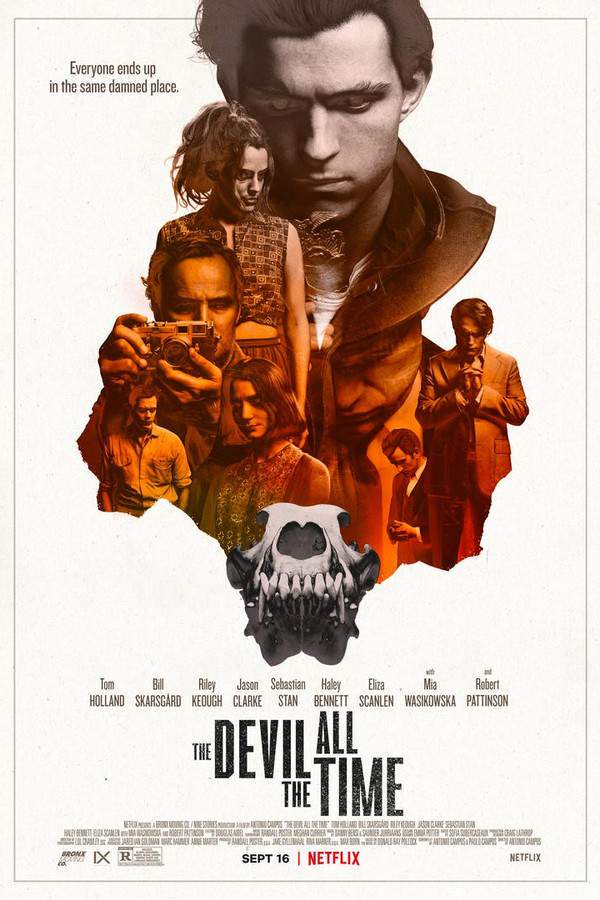
The Devil All the Time (2020) movie poster

Plot Summary

The Devil All the Time (2020) Plot Summary & Ending Explained

Release, runtime and language
2020 · 138 min · English
Echo score 80
JustWatch #2,512 29
Directed by
Antonio Campos
Starring
Chris Evans, Sebastian Stan, Tom Holland, Bill Skarsgård, Robert Pattinson, Mia Wasikowska

Set against a backdrop of post-World War II America through the 1960s, the story follows several characters whose lives intersect in a web of violence, faith, and darkness. Willard Russell, a troubled war veteran, grapples with the loss of his wife, Charlotte, to cancer. Meanwhile, a couple, Carl and Sandy Henderson, embark on a spree of serial killings targeting young women. A corrupt pastor, Roy, and his accomplice, Theodore, are desperately trying to evade the law. At the heart of this turmoil is Arvin Russell, Willard and Charlotte’s son, whose life is profoundly affected by the events unfolding around him.

On this page (8)
  1. 1 Where to watch
  2. 2 What happens: full plot
  3. 3 Plot questions answered
  4. 4 How it ends
  5. 5 The book behind the movie
  6. 6 Movie threads
  7. 7 Movies like The Devil All the Time
  8. 8 Every angle

Where to watch

Where to Watch The Devil All the Time (2020)

Where can you watch The Devil All the Time? Stream, rent or buy it in the US, including on Netflix and Netflix Standard: current JustWatch availability with up-to-date prices.

Streaming availability powered by JustWatch

Full plot summary · contains spoilers

What Happens in The Devil All the Time: Full Plot Summary

The whole story of The Devil All the Time (2020) explained, from the opening scene to the final frame: every key event, every twist and what it all adds up to. Read it as a quick recap before the sequel, to check a scene you missed, or to finally understand what really happened.

During World War II, Marine Willard Russell discovers Gunnery Sergeant Miller Jones brutally skinned and crucified by the Japanese. In a merciful act, Willard ends Jones’ suffering with a gunshot to the head. After the war, en route to his hometown of Coal Creek, West Virginia, Willard stops in Meade, Ohio, where he meets Charlotte, a diner waitress. They marry and settle in Knockemstiff, Ohio, where they welcome a son named Arvin.

Fast forward to 1950, Helen Hatton ties the knot with the eccentric yet captivating preacher Roy Laferty, who showcases his faith by pouring venomous spiders over his head during a sermon. Helen gives birth to Lenora, and soon after, Roy's reality begins to unravel due to a severe allergic reaction to a spider bite. In a delusional belief that he can bring the dead back to life, Roy tragically stabs Helen. When he realizes that she does not revive, he flees, desperate to see his daughter.

Roy's escape leads him to a fatal encounter with the serial-killing couple, Carl Henderson and Sandy. Their twisted modus operandi involves picking up male hitchhikers, seducing them, and then murdering them. When Roy declines to engage with Sandy, Carl has no hesitation in taking his life.

In 1957, as Charlotte battles cancer, Willard engages in fervent prayers, convinced that his devotion can sway God to heal her. In a desperate spiritual sacrifice, he kneels before a cross he erected in the woods and offers the family's dog. Despite his pleas, Charlotte ultimately succumbs to her illness, leading Willard to take his own life out of grief. Orphaned, Arvin is sent to live with his grandmother Emma and soon encounters Lenora, now his stepsister.

Seizing the 1965 scene, Arvin receives his father's Luger pistol as a birthday gift. The local church welcomes a new preacher, Reverend Preston Teagarden, whose extreme behavior raises concerns. After witnessing Lenora's torment by bullies at school, Arvin retaliates violently. Meanwhile, Teagarden exploits Lenora's vulnerability, leading to a harrowing encounter that results in her pregnancy. Unable to cope with the shame, Lenora contemplates suicide and tragically dies in the process.

Heartbroken, Arvin learns of Lenora's pregnancy and immediately suspects Teagarden’s involvement. He resolves to confront him and ultimately kills him with the Luger. In a turn of fate, Arvin finds himself hitchhiking again, only to be picked up by Carl and Sandy. Defending himself against Carl’s lethal intentions, Arvin kills both Carl and Sandy. Inside the glove compartment, he discovers a stash of photographs taken during their monstrous rituals.

With the local sheriff, Lee Bodecker, now aware of Sandy's murder, he seeks to dispose of the evidence. However, the tension escalates when Arvin returns to his childhood home. Their paths cross in the woods where the tragic events unravel, leading to a deadly exchange between Arvin and Lee. As Lee lies wounded, Arvin leaves behind incriminating evidence before catching a ride with a hippie in a VW van.

The story culminates with Arvin reflecting on his future, wondering whether he will become a devoted husband or a soldier in the Vietnam War, as the film concludes with a poignant sense of uncertainty and possibilities.
Last updated: November 15, 2024 at 16:55

Was this helpful?

Plot questions answered

The Devil All the Time Plot Explained: Your Questions Answered

The questions people ask most about The Devil All the Time (2020): what happens in the confusing scenes, why the characters do what they do, the twists, hidden details and what the ending means. Each answer contains spoilers.

Q1

Why does Willard sacrifice his dog in the woods?

Willard sacrifices his dog in a desperate attempt to save his wife Charlotte from cancer. After witnessing the horrors of war and being haunted by the death of Gunnery Sergeant Miller Jones, Willard turns to extreme religious devotion. Believing that God will heal Charlotte if he offers a sufficient sacrifice, he kills their dog at a makeshift cross in the woods. Despite his fervent prayers and sacrifice, Charlotte dies anyway, which is what drives Willard to take his own life.

Foreshadowing: Willard's traumatic wartime experience of mercy-killing Miller Jones sets the precedent for his willingness to end suffering through violent sacrifice.

  • willard russell
  • charlotte
  • cancer
  • prayer
  • sacrifice
  • dog
  • religious devotion
Q2

Why does Roy Laferty kill his wife Helen?

Roy kills Helen because he believes he can resurrect her. After being bitten by a spider (having an extreme allergic reaction from his earlier spider-handling sermons), Roy enters a delusional state. In his delusion, he stabs Helen to death thinking that God will bring her back, just as Jesus resurrected the dead. When Helen does not revive, Roy flees in panic, leaving their daughter Lenora alone.

Foreshadowing: Roy's bizarre sermons involving venomous spiders foreshadow his eventual fatal reaction to a spider bite and his subsequent break from reality.

  • roy laferty
  • helen
  • spider bite
  • delusion
  • resurrection
  • lenora
Q3

How does Roy Laferty die?

Roy Laferty is killed by Carl Henderson after fleeing from his home. On the run and still delusional, Roy hitches a ride with Carl and Sandy Henderson, the serial killing couple. When Sandy tries to seduce Roy as part of their usual trap, Roy refuses to engage with her. This angers Carl, who shoots Roy dead without hesitation, adding another victim to their murderous spree.

Foreshadowing: Roy's escape from the scene of Helen's death directly leads him to encounter the very evil he would have condemned.

  • roy laferty
  • carl henderson
  • sandy
  • hitchhiker
  • serial killer
Q4

Why does Lenora commit suicide?

Lenora commits suicide because she is pregnant after being sexually exploited by Reverend Teagarden and cannot bear the shame. After being manipulated by Teagarden, Lenora becomes pregnant. Overwhelmed by the stigma and unable to cope with the traumatic experience, she takes her own life in a bathtub, leaving Arvin devastated when he discovers what happened.

Foreshadowing: Teagarden's predatory behavior toward vulnerable women is hinted at early in his arrival at the church, where he singles out impressionable congregants.

  • lenora
  • teagarden
  • pregnancy
  • suicide
  • shame
  • exploitation
Q5

Why does Arvin kill Reverend Teagarden?

Arvin kills Reverend Teagarden in revenge for what Teagarden did to his stepsister Lenora. After learning that Lenora was pregnant and had committed suicide, Arvin confronts Teagarden. Using his father's Luger pistol, Arvin shoots the preacher dead, holding him directly responsible for Lenora's suffering and death. This act marks Arvin's descent into violence and sets him on a darker path.

Foreshadowing: Arvin's violent reaction to protecting Lenora from school bullies foreshadows his willingness to use deadly force against those who harm his family.

  • arvin russell
  • teagarden
  • lenora
  • revenge
  • luger
  • vengeance
Q6

How does Arvin end up meeting Carl and Sandy?

Arvin meets Carl and Sandy after killing Teagarden and fleeing town. Like many characters in the film, Arvin becomes a hitchhiker. Carl and Sandy pick him up, not knowing he is the same young man who killed their previous victim Roy Laferty years earlier. When Carl attempts to murder Arvin using their usual method (seducing him with Sandy before killing), Arvin defends himself and kills both of them.

Foreshadowing: The film's circular nature is established early through parallel hitchhiking scenes, showing how the same road claims different victims.

  • arvin
  • carl henderson
  • sandy
  • hitchhiker
  • serial killers
  • car ride
Q7

What does Arvin find in Carl and Sandy's car?

Arvin discovers a stash of photographs in the glove compartment of Carl and Sandy's car. These photographs document the couple's previous murders and rituals, serving as evidence of their extensive serial killing spree. This grim discovery connects Arvin to the dark legacy of violence that has haunted multiple characters throughout the film.

Foreshadowing: The photographs reveal the true extent of evil that has been operating in the background of the story all along.

  • photographs
  • evidence
  • murders
  • carl
  • sandy
  • rituals
  • glove compartment
Q8

Why does Arvin kill Sheriff Lee Bodecker?

Arvin kills Sheriff Lee Bodecker in self-defense during a confrontation in the woods. After Arvin returns to town, Bodecker, who has been corrupt throughout the film and was trying to destroy evidence related to Sandy's murder, finds Arvin. During their encounter, Bodecker shoots at Arvin, and Arvin kills him in the exchange. Before leaving, Arvin deliberately leaves Bodecker's incriminating evidence at the scene to ensure the truth comes out.

Foreshadowing: Bodecker's earlier protection of the serial killers and his corruption have built toward this inevitable confrontation.

  • sheriff
  • bodecker
  • arvin
  • self-defense
  • woods
  • confrontation
Q9

How are all the characters in the story connected?

The characters are connected through a web of cause and effect spanning decades. Arvin Russell is the central figure, being the son of Willard Russell and Charlotte. Lenora is Arvin's stepsister, daughter of Roy Laferty and Helen. Roy is killed by Carl and Sandy, the same couple Arvin later kills. Sheriff Bodecker pursues Arvin while being complicit in the Hendersons' crimes. These interconnections create a cycle of violence where characters from different storylines constantly intersect.

Foreshadowing: The film establishes early on that all roads in this world lead to the same dark destination.

  • connections
  • characters
  • cycle of violence
  • interconnected
  • arvin
  • roy
  • bodecker
Q10

What happens at the end of The Devil All the Time?

At the end, Arvin kills Sheriff Bodecker in self-defense, leaves incriminating evidence at the scene, and escapes in a VW van with a hippie. The film ends with Arvin contemplating his future, wondering whether he will become a devoted husband or go to Vietnam as a soldier. The ending is deliberately ambiguous, leaving his ultimate fate uncertain while suggesting he may continue the cycle of violence or break free from it.

Foreshadowing: The recurring motif of hitchhiking suggests Arvin's journey is far from over.

  • ending
  • future
  • arvin
  • vietnam
  • husband
  • hippie
  • uncertainty
Q11

Why does Willard Russell commit suicide?

Willard Russell commits suicide because he cannot cope with the loss of his wife Charlotte to cancer. After sacrificing their dog in a desperate prayer for her healing and still losing her, Willard becomes overwhelmed by grief and despair. Haunted by his wartime trauma and now completely shattered by Charlotte's death, he hangs himself, leaving their young son Arvin orphaned.

Foreshadowing: Willard's wartime experience of mercy-killing Jones foreshadows his own willingness to end his own suffering through death.

  • willard russell
  • suicide
  • charlotte
  • grief
  • hang
  • orphan
Q12

Why is Reverend Teagarden a villain?

Reverend Teagarden is a villain because he exploits his position as a preacher to sexually manipulate vulnerable women, specifically targeting Lenora Laferty. He manipulates Lenora's religious devotion and emotional vulnerability to seduce her, resulting in her pregnancy. This act of exploitation directly leads to Lenora's shame and subsequent suicide, making him one of the film's most morally corrupt characters despite not being a murderer himself.

Foreshadowing: Teagarden's extreme, performative sermons signal his capacity for deception and manipulation.

  • teagarden
  • preacher
  • corrupt
  • exploitation
  • lenora
  • manipulation
  • pregnancy

Ending explained

What Happens at the End of The Devil All the Time?

How The Devil All the Time (2020) ends, in short: the final scene, the last twist and what it means for the characters. The full ending explained, with every spoiler, lives on its own page.

Read the full ending explained

The film's ending leaves us with a sense of grim closure, but also a hint of unresolved tension. Arvin, having taken justice into his own hands by killing Preston Teagardin and other characters involved in wrongdoings, appears to have freed himself from the cycle of violence that has haunted his life. As he prepares to leave Knockemstiff, the sense is that he believes he's done what needed to be done to cleanse the town of its evil. However, the closing scene, where Arvin considers his future—possibly heading to join the Vietnam War following a radio broadcast—suggests that this cycle may continue elsewhere. It hints that violence and darkness are perpetual forces, capable of passing from one person to another, as symbolized by the recurring themes of sin and corruption in the town.

The presence of the serial killers Carl and Sandy reinforces this idea: even outside Knockemstiff, evil persists in different forms, and darkness isn't confined to one place. Their macabre deeds—posing victims for photographs after death—highlight how corruption can permeate seemingly unrelated worlds, and that evil often lurks just beneath the surface of everyday life. By weaving their stories into the fabric of the film, the story emphasizes that nobody is truly innocent or heroic; instead, each character is simply trying to find meaning or salvation in a corrupt world.

Continue reading the ending (1 more paragraphs)

Ultimately, the film leaves viewers with a complex picture: that violence and evil are woven into human nature, and the struggle to escape or defeat these forces might be an ongoing, perhaps unwinnable, battle. The ending suggests a cautious hope—that individuals like Arvin might find a moment of peace—yet also underscores the sobering reality that the darkness in human hearts continues to burn, ready to resurface in another form, somewhere down the line.

The Devil All the Time ending explained in full

Movie threads

More Movies Like The Devil All the Time, by Mood & Story

Curated lists built around what makes The Devil All the Time tick: the same mood, the same kind of story or the same emotional payoff. Each list explains why these movies belong together.

Southern Gothic movies like The Devil All the Time

Multi-generational tales of corrupted faith and violence in rural America. If you liked the grim, rural setting and themes of corrupted faith in The Devil All the Time, explore other movies in the Southern Gothic tradition. These stories often feature bleak atmospheres, morally ambiguous characters, and a deep sense of place where violence and spirituality tragically intertwine.

  • grim
  • sinister
  • oppressive
  • melancholic
  • fatalistic
  • gothic
  • Tone: dark, grim, sinister
  • Pacing: variable, character-driven
Why these movies?

The story pattern: These narratives often unfold across generations, revealing how past sins irrevocably shape the present. They frequently employ an ensemble cast whose fates are grimly intertwined, leading to violent, often ambiguous conclusions. The plot is driven by characters wrestling with extreme beliefs and desperate circumstances in isolated communities.

Why they belong together: They are grouped by their shared oppressive, rural atmosphere, focus on themes like flawed religiosity and generational curses, and a narrative structure that favors interwoven, tragic character arcs over a single protagonist's journey.

Fatalistic crime webs like The Devil All the Time

Stories where disparate lives collide in a grim, predetermined dance of violence. For viewers who appreciated the complex, interlocking narratives and sense of grim destiny in The Devil All the Time, this section features movies where multiple character arcs tragically collide. These films share a high-stakes, heavy emotional weight and a pacing that builds tension through seemingly disconnected storylines.

  • anxious
  • fatalistic
  • tense
  • desperate
  • grim
  • complex narrative
  • Tone: dark, tense, fatalistic
  • Pacing: variable, building tension
Why these movies?

The story pattern: The narrative pattern involves following several distinct characters or storylines that initially appear separate. Through a series of cause-and-effect events, often spanning different timeframes, these threads gradually intertwine, building towards a violent and emotionally heavy climax. The structure emphasizes the unpredictability and fragility of life, where a single event can set off a chain reaction of tragedy.

Why they belong together: These films are grouped by their complex, multi-perspective narrative structure, a pervasive tone of fatalism, and a shared theme that violence begets violence in an inescapable cycle. The viewing experience is defined by tracking how small actions lead to catastrophic, interconnected consequences.

If you liked this

Movies Like The Devil All the Time

Similar movies to The Devil All the Time: the same genre, themes or kind of story. Each one comes with its own plot summary, timeline and ending explained.

Browse all movie summaries

Every angle

The Devil All the Time (2020) Explained: Plot, Ending, Timeline & Characters

Everything about The Devil All the Time in one place: what happens in the plot summary, the timeline in chronological order, the characters and meaning, the ending explained and a spoiler-free summary. What's After the Movie adds the cast, box office and post-credit scenes.

Coming soon on iOS and Android

The Plot Explained Movie Summary App

Plot summaries, endings explained and timelines on your phone. Catch up on any movie in minutes, save your favorites and never miss a twist again.

Be the first to know when we launch. Your email stays private, always.

Learn more about the app