Marquis

Marquis

Year: 1989

Runtime: 83 mins

Language: French

Director: Henri Xhonneux

AnimationComedy

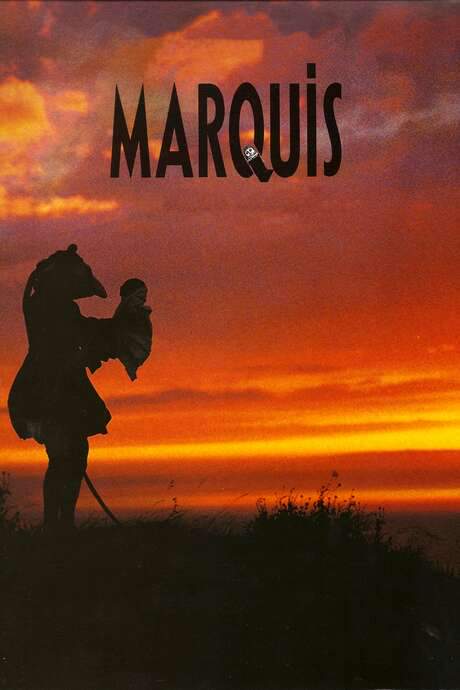
On the brink of revolution, French activist‑author Marquis and his talking penis, Colin, await trial in the Bastille for alleged conspiracy against the state. As Marquis immerses himself in his art while Colin seeks action, the pair draw the attention of rival ideological factions, setting the stage for a clash of mind and desire.

Warning: spoilers below!

Haven’t seen Marquis yet? This summary contains major spoilers. Bookmark the page, watch the movie, and come back for the full breakdown. If you're ready, scroll on and relive the story!

Timeline & Setting – Marquis (1989)

Explore the full timeline and setting of Marquis (1989). Follow every major event in chronological order and see how the environment shapes the story, characters, and dramatic tension.

Time period

Pre-revolutionary era (before the French Revolution)

The events take place in a period when the monarchy and ecclesiastical authorities hold sway. The Bastille serves as a focal point for confinement and political intrigue, while rumors of coups and reform swirl around the prison walls. The tone blends historical setting with surreal, comic elements.

Location

France, Bastille

Set in pre-revolutionary France, the story unfolds inside and around the Bastille. The prison is portrayed as a dense, symbolic site where inmates scheme, write, and confront power. The surrounding public politics pressure the detainees as revolutionary currents begin to surge.

🏰 Bastille 🇫🇷 Pre-revolutionary France

Last updated: February 18, 2026 at 23:05

Was this helpful?

Main Characters – Marquis (1989)

Meet the key characters of Marquis (1989), with detailed profiles, motivations, and roles in the plot. Understand their emotional journeys and what they reveal about the film’s deeper themes.

Marquis de Sade (François Marthouret)

Imprisoned in the Bastille, the canine Marquis channels his controversial thoughts into writing, often conversing with his talking, face-bearing penis Colin. He exudes a wry, self-serving wit and a fascination with power, while contemplating his own life and art within confinement.

🎭 Antihero 🧠 Intellectual 🗝️ Imprisonment

Justine (Isabelle Wolfe)

A bovine inmate whose alleged sexual misconduct is central to the plot. Her presence fuels the political machinations among priests and nobles, and her fate is tied to the manipulation of truth by those in power within the Bastille.

🐮 Bovines 🗝️ Accused 🧭 Plot device

Juliette de Titane (Nathalie Juvet)

An equine noble who emerges as a charismatic leader among the inmates, spearheading revolutionary ambitions. She inspires alliance-building with Colin and becomes a focal point of the inmates’ struggle against royal authority.

🐎 Equine 👑 Noble 🗺️ Rebel

Colin (Valérie Kling)

An anthropomorphized penis with a voice who narrates and disputes power through stories. He develops affection for Juliette and ultimately escapes with her to pursue the revolution, blending humor with political upheaval.

🗣️ Anthropomorphism 💬 Voice 🔥 Love

Dom Pompero (Vicky Messica)

A camel-headed priest orchestrating manipulation and secrecy, he helps cover up the truth about Justine’s fate. He embodies religious and political scheming that fuels the conspiracy against the monarchy.

🕊️ Religion 🎭 Manipulation 🗝️ Secrets

Gaëtan de Preaubois (René Lebrun)

A cocky noble prisoner who teams with Don Pompero to guard a dangerous secret: the King’s involvement in Justine’s fate. He’s self-assured, cunning, and adept at navigating the palace politics.

🏛️ Aristocracy 🗝️ Secrets 🗡️ Conspiracy

Last updated: February 18, 2026 at 23:05

Was this helpful?

Major Themes – Marquis (1989)

Explore the central themes of Marquis (1989), from psychological, social, and emotional dimensions to philosophical messages. Understand what the film is really saying beneath the surface.

🔥 Revolution

A backdrop of political upheaval drives the plot, as revolutionaries plot a coup and the inmates become entangled in the fallout. The Bastille and its inhabitants symbolize the clash between oppressive authority and rising demands for change. The escape and alliance between Colin and Juliette mirror the surge of radical energy against the crown.

🖋️ Art vs. Power

The Marquis's writing and Colin’s storytelling become weapons of imagination in a world of censorship and control. Clay-animated illustrations and surreal dialogue turn fiction into a form of resistance. The film satirizes how art can critique tyranny when it is freed from institutional limits. The relationship between creator and captive questions who tells the truth.

🗝️ Freedom & Imprisonment

Characters navigate literal and figurative confinement, from jail cells to secret plots. The inmates' attempts to escape reflect a broader longing for autonomy, while the revolutionaries’ intervention redefines who holds power. Colin’s flight with Juliette embodies personal liberation entwined with political upheaval. The finale leaves imprisonment behind as new paths open.

Last updated: February 18, 2026 at 23:05

Was this helpful?

Marquis (1989) Character & Theme Questions Answered – Info FAQ

Browse frequently asked questions about Marquis (1989) focused on characters, relationships, themes, symbols, setting, and story context. This movie info FAQ gives spoiler-aware explanations for character arcs, world details, and thematic interpretation so readers can better understand what the film is really about.

Q1

Where is the movie set?

A.

The story takes place in and around the Bastille, the infamous Parisian prison in pre-revolutionary France. The prison is depicted as a dense, symbolic location where inmates scheme, write, and confront authority, while revolutionary currents begin to surge outside its walls.

bastilleparisprisonfrancesettinglocation
Q2

What time period does the story take place in?

A.

The movie is set in the pre-revolutionary era, before the French Revolution. This period is characterized by the dominance of the monarchy and ecclesiastical authorities, with the Bastille serving as a focal point for political intrigue and confinement.

time periodpre-revolutionaryfrench revolutionhistorical era1789
Q3

What are the main themes of the movie?

A.

The film explores three interconnected themes: Revolution as political upheaval drives the plot; Art vs. Power, examining how creative expression becomes resistance against tyranny; and Freedom & Imprisonment, depicting both literal confinement in cells and the broader longing for personal and political autonomy.

themesrevolutionartpowerfreedomimprisonmentresistance
Q4

Who is the Marquis in the film?

A.

The Marquis de Sade is an imprisoned author who channels his controversial ideas into writing while confined in the Bastille. He engages in witty philosophical discussions with his talking penis, Colin, and exhibits a fascination with power dynamics and control.

marquis de sadefrancois marthouretauthorwriterprisoner
Q5

Who is Colin and what role does he play?

A.

Colin is an anthropomorphized penis with a human face who serves as the narrator and voice of the story. He engages in storytelling that critiques authority, develops affection for Juliette, and ultimately escapes with her to join the revolutionary cause.

colintalking penisnarratorcharacteranthropomorphic
Q6

Who is Juliette de Titane?

A.

Juliette de Titane is a noblewoman depicted as an equine character who emerges as a charismatic leader among the inmates. She spearheads revolutionary ambitions and becomes a focal point for the inmates' struggle against royal authority.

juliette de titanenathalie juvetnoblewomanleaderrevolutionary
Q7

Why is the Bastille significant to the story?

A.

The Bastille serves as both a literal prison and a symbolic representation of oppressive authority. It is where political dissidents are held, where the clash between the monarchy and rising revolutionary forces unfolds, and where the film examines the nature of confinement and resistance.

bastilleprisonsymbolismoppressionpolitical imprisonment
Q8

How does the movie explore art versus power?

A.

The film portrays writing and storytelling as weapons of imagination against censorship and control. The Marquis's creative work and Colin's animated tales become forms of resistance, satirizing how art can critique tyranny when freed from institutional limits.

artcensorshipcreative resistancestorytellingwritingpower
Q9

What role does revolution play in the film?

A.

Revolutionary currents provide the backdrop as revolutionaries plot a coup, with the Bastille's inmates becoming entangled in the fallout. The escape and alliance between Colin and Juliette mirror the surge of radical energy challenging the monarchy.

revolutioncouprevolutionariesmonarchypolitical upheaval
Q10

Who is Dom Pompero?

A.

Dom Pompero is a camel-headed priest who orchestrates manipulation and secrecy within the Bastille. He helps cover up truths about Justine's fate, embodying the religious and political scheming that fuels the conspiracy against the monarchy.

dom pomperopriestmanipulationreligiouspolitical scheming
Q11

What is Justine's role in the story?

A.

Justine is a bovine inmate whose alleged sexual misconduct becomes central to the political machinations among priests and nobles. Her fate illustrates how those in power manipulate truth to serve their political agendas within the Bastille.

justineprisonerpolitical machinationsfate
Q12

What kind of movie is it in terms of tone and style?

A.

The film combines heavy subject matter including political imprisonment, sexual themes, and violent revolution with a surreal, comedic, and absurdist lens. It uses clay animation and satirical dialogue to blend historical allegory with meta-fictional commentary.

tonestyleanimationcomedysurrealabsurdistclaymation
Q13

What does the movie say about freedom and imprisonment?

A.

Characters navigate both literal confinement in jail cells and figurative imprisonment in secret plots and political systems. The inmates' escape attempts reflect a broader longing for autonomy, with the finale offering liberation from imprisonment as new paths open.

freedomliberationimprisonmentescapeautonomycaptivity
Mobile App Preview

Coming soon on iOS and Android

The Plot Explained Mobile App

From blockbusters to hidden gems - dive into movie stories anytime, anywhere. Save your favorites, discover plots faster, and never miss a twist again.

Sign up to be the first to know when we launch. Your email stays private, always.

Explore Movie Threads

Discover curated groups of movies connected by mood, themes, and story style. Browse collections built around emotion, atmosphere, and narrative focus to easily find films that match what you feel like watching right now.

Surreal political satires like Marquis

Bizarre comedies that use absurdity to critique power structures and ideology.If you enjoyed the surreal political commentary in Marquis, explore these movies that use absurd humor and unconventional storytelling to critique power structures. These films blend dark comedy with political satire in imaginative ways.

surrealsatiricaldark humorpoliticalabsurdistsubversiveunsettling

Narrative Summary

Stories that juxtapose historical or political events with surreal, absurdist elements to critique authority, often featuring characters trapped within oppressive systems who use wit and subversion to challenge their circumstances.

Why These Movies?

These films share a commitment to using unconventional narrative techniques—whether through animation, absurdist dialogue, or surreal scenarios—to deliver sharp political critique while maintaining dark comedic undertones.

Movies about intellectual confinement like Marquis

Stories about creative minds trapped by ideological systems.Discover films that share Marquis's exploration of creative minds trapped by ideological systems. These stories examine the clash between artistic expression and political repression in confined settings.

claustrophobicphilosophicalideologicalconfinementintellectualrebelliouspsychological

Narrative Summary

Narratives centered on intellectuals, artists, or writers who find themselves physically or ideologically imprisoned, forcing them to confront the limits of their creative freedom against oppressive forces.

Why These Movies?

These movies unite around themes of artistic creation under constraint, featuring protagonists who must confront the relationship between their work and the political realities that seek to control or censor them.

Unlock the Full Story of Marquis

Don't stop at just watching - explore Marquis in full detail. From the complete plot summary and scene-by-scene timeline to character breakdowns, thematic analysis, and a deep dive into the ending - every page helps you truly understand what Marquis is all about. Plus, discover what's next after the movie.

Marquis Summary

Read a complete plot summary of Marquis, including all key story points, character arcs, and turning points. This in-depth recap is ideal for understanding the narrative structure or reviewing what happened in the movie.

Marquis Summary

Marquis Timeline

Track the full timeline of Marquis with every major event arranged chronologically. Perfect for decoding non-linear storytelling, flashbacks, or parallel narratives with a clear scene-by-scene breakdown.

Marquis Timeline

Marquis Spoiler-Free Summary

Get a quick, spoiler-free overview of Marquis that covers the main plot points and key details without revealing any major twists or spoilers. Perfect for those who want to know what to expect before diving in.

Marquis Spoiler-Free Summary

More About Marquis

Visit What's After the Movie to explore more about Marquis: box office results, cast and crew info, production details, post-credit scenes, and external links - all in one place for movie fans and researchers.

More About Marquis

Similar Movies to Marquis

Discover movies like Marquis that share similar genres, themes, and storytelling elements. Whether you’re drawn to the atmosphere, character arcs, or plot structure, these curated recommendations will help you explore more films you’ll love.