







Plot Explained Spoilers guaranteed!
Plot Explained

Browse by genre

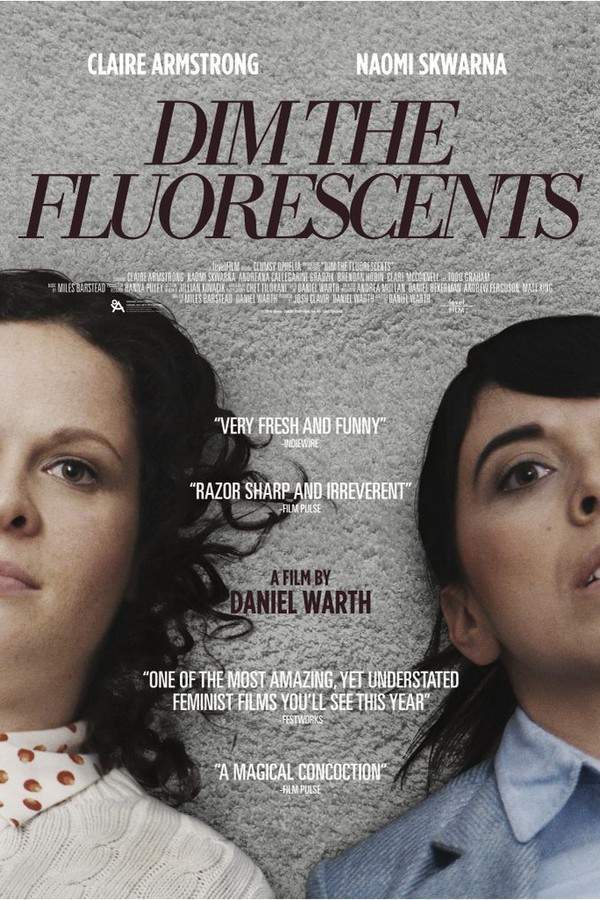
Dim the Fluorescents (2018) movie poster

Plot Summary

Dim the Fluorescents (2018) Plot Summary Explained

Release, runtime and language
2018 · 128 min · English
Echo score 75
JustWatch #33,666
Directed by
Daniel Warth
Starring
Anna Maguire, Andreana Callegarini-Gradzik, Brendan Hobin, Claire Armstrong, Clare McConnell, Jocelyn Reynolds

Ambitious performers and writers find themselves navigating the compromises of a creative life, exchanging theatrical pursuits for the demands of corporate presentations. Trading the allure of the stage for the pressure of sales, they grapple with the challenge of reconciling artistic dreams with the realities of a world increasingly defined by corporate language. To succeed, they must confront the need to temper their passions and adapt to a modern landscape that often prioritizes practicality over artistic expression.

On this page (7)
  1. 1 Where to watch
  2. 2 What happens: full plot
  3. 3 Plot questions answered
  4. 4 Movie threads
  5. 5 Movies like Dim the Fluorescents
  6. 6 Categories
  7. 7 Every angle

Where to watch

Where to Watch Dim the Fluorescents (2018)

Where can you watch Dim the Fluorescents? Stream, rent or buy it in the US, including on Philo, Hoopla and Cineverse: current JustWatch availability with up-to-date prices.

Streaming availability powered by JustWatch

Full plot summary · contains spoilers

What Happens in Dim the Fluorescents: Full Plot Summary

The whole story of Dim the Fluorescents (2018) explained, from the opening scene to the final frame: every key event, every twist and what it all adds up to. Read it as a quick recap before the sequel, to check a scene you missed, or to finally understand what really happened.

This film unfolds a beautifully crafted, visually striking narrative centered around a bespectacled female scriptwriter and her complex, affectionate yet fraught relationship with a profoundly talented but emotionally troubled actress. As the story develops, we witness the internal struggles of the actress who grapples with her passions for acting, coupled with frustrations towards the character she has been assigned to play in the script penned by the writer. A pivotal scene looms ahead in the future, marked on their calendar, which ultimately holds the key to unraveling the intricate dynamics between the troubled actress and her creative counterpart.

The camera guides us through the actress' life, showcasing her dated pill boxes filled with anti-depressants that she relies on to navigate her tumultuous emotions. In a bold departure from the emotional security provided by her scriptwriter, she steps into the harsh realities of the casting world—a realm devoid of validation where she struggles to find acknowledgment of her talents. During this challenging time, she seeks solace in the company of a trusted male friend, Brendan Hobin, who selflessly takes time away from his work to support her, offering her companionship and a glimmer of worth as a person.

As the narrative progresses, we reach the climax where the actress returns to confront her final scene in the script, alongside the writer and another actress. This moment is charged with raw emotion as both the actress and the writer hurl bitter, hurtful words at one another, exposing the cracks and vulnerabilities within their relationship. In a wave of disappointment, the writer confesses that she regrets rescuing the actress from her psychological turmoil. In a heart-wrenching reaction, the actress shatters drinking glasses on the floor—symbolizing the shattering of her remaining hopes and dreams.

Faced with despair, she prepares to walk away, teetering on the edge of a deepening depression, contemplating an irreversible decision. However, in a moment of renewed compassion, the writer intercepts her, unwilling to let her partner despair without a fight. They both embrace, and amidst tears, they come to the profound realization of their inseparable bond—a testament to the complex web of love, creativity, and pain they share.

Last updated: May 12, 2025 at 07:04

Was this helpful?

Plot questions answered

Dim the Fluorescents Plot Explained: Your Questions Answered

The questions people ask most about Dim the Fluorescents (2018): what happens in the confusing scenes, why the characters do what they do, the twists, hidden details and what the ending means. Each answer contains spoilers.

Q1

Why does the writer say she regrets saving the actress from her psychological turmoil?

During the climactic confrontation, the writer lashes out in anger and frustration, telling the actress she regrets rescuing her. This harsh statement stems from years of emotional exhaustion watching her partner struggle with depression while feeling helpless to fix the situation. The writer's regret is not genuine, it's a destructive reaction to the pain of witnessing someone she loves suffer, spoken in the heat of their bitter argument.

Foreshadowing: Earlier scenes showing the writer's constant worry and the actress's reliance on anti-depressants establish the emotional weight that has been building between them.

  • writer
  • actress
  • regret
  • confrontation
  • emotional pain
Q2

What does the actress breaking drinking glasses represent?

When the actress shatters glasses on the floor, it symbolizes the destruction of her remaining hopes and dreams. The act represents her emotional breaking point after hearing the writer's cruel words. The shattered glass visually conveys the fragility of her mental state and the way their relationship has fractured under the weight of frustration, disappointment, and unspoken resentment.

Foreshadowing: The tension has been building throughout the film as the actress struggles with her role dissatisfaction and the writer watches helplessly.

  • shattered glass
  • symbolism
  • hopes
  • destruction
  • emotional breakdown
Q3

What was the actress about to do after the confrontation?

After the devastating argument where the writer expressed regret, the actress descends into deep despair and contemplates an irreversible decision, implying she was considering suicide. The film explicitly shows her teetering on the edge of worsening depression, recognizing how hopelessness threatens to overtake her. This moment represents the climax of her mental health struggle throughout the narrative.

Foreshadowing: The recurring imagery of her pill boxes and the difficult audition experiences establish her vulnerability to severe depression.

  • depression
  • suicide
  • despair
  • mental health
  • dark moment
Q4

Who is Brendan Hobin's character and what is his purpose in the story?

Brendan Hobin plays a trusted male friend who supports the actress during her lowest points. When she leaves the safety of the writer's script to face the harsh casting world, he takes time away from his own work to keep her company and help her feel valued as a person. His role serves as an emotional safety net during her struggles, providing companionship when she feels unseen and unacknowledged by the industry.

Foreshadowing: The friend's willingness to risk his job security hints at the depth of their friendship and the actress's need for validation outside her complicated relationship.

  • brendan hobin
  • friend
  • support
  • auditions
  • companionship
Q5

What is the significance of the actress's medication and pill boxes?

The dated pill boxes filled with anti-depressants visually establish the actress's ongoing battle with depression and anxiety. They reveal that her mental health struggles are not new but have been a constant presence in her life. The medication represents both her attempt to manage her condition and the emotional burden she carries while pursuing her passion for acting.

Foreshadowing: The pills foreshadow the severity of her later breakdown, showing she was already vulnerable before the events of the film.

  • medication
  • depression
  • pills
  • mental health
  • anxiety
Q6

What is the significance of the scene marked on the calendar?

The scene marked on the calendar represents the climactic final scene of the writer's script that both characters must face together. This anticipated moment drives much of the emotional tension throughout the film, the actress knows she must eventually return to perform this scene with the writer, creating dread and anticipation as the date approaches. It serves as the literal and symbolic endpoint where their relationship's issues must be resolved.

Foreshadowing: The marked calendar builds suspense from the beginning, signaling that this confrontation has been inevitable.

  • calendar
  • final scene
  • climax
  • anticipation
  • confrontation
Q7

Why does the actress leave the writer's script to pursue auditions?

The actress decides to venture into the casting world because she feels frustrated with the character she has been assigned in the writer's script and craves validation from outside their relationship. She wants to prove herself in the professional acting industry and potentially find roles that don't depend on the writer. However, she quickly discovers the brutal reality of auditions, a world without the emotional support and understanding she receives from her partner.

Foreshadowing: Her dissatisfaction with the script role and need for external validation plant the seeds for her difficult journey.

  • auditions
  • leaving
  • script
  • casting
  • independence
Q8

Do the main characters reconcile at the end?

Yes, the characters reconcile in a tearful embrace. After the actress prepares to walk away in despair, the writer intervenes with compassion and refuses to let her leave. They embrace and share a moment of mutual understanding, realizing their bond is inseparable despite all the pain. This emotional reunion signifies their love for each other and marks a hopeful new chapter, though their underlying struggles with creativity and mental health remain ongoing challenges.

Foreshadowing: Despite their bitter argument, earlier moments of affection and care between them hinted that reconciliation was possible.

  • reconciliation
  • embrace
  • hope
  • forgiveness
  • ending
Q9

What is the nature of the relationship between the writer and actress?

The writer and actress share a deeply loving but tumultuous romantic relationship complicated by creative tensions and the actress's mental health struggles. They function as creative partners, the writer creates scripts with the actress in mind, yet this closeness breeds frustration when the actress feels confined by her assigned roles. Their bond is affectionate yet fraught with misunderstandings, codependency, and emotional volatility, making their connection both sustaining and damaging.

Foreshadowing: The opening introduction establishes their loving yet intricate dynamic, setting up the conflicts to come.

  • relationship
  • writer
  • actress
  • love
  • creative partnership
Q10

Is the ending of Dim the Fluorescents hopeful or sad?

The ending is bittersweet. While the characters achieve a touching reconciliation and affirm their inseparable bond through a tearful embrace, the film doesn't offer a complete resolution. Their underlying struggles remain: the actress's ongoing battle with depression, their complicated creative lives, and the tensions between artistic dreams and practical demands. The hopeful embrace coexists with the acknowledgment that their challenges are far from over, making the conclusion emotionally complex rather than simply uplifting.

Foreshadowing: The melancholic tone and recurring themes of artistic struggle throughout the film prepare viewers for this nuanced ending.

  • ending
  • bittersweet
  • hope
  • sadness
  • reconciliation

Movie threads

More Movies Like Dim the Fluorescents, by Mood & Story

Curated lists built around what makes Dim the Fluorescents tick: the same mood, the same kind of story or the same emotional payoff. Each list explains why these movies belong together.

Movies about struggling artists like Dim the Fluorescents

Character studies of creators wrestling with compromise and mental health. If you liked Dim the Fluorescents, explore more movies about the quiet desperation of creative life. These films capture the raw emotional struggles, mental health challenges, and artistic compromises faced by performers, writers, and painters, offering a melancholic and deeply human look at the pursuit of art.

  • artistic
  • anxious
  • frustrated
  • contemplative
  • raw
  • supportive
  • Tone: melancholic, raw
  • Pacing: slow, contemplative
Why these movies?

The story pattern: Stories in this thread typically follow artists—performers, writers, painters—as they navigate the frustrating mundanity of day jobs and the psychological strain of unfulfilled dreams. The narrative conflict is internal and relational, focusing on the erosion of passion, the strain on personal connections, and the quiet existential crisis that accompanies a life dedicated to an uncooperative craft.

Why they belong together: Movies are grouped here for their shared focus on the artistic struggle as a central theme. They share a melancholic, contemplative mood, a raw and anxious emotional core, and a character-driven pace that prioritizes psychological depth over plot, creating a deeply empathetic and often heavy viewing experience.

Movies with complex friendships like in Dim the Fluorescents

Stories of complex relationships tested by personal struggles. Find movies similar to Dim the Fluorescents that explore the dynamics of a strained but deeply affectionate relationship. These stories focus on how personal struggles and life's pressures test a central bond, leading to emotional fractures and ultimately, a bittersweet but compassionate resolution.

  • supportive
  • frustrated
  • raw
  • anxious
  • melancholic
  • bittersweet
  • Tone: melancholic, bittersweet
  • Pacing: slow, character-driven
Why these movies?

The story pattern: The narrative pattern revolves around a central, codependent relationship—often a creative partnership or deep friendship—that serves as the story's emotional anchor. This bond is severely tested by the characters' individual struggles (e.g., depression, career failure), leading to a major confrontation or breakdown. The story resolves not with a simple happy ending, but with a tearful, hard-won reconciliation that is profoundly bittersweet, leaving underlying issues unresolved but the bond intact.

Why they belong together: These films are grouped by their shared focus on a single, intensely rendered relationship as the primary source of drama and emotional payoff. They share a heavy emotional weight, a melancholic tone underpinned by genuine affection, and a bittersweet ending feel that prioritizes emotional realism over neat conclusions.

If you liked this

Movies Like Dim the Fluorescents

Similar movies to Dim the Fluorescents: the same genre, themes or kind of story. Each one comes with its own plot summary, timeline and ending explained.

Browse all movie summaries

Categories

Movie Lists Featuring Dim the Fluorescents

Dim the Fluorescents appears in these hand-built movie categories. Each one groups movies by a specific mood, theme or story type, with their plot summaries and endings explained.

View all movie categories

Every angle

Dim the Fluorescents (2018) Explained: Plot, Timeline & Characters

Everything about Dim the Fluorescents in one place: what happens in the plot summary, the timeline in chronological order, the characters and meaning and a spoiler-free summary. What's After the Movie adds the cast, box office and post-credit scenes.

Coming soon on iOS and Android

The Plot Explained Movie Summary App

Plot summaries, endings explained and timelines on your phone. Catch up on any movie in minutes, save your favorites and never miss a twist again.

Be the first to know when we launch. Your email stays private, always.

Learn more about the app