Plot Explained Spoilers guaranteed!
Plot Explained

Browse by genre

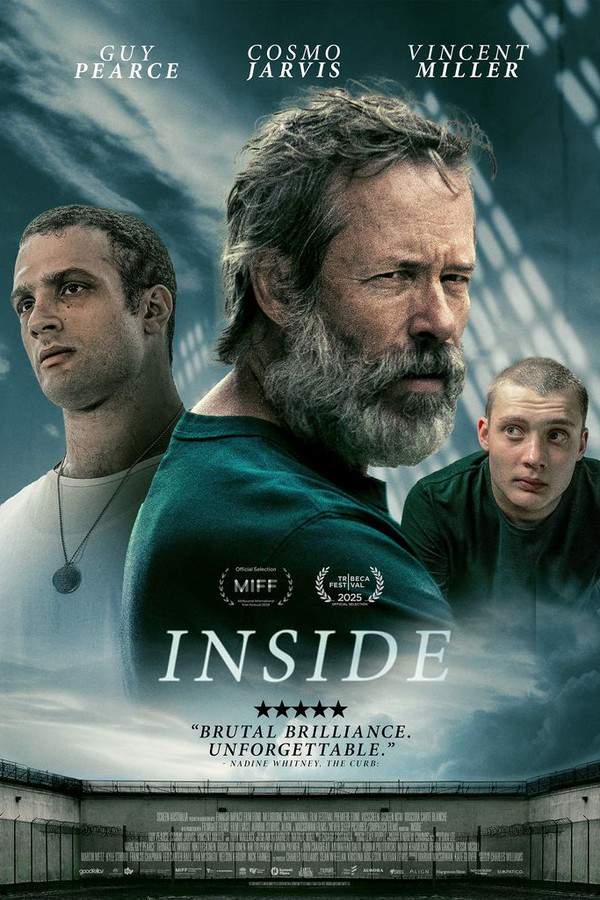
Inside (2023) movie poster

Plot Summary

Inside (2023) Plot Summary & Ending Explained

Release, runtime and language
2023 · 105 min · English
Echo score 49
JustWatch #9,216 21
Directed by
Vasilis Katsoupis
Starring
Willem Dafoe, Andrew Blumenthal, Ava von Voigt, Cornelia Buch, Daniel White, Eliza Stuyck
Budget
$10M

Following a failed art heist, thief Nemo finds himself unexpectedly trapped inside a vast, complex penthouse. He must use his intelligence and resourcefulness to outwit his pursuers and navigate a dangerous game of cat and mouse. Surrounded by stolen masterpieces, Nemo begins to uncover a larger conspiracy and a web of deceit, as the consequences of his actions escalate above the Manhattan skyline.

On this page (7)
  1. 1 Where to watch
  2. 2 What happens: full plot
  3. 3 Plot questions answered
  4. 4 How it ends
  5. 5 Movie threads
  6. 6 Movies like Inside
  7. 7 Every angle

Where to watch

Where to Watch Inside (2023)

Where can you watch Inside? Stream, rent or buy it in the US, including on Peacock Premium, Peacock Premium Plus and YouTube TV: current JustWatch availability with up-to-date prices.

Streaming availability powered by JustWatch

Full plot summary · contains spoilers

What Happens in Inside: Full Plot Summary

The whole story of Inside (2023) explained, from the opening scene to the final frame: every key event, every twist and what it all adds up to. Read it as a quick recap before the sequel, to check a scene you missed, or to finally understand what really happened.

Nemo, Willem Dafoe, is an art thief with a poignant and reflective past. In his storytelling, he recounts a childhood incident where a teacher asked him to select three possessions to save from a house fire. Instead of choosing his family, Nemo picked his beloved cat, an AC/DC record, and his sketchbook. He laments that the cat died, the record was lent to someone who never returned it, but his sketchbook remains—a symbol of his belief that "art is for keeps." This anecdote hints at Nemo's deep connection to art and the importance he places on creation and preservation.

In the present day, Nemo adopts the guise of a handyman to infiltrate a luxurious Manhattan penthouse owned by a wealthy collector. His goal is to steal three works by the renowned artist Egon Schiele, although he struggles to locate Schiele's self-portrait within the lavish space. His daring attempt to steal the artwork triggers a security alarm, trapping him inside the apartment, which then seals itself off completely. As his contacts on the outside abandon him, Nemo finds himself increasingly isolated, facing the challenge of breaking free. The penthouse's malfunctioning thermostat swings between scorching heat and freezing cold, adding to his physical torment. Food and water are scarce—apart from the timed sprinklers in the indoor garden—and Nemo's psychological state begins to waver.

His entry into the apartment is dramatic; after climbing through bird netting over the balcony, a pigeon becomes trapped in the space, slowly starving to death while Nemo helplessly watches. Wasted and injured from repeated escape attempts, Nemo constructs a massive scaffold from furniture in a bid to reach a skylight, which he hopes will lead to his escape. Using improvised tools made from furniture, he gradually dismantles the frame around the skylight, inching closer to freedom. During this ordeal, he becomes obsessively fixated on Jasmine, a young housekeeper he observes via security cameras shown on the apartment's television. Despite the frustration of hearing her nearby while she remains oblivious—wearing earphones and unaware of his desperation—Nemo's desperation grows.

His discovery of a hidden passage in a closet leads him to a private room containing the self-portrait of Schiele and a collection of The Marriage of Heaven and Hell. In his desperation, Nemo turns to consuming the fish from the aquarium and even dog food, which ultimately leads to tooth decay and hallucinations. His physical decline worsens when he falls while removing bolts from the skylight, breaking his leg. Despite patching it up with a splint, his health and sanity continue to erode amid the deteriorating apartment environment.

Throughout his ordeal, Nemo immerses himself in studying the apartment's artwork and creating his own drawings and art pieces on the walls—each a testament to his obsession with creation amid destruction. His attempts to seek help become increasingly desperate; he sets off a smoke alarm, flooding the penthouse in the process, but no aid arrives. In a final act of remorse and reflection, he leaves a message on the walls, recounting his childhood story once more, apologizing for breaking into and damaging his host's home, and affirming that "there is no creation without destruction." He explains that he has saved three pieces of artwork, symbolizing the core of his mission.

The film closes with a serene, lingering shot of the scaffolding now surrounding the open skylight, symbolizing Nemo’s potential escape. Through the skylight, a shadow is visible—suggesting Nemo has finally broken free from his prison, transcending his physical and psychological struggles. This ending leaves viewers with a sense of hope and the enduring power of art as a form of salvation, even in the midst of chaos.

Last updated: August 19, 2025 at 05:15

Was this helpful?

Plot questions answered

Inside Plot Explained: Your Questions Answered

The questions people ask most about Inside (2023): what happens in the confusing scenes, why the characters do what they do, the twists, hidden details and what the ending means. Each answer contains spoilers.

Q1

Why did Nemo choose his cat and belongings over his family during the fire

In the childhood flashback, Nemo's teacher asked him to save three things from a house fire. Rather than rescuing his family, he chose his cat, an AC/DC record, and his sketchbook. This reflects Nemo's core belief that 'art is for keeps', he values artistic creation and preservation over everything else, even loyalty to family. The cat died and the record was never returned, but he still has his sketchbook, reinforcing that art is the only thing that truly endures.

Foreshadowing: This childhood moment establishes Nemo's obsession with art as a form of salvation, foreshadowing his later actions in the penthouse.

  • nemo
  • fire
  • childhood
  • cat
  • sketchbook
  • art is for keeps
Q2

Why does the apartment lock down and trap Nemo inside

Nemo triggers the security alarm while attempting to steal the Egon Schiele paintings. The penthouse's advanced security system automatically seals the entire apartment in lockdown mode once the alarm is tripped. His contacts on the outside abandon him when they realize he's trapped, leaving him to face the consequences alone.

  • security alarm
  • lockdown
  • trapped
  • penthouse
  • escape
Q3

What is the significance of the pigeon in the penthouse

When Nemo enters through the balcony, a pigeon gets trapped inside the bird netting. Over weeks, the pigeon starves to death while Nemo watches helplessly. The pigeon serves as a tragic mirror of Nemo's own entrapment, he too is trapped, slowly deteriorating, and unable to escape. It symbolizes the consequences of his failed heist and his helplessness against the situation.

  • pigeon
  • trapped
  • balcony
  • symbolism
  • entrapment
Q4

Why does Nemo become obsessed with Jasmine the housekeeper

Nemo watches Jasmine through the apartment's security cameras displayed on the television. She works just outside his door but remains completely unaware of his presence because she wears earphones. His isolation and desperation cause him to fixate on her as his only connection to the outside world. Hearing her nearby yet being unable to reach her intensifies his loneliness and psychological deterioration.

  • jasmine
  • housekeeper
  • cctv
  • obsession
  • isolation
Q5

How does Nemo discover the hidden room with the Schiele self-portrait

Nemo finds a concealed passage inside a closet that leads to a private room. This hidden space contains the Egon Schiele self-portrait he had been searching for throughout the heist, along with a collection of William Blake's 'The Marriage of Heaven and Hell'. The room represents the ultimate artistic prize he risked everything to obtain.

  • hidden room
  • closet
  • schiele
  • self-portrait
  • blake
Q6

Why does Nemo eat fish and dog food while trapped

With food and water extremely scarce in the sealed apartment, Nemo resorts to desperate measures for survival. He eats fish from the aquarium and dog food meant for the owner's pet. This sustenance ultimately causes his teeth to decay and contributes to his declining health, including hallucinations.

  • starvation
  • fish
  • dog food
  • hunger
  • survival
Q7

What causes Nemo's mental breakdown in the apartment

Nemo's mental state deteriorates from a combination of extreme factors: prolonged isolation, starvation, physical injury from escape attempts, temperature extremes caused by the broken thermostat, sleep deprivation, and the psychological weight of his situation. His hallucinations and erratic behavior stem from this accumulated physical and emotional trauma.

  • hallucinations
  • mental breakdown
  • isolation
  • starvation
  • injury
Q8

What does the shadow through the skylight mean at the end

The film ends with the scaffolding surrounding an open skylight, and a shadow is visible passing through the light above. This suggests Nemo has finally escaped from the penthouse. The shadow represents his liberation from both physical captivity and psychological torment, though the film leaves this ambiguous, the shadow could also belong to someone else, maintaining the ending's sense of cautious hope.

  • ending
  • skylight
  • escape
  • shadow
  • freedom
Q9

Why does Nemo draw on the walls of the apartment

As his situation deteriorates, Nemo begins creating his own artwork on the apartment walls, combining his drawings with the existing artwork. This reflects his deep connection to art as a form of expression and survival. Through creation amid destruction, he affirms his belief that 'there is no creation without destruction', even while destroying the apartment, he creates something meaningful.

  • artwork
  • drawing
  • walls
  • creation
  • destruction
Q10

What does Nemo mean by 'there is no creation without destruction'

In his final wall message, Nemo explains that his destructive actions, the breaking and entering, damaging the apartment, were necessary to preserve and create art. He believes the three artworks he saved represent the core of his mission. This statement encapsulates the film's thematic exploration of how destruction and creation are intertwined, and how art can emerge from chaos.

  • art
  • destruction
  • creation
  • quote
  • theme
Q11

How does Nemo break his leg in the apartment

While attempting to remove the bolts from the skylight frame in his escape attempt, Nemo falls from his makeshift furniture scaffold. He breaks his leg in the fall and must patch it up with a makeshift splint. This injury severely limits his mobility and worsens his already deteriorating physical condition.

  • broken leg
  • fall
  • skylight
  • injury
  • escape attempt
Q12

Why doesn't anyone come to help Nemo despite his attempts

Despite numerous desperate attempts to signal for help, including setting off the smoke alarm, which floods the apartment with water, outside help never arrives. His contacts abandoned him when the security system locked down. The wealthy collector presumably did not return home, and no one noticed his trapped situation, leaving him completely isolated.

  • help
  • smoke alarm
  • isolation
  • abandoned
  • rescue
Q13

What happens to Nemo's contacts who were supposed to help with the heist

When the security system locks down and traps Nemo inside the penthouse, his outside contacts abandon him. They recognize that the situation has become too dangerous and hopeless to attempt a rescue. This betrayal leaves Nemo completely alone to face the consequences of his failed heist.

  • contacts
  • accomplices
  • heist
  • abandoned
  • betrayal
Q14

Why does the apartment temperature fluctuate so dramatically

The penthouse's thermostat is malfunctioning, causing the temperature to swing wildly between extreme heat and freezing cold. This adds to Nemo's physical torment and makes survival even more difficult. The temperature fluctuations also affect his physical condition and mental state throughout his ordeal.

  • thermostat
  • temperature
  • heat
  • cold
  • survival

Ending explained

What Happens at the End of Inside?

How Inside (2023) ends, in short: the final scene, the last twist and what it means for the characters. The full ending explained, with every spoiler, lives on its own page.

Read the full ending explained

Inside ends in a powerful and ambiguous way that leaves the viewer questioning what really happened. Throughout the film, Nemo, a trapped and desperate man, has been trying to escape from the luxurious but soul-less apartment after being locked in by an unknown owner. After weeks of isolation, suffering the extreme heat, cold, hunger, and despair, he finally reaches the skylight with the intent to break free. The climax suggests that Nemo either succeeded in escaping or succumbed to his circumstances. If he managed to unscrew the glass and escape, then the final image of him climbing through the broken panel symbolizes victory over his confinement and a reclaiming of agency. On the other hand, the scene can also be seen as a metaphor for surrender—after creating a chaotic and haunting masterpiece out of his suffering, Nemo might have given up on the idea of escape altogether, accepting his fate within the confines of the apartment.

The ending's openness reflects the film’s broader themes about the human condition—our fight against despair, the inevitable passage of time, and the destructive nature of obsession. Nemo’s journey is as much about physical survival as it is about psychological resilience and the search for meaning in chaos. Whether he escapes or not, the film leaves us with a haunting image of a man pushed to his limits, forever marked by his ordeal—an artistic and existential statement on the importance of confronting one’s circumstances, even when escape seems impossible. Ultimately, the ending challenges viewers to interpret Nemo’s fate, emphasizing that sometimes, in the face of overwhelming adversity, survival itself becomes an act of defiance and art.

Inside ending explained in full

Movie threads

More Movies Like Inside, by Mood & Story

Curated lists built around what makes Inside tick: the same mood, the same kind of story or the same emotional payoff. Each list explains why these movies belong together.

Claustrophobic survival thrillers like Inside

Characters trapped in a single location, fighting against their own minds. If you enjoyed the intense, confined setting of Inside, explore other movies where characters are trapped and must use their wits to survive. These similar stories focus on psychological torment and physical endurance in isolated environments, creating a uniquely tense and anxious viewing experience.

  • claustrophobic
  • anxious
  • desperate
  • isolated
  • psychological
  • tense
  • Tone: tense, desperate, anxious
  • Pacing: slow burn, methodical
Why these movies?

The story pattern: Narratives typically focus on a protagonist isolated in a single, inescapable location, such as a room, vehicle, or complex structure. The plot unfolds as they face external threats and internal psychological turmoil, forcing them to adapt and uncover hidden truths about their situation or themselves in order to endure.

Why they belong together: They share a core experience of confinement, high-stakes survival, and a slow-burn pacing that amplifies dread. The focus is on the visceral, anxious feeling of being trapped and the intellectual and emotional battle against overwhelming odds.

Movies about descent into madness like Inside

Stories that meticulously chart a character's psychological collapse. Fans of Inside's portrayal of Nemo's mental unraveling will appreciate these films about psychological collapse. Discover similar slow-burn dramas and thrillers where characters face a gradual loss of sanity, often in high-pressure situations that expose their deepest fears and obsessions.

  • obsessive
  • melancholic
  • desperate
  • psychological torment
  • uneasy
  • heavy
  • Tone: melancholic, tense, bleak
  • Pacing: slow, deliberate, agonizing
Why these movies?

The story pattern: The narrative pattern is a downward spiral, often triggered by a traumatic event or extreme isolation. The story focuses on the protagonist's internal conflict, blurring the lines between reality and perception. The journey is less about external action and more about the painful, detailed observation of a mind coming apart.

Why they belong together: They are united by a heavy emotional weight, a slow and tense pacing that builds unease, and a central theme of psychological decay. The viewing experience is defined by a profound sense of melancholy and a deep dive into a character's deteriorating mental landscape.

If you liked this

Movies Like Inside

Similar movies to Inside: the same genre, themes or kind of story. Each one comes with its own plot summary, timeline and ending explained.

Browse all movie summaries

Every angle

Inside (2023) Explained: Plot, Ending, Timeline & Characters

Everything about Inside in one place: what happens in the plot summary, the timeline in chronological order, the characters and meaning, the ending explained and a spoiler-free summary. What's After the Movie adds the cast, box office and post-credit scenes.

Coming soon on iOS and Android

The Plot Explained Movie Summary App

Plot summaries, endings explained and timelines on your phone. Catch up on any movie in minutes, save your favorites and never miss a twist again.

Be the first to know when we launch. Your email stays private, always.

Learn more about the app