Year: 2007
Runtime: 112 min
Language: French
Director: Julian Schnabel
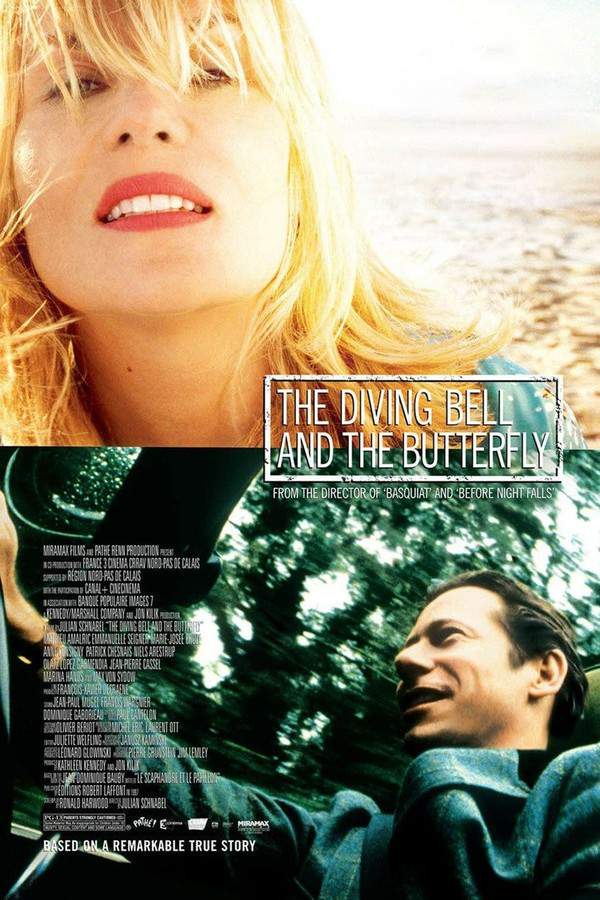
Following a devastating stroke, Jean-Dominique Bauby, the witty and dynamic editor-in-chief of Elle magazine, finds himself trapped within a virtually paralyzed body, able to move only his left eyelid. Despite this profound physical limitation, Bauby perseveres, using this single muscle to communicate with the help of a logopedic therapist. Through a laborious system of blinking, he begins to reconnect with the world and rediscover the power of his imagination, revisiting cherished memories and ultimately finding a way to express himself creatively.
Find where to stream, rent, or buy The Diving Bell and the Butterfly (2007) in the US with current JustWatch availability, up-to-date pricing, and platform listings for subscription, rental, and digital purchase options.
Warning: spoilers below!
Haven’t seen The Diving Bell and the Butterfly yet? This summary contains major spoilers. Bookmark the page, watch the movie, and come back for the full breakdown. If you're ready, scroll on and relive the story!
Read the complete plot breakdown of The Diving Bell and the Butterfly (2007), including all key story events, major twists, and the ending explained in detail. Discover what really happened, and what it all means.
The film primarily unfolds through the eyes of Jean-Dominique Bauby, affectionately known as Jean-Do. It begins with his awakening from a three-week coma in a hospital located in Berck-sur-Mer, France. Following an overly optimistic prognosis from one of the doctors, a neurologist breaks the tragic news of Bauby’s locked-in syndrome—an exceedingly rare affliction where the individual is almost entirely physically paralyzed yet retains full mental awareness. Initially, viewers experience Bauby’s inner thoughts, believing he’s voicing them aloud while others around him remain oblivious, perceiving him only through his solitary functioning eye.
To aid in his recovery, a speech therapist and a physical therapist step in with the intent of helping Bauby regain some functionality. Although speech is beyond his reach, Bauby ingeniously creates a communication system by blinking his left eye in response to the letters read out by his dedicated speech therapist. This painstaking method allows him to convey his thoughts and feelings letter by letter.
As the plot progresses, the narrow focus begins to expand. Viewers gain insights into Bauby’s life outside of his hospital room and witness flashbacks to significant moments, including a profound visit to Lourdes. His vivid imagination takes flight, conjuring images of serene beaches, majestic mountains, encounters with the Empress Eugénie, and a sensuous banquet with one of his transcriptionists. It becomes apparent that Bauby once held the esteemed position of editor at the renowned French fashion magazine Elle and had ambitions to pen a book—originally intended to reinterpret The Count of Monte Cristo from a female perspective. Determined, Bauby decides to forge ahead with his literary aspirations, utilizing his arduous communication method. A representative from the publishing house, who had previously engaged with Bauby, is brought in to help him transcribe his thoughts.
Through this memoir, he articulates the struggles of existing within a body he feels encased in murky water, reminiscent of an antiquated deep-sea diving suit, or scaphandre as termed in French. This metaphor evokes the image of his spirit, still vibrant and alive, soaring as a “Butterfly.”
The narrative intertwines Bauby’s poignant reflections and the tensions of his new reality, revealing glimpses of his family—his three children, their mother (whom he never wed), a mistress, dear friends, and his aging father. He reconnects with figures from his past, whose experiences echo his own sense of confinement, including a friend kidnapped in Beirut, held captive in solitary for four years, and his elderly father, constrained to his apartment due to frailty.
Ultimately, Bauby succeeds in finishing his memoir, anxiously awaiting the critics’ responses. Tragically, he succumbs to pneumonia just two days after the book’s publication. The film concludes with evocative imagery of ice glaciers cracking in reverse, paired with the haunting melody of Joe Strummer & the Mescaleros’ “Ramshackle Day Parade.”
Last updated: November 15, 2024 at 20:26
Explore frequently asked questions about The Diving Bell and the Butterfly (2007) with spoiler-rich answers covering the full plot summary, major story beats, character motivations, hidden details, and ending meaning. This movie summary FAQ helps explain confusing scenes, plot twists, and narrative decisions in clear, searchable detail.
Locked-in syndrome is an extremely rare condition where a person becomes almost completely physically paralyzed while retaining full mental awareness. In the film, Jean-Do can only move his left eyelid after his stroke. He is trapped inside his body, unable to speak or move, but his mind remains completely intact and alert. This is why the doctors initially give an overly optimistic prognosis, they didn't recognize the specific nature of his condition.
The film opens by showing viewers Jean-Do's inner thoughts before revealing that others around him cannot hear them, hinting at his isolated mental state.
Jean-Do communicates by blinking his left eye. His speech therapist reads out letters of the alphabet, and he blinks when she reaches the letter he wants to select. This painstaking process allows him to communicate one letter at a time, which he uses to dictate his memoir to a transcriptionist. It is the only way he can express his thoughts and needs.
Early in the film, when Jean-Do thinks he's voicing his thoughts aloud but others ignore him, viewers realize he cannot speak.
Jean-Do decides to write a memoir because he wants to reclaim his identity and purpose despite his condition. Before his stroke, he was the editor of the French fashion magazine Elle and had always wanted to write a book. Rather than simply waiting to die, he chooses to use his mind and imagination to create something meaningful, transforming his suffering into literature.
Earlier flashbacks show Jean-Do's ambitions as a writer, including his plan to reinterpret The Count of Monte Cristo from a female perspective.
Jean-Do uses the diving bell metaphor to describe his trapped physical state, an old-fashioned deep-sea diving suit that keeps him imprisoned in murky water. The butterfly represents his vivid imagination and free spirit, which still soars despite his physical confinement. Together, the title captures the central theme of the film: a vibrant mind trapped in a paralyzed body, longing for freedom.
The film opens with imagery of underwater sequences, visually establishing the diving bell metaphor from the beginning.
Jean-Do dies from pneumonia just two days after his memoir is published. The film shows his death as a quiet, sad moment, he had achieved his goal of completing and publishing his book, but did not live long enough to experience its full impact or read the critics' responses.
Throughout the film, Bauby's fragile physical condition is emphasized, with medical staff repeatedly warning about the severity of his situation.
Before his stroke, Jean-Do was the editor-in-chief of the prestigious French fashion magazine Elle. He lived an energetic, dynamic life filled with intellectual pursuits, social connections, and creative ambitions. He had three children, a partner he never married, a mistress, and many friends. The film shows flashbacks to his previous life, including a visit to Lourdes, to illustrate the dramatic contrast with his new reality.
The film immediately contrasts his current immobility with flashbacks showing him active, walking, and engaged in his work.
The flashbacks reveal Jean-Do's past life, showing who he was before his stroke, including his time at Elle, his visit to Lourdes, and his relationships. The imaginative sequences, where he pictures beaches, mountains, and encounters with the Empress Eugénie, represent his inner freedom and creativity. These sequences contrast his physical imprisonment with the vastness of his mind and memory.
The imaginative scenes begin early in his hospital stay, showing that his mind has not been affected by the stroke.
The film shows several important people in Jean-Do's life: his three children, their mother (referred to as his partner whom he never married), his mistress, his elderly father, and various friends. A key figure is his speech therapist who helps him communicate through blinking. A publishing representative who had previously worked with him also helps transcribe his memoir. He also thinks about a friend who was kidnapped in Beirut and held in solitary confinement for four years, which resonates with his own sense of confinement.
The film establishes the complexity of his relationships early, showing that he had a rich emotional life before his condition.
Jean-Do writes his memoir through an extremely laborious process. His speech therapist or a transcriptionist reads through the French alphabet. For each letter he wants to use, he blinks when she reaches that letter. This letter-by-letter process is how he constructs every word, every sentence, and ultimately the entire book. A publishing house representative who had known him before helps with the transcription. Despite taking immense effort, he manages to complete his memoir.
The film shows just how time-consuming this process is, with entire scenes devoted to selecting single letters.
Jean-Do's emotional journey moves from initial despair and frustration at his trapped state, through moments of depression and anger, to eventual acceptance and determination. He finds meaning by focusing on his imagination and his ability to create. Rather than surrendering to hopelessness, he channels his energy into writing and reconnecting with his loved ones through his unique form of communication. The film balances his profound sense of loss with moments of joy and humor.
Even in early scenes, Jean-Do uses dark humor to cope with his situation, showing his resilient spirit.
Jean-Do reflects on a friend who was kidnapped in Beirut and held captive in solitary confinement for four years. This memory resonates deeply with his own experience of being trapped, though in entirely different circumstances. The friend represents another form of confinement, making Jean-Do reflect on the nature of imprisonment and how people cope with isolation. This connection deepens the film's themes of physical and psychological imprisonment.
This memory appears as Jean-Do reflects on different forms of being trapped or confined.
Discover curated groups of movies connected by mood, themes, and story style. Browse collections built around emotion, atmosphere, and narrative focus to easily find films that match what you feel like watching right now.
Stories where imagination and memory overcome immense physical or external constraints.If you were moved by the way Jean-Dominique Bauby used his imagination to escape paralysis, you'll appreciate these movies like The Diving Bell and the Butterfly. This list features similar stories where characters overcome physical or situational constraints through the power of memory, creativity, and the human spirit.
Narratives in this thread often juxtapose a character's stark, constrained present reality with vivid, non-linear journeys into their past or imagination. The central conflict is internal—a psychological battle to find meaning and freedom when the body or environment is a prison. The journey is one of rediscovery and creative expression against all odds.
These films are grouped together because they share a core theme of internal liberation. They balance a melancholic or heavy tone with flashes of hope and triumph, achieved not through external action but through introspection, memory, and the enduring power of creativity in the face of adversity.
Intimate, slow-burn dramas set in limited spaces, focusing on profound personal struggle.For viewers who appreciated the intimate, claustrophobic setting of The Diving Bell and the Butterfly, this list features similar movies with a slow pace and melancholic tone. These dramas focus deeply on a character's internal struggle within a limited physical space, creating a powerful and reflective viewing experience.
The narrative pattern is one of intense focus on a single protagonist grappling with a life-altering situation. The limited setting creates a sense of claustrophobia that enhances the emotional weight. The plot is often less about external events and more about the gradual, laborious process of internal acceptance, communication, or coming to terms with a new reality.
These films share a specific combination of a slow, deliberate pacing, a heavy emotional weight, and a setting that physically embodies the protagonist's struggle. The melancholic tone is persistent, arising from the intimate portrayal of suffering, yet often contains threads of human connection and quiet dignity.
Don't stop at just watching - explore The Diving Bell and the Butterfly in full detail. From the complete plot summary and scene-by-scene timeline to character breakdowns, thematic analysis, and a deep dive into the ending - every page helps you truly understand what The Diving Bell and the Butterfly is all about. Plus, discover what's next after the movie.
Track the full timeline of The Diving Bell and the Butterfly with every major event arranged chronologically. Perfect for decoding non-linear storytelling, flashbacks, or parallel narratives with a clear scene-by-scene breakdown.
Discover the characters, locations, and core themes that shape The Diving Bell and the Butterfly. Get insights into symbolic elements, setting significance, and deeper narrative meaning - ideal for thematic analysis and movie breakdowns.