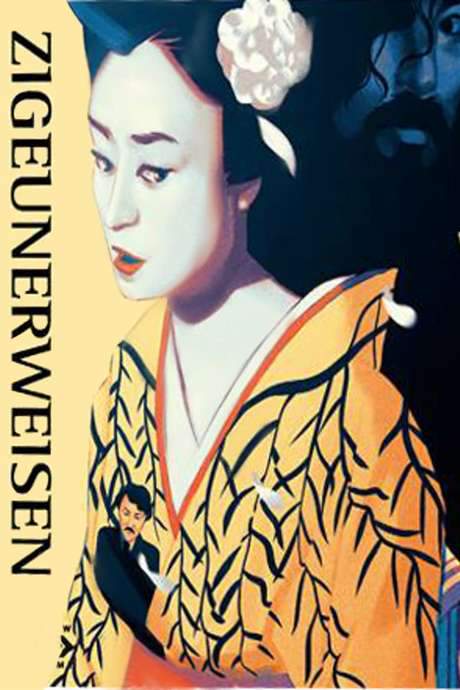
Zerograd

Zerograd

Year: 1988

Runtime: 97 mins

Language: Russian

Director: Karen Shakhnazarov

ComedyDrama

While on a business trip, the protagonist unexpectedly arrives in a strange, fantastical city that mirrors our own world. In this place, everyday routines and quirks of daily life are laid bare, revealing an absurd, almost surreal undercurrent that forces him to confront the hidden eccentricities of ordinary existence.

Warning: spoilers below!

Haven’t seen Zerograd yet? This summary contains major spoilers. Bookmark the page, watch the movie, and come back for the full breakdown. If you're ready, scroll on and relive the story!

Zerograd (1988) – Full Plot Summary & Ending Explained

Read the complete plot breakdown of Zerograd (1988), including all key story events, major twists, and the ending explained in detail. Discover what really happened—and what it all means.

Alexei Varakin, Leonid Filatov, an engineer from Moscow, travels to a nameless town in the Soviet Union for a routine business trip. On arrival at the factory, his pass is missing, creating immediate friction with the local routine. Inside, the manager’s secretary, Elena Arzhanik, is working naked, yet no one seems surprised by the odd scene. The manager remains unaware of the chief engineer’s death, a detail that will quietly haunt the day’s events.

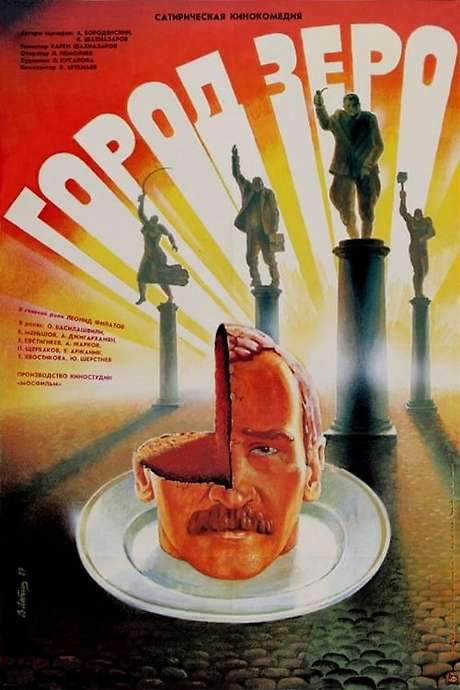
During lunch at an empty restaurant, Alexei is offered a cake shaped like his head—a harmless joke that he refuses. The cook who prepared the cake, however, is deeply upset by the moment and ultimately takes his own life, casting a pall over the town and signaling that not everything here is as it seems.

After giving his statement to the authorities, Alexei tries to depart, but all train tickets are sold out. His growing desperation to return to Moscow is met with indifference, and his pleas go unanswered. A taxi driver redirects him to a remote spot housing an underground local history museum, where the museum’s caretaker, Evgeniy Evstigneev, presents Alexei with a diverse exhibition spanning eras from the Trojans to Romans to Soviet leaders, a surreal survey of human culture that foreshadows the town’s strange currents.

That night, Alexei finds shelter at the home of a local electrician, Aleksandr Bespalyy, whose son Misha confidently proclaims that he will never leave the town, even offering intimate details about Alexei’s life and future plans that feel strikingly prescient. Later, a local driver named Anna, Tatyana Khvostikova, offers to drive him to Perebrodino station for trains bound for Moscow. A black police Volga intercepts them, and the town’s investigator, Aleksei Zharkov, informs Varakin that his biological father was a deceased cook named Nikolayev and reveals that his own name is Mahmud, a startling lineage that unsettles him further.

The town’s prosecutor, Vladimir Menshov, who secretly harbors a desire to commit a crime, confronts Varakin with the truth: what was believed to be a suicide was in fact a premeditated murder. They head to the summer house of poet Vasily Chugunov, Oleg Basilashvili, where he and others come to terms with the past. There, they learn that the cook Nikolayev in town used to be a famous rock ’n’ roll dancer, a detail that reshapes the town’s memory and adds a chilling edge to the narrative. The opening of the Nikolayev Rock ’n’ Roll Fans Club becomes a backdrop for broader political and personal tensions, as prominent locals mingle in the glow of a fragile democracy.

As the night deepens, the prosecutor’s disquiet grows; he attempts to shoot himself with his service weapon, but the gun misfires several times, a moment that blurs the line between intention and failure. A group from the dance party, led by Alexei, heads to the legendary 1,000-year-old oak tree that locals believe grants power to those who dare to cut its branches. The tree itself is dying, yet the crowd still gathers to claim a piece of its legacy, gathering branches as mementos. In a troubling turn, the prosecutor offers Alexei a chance to escape; after fleeing through a forest, he discovers an abandoned boat without oars and decides to ride the current, letting the river carry him toward an uncertain future.

This tale weaves a slow-burn mood of tension and curiosity, anchored by a cast of complex figures who drift between loyalty and self-interest, their fates intertwined through a town that feels both timeless and uneasy. The interplay of memory, ambition, and mortality lingers long after Alexei’s final, improvisational decision at the river’s edge.
Last Updated: October 09, 2025 at 14:24

Mobile App Preview

Coming soon on iOS and Android

The Plot Explained Mobile App

From blockbusters to hidden gems — dive into movie stories anytime, anywhere. Save your favorites, discover plots faster, and never miss a twist again.

Sign up to be the first to know when we launch. Your email stays private — always.

Explore Movie Threads

Discover curated groups of movies connected by mood, themes, and story style. Browse collections built around emotion, atmosphere, and narrative focus to easily find films that match what you feel like watching right now.

Surreal Absurdist Journeys like in Zerograd

Where ordinary life unravels into a dreamlike and unsettling spectacle.Discover movies like Zerograd that explore bizarre, dreamlike worlds where daily life becomes a stage for the absurd. If you enjoyed the unsettling blend of surrealism and dark comedy in Zerograd, these films offer similar journeys into the strange undercurrents of existence and bureaucratic nightmares.

surrealdreamlikebizarreunsettlingabsurdclaustrophobicmelancholicoppressive

Narrative Summary

Narratives in this thread often follow a protagonist who enters a strange environment—a city, an institution, or a situation—that operates on its own illogical rules. The plot is less about a traditional goal and more about the character's growing disorientation and forced adaptation to an incomprehensible system, leading to an ambiguous or open-ended resolution.

Why These Movies?

These movies are grouped by their shared mood of dreamlike unease and their thematic focus on absurdism. They use surrealism not just as a visual style but as a core narrative device to critique society and explore existential questions, all while maintaining a slow, deliberate pacing that allows the bizarre atmosphere to fully saturate the viewer.

Slow-Burn Psychological Unease like in Zerograd

Atmospheric narratives where psychological tension builds to a heavy, ambiguous end.Find films with a similar slow-burn pace and heavy psychological atmosphere as Zerograd. If you liked the oppressive mood and the build-up of existential dread in Zerograd, these movies offer a comparable experience of gradual tension, complex narratives, and ambiguous, thought-provoking endings.

slow burnoppressivepsychologicaluneasymelancholicclaustrophobicdreadunsettling

Narrative Summary

The narrative pattern involves a gradual accumulation of strange events and psychological pressure on a central character. There is no sudden explosion of action; instead, the tension simmers, forcing the protagonist—and the viewer—to sit with a growing feeling of wrongness. The journey typically culminates in an ambiguous ending that reflects the unresolved nature of the core conflict.

Why These Movies?

This grouping prioritizes a specific combination of pacing, tone, and emotional weight. The films share a SLOW pace, a DARK or tense tone, and HEAVY emotional weight, resulting in a coherent viewing experience defined by atmospheric dread and a complex, often melancholic, psychological exploration.

Unlock the Full Story of Zerograd

Don't stop at just watching — explore Zerograd in full detail. From the complete plot summary and scene-by-scene timeline to character breakdowns, thematic analysis, and a deep dive into the ending — every page helps you truly understand what Zerograd is all about. Plus, discover what's next after the movie.

Zerograd Timeline

Track the full timeline of Zerograd with every major event arranged chronologically. Perfect for decoding non-linear storytelling, flashbacks, or parallel narratives with a clear scene-by-scene breakdown.

Zerograd Timeline

Characters, Settings & Themes in Zerograd

Discover the characters, locations, and core themes that shape Zerograd. Get insights into symbolic elements, setting significance, and deeper narrative meaning — ideal for thematic analysis and movie breakdowns.

Characters, Settings & Themes in Zerograd

Zerograd Spoiler-Free Summary

Get a quick, spoiler-free overview of Zerograd that covers the main plot points and key details without revealing any major twists or spoilers. Perfect for those who want to know what to expect before diving in.

Zerograd Spoiler-Free Summary

More About Zerograd

Visit What's After the Movie to explore more about Zerograd: box office results, cast and crew info, production details, post-credit scenes, and external links — all in one place for movie fans and researchers.

More About Zerograd

Similar Movies to Zerograd

Discover movies like Zerograd that share similar genres, themes, and storytelling elements. Whether you’re drawn to the atmosphere, character arcs, or plot structure, these curated recommendations will help you explore more films you’ll love.