Plot Explained Spoilers guaranteed!
Plot Explained

Browse by genre

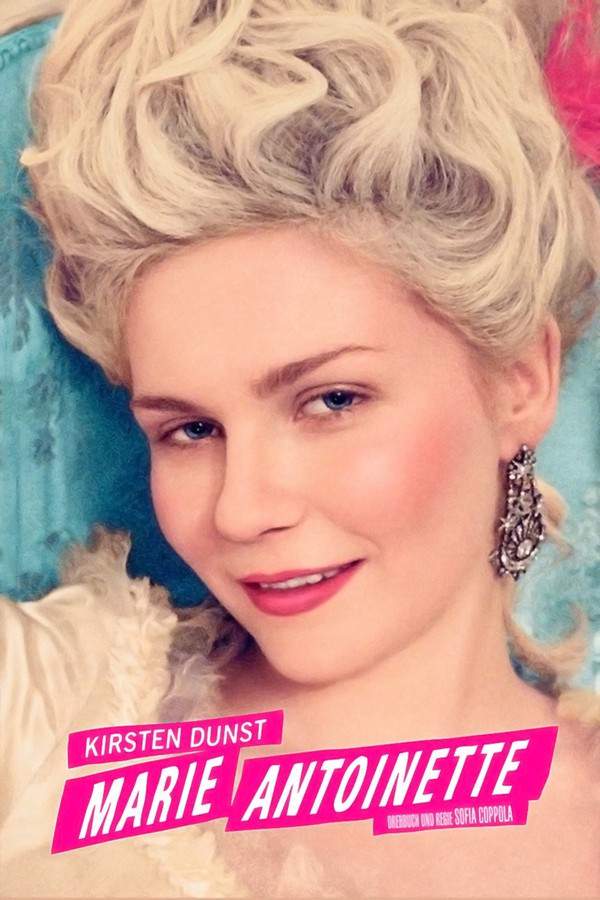
Marie Antoinette (2006) movie poster

Plot Summary

Marie Antoinette (2006) Plot Summary Explained

Release, runtime and language
2006 · 123 min · English
JustWatch #798 27
Directed by
Sofia Coppola
Starring
Kirsten Dunst, Jason Schwartzman, Rip Torn
Budget
$40M

Transferred from Austria to the extravagant court of Versailles, a spirited young princess marries the Dauphin of France and becomes queen. Surrounded by immense wealth and privilege, she initially embraces a life of luxury and indulgence. However, as political tensions rise and the French Revolution erupts, her world is turned upside down. Facing increasing criticism and ultimately confronting the consequences of her actions, her reign concludes in a dramatic and tragic downfall.

On this page (6)
  1. 1 Where to watch
  2. 2 What happens: full plot
  3. 3 Plot questions answered
  4. 4 Movie threads
  5. 5 Movies like Marie Antoinette
  6. 6 Every angle

Where to watch

Where to Watch Marie Antoinette (2006)

Where can you watch Marie Antoinette? Stream, rent or buy it in the US, including on Netflix, Netflix Standard and Paramount Plus Essential: current JustWatch availability with up-to-date prices.

Streaming availability powered by JustWatch

Full plot summary · contains spoilers

What Happens in Marie Antoinette: Full Plot Summary

The whole story of Marie Antoinette (2006) explained, from the opening scene to the final frame: every key event, every twist and what it all adds up to. Read it as a quick recap before the sequel, to check a scene you missed, or to finally understand what really happened.

Based on the award-winning biography Marie Antoinette: The Journey by British author Lady Antonia Fraser, Marie Antoinette presents a poignant glimpse into the private life of France's last queen before the Revolution.

The story opens in 1770 with Maria Antonia Josepha Joanna, affectionately called Antoine and portrayed by Kirsten Dunst. She is the enchanting but unsuspecting youngest daughter of empress Maria Theresa (played by Marianne Faithfull). Selected by her mother to marry her second cousin, King Louis XVI, Antoine embarks on a significant journey to solidify an alliance between ailing rivals, Austria and France.

As the 14-year-old girl travels to a small island amidst the Rhine River, a place symbolizing the shift from Austrian to French dominion, she is introduced to the Comtesse de Noailles (Judy Davis), who will oversee her transition into life at Versailles—her future home. In a traditional "crossing-over" ceremony, the Comtesse explains that Antoine must forfeit her Austrian identity, which includes her cherished possessions and even her beloved pug dog, Mops. After undergoing a transformation into French fashion, she makes her grand entrance as the Dauphine of France, her name now translated to Marie Antoinette.

Later that day, Marie Antoinette meets King Louis XV, portrayed by Rip Torn, the lascivious grandfather of her betrothed, Louis XVI, played by Jason Schwartzman. The introverted Dauphin awkwardly interacts with his fiancée for the first time, while his aunts engage in hushed gossip, claiming, “she looks like a child,” deriding her Austrian lineage.

As Marie Antoinette arrives at the grand opulence of Versailles, she is quickly swept into an extravagant wedding ceremony, lacking the time necessary to acclimate to her new life. Despite the lavish celebration, her wedding night takes an unusual turn, leaving the expectation of intimacy unmet, which leads to the morning report stating, “apparently, nothing happened."

The marriage soon becomes burdensome for Marie Antoinette as she grapples with the constraints imposed by the palace’s formal customs. Seemingly enclosed by an entourage of indifferent nobility, the court's disdain grows, attributing blame to her failure in producing an heir. Meanwhile, her husband Louis becomes absorbed in his obsession with locks and keys, leaving their relationship emotionally distant.

Amid courtly gossip relayed to her by sympathetic courtiers, Marie Antoinette learns of the notorious Madame du Barry, the King’s mistress, whose crude behavior is shunned by many. Although counselled to avoid du Barry, Marie Antoinette begrudgingly engages in a brief conversation, hoping to quell any impending scandal.

Striving to break free from Versailles’ rigid formality, Marie Antoinette attempts warmth and camaraderie. From sharing food on hunting trips to enthusiastically applauding at operas, her efforts to connect unsettle some courtiers, yet she gradually forms friendships with Victoire and Sophie, among others. Following a letter from her mother warning of the potential annulment due to their unconsummated marriage, she attempts to seduce Louis but faces whispers of impotence surrounding her husband.

As the years progress, Marie Antoinette continues to lavish herself in gowns and pastries, seeking solace in indulgence while struggling with her unproductive marriage. One fateful evening, her husband, her friend the Duchesse de Polignac, and others participate in a masked ball in Paris, where an undeniable attraction emerges with Count Axel von Fersen (Jamie Dornan).

In 1774, following the death of Louis XV, Louis XVI rises to the throne, and Marie Antoinette proudly stands by his side during the coronation ceremony in Reims. However, amidst increasing strife among the French populace, her extravagant spending persists, further escalating the country's financial turmoil as the new King dives into wars abroad.

Winter brings joy as her brother, the Holy Roman Emperor Joseph II (Danny Huston), arrives, highlighting their reunion and revealing their mother’s advice on intimacy. This prompts the couple to finally consummate their marriage, leading to the joy of Marie Antoinette giving birth to a daughter, Marie Therese, in December 1778. Although she desires to foster a close bond with her newborn, societal norms prohibit her from nursing her child. Louis gifts her with the Petit Trianon, a secluded cottage in the gardens of Versailles, where she cherishes moments of peace with family.

Over the coming years, France continues to support the American Revolution financially, causing growing discontent among its citizens. Food shortages spark riots in Paris, leading to a stark decline in Marie Antoinette’s public standing, which earns her the derogatory title of “Madame Déficit.” With maturity, she reevaluates her lavish lifestyle and prioritizes family, even refraining from diamond purchases. Tragically, after the loss of her mother in November 1780, Marie Antoinette welcomes a son, Louis-Joseph, but faces heartbreak once again as another child dies in infancy.

By July 1789, the tides of revolution surge as an enraged mob heads toward Versailles, forcing the royal family to choose between fleeing or remaining. With most aristocrats escaping, the royal family decides to stay, only for the mob to breach the palace walls, capturing them and leading them to the Tuileries for a period of semi-imprisonment. The film concludes with the haunting image of the Queen's once-splendid chamber, now ravaged by the uprising.

The final disclaimer underscores the historical outcomes: Louis XVI was executed by revolutionaries in early 1793, followed shortly by the beheading of Marie Antoinette that same year, marking the end of the French monarchy and the birth of the Republic.
Last updated: November 04, 2024 at 01:41

Was this helpful?

Plot questions answered

Marie Antoinette Plot Explained: Your Questions Answered

The questions people ask most about Marie Antoinette (2006): what happens in the confusing scenes, why the characters do what they do, the twists, hidden details and what the ending means. Each answer contains spoilers.

Q1

Why did Marie Antoinette and Louis XVI have an unconsummated marriage for years?

Louis XVI struggled with impotence, reportedly due to a physical condition affecting his ability to consummate the marriage. He was also deeply absorbed in his obsessive hobby of collecting and making locks and keys, which left him emotionally distant from his wife. The marriage remained unconsummated for years until Marie Antoinette's brother, Emperor Joseph II, visited in 1774 and directly addressed the issue, urging them to resolve the situation.

Foreshadowing: Early in the film, the morning report after the wedding states 'apparently, nothing happened,' hinting at the marriage problems to come.

  • Louis XVI
  • marriage problems
  • impotence
  • consummation
  • Versailles
Q2

Why was Marie Antoinette called Madame Déficit?

Marie Antoinette earned the nickname 'Madame Déficit' because of her extravagant spending habits while France was facing severe financial crisis. The country was heavily indebted from supporting the American Revolution and from costly wars abroad. Her purchases of gowns, jewelry, and luxurious parties contrasted sharply with the growing poverty and food shortages experienced by ordinary French citizens, making her a symbol of royal excess.

Foreshadowing: The film shows her lavishly spending on pastries and diamonds while the narrator explains France's financial troubles were escalating.

  • Madame Déficit
  • financial crisis
  • spending
  • French economy
  • debt
Q3

What triggered the mob to attack Versailles in July 1789?

The attack on Versailles was triggered by mounting public anger over bread shortages, economic hardship, and the perceived indifference of the royal family during the French Revolution's early stages. When an enraged mob marched toward the palace in July 1789, they were demanding solutions to the food crisis and greater accountability from the monarchy. The royal family initially chose to stay rather than flee, and the mob ultimately breached the palace walls, forcing them to move to the Tuileries Palace.

Foreshadowing: Earlier scenes show food riots in Paris and the growing resentment toward the queen's extravagance during times of scarcity.

  • Versailles
  • mob attack
  • French Revolution
  • 1789
  • bread riots
  • Tuileries
Q4

Who was Axel von Fersen and what was his connection to Marie Antoinette?

Count Axel von Fersen was a Swedish nobleman who became Marie Antoinette's close friend and likely lover. They met at a masked ball in Paris in 1774 when he was serving as an officer in the French army. The film depicts undeniable attraction between them during this event. While their relationship has been debated by historians, Fersen remained a trusted confidant to Marie Antoinette throughout her life.

Foreshadowing: The masked ball scene explicitly shows the chemistry between them, marking Fersen as a significant figure in her emotional life beyond the court.

  • Axel von Fersen
  • masked ball
  • affair
  • Swedish noble
  • romantic connection
Q5

What happened at Marie Antoinette's crossing-over ceremony on the Rhine River?

The crossing-over ceremony was a traditional ritual that marked Marie Antoinette's transition from Austrian to French authority. When she reached a small island in the Rhine River, she had to surrender her Austrian identity, including her cherished possessions and her beloved pug dog named Mops. She then underwent a complete transformation in French fashion before being formally introduced as the Dauphine of France, renamed Marie Antoinette.

Foreshadowing: This moment establishes the loss and identity transformation she experiences, setting up her isolation at the French court.

  • Rhine River
  • crossing ceremony
  • Austria
  • French identity
  • Comtesse de Noailles
Q6

Why was Marie Antoinette not allowed to nurse her own child?

Societal norms at the French court prohibited Marie Antoinette from nursing her own infant. Royal protocol dictated that noblewomen should not breastfeed their children, as it was considered below their status. Instead, wet nurses were hired to feed the royal offspring. This painful separation from her newborn was one of the many constraints of court life that frustrated Marie Antoinette, though her husband later gifted her the Petit Trianon as a gesture of reconciliation.

Foreshadowing: The birth scene shows her joy at having a daughter, Marie Therese, immediately followed by the painful realization she cannot keep the child close.

  • Marie Therese
  • nursing
  • wet nurse
  • royal protocol
  • Versailles
  • Petit Trianon
Q7

What finally prompted Louis XVI and Marie Antoinette to consummate their marriage?

The marriage was finally consummated after Marie Antoinette's brother, Emperor Joseph II, visited Versailles in 1774. During his visit, he gave both Marie Antoinette and Louis XVI blunt advice about their marriage and intimacy. This direct intervention from her brother, combined with the pressure from their mother Empress Maria Theresa and the court's growing criticism, led Louis XVI to overcome his difficulties and consummate the marriage.

Foreshadowing: Earlier, the film shows a letter from their mother warning of potential annulment due to their unconsummated marriage, adding pressure to resolve the situation.

  • Joseph II
  • Emperor
  • consummation
  • marriage
  • intervention
  • Empress Maria Theresa
Q8

Why was Marie Antoinette's transformation into French fashion significant?

The transformation into French fashion represented Marie Antoinette's complete cultural assimilation into French royal life. At the crossing-over ceremony, she was required to abandon her Austrian identity, possessions, and even her pet dog. This symbolic erasure of her past was meant to transform her into a French queen who would strengthen the alliance between Austria and France. The scene emphasizes how she lost her childhood and identity to fulfill a political marriage.

Foreshadowing: The Comtesse de Noailles explains during the ceremony that she must give up everything Austrian, marking the beginning of her isolation.

  • French fashion
  • transformation
  • Austrian identity
  • Versailles
  • cultural assimilation
Q9

What caused Marie Antoinette to change her behavior later in the film?

Marie Antoinette's transformation from extravagance to restraint came after several events: the death of her mother in November 1780, the birth of her son Louis-Joseph, and the growing public criticism of her spending. She matured and began prioritizing family over luxury, even refusing to buy diamonds. However, by then, her reputation as 'Madame Déficit' was already established and could not be reversed, despite her efforts to reform.

Foreshadowing: The film shows her maturity after becoming a mother and after losing her mother, which coincides with her refusal to purchase diamonds.

  • maturation
  • spending reform
  • diamonds
  • Louis Joseph
  • mother death
Q10

Why did Marie Antoinette reluctantly meet Madame du Barry?

Marie Antoinette met Madame du Barry, King Louis XV's mistress, despite being advised to avoid her because she needed to maintain political harmony at court. Although du Barry's crude behavior was shunned by the nobility, refusing to acknowledge her could have created a scandal and further isolated Marie Antoinette at Versailles. Her brief engagement with du Barry reflected the complicated social dynamics she had to navigate as a young, unfamiliar queen.

Foreshadowing: Earlier, sympathetic courtiers warn her about du Barry and the political consequences of either meeting or ignoring her.

  • Madame du Barry
  • Louis XV
  • mistress
  • Versailles
  • court politics

Movie threads

More Movies Like Marie Antoinette, by Mood & Story

Curated lists built around what makes Marie Antoinette tick: the same mood, the same kind of story or the same emotional payoff. Each list explains why these movies belong together.

Dramas of Privilege and Downfall like Marie Antoinette

Opulent lives crumble under the weight of history and hubris. Explore a curated list of movies like Marie Antoinette, featuring stories about royal figures and the extravagantly wealthy whose lives of privilege lead to a dramatic and tragic collapse. These similar historical dramas and biographical films capture the bittersweet tone and heavy emotional weight of a life unraveled by revolution or scandal.

  • tragic
  • opulent
  • melancholic
  • decadent
  • isolated
  • historical
  • Tone: bittersweet, bleak
  • Pacing: steady, building to climax
Why these movies?

The story pattern: This thread groups stories that follow a similar arc: a character enjoys a life of extreme luxury and status, often within a confining system. Their initial innocence or indulgence is challenged by rising political or social tensions, culminating in a loss of power, freedom, or life. The journey is marked by a growing sense of isolation and a bleak, historically inevitable conclusion.

Why they belong together: Movies in this thread share a focus on the intersection of personal life and historical forces. They blend opulent, sensory visuals with a deeply melancholic and tragic mood. The pacing is often steady, allowing for a character-driven exploration of decadence and isolation before the high-intensity collapse, resulting in a bittersweet-to-bleak emotional experience.

Atmospheric Gilded Cage Dramas like Marie Antoinette

Visually rich stories of confinement within a beautiful but oppressive world. Discover movies similar to Marie Antoinette that excel in creating a melancholic and opulent atmosphere. If you liked the sensory, confining feel of Versailles and the focus on a character's isolation amidst luxury, this list features films with a steady pace, heavy emotional weight, and a bittersweet tone.

  • melancholic
  • opulent
  • isolated
  • confining
  • sensual
  • nostalgic
  • Tone: melancholic, bittersweet
  • Pacing: steady, immersive
Why these movies?

The story pattern: The narrative pattern here is less about a specific plot and more about an experiential journey. The story unfolds through sensory details and character observations, emphasizing the contrast between beautiful surroundings and profound personal loneliness. Conflict often arises from the protagonist's struggle between societal expectations and their desire for freedom or authenticity, leading to a poignant, character-focused resolution.

Why they belong together: These films are grouped by their shared vibe: a lush, aesthetic-driven presentation combined with a core feeling of melancholy and confinement. They share a steady, immersive pacing that lets the viewer soak in the environment and the protagonist's emotional state. The tone is consistently bittersweet, balancing visual beauty with thematic weight.

If you liked this

Movies Like Marie Antoinette

Similar movies to Marie Antoinette: the same genre, themes or kind of story. Each one comes with its own plot summary, timeline and ending explained.

Browse all movie summaries

Every angle

Marie Antoinette (2006) Explained: Plot, Timeline & Characters

Everything about Marie Antoinette in one place: what happens in the plot summary, the timeline in chronological order, the characters and meaning and a spoiler-free summary. What's After the Movie adds the cast, box office and post-credit scenes.

Coming soon on iOS and Android

The Plot Explained Movie Summary App

Plot summaries, endings explained and timelines on your phone. Catch up on any movie in minutes, save your favorites and never miss a twist again.

Be the first to know when we launch. Your email stays private, always.

Learn more about the app