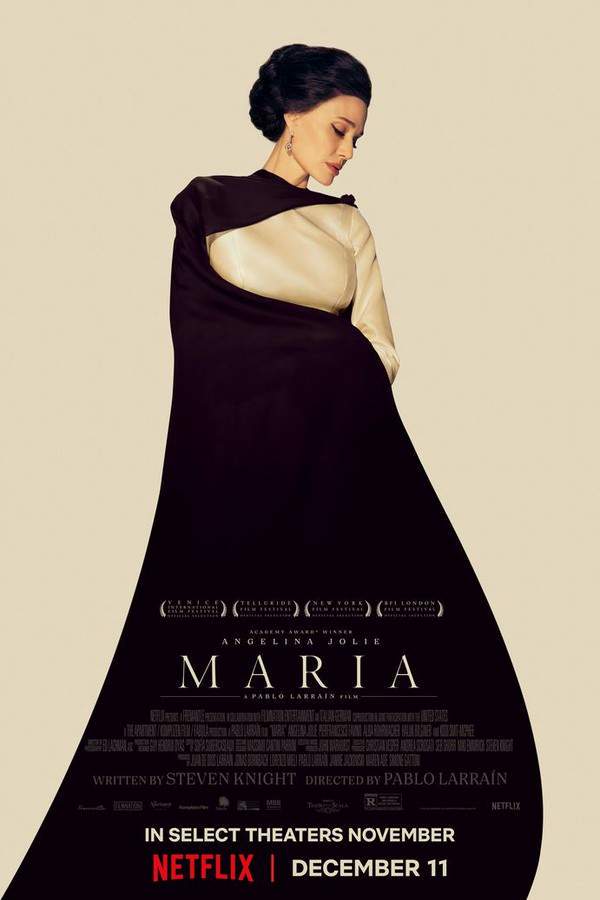
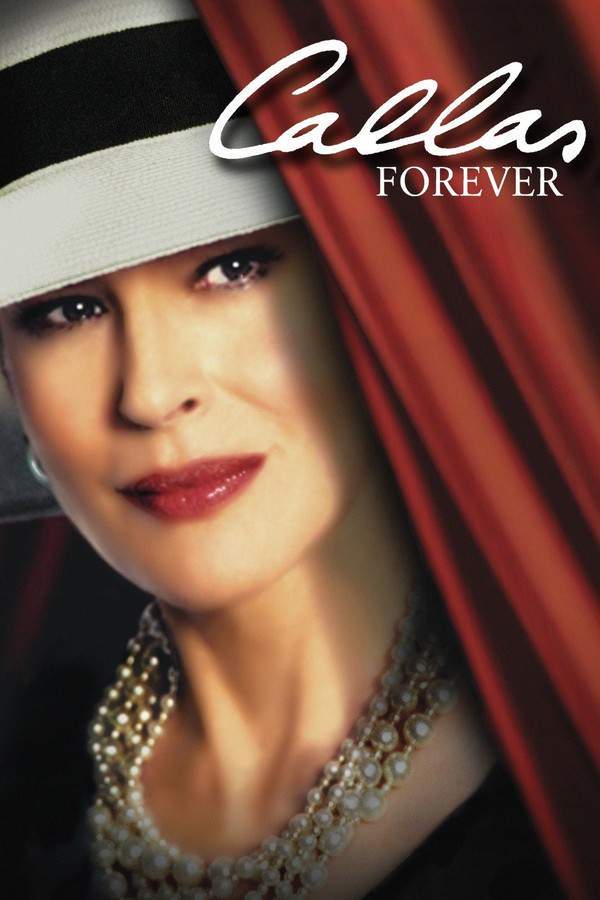
Maria Callas, Angelina Jolie, a world‑famous soprano, spends a tense week in a Paris apartment trying to sing again after years of faltering health, while her devoted butler Ferruccio, Pierfrancesco Favino, and housekeeper Bruna, Alba Rohrwacher, keep the home running and manage the pressures of her fragile condition.
Her routine is upended when Ferruccio insists she consult a doctor, but Maria clings to a troubling remedy: Mandrax, a medication she overuses despite its harsh side effects. The tension escalates as a television crew arrives to interview her about her life, led by a young filmmaker introduced as Mandrax, Kodi Smit-McPhee. The sight of these visitors unleashes a cascade of vivid hallucinations that Ferruccio and Bruna cannot perceive, turning the apartment into a liminal space where reality and dream blur.
Across the week, Maria is drawn into memories that reveal the private side of a public life. She remembers a passionate but complicated romance with Aristotle Onassis, Haluk Bilginer, the Greek magnate who would later become entwined with Jackie Kennedy. In these recollections, she recalls rejecting him at first in 1957, then yielding to a deep, contradictory love before public scrutiny and personal fear redirected her path. She also remembers leaving her husband Giovanni Battista Meneghini, Alessandro Bressanello, yet never entirely erasing the tenderness of those years, and she admits that, on his deathbed, Onassis remained an ache she couldn’t fully extinguish.
The hallucinations extend to her youth, when, as a teenager during World War II, her mother forced her to sing for Italian and German officers in exchange for money. These memories haunt her as she tries to reconcile the past with the fragile present. A confrontation with her older sister, Yakinthi Callas, Valeria Golino, offers a rare moment of reconciliation over how their mother treated them, a small, human counterpoint to the grander arc of fame and tragedy.
During a final round of medical consultations, Dr. Fontainebleau, Vincent Macaigne, confirms that her health has worsened and that singing at previous heights may no longer be possible. In subsequent sessions with a conductor, Tate, Maria records her voice on an audio device, hoping to preserve what remains of her art even if the live performance has slipped away. A Le Figaro journalist intrudes, probing for a sensational angle, only to be dismissed when Ferruccio steps in.
In a quiet, reverent moment, Maria thanks Ferruccio and Bruna for their steadfast presence. The next morning, with the apartment’s windows open to the city, she sings Vissi d’arte one last time, a release and a grieving testament to a life defined by art and longing. The performance draws curiosity and sympathy from neighbors on the street, as well as from Onassis and Mandrax, who watch from inside the room before fading from view. When Ferruccio and Bruna re-enter, they discover Maria unconscious and, ultimately, dead on the floor. Ferruccio calls Dr. Fontainebleau to report the death, and the authorities arrive, closing a remarkable, haunted chapter in a legend’s twilight.