Plot Explained Spoilers guaranteed!
Plot Explained

Browse by genre

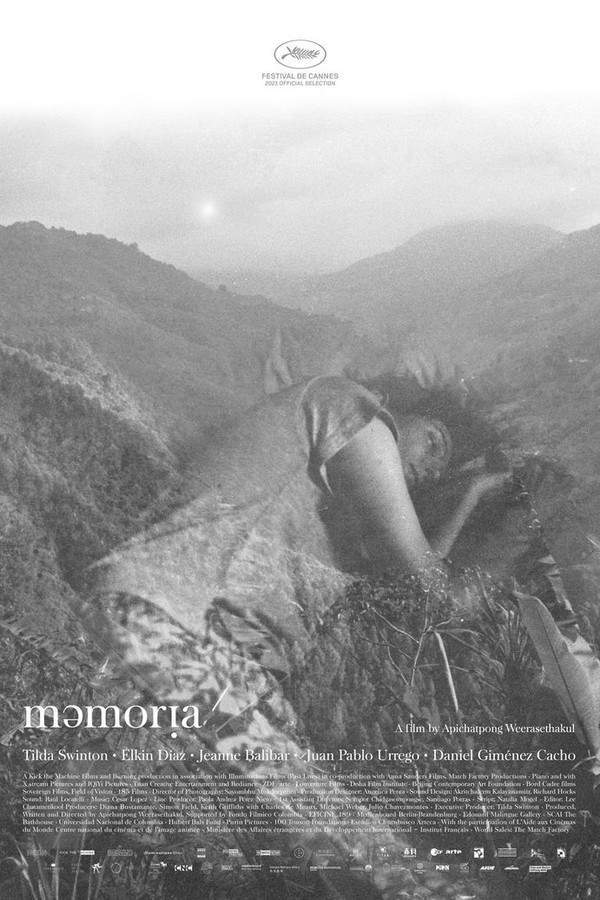
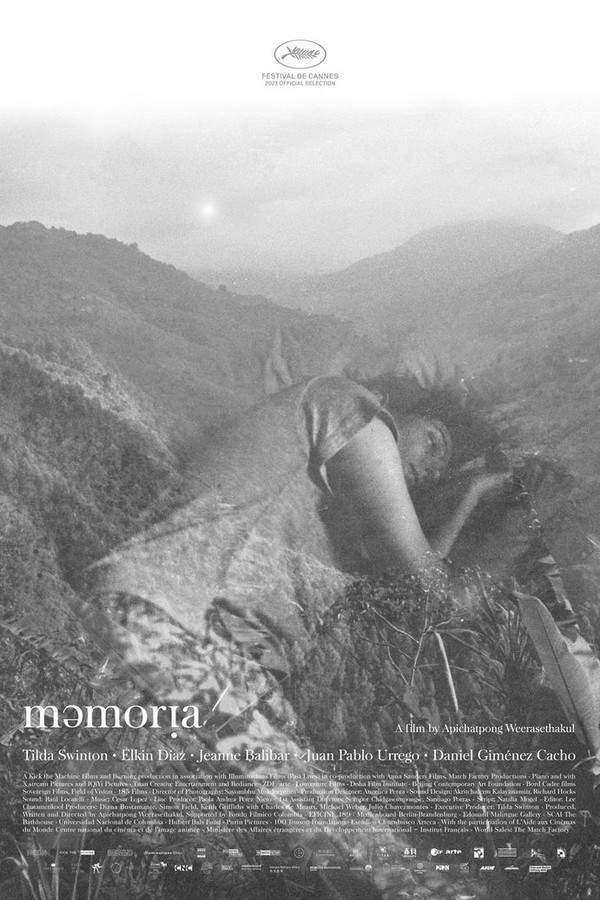
Memoria (2016) movie poster

Plot Summary

Memoria (2016) Plot Summary & Ending Explained

Release, runtime and language
2016 · 70 min · English
Directed by
Vladimir de Fontenay, Nina Ljeti

Ivan Cohen's adolescence in Palo Alto, California, is portrayed in this coming-of-age story. He grapples with the challenges of friendships, unreciprocated feelings, and a turbulent family dynamic. The film explores the difficulties of growing up and finding one's place amidst personal struggles and complex relationships.

On this page (7)
  1. 1 Where to watch
  2. 2 What happens: full plot
  3. 3 Plot questions answered
  4. 4 How it ends
  5. 5 Movie threads
  6. 6 Movies like Memoria
  7. 7 Every angle

Where to watch

Where to Watch Memoria (2016)

Where can you watch Memoria? Stream, rent or buy it in the US, including on Hoopla, Kanopy and Apple TV Store: current JustWatch availability with up-to-date prices.

Streaming availability powered by JustWatch

Full plot summary · contains spoilers

What Happens in Memoria: Full Plot Summary

The whole story of Memoria (2016) explained, from the opening scene to the final frame: every key event, every twist and what it all adds up to. Read it as a quick recap before the sequel, to check a scene you missed, or to finally understand what really happened.

Ivan Cohen grows up in Palo Alto, a city that frames his early years with a quiet sense of distance. His home life is split between his mother, who is a Russian immigrant, and a American step-father who struggles to form any real connection with him. From the start, Ivan feels unseen beyond the surface markers people notice: his blonde hair, pale skin, and the Russian army jacket that once belonged to his father. These details seem to define him more than any attempts at warmth or understanding, leaving him with a lingering sense of dissatisfaction about his childhood.

As he enters adolescence, Ivan drifts into a small circle of working-class slackers. He stands more as a follower than a leader within the group, though a tentative bond begins to form with a girl named Nina. A thread of jealousy runs through his relationship with another friend, Alex, who is dating a pretty girl named Kelly. This trio remains tangled in high school life, with Ivan observing the couple and feeling both drawn to and resentful of their closeness.

One night, after the group experiments with acid, a minor car incident shakes him. A caring yet cautious teacher, Mr. Wyckoff, notices Ivan’s struggles and reaches out, hoping to coax him toward opening up. Ivan resists at first, but a suggested writing assignment becomes a beacon of possibility. He crafts a fantasy about life after high school in San Francisco—a future that looks modest and perhaps limiting, yet somehow forms a genuine horizon that he clings to as a form of escape and aspiration.

High school parties become a crucible where Ivan’s inner turmoil comes to a head. At the end-of-year gathering, he finds Nina and is met with an offhand joke about a future that could include him in a bank-robbing, mansion-dwelling life with her, a notion that briefly rekindles his hope. He attempts to kiss Nina, only to be gently rebuffed; she insists their friendship remains firmly in place. The night becomes more harrowing when he stumbles upon a bedroom scene where two people are having sex and another room where someone is passed out in vomit. The chaos unsettles him, and in a moment of escalating anger he heads downstairs for alcohol, is accused of stealing it, and is punched by a fellow teen.

The culmination of these pressures drives Ivan to a desperate act. He returns home, grabs his step-father’s hunting rifle, and drives back to the party intent on releasing his fury. Yet when he arrives, the house is quiet except for a few passed-out kids, and there is no one to confront or confront him in the way he expects. He slips back home, entering his parents’ bedroom where they sleep, wrestling with the impulse to kill his step-father. In the end, nerves fail him, and the act never occurs.

The film closes with a stark image that lingers: Ivan stands on the Golden Gate Bridge, looking out over the expanse, and leaves his father’s jacket behind on the bridge. The gesture captures the weight of his unresolved anger, the distance he feels from his family, and the uncertain path that lies ahead beyond the safety of his familiar surroundings.

Last updated: October 09, 2025 at 16:15

Was this helpful?

Plot questions answered

Memoria Plot Explained: Your Questions Answered

The questions people ask most about Memoria (2016): what happens in the confusing scenes, why the characters do what they do, the twists, hidden details and what the ending means. Each answer contains spoilers.

Q1

Why does Ivan want to kill his stepfather in Memoria?

Ivan's desire to kill his stepfather stems from years of emotional rejection and feeling like a outsider in his own home. The stepfather never connected with Ivan, treating him with distant formality rather than warmth. Combined with the humiliation and anger from the party night, being rejected by Nina, seeing disturbing scenes, and being punched, Ivan sees his stepfather as the source of his suffering and channels his desperate rage toward him.

Foreshadowing: The film establishes early on that Ivan's stepfather cannot form a real connection with him, setting the foundation for Ivan's deep resentment.

  • Ivan
  • stepfather
  • violence
  • family dysfunction
  • anger
Q2

What triggers Ivan's violent breakdown at the party?

Ivan's breakdown is triggered by a cumulative series of events that night. First, Nina rejects his kiss and insists they stay friends. Then he witnesses disturbing scenes: a couple having sex and someone passed out in vomit. Finally, he's accused of stealing alcohol and gets punched. These humiliations and the chaotic atmosphere push him over the edge, leading him to grab his stepfather's rifle and return to the party.

Foreshadowing: The acid trip and car accident earlier in the film foreshadow Ivan's escalating unrest and inability to process his emotions.

  • Ivan
  • party
  • violence
  • breakdown
  • rejection
  • humiliation
Q3

Why does Ivan leave his father's jacket on the Golden Gate Bridge?

Ivan leaves his father's Russian army jacket on the Golden Gate Bridge as a symbolic act of releasing his burden and stepping into adulthood. The jacket represents his connection to his absent father and the weight of expectations and identity imposed on him. By leaving it behind, he signals a desire to move beyond his painful past and forge a new path, though the act remains ambiguous about whether he's truly free or just running away.

Foreshadowing: The jacket is introduced early as something that defines Ivan more than his own personality, making its abandonment a meaningful character moment.

  • Golden Gate Bridge
  • jacket
  • symbolism
  • ending
  • father
  • release
Q4

What does the ending of Memoria mean?

The ending of Memoria shows Ivan standing on the Golden Gate Bridge after removing his father's jacket, symbolizing his departure from his old identity and family ties. He's choosing to leave behind the pain and anger of his upbringing, but whether this represents hope or escape remains unclear. The open horizon suggests possibility, yet the weight of his unresolved trauma means his future is uncertain.

Foreshadowing: Ivan's writing assignment earlier hints at his longing to escape to San Francisco, making the bridge location a fulfillment of that fantasy.

  • ending
  • Golden Gate Bridge
  • symbolism
  • resolution
  • future
Q5

Why does Ivan fail to go through with the violence?

Ivan fails to carry out the violence because his nerves ultimately give out. When he returns to the party with the rifle, everyone is passed out and there's no one to target. He then goes home intending to kill his stepfather but cannot bring himself to act. This moment reveals that while Ivan harbored intense rage, he lacks the capacity to truly commit violent act, his anger remains trapped inside him, unresolved.

Foreshadowing: Mr. Wyckoff's attempt to get Ivan to open up suggests he's aware of Ivan's internal struggles but can't reach him in time.

  • Ivan
  • violence
  • nerves
  • rifle
  • failure
  • hesitation
Q6

Why is Ivan jealous of Alex in Memoria?

Ivan is jealous of Alex because Alex dates Kelly while Ivan feels invisible and unwanted. More importantly, Ivan has feelings for Nina but watches Alex occupy a space of normalcy and romance that Ivan cannot access. This jealousy highlights Ivan's broader sense of alienation, he sees others experiencing connection and belonging that elude him.

Foreshadowing: Ivan's jealousy is established early when he observes Alex and Kelly's relationship while feeling on the outside.

  • Alex
  • Nina
  • jealousy
  • Kelly
  • relationships
  • insecurity
Q7

Why does Nina reject Ivan at the party?

Nina rejects Ivan's kiss because she genuinely views him only as a friend. Her joking suggestion about bank robbing and mansion living was just playful banter, not a genuine romantic invitation. Nina seems oblivious to Ivan's romantic feelings, and her rejection sends him into an emotional spiral that contributes to his later breakdown.

Foreshadowing: The film establishes early that Ivan's bond with Nina is tentative and one-sided in terms of romantic interest.

  • Nina
  • rejection
  • kiss
  • friendship
  • party
Q8

What does Ivan's writing assignment reveal about his character?

Ivan's writing assignment reveals his conflicted desires, he dreams of escaping to San Francisco but imagines a modest future, suggesting low self-expectations. The fantasy shows he craves a life beyond Palo Alto yet can't fully envision success for himself. Mr. Wyckoff uses this assignment to try to reach Ivan emotionally, hoping self-expression might help him process his struggles.

Foreshadowing: The writing assignment serves as the bridge between Ivan's inner world and the external help being offered to him.

  • writing assignment
  • Mr. Wyckoff
  • fantasy
  • San Francisco
  • aspirations
Q9

Why does Ivan feel so isolated in Memoria?

Ivan feels isolated because he exists between worlds, his Russian heritage through his mother and his American life with his stepfather, with neither fully accepting him. His blonde hair and pale skin make him visually distinct, and his stepfather's emotional distance leaves him feeling unseen. These factors combine with typical adolescent struggles to create a deep sense of alienation.

Foreshadowing: The opening scenes establish Ivan's feeling of being defined by surface traits rather than his inner self.

  • Ivan
  • isolation
  • alienation
  • family
  • identity
  • stepfather

Ending explained

What Happens at the End of Memoria?

How Memoria (2016) ends, in short: the final scene, the last twist and what it means for the characters. The full ending explained, with every spoiler, lives on its own page.

Read the full ending explained

Jessica's journey in "Memoria" leads her to a revelation about the nature of her reality and herself. Throughout the film, she experiences strange noises and disjointed memories that blur the line between what is real and what is imagined. Her encounters, especially with the man who claims he remembers everything, suggest a deeper connection to a universe where time and memory are fluid. When Jessica reaches the house in the forest and converses with this man, she begins to remember her own childhood and, surprisingly, sees an alien spaceship fly away into the sky, symbolizing a bridge between the human experience and cosmic or otherworldly realms. This ending suggests that Jessica's perception of reality may be more expansive and interconnected than she initially believed. It is possible that she is losing her grip on conventional reality, or perhaps she is awakening to a higher understanding of existence beyond linear time. In true Apichatpong style, the film leaves many questions unanswered, emphasizing the subjective nature of memory, the universe, and consciousness. The sonic boom, the disjointed memories, and the surreal imagery all point toward a realm where human understanding is limited, and true knowing might be beyond what the mind can grasp. Ultimately, the film invites viewers to reflect on the mysterious, interconnected fabric of reality and the obscure depths of memory and consciousness.

Memoria ending explained in full

Movie threads

More Movies Like Memoria, by Mood & Story

Curated lists built around what makes Memoria tick: the same mood, the same kind of story or the same emotional payoff. Each list explains why these movies belong together.

Movies about alienated adolescence like Memoria

Slow-paced stories of teenagers grappling with profound alienation and quiet angst. Discover movies like Memoria that delve into the quiet psychological turmoil of teenage life. These coming-of-age stories share a slow, melancholic pace and a heavy emotional weight, focusing on themes of family dysfunction, unrequited love, and the search for identity in a seemingly indifferent world.

  • melancholic
  • alienated
  • introspective
  • angst-ridden
  • atmospheric
  • quiet
  • Tone: melancholic, introspective
  • Pacing: slow, deliberate
Why these movies?

The story pattern: Stories in this thread typically follow a linear, character-driven path, where the protagonist's internal struggles are the primary focus. The narrative builds tension through psychological pressure, often culminating in a moment of quiet desperation or an ambiguous ending that reflects the unresolved nature of their emotional journey.

Why they belong together: These films are grouped by their shared commitment to portraying the raw, introspective side of growing up. They prioritize a melancholic tone, slow pacing, and a heavy emotional atmosphere, creating a cohesive viewing experience for those interested in nuanced, character-focused dramas about youth.

Psychological dramas in suburban settings like Memoria

Character studies of internal collapse within the confines of suburban life. If you liked Memoria's portrayal of suburban psychological turmoil, explore these similar dramas. They feature characters grappling with heavy emotional burdens, family dysfunction, and a slow-building tension that simmers beneath the surface of everyday life.

  • psychological distress
  • suburban life
  • family dysfunction
  • atmospheric
  • quiet tension
  • alienation
  • Tone: melancholic, tense
  • Pacing: slow burn
Why these movies?

The story pattern: Narratives often follow a straightforward chronological progression, using the setting as a cage that amplifies the protagonist's feelings of entrapment. The conflict is primarily internal and interpersonal, building towards a climax that may involve a contemplation of violence or a symbolic act of release, rather than a neatly resolved conclusion.

Why they belong together: These movies are connected by their shared setting and thematic focus. They use the suburb as a microcosm for exploring psychological distress, familial breakdown, and the struggle for identity, all delivered with a restrained, atmospheric approach that prioritizes mood over plot.

If you liked this

Movies Like Memoria

Similar movies to Memoria: the same genre, themes or kind of story. Each one comes with its own plot summary, timeline and ending explained.

Browse all movie summaries

Every angle

Memoria (2016) Explained: Plot, Ending, Timeline & Characters

Everything about Memoria in one place: what happens in the plot summary, the timeline in chronological order, the characters and meaning, the ending explained and a spoiler-free summary. What's After the Movie adds the cast, box office and post-credit scenes.

Coming soon on iOS and Android

The Plot Explained Movie Summary App

Plot summaries, endings explained and timelines on your phone. Catch up on any movie in minutes, save your favorites and never miss a twist again.

Be the first to know when we launch. Your email stays private, always.

Learn more about the app