












Plot Explained Spoilers guaranteed!
Plot Explained

Browse by genre

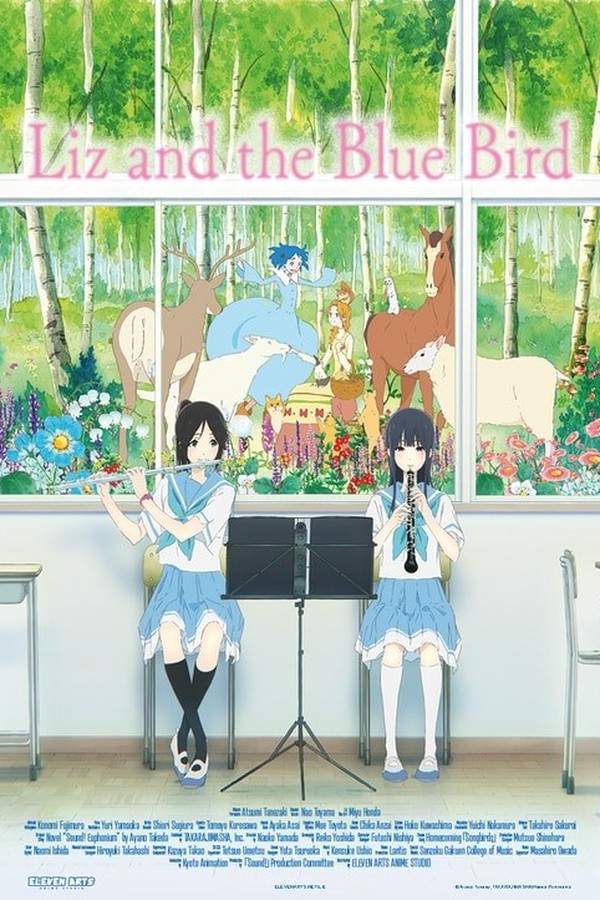
Liz and the Blue Bird (2018) movie poster

Timeline

Liz and the Blue Bird (2018) Timeline Explained – Every Event in Order

Release, runtime and language
2018 · 90 min · Japanese
Echo score 80
JustWatch #19,048
Directed by
Naoko Yamada
Starring
Ayaka Asai, Yuri Yamaoka, Atsumi Tanezaki, Chika Anzai, Konomi Fujimura, Miyu Honda

Mizore and Nozomi have been close friends since high school, their bond strengthened by a shared love of music. As they prepare for graduation, their final concert becomes a poignant moment, featuring a duet that reflects the sadness of their approaching separation. The prospect of attending different colleges creates a subtle tension, threatening to fracture their long-standing friendship. This heartwarming story explores the complexities of growing up and the challenges of maintaining relationships through significant life changes, ultimately leading to an emotional and resonant conclusion.

On this page (5)
  1. 1 Where to watch
  2. 2 Events in order (13)
  3. 3 Timeline questions answered
  4. 4 Movie threads
  5. 5 Every angle

Where to watch

Where to Watch Liz and the Blue Bird (2018)

Where can you watch Liz and the Blue Bird? Stream, rent or buy it in the US, including on Amazon Prime Video, HBO Max and Hoopla: current JustWatch availability with up-to-date prices.

Streaming availability powered by JustWatch

13 events in order · contains spoilers

Liz and the Blue Bird Timeline: Events in Chronological Order

Every key event of Liz and the Blue Bird (2018) in order, scene by scene, with when and where it takes place. Use it to untangle flashbacks, time jumps and parallel storylines, to refresh your memory before the sequel or to find the exact scene you are thinking of.

  1. Mizore's Reflection

    Mizore is introduced as a reserved and introverted student, deeply immersed in her world of music. As a senior in high school, she finds solace in her oboe playing and is often lost in her thoughts about her best friend Nozomi, an outgoing and charismatic flutist.

    When
    Senior Year
    Where
    High School Concert Band
  2. The Duet Practice

    Mizore and Nozomi practice a duet from *Liz and the Blue Bird*, a piece that resonates with their friendship. The musical narrative of Liz and the blue bird mirrors the girls' own emotional struggles and foreshadows the separation they will soon face with graduation approaching.

    When
    Weeks Before Graduation
    Where
    Music Room
  3. Emotional Isolation

    As graduation approaches, Mizore begins to feel increasingly isolated from her classmates and turns down invitations to bond with her fellow bandmates. Struggling to articulate her feelings to Nozomi, she grapples with the fear of losing her closest friend.

    When
    Days Leading to Graduation
  4. The Influence of Music School

    Despite initial reluctance, Mizore's perspective shifts when Nozomi expresses interest in applying to the same music school after graduation. This revelation reignites Mizore's motivation, but it also brings up insecurities about her true aspirations.

    When
    Weeks Before Graduation
    Where
    Classroom
  5. Peer Concerns

    Their peers notice Mizore's growing motivation towards music and worry that her drive stems solely from Nozomi's influence. This concern adds pressure to Mizore, who feels conflicted over her independence and passion for music.

    When
    Days Leading to Graduation
    Where
    School Hallway
  6. Heightened Tensions

    Tensions escalate between Mizore and Nozomi as concert preparations intensify. Mizore's anxiety grows, compounded by memories of Nozomi's past distancing from the band, which leads to friction in their rehearsals.

    When
    Days Leading to Concert
    Where
    Rehearsal Room
  7. Understanding Through Music

    With guidance from their instructor Niiyama, both girls begin to gain clarity about their relationship. They identify themselves with roles from the music they perform, realizing the emotional depth of their connections and the sacrifices they must consider.

    When
    Days Before Concert
    Where
    Rehearsal Room
  8. The Awe-Inspiring Performance

    During a pivotal rehearsal, Mizore delivers a passionate performance that leaves their bandmates in awe. The emotional intensity of their duet reveals the depth of Mizore’s feelings, leading Nozomi to step out in tears after the performance.

    When
    Days Before Concert
    Where
    Rehearsal Room
  9. A Heartfelt Confession

    After the rehearsal, Nozomi admits to Mizore that she has been jealous of her talent and reveals that her previous ambitions regarding music school were based on insecurity. Mizore expresses the depth of her feelings, but Nozomi avoids fully acknowledging their emotional connection.

    When
    After Rehearsal
    Where
    Backstage
  10. Lingering Distance

    As time passes, the emotional distance between Mizore and Nozomi becomes apparent. Nozomi begins to focus on her entrance exams, seemingly sidelining their bond as friends and bandmates.

    When
    Weeks After Rehearsal
    Where
    Library
  11. The Café Invitation

    Mizore receives an unexpected invitation from Nozomi to go to a café after school. In this casual moment, Nozomi reassures Mizore of her support for their duet, but hints at needing extra time, leaving Mizore confused yet hopeful.

    When
    Days Post-Exams
    Where
    Café
  12. Renewed Commitment

    As they walk to the café, Mizore reaffirms her commitment to continue playing the oboe. This conversation marks a crucial moment in their friendship, as both girls navigate their complexities and the uncertainties ahead.

    When
    After School
    Where
    Streets Near School
  13. An Unexpected Moment

    While strolling together, Nozomi suddenly turns to look at Mizore with an intensity that surprises her. This unexpected moment signifies a possible turning point in their relationship, hinting at deeper feelings that have yet to be fully explored.

    When
    While Walking
    Where
    Streets Near Café

Last updated: November 09, 2024 at 11:22

Was this helpful?

Timeline questions answered

Liz and the Blue Bird Timeline Explained: Your Questions Answered

When does it happen, and why in that order? The questions people ask about the chronology of Liz and the Blue Bird (2018): time jumps, flashbacks, cause and effect between scenes and the correct order of events, each answered with spoilers.

Q1

Why does Nozomi cry after Mizore's rehearsal performance?

Nozomi cries because she is overwhelmed by Mizore's emotional and passionate oboe performance. The intensity of Mizore's playing reveals her true feelings, which moves Nozomi deeply. Additionally, Nozomi is grappling with her own secret: she has been jealous of Mizore's musical talent and had lied about wanting to apply to music school. Seeing Mizore finally express herself authentically brings these buried emotions to the surface.

Foreshadowing: Earlier rehearsals show the girls struggling to convey the emotional depth of their duet, building toward this release.

  • Nozomi crying
  • Mizore performance
  • emotional release
  • rehearsal scene
Q2

What does the Liz and the Blue Bird allegory mean in the movie?

The fairy tale serves as a mirror for Mizore and Nozomi's relationship. Liz (represented by the oboe) and the blue bird (represented by the flute) are close friends who must separate. The crucial revelation is that their roles are reversed from what initially appears: Mizore, the quiet and dependent one, actually embodies the blue bird who needs to fly free, while Nozomi, who seems outgoing and free-spirited, actually represents Liz who must learn to let go for the bird's sake.

Foreshadowing: Mizore struggles to understand why Liz would let the blue bird fly away forever, hinting at her own fear of separation.

  • Liz and the Blue Bird
  • allegory
  • fairy tale
  • symbolism
  • metaphor
Q3

Why did Nozomi say she wanted to go to music school if she didn't mean it?

Nozomi claimed she wanted to apply to the same music school as Mizore out of jealousy, not genuine ambition. She was envious of Mizore's obvious musical talent and feared being left behind. By pretending she also wanted to pursue music, Nozomi tried to maintain their connection and keep Mizore close. When she confesses this to Mizore, she admits her earlier motivation was hollow and rooted in insecurity.

Foreshadowing: Peers in the band express concern that Mizore's motivation comes only from Nozomi's influence, hinting at the unhealthy dynamic.

  • Nozomi jealousy
  • music school lie
  • insecurity
  • Mizore talent
Q4

What does the ending mean when Nozomi turns to look at Mizore?

The ending suggests a turning point in their relationship. After months of emotional distance, Nozomi's intense look at Mizore indicates she has come to terms with her feelings and is ready to face them honestly. Rather than running from their bond or pretending it doesn't exist, she acknowledges something meaningful has shifted between them. The film leaves their future open but hints at a more mature friendship built on truth rather than dependency.

Foreshadowing: Nozomi asks Mizore for 'a little time' and reassures her about the duet, showing she's processing her emotions.

  • ending scene
  • Nozomi look
  • character resolution
  • ambiguous ending
Q5

Who represents Liz and who represents the Blue Bird between Mizore and Nozomi?

Initially, Mizore identifies with Liz and Nozomi with the blue bird, but this is reversed. Mizore, despite being quiet and seemingly tied down, actually represents the blue bird, she must learn to release her dependencies to truly thrive. Nozomi, despite her outgoing personality, fits the role of Liz, who sacrifices her own desires for the sake of the blue bird's freedom. This reversal is central to their emotional growth.

Foreshadowing: The woodwind instructor Niiyama guides them to understand the deeper meaning of their roles in the music.

  • character comparison
  • Liz role
  • Blue Bird role
  • identity reversal
Q6

Why does Mizore isolate herself from her classmates?

Mizore becomes increasingly isolated because her entire emotional world revolves around Nozomi. She struggles to articulate her feelings and finds it difficult to connect with anyone else. As graduation approaches and the threat of separation looms, Mizore withdraws further into herself, declining invitations from bandmates to spend time together. Her introverted nature combined with her fear of losing Nozomi creates this self-imposed isolation.

Foreshadowing: Mizore is often shown lost in thought about Nozomi, demonstrating how fixated she has become.

  • Mizore isolation
  • introversion
  • fear of loss
  • emotional withdrawal
Q7

What causes the tension between Mizore and Nozomi before the concert?

The tension stems from mutual insecurities. Mizore becomes anxious about losing Nozomi to different colleges and fears their friendship will dissolve. Meanwhile, Nozomi feels envious as she watches Mizore grow musically under Niiyama's guidance, while she herself lacks genuine passion for music. These unresolved feelings create friction during rehearsals, especially around the emotional depth required for their duet.

Foreshadowing: Mizore recalls past moments when Nozomi distanced herself from the band, adding to her anxiety.

  • friendship tension
  • concert preparation
  • mutual insecurity
  • jealousy
Q8

Why does Mizore decide to keep playing the oboe after everything?

Mizore reaffirms her commitment to playing the oboe because she finally understands that her love for music is separate from her dependency on Nozomi. When Nozomi asks for time but promises to support their duet, Mizore responds by choosing to continue playing for herself, not to stay close to Nozomi, but because she genuinely loves music. This represents her growth toward emotional independence.

Foreshadowing: Niiyama encouraged Mizore to consider pursuing music professionally, planting the seed for this decision.

  • Mizore oboe
  • continuing music
  • personal growth
  • independence
Q9

Why does Nozomi avoid fully acknowledging Mizore's feelings?

Nozomi deflects when Mizore expresses the true depth of her affection because she believes that acknowledging these feelings would only bind them tighter and make separation more painful. She chooses to hold back, suggesting that keeping some distance might help them both move forward more easily. This avoidance reflects Nozomi's own struggles with how to handle their complex emotional bond.

Foreshadowing: Nozomi chuckles after Mizore's confession, indicating she's choosing not to confront the feelings directly.

  • emotional avoidance
  • unrequited feelings
  • Mizore confession
  • Nozomi response
Q10

What is Niiyama's role in Mizore and Nozomi's relationship?

Niiyama, the woodwind instructor, serves as a guiding figure who helps both girls gain clarity about their relationship and their music. She encourages Mizore to consider professional music study and guides both students to understand the deeper meaning behind their duet. Her intervention is crucial in helping them realize the reversal of their roles in the Liz and Blue Bird allegory, leading to their emotional breakthrough.

Foreshadowing: Niiyama's guidance appears during key rehearsal moments when tensions are highest.

  • Niiyama instructor
  • mentor role
  • guidance
  • music teacher

Movie threads

More Movies Like Liz and the Blue Bird, by Mood & Story

Curated lists built around what makes Liz and the Blue Bird tick: the same mood, the same kind of story or the same emotional payoff. Each list explains why these movies belong together.

Quietly Melancholic Coming-of-Age Stories like Liz and the Blue Bird

Intimate tales of friendship and the bittersweet ache of changing relationships. If you liked the gentle, bittersweet emotions of Liz and the Blue Bird, explore more movies like it. This collection features intimate stories about friendship, separation, and the quiet pangs of growing up, all sharing a similar melancholic but tender tone.

  • melancholic
  • contemplative
  • tender
  • nostalgic
  • intimate
  • yearning
  • Tone: melancholic, tender, bittersweet
  • Pacing: slow, contemplative
Why these movies?

The story pattern: Narratives in this thread often follow characters on the cusp of a major life change, typically graduation or leaving home. The central conflict is emotional and internal, revolving around the preservation or transformation of a deep friendship or bond. The journey is less about external events and more about the characters coming to a new, more mature understanding of themselves and each other.

Why they belong together: These films are grouped together because they share a specific mood: a soft, contemplative sadness mixed with warmth. They prioritize atmosphere, subtle character expression, and a slow, deliberate pace to explore themes of separation, nostalgia, and emotional growth, resulting in a deeply personal and poignant viewing experience.

Movies Where Art Reflects Life like Liz and the Blue Bird

Stories where a creative process mirrors the inner world of the characters. For viewers who appreciated how the 'Liz and the Blue Bird' fairytale paralleled the main relationship in Liz and the Blue Bird, this section finds similar movies. Discover films where music, performance, or art becomes a powerful allegory for the characters' unspoken emotions and personal growth.

  • contemplative
  • expressive
  • emotional
  • cathartic
  • symbolic
  • introspective
  • Tone: contemplative, emotional, resonant
  • Pacing: steady, character-driven
Why these movies?

The story pattern: These narratives often feature a dual structure: the primary story of the characters' relationships and a secondary, allegorical story from their art. The climax frequently involves a performance or completion of the artwork, which forces the characters to confront the truth about their feelings, leading to a moment of catharsis and emotional resolution.

Why they belong together: Movies are grouped here based on their shared narrative device of using art as a thematic mirror. This technique adds a layer of complexity and depth to character-driven dramas, creating a rich, interpretive experience where the audience is invited to draw parallels between the art being created and the lives of the creators.

Every angle

Liz and the Blue Bird (2018) Explained: Plot, Timeline & Characters

Everything about Liz and the Blue Bird in one place: what happens in the plot summary, the timeline in chronological order, the characters and meaning and a spoiler-free summary. What's After the Movie adds the cast, box office and post-credit scenes.

Coming soon on iOS and Android

The Plot Explained Movie Summary App

Plot summaries, endings explained and timelines on your phone. Catch up on any movie in minutes, save your favorites and never miss a twist again.

Be the first to know when we launch. Your email stays private, always.

Learn more about the app