Year: 2010
Runtime: 119 min
Language: French
Director: Radu Mihaileanu
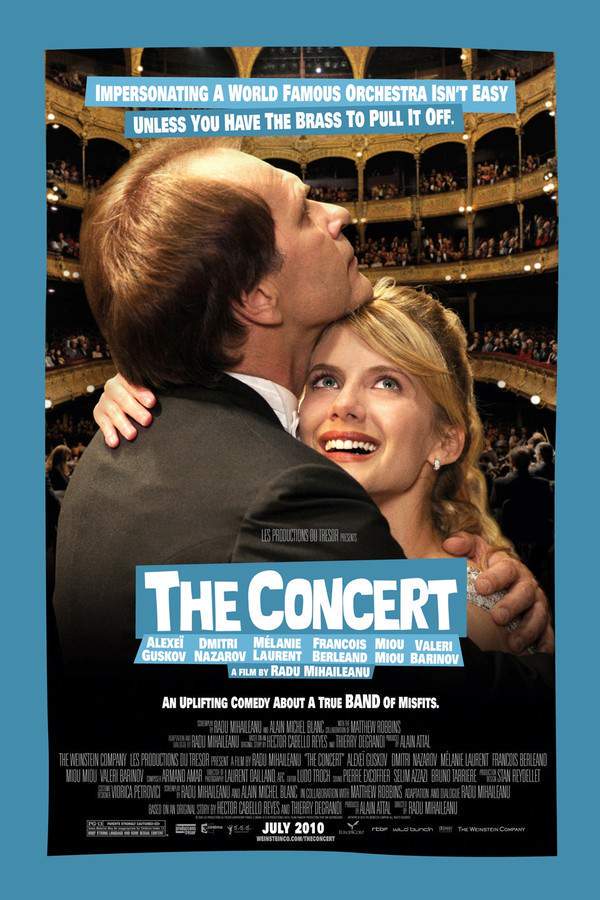
After a career impacted by political circumstances, former Bolshoi conductor Andrei Filipov orchestrates a bold artistic endeavor. He assembles his former musicians, including Jewish and Gypsy talents, to celebrate their musical heritage with a concert in Paris. With the exceptional violin skills of Anne-Marie Jacquet, the group faces challenges as they strive to deliver a triumphant performance and confront the shadows of their past.
Warning: spoilers below!
Haven’t seen The Concert yet? This summary contains major spoilers. Bookmark the page, watch the movie, and come back for the full breakdown. If you're ready, scroll on and relive the story!
Read the complete plot breakdown of The Concert (2010), including all key story events, major twists, and the ending explained in detail. Discover what really happened—and what it all means.
Andrey Simonovich Filipov is a former world‑famous conductor of the Bolshoi Theatre orchestra, once at the pinnacle of his craft, who fell from grace after standing up for Jewish musicians and was publicly discredited during the Brezhnev era. The fallout left him working as a janitor in the same theatre he once ruled, and his career spiraled into alcoholism. When fate drops a last‑chance opportunity into his lap, he seizes it with a plan that could restore his old glory: reunite his long‑disbanded ensemble, a group of Jewish and Gypsy musicians now eked out in menial jobs, to perform in Paris and finish the long‑delayed realization of Tchaikovsky’s Violin Concerto.
The invitation arrives as a lifeline from the prestigious Théâtre du Châtelet in Paris, where a canceled Los Angeles Philharmonic concert has left a gap that Filipov believes only his reconstructed orchestra can fill. To make the scheme work, he enlists the unexpected aid of a former KGB agent, Ivan Gavrilov, who becomes the orchestra’s manager and executes the plan with cold efficiency. But Gavrilov’s so‑called help is veiled with his own ambitions, unsettling the orchestra’s principal cellist, [Sasha Abramovich Grossman]—a detail that hints at hidden agendas behind the Paris project.
The plan hinges on one dramatic condition: the solo violinist will be Anne-Marie Jacquet, a virtuoso who has never played the concerto because she fears it. She has long dreamed of performing it with the Bolshoi, and especially under Filipov’s baton, whose renown outside Russia remains strong. Anne‑Marie’s agent, Guylène de La Rivière, is wary due to Filipov’s controversial past, but she yields to the inevitability of the moment when the opportunity aligns with Anne‑Marie’s deepest aspirations. The ensemble also agrees to a provocative sponsorship from a Russian mafia boss who wants to join the orchestra, bringing an unsettling edge to the musical project as a whole.
Arriving in Paris, the orchestra swiftly abandons discipline for life’s everyday rhythms, melting away into taxi driving, moving, and translation work as party atmospheres replace rehearsals. Anne‑Marie’s initial sense that the project is more about Filipov’s catharsis than a true artistic comeback grows stronger, and she begins to pull away. Yet La Rivière appeals to a more personal motive: the concert holds a key to Anne‑Marie’s past and to her missing parents, scientists who disappeared in the Alps when she was a child. The story digs deeper, uncovering that Filipov and his wife Irina were close friends with Lea and Yitzhak Strum, an accomplished violinist and the original soloist in the interrupted Moscow concert. Lea’s life after the humiliation she and her husband faced under the regime spiraled into tragedy, and her memory becomes a powerful force driving the Paris performance.
In a backstory that gradually comes to light, Lea—Anne‑Marie’s mother—lost her sanity after those years, clinging to the imagined cadence of the concerto until her death in 1981, while her husband died soon after. Guylène’s escape with baby Anne‑Marie hidden in a cello case becomes a pivotal thread that ties the present to the past, revealing the way survival and memory intersect in art. The revelation reframes the Paris concert as not merely a comeback, but a chance to honor Lea’s memory and the generations of musicians who suffered for their truth.
On the night of the performance, the orchestra answers a late SMS summons to appear, drawn by the memory of Lea and the promise of something transcendent. They arrive at the Théâtre with little rehearsal, while the Bolshoi’s real manager, who happened to be vacationing in Paris, shows up intending to stop the show; Gavrilov intercepts him, leaving him locked in a broom closet. The concert begins shakily, and even Gavrilov wonders aloud if a higher power might intervene to salvage the moment. Yet the musicians find their footing, guided by Anne‑Marie’s luminous interpretation of the solo, inspired by her mother’s annotated score. The sound grows in confidence, and the performance slowly coalesces into a genuine magical moment of spontaneous harmony.
What follows is more than a single triumph on stage. The performance becomes a catalyst for Filipov to reclaim his career under a new banner—the Andreï Filipov Orchestra—while Anne‑Marie joins him on a widening world tour. The show’s emotional arc blends memory, resilience, and the healing power of music, illustrating how art can bridge past wounds and forge a hopeful future.
Last Updated: October 09, 2025 at 15:43
Discover curated groups of movies connected by mood, themes, and story style. Browse collections built around emotion, atmosphere, and narrative focus to easily find films that match what you feel like watching right now.
Past masters reclaim their legacy in a final, triumphant performance.Find more movies like The Concert about talented artists seeking a second chance. If you enjoyed the story of a conductor reclaiming his glory, you'll appreciate these other hopeful dramas of late-in-life comebacks and triumphant creative performances.
The narrative follows a protagonist haunted by a past failure or injustice, often related to their artistic field. A new opportunity arises, forcing them to confront old demons and assemble a team of former colleagues or new talent. The journey is as much about personal healing and reconciliation as it is about preparing for a culminating artistic event that serves as redemption.
These films are grouped by their shared focus on artistic expression as a path to personal redemption. They balance a melancholic look at the past with a hopeful, forward-moving quest, resulting in a deeply satisfying and emotionally resonant happy ending centered on creative triumph.
Characters process a painful past through the collective power of music.Discover movies similar to The Concert where music is a catalyst for redemption and healing. These films feature ensembles overcoming adversity, blending bittersweet nostalgia with the triumphant joy of performance, perfect for fans of heartfelt music dramas.
The plot revolves around assembling a musical ensemble, with each member bringing their own personal history of loss or persecution. The rehearsal process becomes a vehicle for working through these shared and individual traumas. The narrative builds steadily towards a public performance where the music itself delivers emotional closure and a sense of victory over adversity.
This thread connects movies where the experience of making music is intrinsically linked to emotional recovery. They share a specific mix of moods: the melancholy of remembering a difficult past is balanced and ultimately overcome by the triumphant, communal joy of artistic creation, resulting in a deeply satisfying and hopeful feeling.
Don't stop at just watching — explore The Concert in full detail. From the complete plot summary and scene-by-scene timeline to character breakdowns, thematic analysis, and a deep dive into the ending — every page helps you truly understand what The Concert is all about. Plus, discover what's next after the movie.
Track the full timeline of The Concert with every major event arranged chronologically. Perfect for decoding non-linear storytelling, flashbacks, or parallel narratives with a clear scene-by-scene breakdown.
Discover the characters, locations, and core themes that shape The Concert. Get insights into symbolic elements, setting significance, and deeper narrative meaning — ideal for thematic analysis and movie breakdowns.
Get a quick, spoiler-free overview of The Concert that covers the main plot points and key details without revealing any major twists or spoilers. Perfect for those who want to know what to expect before diving in.
Visit What's After the Movie to explore more about The Concert: box office results, cast and crew info, production details, post-credit scenes, and external links — all in one place for movie fans and researchers.
Discover movies like The Concert that share similar genres, themes, and storytelling elements. Whether you’re drawn to the atmosphere, character arcs, or plot structure, these curated recommendations will help you explore more films you’ll love.
The Concert (2010) Scene-by-Scene Movie Timeline
The Concert (2010) Movie Characters, Themes & Settings
The Concert (2010) Spoiler-Free Summary & Key Flow
Movies Like The Concert – Similar Titles You’ll Enjoy
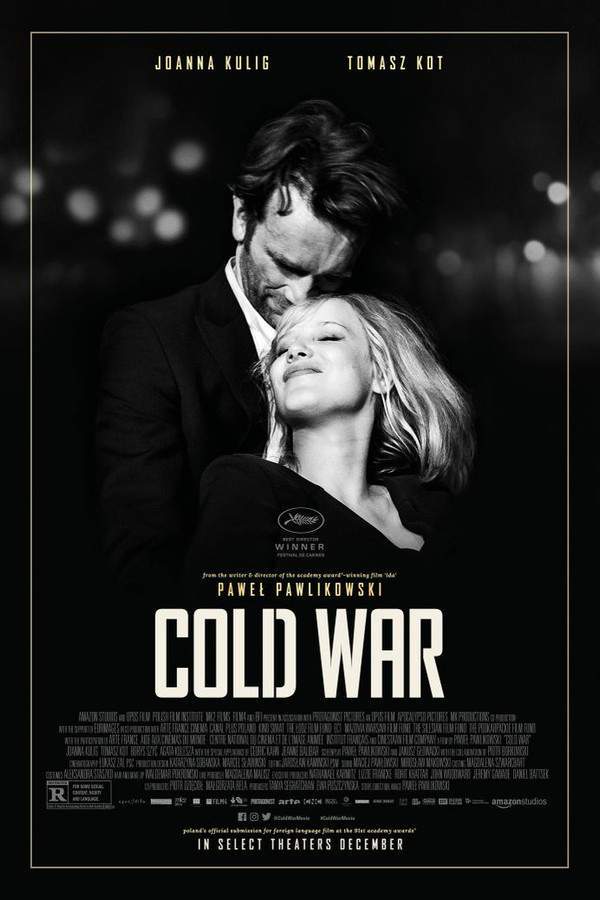
Cold War (2018) Full Movie Breakdown
The Chorus (2005) Story Summary & Characters
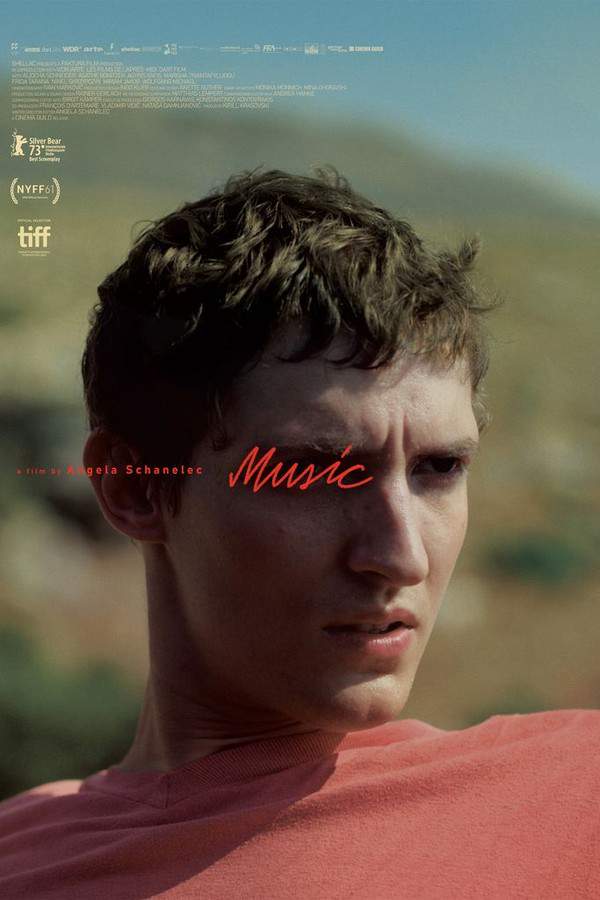
Music (2024) Detailed Story Recap
The Audition (2019) Story Summary & Characters
Concerto Campestre (2005) Story Summary & Characters
Concert at the End of Summer (1980) Full Movie Breakdown
The Conductor (1980) Spoiler-Packed Plot Recap
The Concert (1954) Complete Plot Breakdown
The Music Lovers (1971) Ending Explained & Film Insights
Song of Russia (1944) Spoiler-Packed Plot Recap
Audition (1964) Ending Explained & Film Insights
Not Everybody’s Lucky Enough to Have Communist Parents (1993) Full Movie Breakdown
The Concert (1962) Plot Summary & Ending Explained
Pastorale (1975) Plot Summary & Ending Explained
They Shall Have Music (1939) Plot Summary & Ending Explained