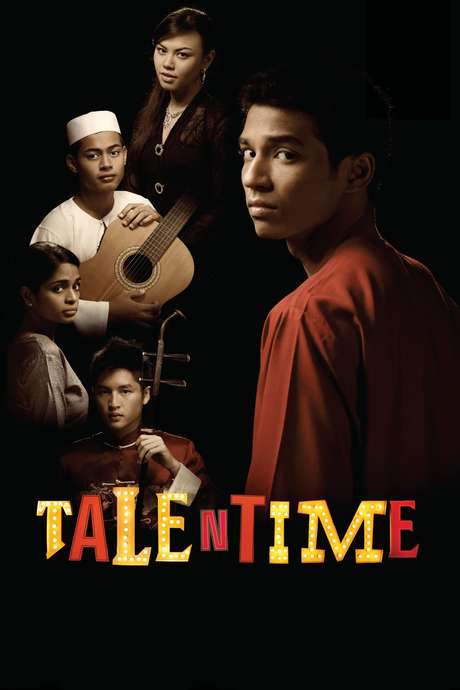
Talentime follows the days of auditions, rehearsals, and preparations that lead up to a school’s inter-school talent show organized by Cikgu Adibah [Adibah Noor]. The film builds a warm, charged atmosphere where ambition, jealousy, humor, romance, and heartbreak rub shoulders as performers strive to shine on a single night of music and memory. Throughout the journey, Yasmin’s insight lingers: the idea behind Talentime is that growth often comes through pain and a measure of suffering before we reach greater heights.
A talent search pairs Melur [Pamela Chong], a Malay‑mixed girl with a natural gift for song who sings while accompanying herself on the piano, with a crowd of finalists that includes Mahesh [Muhesh Jugal Kishor], an Indian male student whose vocal talent complements his guitar chops. Hafiz [Syafie Naswip] adds his own magnetic presence, captivating audiences with his voice and guitar as he balances school life with the heavy burden of a mother who is hospitalized with a brain tumor.
The family dynamics and personal histories deepen the drama. Melur's mother [Mislina Mustaffa] offers steady support and warmth, while Mahesh carries a heavier load at home—his uncle Ganesh, who cared for the family since the death of Mahesh's father, is stabbed to death on his wedding day. At first, Melur reads Mahesh's quiet withdrawal as a sign of grief, growing frustrated, until Hafiz explains the deeper circumstances surrounding Mahesh's life.
As their bond deepens, the couple faces the reality that their relationship will likely face opposition. They keep their affection private, and Mahesh even hides this from his own mother, who remains grief‑stricken as the family confronts its unresolved wounds. The truth eventually surfaces, and Mahesh is assaulted before Melur's eyes just a day before Talentime, a brutal moment that tests their resilience and the strength of their connection.
On Talentime night, Melur must rise to the occasion and sing through the ache in her heart, balancing technical prowess with raw emotion. The performances become a conduit for shared pain and tentative hope, a reminder that art can illuminate even the heaviest moments. The surrounding stories—family pressure, secrecy, and the ethical complexities of love—interweave with the music, creating a tapestry that lingers long after the final note fades.
In the end, the film portrays not just a competition, but a communal experience where young voices meet old wounds, and where the act of performing becomes a pathway to understanding, forgiveness, and the fragile beauty of human connection.