Year: 1952
Runtime: 90 mins
Language: English
Director: Edward Ludwig
Set and filmed in post‑war Hawaii, the story follows House Un‑American Activities Committee investigators Jim McLain and Mal Baxter as they probe Communist Party activities, which were legal at the time. Their investigation covers everything from insurance fraud to the sabotage of a U.S. naval vessel.
Warning: spoilers below!
Haven’t seen Big Jim McLain yet? This summary contains major spoilers. Bookmark the page, watch the movie, and come back for the full breakdown. If you're ready, scroll on and relive the story!
Read the complete plot breakdown of Big Jim McLain (1952), including all key story events, major twists, and the ending explained in detail. Discover what really happened—and what it all means.
During the late 1940s, HUAC investigators Jim McLain John Wayne and Mal Baxter James Arness are dispatched to Hawaii to track Communist Party activities and gather evidence toward convictions. Their mission sweeps across the shipping lanes and harbor operations, uncovering a tangled web of insurance fraud, saboteurs, and infiltrators inside labor unions that threaten to foul the loading and unloading of ships on the Honolulu docks. A key break comes when a local newspaper reporter shares tips that steer them toward Willie Nomaka, a former Party treasurer, drawing the pair deeper into a case that blends espionage with criminal conspiracies.
Nomaka is under the care of psychiatrist Dr. Gelster [Gayne Whitman], whose secretary Nancy Vallon [Nancy Olson] proves particularly helpful. McLain pursues a developing connection with her on a date, and a genuine romance blossoms amid the danger and intrigue. Meanwhile, Nomaka disappears during treatment for what’s described as an induced nervous breakdown. Nomaka’s landlady, Madge [Veda Ann Borg], grows involved in the investigation, while Nomaka’s ex-wife [Soo Yong] as Mrs. Namaka, a former Communist, supplies crucial background information that helps McLain connect the dots. Nomaka is eventually located under an alias at a Honolulu sanatorium, but he is heavily drugged and unable to speak.
Sturak [Alan Napier], the Party’s leader, orders Dr. Gelster to dispose of Nomaka, yet McLain manages to rescue him and carry him to safety. Sadly, Nomaka’s knowledge proves of little value to the investigators. The danger escalates when two thug Communists kidnap Baxter, and during a tense interrogation, Gelster accidentally kills him with a sodium pentothal injection. The loss steels McLain’s resolve to finish the task, despite the heavy setback.
In the meantime, Sturak convenes a meeting of the Party cell, where he instructs Gelster to confess his party membership to local authorities with the aim of convincing investigators that the cell has been destroyed and that other cells can continue their work unchecked. Gelster is reluctant to sacrifice himself for the Party, and the moment finally erupts when McLain arrives, delivering a hard punch to Gelster for Baxter’s death. The authorities soon arrive, and the insurrectionists are placed under arrest. Those responsible for Baxter’s death are convicted of murder, but the broader implication remains a chilling reminder of how political pressure and fear can shape law enforcement.
As the investigations progress, McLain and Nancy witness other Communist figures choosing to plead the Fifth Amendment to avoid self-incrimination during additional HUAC interrogations. The outcome feels almost cyclical—McLain achieves a measure of justice for Baxter, yet the system leaves him back at square one, continuing the broader struggle that defined his mission and the era.
Last Updated: October 09, 2025 at 11:22
Discover curated groups of movies connected by mood, themes, and story style. Browse collections built around emotion, atmosphere, and narrative focus to easily find films that match what you feel like watching right now.
Methodical thrillers where government agents uncover political conspiracies in a tense atmosphere.Explore movies like Big Jim McLain that feature tense, methodical investigations into political conspiracies. If you liked the steady pacing and high-stakes detective work of HUAC agents in Hawaii, you'll find similar thrillers here focused on government agents, espionage, and uncovering hidden threats during periods of intense political suspicion.
These narratives typically follow a linear investigation, where protagonists gather clues, interview suspects, and piece together a larger conspiracy. The journey is often straightforward but tense, pitting clear-cut heroes against a shadowy, ideologically driven enemy. Victories are frequently partial, acknowledging that while a specific threat is neutralized, the underlying ideological conflict persists.
Movies in this thread are grouped by their shared focus on procedural investigation within a specific political-historical context. They create a cohesive experience through a steady, methodical pacing, a consistently tense and grim tone, and themes of espionage, loyalty, and fighting a pervasive, often unseen, enemy.
Stories where a battle is won, but the larger war feels endless and unresolved.Find films with endings similar to Big Jim McLain, where justice is served for a specific crime but the overarching threat remains. If you appreciated the film's conclusion that leaves the hero 'back at square one' in a larger conflict, you'll discover other stories where victory is personal yet philosophically incomplete.
The narrative pattern involves a protagonist engaging in a specific conflict that represents a much larger, seemingly unsolvable problem. The story resolves the immediate plot, providing closure for the characters' direct actions, but deliberately leaves the overarching thematic conflict wide open. This structure emphasizes the futility or endless nature of certain struggles, whether they are political, social, or moral.
These films are connected by their distinctive emotional payload at the ending. They share a specific mix of satisfaction from a concrete accomplishment and frustration or unease from an unresolved larger threat. This creates a cohesive viewing experience for those who appreciate nuanced, thought-provoking conclusions that aren't purely happy or sad.
Don't stop at just watching — explore Big Jim McLain in full detail. From the complete plot summary and scene-by-scene timeline to character breakdowns, thematic analysis, and a deep dive into the ending — every page helps you truly understand what Big Jim McLain is all about. Plus, discover what's next after the movie.
Track the full timeline of Big Jim McLain with every major event arranged chronologically. Perfect for decoding non-linear storytelling, flashbacks, or parallel narratives with a clear scene-by-scene breakdown.
Discover the characters, locations, and core themes that shape Big Jim McLain. Get insights into symbolic elements, setting significance, and deeper narrative meaning — ideal for thematic analysis and movie breakdowns.
Get a quick, spoiler-free overview of Big Jim McLain that covers the main plot points and key details without revealing any major twists or spoilers. Perfect for those who want to know what to expect before diving in.
Visit What's After the Movie to explore more about Big Jim McLain: box office results, cast and crew info, production details, post-credit scenes, and external links — all in one place for movie fans and researchers.
Discover movies like Big Jim McLain that share similar genres, themes, and storytelling elements. Whether you’re drawn to the atmosphere, character arcs, or plot structure, these curated recommendations will help you explore more films you’ll love.
Big Jim McLain (1952) Scene-by-Scene Movie Timeline
Big Jim McLain (1952) Movie Characters, Themes & Settings
Big Jim McLain (1952) Spoiler-Free Summary & Key Flow
Movies Like Big Jim McLain – Similar Titles You’ll Enjoy
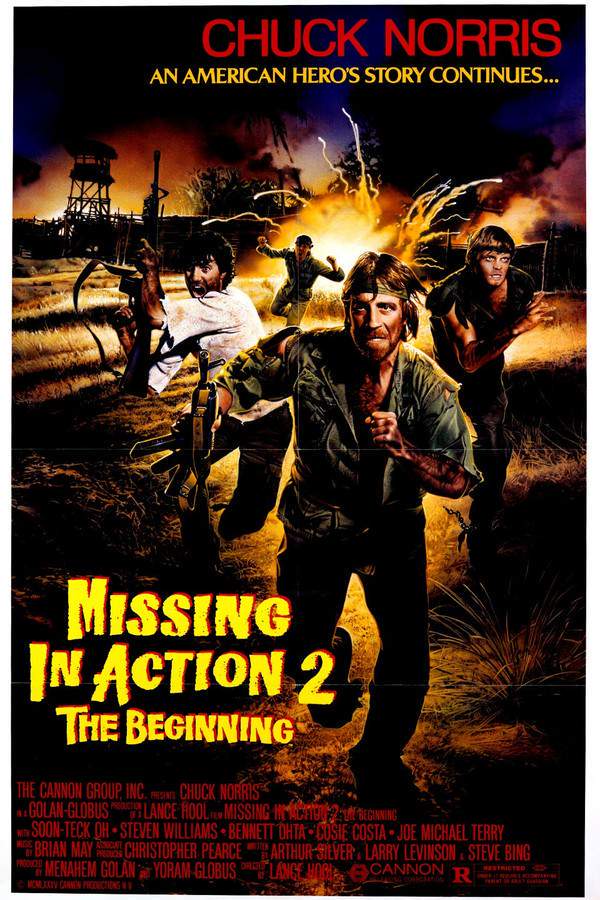
Missing in Action (1984) Film Overview & Timeline
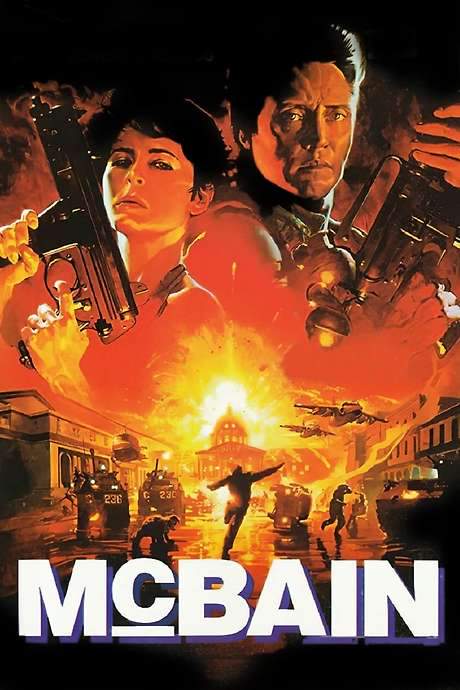
McBain (1991) Film Overview & Timeline
Malone (1987) Plot Summary & Ending Explained
Braddock: Missing in Action III (1988) Complete Plot Breakdown
The McConnell Story (1955) Detailed Story Recap
All the Young Men (1960) Plot Summary & Ending Explained
The Ugly American (1963) Ending Explained & Film Insights
Across the Pacific (1942) Story Summary & Characters
Gung Ho! (1943) Story Summary & Characters
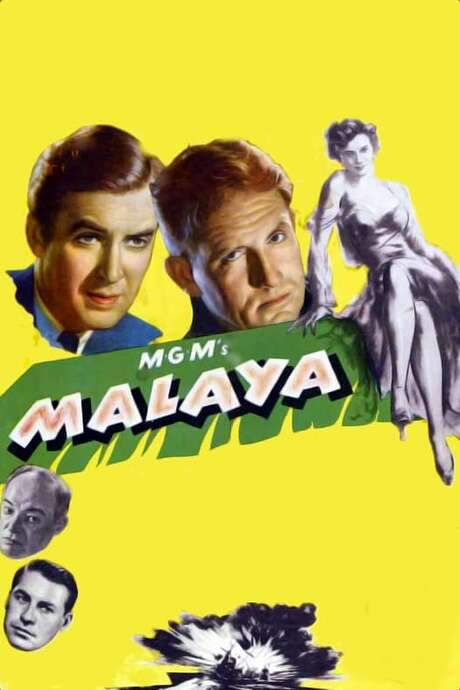
Malaya (1949) Plot Summary & Ending Explained
Home of the Brave (1949) Movie Recap & Themes
I Was a Communist for the FBI (1951) Spoiler-Packed Plot Recap
The Bamboo Prison (1954) Full Summary & Key Details
Jungle Heat (1957) Ending Explained & Film Insights
Hell in the Pacific (1968) Story Summary & Characters