Plot Explained Spoilers guaranteed!
Plot Explained

Browse by genre

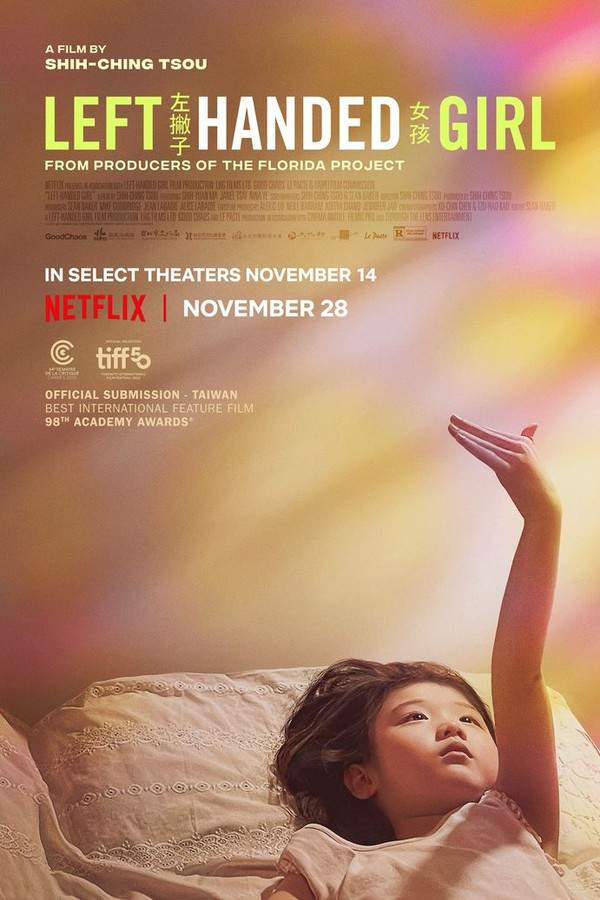
Left-Handed Girl (2025) movie poster

Plot Summary

Left-Handed Girl (2025) Plot Summary & Ending Explained

Release, runtime and language
2025 · 1 h 48 m · Chinese
Echo score 83
Loading streaming availability…
Directed by
Shih-Ching Tsou
Starring
Nina Ye, Akio Chen, Janel Tsai, Brando Huang, Blaire Chang, Hsia Teng Hung

After years living in the countryside, a single mother brings her two daughters back to Taipei to run a stall at a bustling night market. When their traditional grandfather insists the youngest, who is left‑handed, must not use her “devil hand,” long‑buried family secrets surface and the truth of generations begins to unravel.

On this page (7)
  1. 1 Where to watch
  2. 2 What happens: full plot
  3. 3 Plot questions answered
  4. 4 How it ends
  5. 5 Movie threads
  6. 6 Movies like Left-Handed Girl
  7. 7 Every angle
Loading streaming availability…

Full plot summary · contains spoilers

What Happens in Left-Handed Girl: Full Plot Summary

The whole story of Left-Handed Girl (2025) explained, from the opening scene to the final frame: every key event, every twist and what it all adds up to. Read it as a quick recap before the sequel, to check a scene you missed, or to finally understand what really happened.

A single mother Shu-Fen Janel Tsai moves with her two daughters—five-year-old I-Jing Nina Ye and college-aged I-Ann Shi-Yuan Ma—to Taipei to open a bustling noodle stand in a crowded night market, while I-Ann hovers between work at a betel nut stand as a betel nut beauty and the pressures of supporting the family. The move marks a fresh start, but it soon collides with hard truths about money, health, and responsibility that bend the family under one roof.

When Shu-Fen discovers that her estranged husband—who left the family a decade earlier—is terminally ill, she borrows more to cover his medical bills and funeral costs. The mounting debts weigh on her, and the burden strains the already fragile trust between mother and daughter. I-Ann grows resentful as Shu-Fen sinks deeper into debt and struggles to keep the noodle stand afloat, while the rent reminders loom over their modest home. The family’s precarious balance is further complicated when Shu-Fen reconnects with her own aging parents, and I-Jing is reintroduced to her grandparents Wen-Xong Chen and Xue-Mei Wu, shaping a tapestry of generational expectations that widen the emotional gap between the siblings.

I-Jing, who is left-handed, becomes the center of a troubling superstition. Her grandfather tells her that the left hand is “the devil’s hand” and instructs her not to use it at home. Misunderstanding the superstition, I-Jing internalizes a belief that she cannot be blamed for misdeeds performed with her left hand, which fascinates and terrifies her. This misunderstanding nudges her toward mischief, and she begins to shoplift from other market stands, driven by a sense of guilt and confusion that she cannot fully articulate. The family’s financial struggles intensify the stakes, and I-Jing’s actions begin to ripple through the lives of everyone around them.

I-Ann’s life takes another dramatic turn when she is invited to a party at a motel with an old classmate. There, she reveals a complicated past: she was once a straight-A student and the most popular girl on campus, but she had to abandon high school for financial reasons. The party becomes a toxic space where crude advances are directed at her, and she leaves in distress. The night reveals more pain when I-Ann discovers she is in a sexual relationship with her boss, A-Ming, whose wife confronts her at work. I-Ann ultimately reveals that she is pregnant with A-Ming’s child and makes the decision to quit, shattering any pretenses of stability she had hoped to maintain.

In the midst of these personal upheavals, I-Jing’s play with a pet meerkat—an inheritance from Shu-Fen’s late husband—ends in tragedy when the animal tumbles from the balcony after a left-handed throw. The child is overwhelmed with guilt, blaming the so-called devil’s hand for the accident, a belief that shadows her sense of self and responsibility. Shu-Fen’s attempt to seek help leads her to Xue-Mei Wu’s home, but Xue-Mei refuses money, signaling the complicated, sometimes fraught loyalties within extended families. Yet I-Jing’s act of stealing passports from Xue-Mei’s hidden black-market operation becomes a catalyst for a tense reckoning. The shop owner contacts the family, and I-Ann, who has returned to care for her sister, collects I-Jing and learns of the depth of I-Jing’s belief in the “devil hand” and the extent of her shoplifting. In a moment of resolve and care, I-Ann helps I-Jing recognize that the superstition is false and that the meerkat’s death was an accident. She leads I-Jing to return the stolen items and atone for her actions. Xue-Mei’s gratitude arrives in the form of financial aid, as she gifts Shu-Fen the money needed to keep the noodle stand afloat, recognizing the child’s honest effort and the family’s resilience.

A family gathering marks a turning point: Xue-Mei’s sixtieth birthday banquet becomes a stage for old secrets and new confrontations. A-Ming, who has been trying to reach I-Ann, appears with his wife, and the gathering becomes a crucible where the truth surfaces. His wife publicly exposes I-Ann’s affair and pregnancy—even insinuating expectations that the baby be male. In response, I-Ann reveals that she had aborted the child, sparking a fierce argument with Shu-Fen. The confrontation strains the family, and the couple is asked to leave. I-Ann, overwhelmed, drinks heavily and drinks in the revelation that I-Jing is her own daughter, not Shu-Fen’s, a truth Shu-Fen had kept to protect her daughter’s future. The disclosure causes upheaval, yet the moment becomes a cathartic turning point for both Shu-Fen and I-Ann, shaking loose years of secrecy.

In the end, the family chooses to stay together. I-Ann decides to continue working at the noodle stand alongside Shu-Fen and I-Jing, choosing to remain part of the family rather than pursue other possibilities. The film closes on a note of reconciliation: the mother and daughter begin to build a new, stronger relationship, grounded in honesty, responsibility, and a shared commitment to a future they can face together.

- The story unfolds with intimate, character-driven scenes that explore motherhood, intergenerational tension, and the consequences of choices made under financial pressure, all set against Taipei’s vibrant night markets and a family’s stubborn love.

- The emotional heart of the film rests in the evolving bond between Shu-Fen, I-Jing, and I-Ann, whose shared experiences gradually redefine what family means and how trust can grow again after rupture.
Last updated: February 05, 2026 at 07:36

Was this helpful?

Plot questions answered

Left-Handed Girl Plot Explained: Your Questions Answered

The questions people ask most about Left-Handed Girl (2025): what happens in the confusing scenes, why the characters do what they do, the twists, hidden details and what the ending means. Each answer contains spoilers.

Q1

Why does I-Jing believe she cannot be blamed for things she does with her left hand?

I-Jing's grandfather tells her that the left hand is 'the devil's hand' and she should not use it at home. Misunderstanding the superstition, I-Jing interprets this as meaning she cannot be held responsible for any misdeeds performed with her left hand. This belief gives her a distorted sense of immunity from guilt, which she uses to rationalize her later shoplifting behavior.

Foreshadowing: The grandfather's warning about the devil's hand plants the seed for I-Jing's later misunderstanding and acting out.

  • i-jing
  • left hand
  • devil's hand
  • superstition
  • misunderstanding
Q2

Why does I-Jing start shoplifting from the market stands?

I-Jing begins shoplifting because she believes her left hand is the 'devil's hand' and cannot be blamed for misdeeds. Combined with the family's financial stress and her own guilt and confusion about the superstition, she rationalizes stealing as something she shouldn't be held accountable for. Her actions are also a manifestation of the emotional turmoil caused by the family's instability and the new environment.

Foreshadowing: The shoplifting directly stems from the grandfather's superstitious warning about the devil's hand.

  • i-jing
  • shoplifting
  • devil's hand
  • market
  • stealing
Q3

Why does Shu-Fen go deeper into debt to cover her estranged husband's medical bills?

Shu-Fen decides to pay for her estranged husband's terminal illness and funeral costs despite him abandoning the family a decade earlier. This decision reflects her sense of moral obligation and perhaps unfinished emotional business with him. However, this choice deepens the family's financial crisis and fuels I-Ann's resentment, as the money could have helped stabilize their own struggling household.

Foreshadowing: This debt burden adds to the mounting financial pressure that strains relationships throughout the film.

  • shu-fen
  • husband
  • debt
  • medical bills
  • estrangement
Q4

Why does I-Ann get involved in a sexual relationship with her boss A-Ming?

I-Ann's affair with her boss A-Ming develops from her precarious financial situation and emotional vulnerability. Working as a betel nut beauty while struggling to support her family, she is drawn into a relationship with someone who offers financial security. The affair ultimately leads to her pregnancy, and when A-Ming's wife confronts her at work, I her-Ann reveals pregnancy and quits her job, losing both her relationship and her source of income.

Foreshadowing: I-Ann's motel party experience earlier hints at her vulnerability to exploitation.

  • i-ann
  • a-ming
  • affair
  • boss
  • pregnancy
  • workplace
Q5

What happens to the family meerkat and why does I-Jing blame herself?

The meerkat, an inheritance from Shu-Fen's late husband, dies when I-Jing accidentally causes it to fall from the balcony while playing. Using her left hand to throw a ball, the meerkat tumbles and dies. Overwhelmed by guilt and deeply influenced by the 'devil's hand' superstition, I-Jing internalizes the belief that her left hand caused the tragedy, adding to her psychological burden.

Foreshadowing: I-Jing's misunderstanding of the devil's hand superstition directly leads to her interpretation of the meerkat's death as her fault.

  • meerkat
  • i-jing
  • accident
  • balcony
  • devil's hand
Q6

Why did Shu-Fen keep secret that I-Jing is actually I-Ann's daughter?

Shu-Fen concealed I-Jing's true parentage to protect her daughter's future prospects. When I-Ann became pregnant at a young age and was unable to care for the child, Shu-Fen took I-Jing as her own daughter. Keeping this secret was meant to shield I-Jing from the stigma of being born out of wedlock and to give her better opportunities within the family structure.

Foreshadowing: The truth finally emerges during the emotionally charged birthday banquet confrontation.

  • i-jing
  • i-ann
  • secret
  • parentage
  • shu-fen
  • family secret
Q7

Why does I-Ann decide to have an abortion?

I-Ann chooses to abort her pregnancy because she is already in a precarious position, struggling financially, involved in a scandalous affair with a married man, and facing the realization that she cannot provide for a child given her circumstances. The decision is also influenced by the shame and complexity of her situation, including the public exposure of her affair at the birthday banquet.

Foreshadowing: I-Ann's earlier financial struggles and the motel party incident foreshadow the difficult choices she will face.

  • i-ann
  • abortion
  • pregnancy
  • a-ming
  • decision
Q8

What happens at Xue-Mei's birthday banquet that causes the family confrontation?

Xue-Mei's sixtieth birthday banquet becomes the setting for explosive family revelations. A-Ming arrives with his wife, who publicly exposes I-Ann's affair and pregnancy, causing shame among the relatives. In response, I-Ann reveals she has already aborted the baby, leading to a heated argument with Shu-Fen. The confrontation escalates until the couple is asked to leave, and the accumulated family secrets begin to unravel.

Foreshadowing: This confrontation is the culmination of all the secrets and tensions that have been building throughout the film.

  • xue-mei
  • birthday
  • banquet
  • confrontation
  • affair
  • exposure
Q9

Why does Xue-Mei initially refuse to help Shu-Fen but later gives her money?

Xue-Mei initially refuses Shu-Fen's request for money because she is involved in a black-market illegal-immigration operation and wants to avoid drawing attention to herself. However, after I-Jing steals passports from her home and then demonstrates honesty by returning them, Xue-Mei is moved by the child's integrity and the family's resilience. She rewards their honesty by providing the financial assistance needed to keep the noodle stand afloat.

Foreshadowing: I-Jing's theft of the passports becomes the turning point that changes Xue-Mei's attitude toward helping the family.

  • xue-mei
  • money
  • help
  • passport theft
  • noodle stand
Q10

How does I-Ann learn about I-Jing's 'devil's hand' belief and help her?

When the shop owner contacts the family about I-Jing's stolen passports, I-Ann returns to confront the situation. There she learns the full extent of I-Jing's belief in the 'devil's hand' and how it has been driving her shoplifting and guilt. I-Ann takes the opportunity to explain to I-Jing that the superstition is false and that the meerkat's death was a tragic accident, not the result of any supernatural curse or evil force.

Foreshadowing: I-Ann's return to care for her sister provides the emotional support needed to break the cycle of superstition.

  • i-ann
  • i-jing
  • devil's hand
  • superstition
  • explanation
  • accountability
Q11

Why does the family decide to stay together despite all the revelations and conflicts?

The family chooses to stay together because the painful truths, though devastating, ultimately clear away years of secrecy and misunderstanding. After I-Ann reveals I-Jing is her daughter and after the public confrontation at the banquet, both Shu-Fen and I-Ann must reckon with honesty. This cathartic moment allows them to begin rebuilding their relationship on a foundation of truth, and I-Ann decides to stay and work at the noodle stand with her family.

Foreshadowing: The birthday banquet confrontation, though painful, becomes necessary for the family's healing.

  • family
  • reconciliation
  • staying together
  • honesty
  • noodle stand
Q12

Why does I-Ann drink heavily after the birthday banquet?

I-Ann drinks heavily after the banquet because she is overwhelmed by the cascade of revelations: her affair and pregnancy have been publicly exposed, she has revealed her abortion to her mother, and most shocking, she has learned that I-Jing is actually her own daughter, not her sister. The alcohol serves as a coping mechanism for the emotional shock of discovering this family secret while processing the public humiliation she just experienced.

Foreshadowing: The revelation about I-Jing's true parentage adds another layer of complexity to I-Ann's emotional state.

  • i-ann
  • drinking
  • banquet
  • revelation
  • shock
  • secret

Ending explained

What Happens at the End of Left-Handed Girl?

How Left-Handed Girl (2025) ends, in short: the final scene, the last twist and what it means for the characters. The full ending explained, with every spoiler, lives on its own page.

Read the full ending explained

In the final act I‑Jing finally gives in to the superstition her grandfather fed her and steals the sealed envelope that her grandmother keeps hidden. When she tries to pawn the contents, the shopkeeper recognises the passports inside and alerts the family. Her grandmother, who had been quietly running an illegal‑immigration scheme, is suddenly safe from a police raid; grateful, she uses the unexpected windfall to cover three months of rent for Shu‑Fen’s noodle stall. Thus the “devil’s hand” that I‑Jing blamed for her misdeeds actually becomes the means that saves the household.

Later, I‑Ann discovers what her sister has been doing. She confronts I‑Jing, telling her that the left‑hand myth is a lie and that she must take responsibility for the stolen trinkets. I‑Jing returns each night‑market item, apologises, and learns that she—not a supernatural force—controls her actions. During the chaotic birthday celebration for Shu‑Fen’s mother, I‑Ann finally declares in front of the whole family that she is I‑Jing’s mother, breaking the secret Shu‑Fen had guarded for years. The revelation exposes the pressure of “saving face” that has strained their relationships, but it also releases the girls from the web of lies that kept them apart.

Continue reading the ending (1 more paragraphs)

The film closes with the three women hauling tables, setting chairs, and lighting a new lamp in the noodle shop while Johnny helps. The storm of arguments and revelations has passed, and the family returns to the grind of daily life, each carrying a small but crucial lesson: I‑Jing learns agency, I‑Ann sees the futility of blaming her mother, and Shu‑Fen realizes that listening to her daughters can be as necessary as working the stall. The lingering kale‑shaped motif suggests that, like the broken shards that recombine into a beautiful pattern, the fractured members of this Taipei family are able to re‑assemble themselves into a fragile, hopeful whole.

Left-Handed Girl ending explained in full

Movie threads

More Movies Like Left-Handed Girl, by Mood & Story

Curated lists built around what makes Left-Handed Girl tick: the same mood, the same kind of story or the same emotional payoff. Each list explains why these movies belong together.

Family secret dramas like Left-Handed Girl

Stories where long-buried family truths surface, causing a painful but necessary reckoning. Explore movies similar to Left-Handed Girl, where long-buried family secrets and generational conflicts come to light. If you enjoyed the tense, realistic portrayal of a family confronting its past under the weight of tradition, you'll find more emotionally heavy dramas here.

  • family conflict
  • generational trauma
  • secrets
  • cathartic
  • tense
  • realistic
  • Tone: bittersweet, tense, cathartic
  • Pacing: steady, methodical
Why these movies?

The story pattern: Narratives in this thread typically center on a contemporary family unit operating under the unspoken weight of the past. A catalyst—often a generational clash, a financial crisis, or a personal revelation—forces long-suppressed secrets into the open. The story unfolds methodically, exploring the fallout and the difficult path toward a more honest, albeit scarred, future.

Why they belong together: These films are grouped by their shared focus on the destructive power of secrets within a family and the bittersweet redemption found in truth. They share a gritty, realistic mood, a steady pacing that allows emotional weight to build, and a thematic core about inheritance—not of wealth, but of trauma and resilience.

Urban family survival stories like Left-Handed Girl

Intimate portraits of families navigating economic hardship and personal crises in a bustling city. Discover movies like Left-Handed Girl that depict the gritty reality of family life and economic struggle in a city environment. If you were drawn to the story of a mother rebuilding her life in a bustling night market amidst personal and financial crises, this thread is for you.

  • gritty
  • realistic
  • economic struggle
  • urban life
  • introspective
  • tense
  • Tone: gritty, bittersweet, realistic
  • Pacing: steady, immersive
Why these movies?

The story pattern: These narratives follow characters whose lives are deeply intertwined with their urban environment, often using a specific setting—like a market, a neighborhood, or a workplace—as a microcosm for larger societal pressures. The plot is driven by the intersection of economic necessity and complex interpersonal relationships, creating a steady buildup of tension that feels authentic and immersive.

Why they belong together: Movies in this thread share a common vibe of realistic struggle within an urban landscape. They are united by a gritty, introspective mood, a steady pacing that mirrors the relentless nature of daily survival, and a heavy emotional weight derived from themes like economic anxiety, family duty, and personal sacrifice.

Family dramas with buried secrets like Left-Handed Girl

Families navigating hardship while confronting truths they've tried to leave behind. If you enjoyed the realistic portrayal of a family facing hardship and hidden pasts in Left-Handed Girl, you'll find similar stories here. These movies explore the complex dynamics of families under pressure, where financial struggle and long-held secrets create powerful, emotional drama.

  • realistic
  • tense
  • emotional
  • melancholic
  • gritty
  • hopeful
  • Tone: bittersweet, tense, melancholic
  • Pacing: steady, character-driven
Why these movies?

The story pattern: Stories in this thread typically follow a family unit facing external pressures like poverty, which serves as a catalyst for internal conflict. A central secret from the past gradually surfaces, forcing characters into painful confrontations that test their bonds and lead to a fragile, often bittersweet, reconciliation.

Why they belong together: Movies are grouped here for their shared focus on the intersection of economic hardship and familial secrets. They deliver a specific, grounded emotional experience that is both tense and melancholic, built on realistic character dynamics and the slow unraveling of truth.

Movies about generational conflict like Left-Handed Girl

Stories where painful honesty between generations leads to fragile new beginnings. Fans of Left-Handed Girl's exploration of clashing values between grandparents and grandchildren will appreciate these films. They depict the difficult but necessary journey towards understanding across generations, often resulting in a bittersweet but hopeful resolution to family strife.

  • emotional
  • hopeful
  • melancholic
  • heartfelt
  • family
  • dramatic
  • Tone: bittersweet, emotional, hopeful
  • Pacing: steady, deliberate
Why these movies?

The story pattern: The narrative pattern involves a clash between old-world values and modern perspectives, typically within a family. A younger character's identity or choices conflict with traditional beliefs held by an elder. The conflict escalates until a long-hidden truth is revealed, forcing a heartfelt, if imperfect, reckoning that allows for a new, more honest relationship to form.

Why they belong together: These movies are united by their specific emotional arc: they start with generational tension, build through conflict fueled by the past, and arrive at a resolution that is cathartic yet realistically acknowledges that some wounds never fully heal. The overall feeling is poignant and ultimately hopeful.

If you liked this

Movies Like Left-Handed Girl

Similar movies to Left-Handed Girl: the same genre, themes or kind of story. Each one comes with its own plot summary, timeline and ending explained.

Browse all movie summaries

Every angle

Left-Handed Girl (2025) Explained: Plot, Ending, Timeline & Characters

Everything about Left-Handed Girl in one place: what happens in the plot summary, the timeline in chronological order, the characters and meaning, the ending explained and a spoiler-free summary. What's After the Movie adds the cast, box office and post-credit scenes.

Coming soon on iOS and Android

The Plot Explained Movie Summary App

Plot summaries, endings explained and timelines on your phone. Catch up on any movie in minutes, save your favorites and never miss a twist again.

Be the first to know when we launch. Your email stays private, always.

Learn more about the app