Plot Explained Spoilers guaranteed!
Plot Explained

Browse by genre

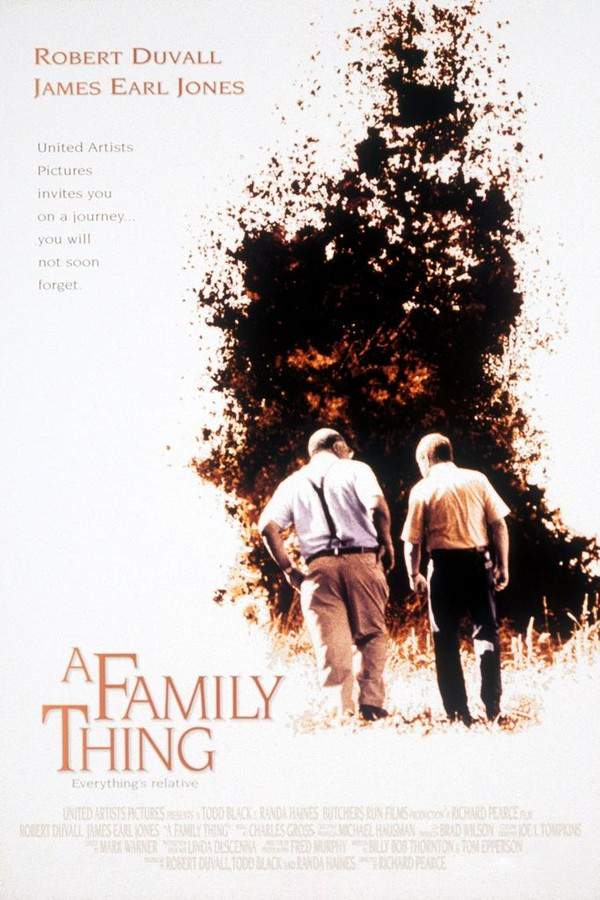
A Family Thing (1996) movie poster

Plot Summary

A Family Thing (1996) Plot Summary Explained

Release, runtime and language
1996 · 109 min · English
Directed by
Richard Pearce
Starring
Robert Duvall, James Earl Jones

After learning his mother wasn't who he thought she was, Earl Pilcher Jr. sets out on a journey to Chicago to uncover his family's hidden past. The discovery that he has a black mother and a half-brother, Roy Murdock, forces him to confront a lifetime of lies and rejection. As Earl seeks to understand his heritage and find a sense of belonging, he experiences a profound and moving exploration of identity, acceptance, and the complexities of family.

On this page (7)
  1. 1 Where to watch
  2. 2 What happens: full plot
  3. 3 Plot questions answered
  4. 4 Movie threads
  5. 5 Movies like A Family Thing
  6. 6 Categories
  7. 7 Every angle

Where to watch

Where to Watch A Family Thing (1996)

Where can you watch A Family Thing? Stream, rent or buy it in the US, including on Hoopla, Fandango at Home Free and Tubi TV: current JustWatch availability with up-to-date prices.

Streaming availability powered by JustWatch

Full plot summary · contains spoilers

What Happens in A Family Thing: Full Plot Summary

The whole story of A Family Thing (1996) explained, from the opening scene to the final frame: every key event, every twist and what it all adds up to. Read it as a quick recap before the sequel, to check a scene you missed, or to finally understand what really happened.

Fifty-something Arkansas redneck Earl Pilcher Jr. embarks on a life-altering journey upon discovering that his biological mother was black and that he has a half-brother named Ray, who resides in Chicago. Determined to connect with Ray, Earl drives his pickup to the windy city, only to find that their reunion is anything but warm. Ray harbors resentment, blaming Earl's racist father for their mother’s tragic passing, which now casts a shadow over his feelings towards Earl.

After an uncomfortable confrontation, Earl's plans are derailed when his pickup gets carjacked, resulting in a severe head injury. In a twist of fate, Ray, now a Chicago cop, is coerced into taking Earl from the hospital back to his home under the doctor's orders that Earl must stay awake. To mask their family relationship from their Auntie T., Ray fabricates a tale about being Korean War buddies with Earl. However, Auntie T., who is blind, readily sees through the ruse, recognizing Earl's true identity.

When Ray’s son, Virgil, arrives from his job as a city transit bus driver, he is confronted with the unexpected sight of Earl sleeping on his couch. Suspicion drips from Virgil as he demands to know who this stranger is. Fortunately, Auntie T. steps in, insisting that the truth be revealed. This revelation prompts Earl to consider leaving in search of a motel. However, an argument ensues between Earl and Ray, leading to a physical scuffle. The confrontation takes a stark turn when Earl makes a racially charged remark, igniting Ray's fury. As Ray storms off, he declares, "If you need any more help, don't call me. I'm through helping you!"

That night, hit hard by his choices, Earl seeks refuge under a bridge alongside a group of homeless individuals. Meanwhile, Ray, scrapping his anger after a stern talk from Auntie T., attempts to find Earl, reaching out to the police dispatcher to keep an eye on his brother. The next day brings mixed news when Virgil learns that Earl has been discovered.

The family unites with Virgil's ex-wife, Ann, and their daughters, Kindra and Danielle, for a picnic. During this gathering, Earl gains insight into Virgil's past and the dreams that were dashed after a knee injury curtailed his football career. This moment fosters a deeper bond as Earl urges Virgil to seek hope and pursue positives in life. Virgil, initially resistant, begins to reflect on Earl's encouraging words.

Back at home, Auntie T. presents Earl with a photograph of their mother and recounts the heartwarming yet bittersweet tale of Earl's birth, revealing a moment where Ray cradled Earl as a newborn and proclaimed, "This is my baby." The story touches both brothers deeply, leading them to confront their shared past.

In a poignant turn of events, Ray takes Earl to reclaim his stolen truck from the police impound lot. Despite its rough condition—marked with bullet holes from a robbery—the truck signifies a path back to their roots. Together, the brothers set off on a heartfelt journey back to Arkansas to pay respects at their mother's grave, embarking on a healing journey marked by their newfound connection.

Last updated: November 04, 2024 at 00:39

Was this helpful?

Plot questions answered

A Family Thing Plot Explained: Your Questions Answered

The questions people ask most about A Family Thing (1996): what happens in the confusing scenes, why the characters do what they do, the twists, hidden details and what the ending means. Each answer contains spoilers.

Q1

Why does Ray resent Earl so much at first?

Ray resents Earl because Earl's racist father was directly responsible for their mother's death. This family tragedy created deep anger that Ray directs at Earl, seeing him as a reminder of the pain their father caused. Despite being brothers, Ray associates Earl with the white family that rejected and hurt their mother.

Foreshadowing: The timeline notes that Ray was cradling Earl as a newborn, saying "This is my baby," hinting at his original acceptance before resentment took hold.

  • ray
  • resentment
  • earl
  • mother death
  • father racism
Q2

How does Auntie T know Earl is Ray's brother if she's blind?

Although Auntie T is blind, she perceives Earl's true identity through non-visual cues. She notices details in his voice, mannerisms, and the way he carries himself that reveal his blood relation to Ray. Her years of knowing the family allow her to sense truths that sighted people might miss, making the fabricated war buddy story unconvincing to her.

  • auntie t
  • blind
  • truth
  • perception
  • senses
Q3

Why does Earl make a racially charged remark during the argument?

Earl makes the racially charged remark in the heat of the moment during a heated argument with Ray. This reflects the deep-seated racism he grew up with as his father's son, showing that despite his journey to find his brother, Earl still carries the toxic conditioning of his upbringing. The remark immediately costs him his connection with Ray and forces him to confront his own prejudices.

  • earl
  • racial remark
  • argument
  • racism
  • father
Q4

What leads Ray to change his mind about helping Earl?

Auntie T has a stern conversation with Ray after he storms off, challenging his anger and reminding him of family obligations. This sober talk causes Ray to reconsider his harsh treatment of Earl. He reaches out to the police dispatcher to help find Earl, showing he's willing to mend their relationship despite the hurtful remark.

  • ray
  • auntie t
  • reconciliation
  • family
  • change heart
Q5

Why is retrieving the truck important to the brothers?

The truck represents Earl's life in Arkansas and his journey to Chicago, it's his connection to his old identity. When Ray takes Earl to retrieve it from the police impound lot, damaged from the carjacking, he's symbolically accepting Earl into his life. The truck becomes a vehicle for their shared healing journey back to Arkansas.

  • truck
  • impound
  • symbol
  • journey
  • arkansas
Q6

Why do Earl and Ray go back to Arkansas together?

The brothers travel to Arkansas to visit their mother's grave, a pilgrimage that symbolizes their reconciliation and commitment to honoring their shared heritage. This journey represents the culmination of their healing, moving forward together while acknowledging the painful past that divided them. It's a physical and emotional return to their roots.

  • arkansas
  • mother grave
  • journey
  • healing
  • reconciliation
Q7

What is the significance of Auntie T's story about Earl's birth?

Auntie T shows Earl a photograph of their mother and recounts how Ray held baby Earl and declared "This is my baby," showing his immediate acceptance as a brother despite their different appearances. This story bridges the emotional gap between the brothers, reminding them that their bond was pure at the start before racism and loss corrupted their family ties.

  • auntie t
  • photo
  • birth story
  • ray
  • baby
  • brother bond
Q8

How does Earl's conversation with Virgil at the picnic help the story?

At the family picnic, Earl learns about Virgil's dashed football dreams due to a knee injury. When Earl encourages Virgil to find hope and pursue positives, it marks Earl's growth into someone who can offer support rather than just receive it. This conversation helps Earl find his place in the family and demonstrates intergenerational healing.

  • virgil
  • picnic
  • football
  • injury
  • hope
  • encouragement
Q9

Why does Earl stay with homeless people under the bridge?

After the argument with Ray and making the racially charged remark, Earl feels lost and unworthy of family help. He chooses to stay under the bridge with homeless people as a form of self-punishment and reflection. This low point forces him to confront who he wants to become, continuing his father's racism or embracing his new identity.

  • earl
  • homeless
  • bridge
  • reflection
  • self-punishment
Q10

How was Earl's father responsible for their mother's death?

The film implies Earl's father was racist and played a role in the tragic circumstances surrounding their mother's death. This family secret is the core reason Ray harbors such deep resentment, Earl's father not only kept the truth about Earl's heritage hidden but also directly caused the tragedy that led to their mother passing away.

  • father
  • racism
  • mother death
  • family secret
  • tragedy

Movie threads

More Movies Like A Family Thing, by Mood & Story

Curated lists built around what makes A Family Thing tick: the same mood, the same kind of story or the same emotional payoff. Each list explains why these movies belong together.

Family Secret Dramas Like A Family Thing

Emotional journeys triggered by a shocking revelation about one's true family. Discover movies like A Family Thing where a hidden truth rewrites a character's identity. If you enjoyed the journey of uncovering a family secret and forging an unlikely bond, you'll find similar poignant and revelatory stories here.

  • reflective
  • heartfelt
  • uncomfortable
  • hopeful
  • raw
  • contemplative
  • Tone: bittersweet, heartfelt
  • Pacing: steady, reflective
Why these movies?

The story pattern: Stories in this thread typically begin with a life-altering discovery—a hidden parent, a secret sibling, or a buried history—that shatters the protagonist's sense of self. The narrative follows their quest for answers, leading to emotionally raw confrontations and a gradual, often bittersweet, process of building new connections from the rubble of the past.

Why they belong together: Movies are grouped here for their shared focus on the explosive impact of family secrets and the slow, often difficult, process of reconciliation and building new family ties from a place of betrayal and confusion.

Identity and Belonging Movies Similar to A Family Thing

Character-driven stories about finding where you belong after a personal upheaval. Explore films similar to A Family Thing that focus on a character's search for identity and a sense of belonging. If you liked the thoughtful, bittersweet exploration of heritage and family in A Family Thing, these movies offer comparable emotional journeys.

  • contemplative
  • hopeful
  • reflective
  • heartfelt
  • searching
  • melancholic
  • Tone: bittersweet, contemplative
  • Pacing: steady, character-driven
Why these movies?

The story pattern: The narrative pattern involves a protagonist feeling like an outsider, either to their own life or a new environment. The plot is a series of encounters and reflections that challenge their preconceptions, leading to a nuanced understanding of themselves and their place in the world, typically concluding with a hopeful but realistically incomplete resolution.

Why they belong together: These films are connected by their central theme of a personal identity quest, a bittersweet emotional tone, and a steady, reflective pacing that allows the audience to sit with the character's internal conflicts and gradual realizations.

If you liked this

Movies Like A Family Thing

Similar movies to A Family Thing: the same genre, themes or kind of story. Each one comes with its own plot summary, timeline and ending explained.

Browse all movie summaries

Categories

Movie Lists Featuring A Family Thing

A Family Thing appears in these hand-built movie categories. Each one groups movies by a specific mood, theme or story type, with their plot summaries and endings explained.

View all movie categories

Every angle

A Family Thing (1996) Explained: Plot, Timeline & Characters

Everything about A Family Thing in one place: what happens in the plot summary, the timeline in chronological order, the characters and meaning and a spoiler-free summary. What's After the Movie adds the cast, box office and post-credit scenes.

Coming soon on iOS and Android

The Plot Explained Movie Summary App

Plot summaries, endings explained and timelines on your phone. Catch up on any movie in minutes, save your favorites and never miss a twist again.

Be the first to know when we launch. Your email stays private, always.

Learn more about the app