


Plot Explained Spoilers guaranteed!
Plot Explained

Browse by genre

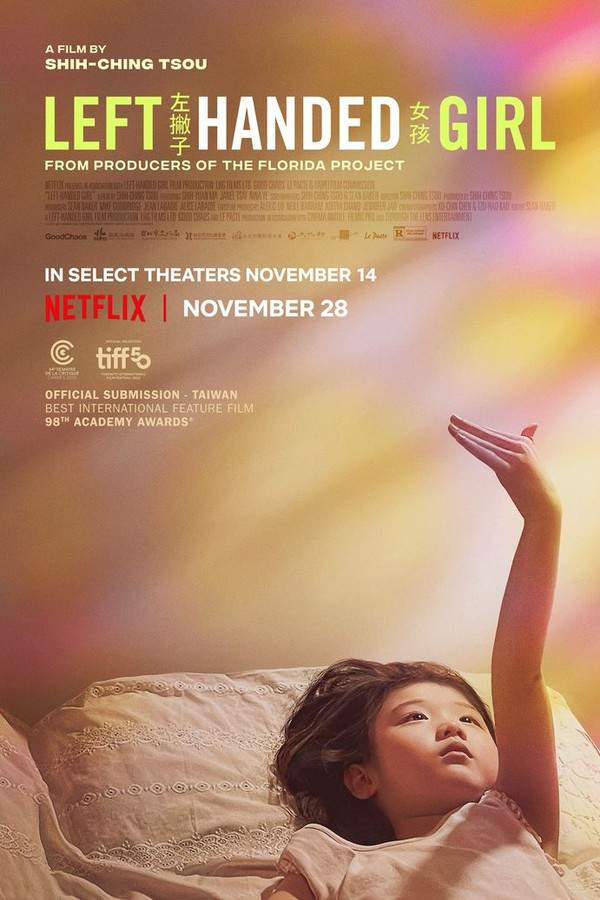
Left-Handed Girl (2025) movie poster

Ending Explained

Left-Handed Girl (2025) Ending Explained – Final Scene & Meaning

Release, runtime and language
2025 · 1 h 48 m · Chinese
Echo score 83
JustWatch #10,033 1
Directed by
Shih-Ching Tsou
Starring
Nina Ye, Akio Chen, Janel Tsai, Brando Huang, Blaire Chang, Hsia Teng Hung

After years living in the countryside, a single mother brings her two daughters back to Taipei to run a stall at a bustling night market. When their traditional grandfather insists the youngest, who is left‑handed, must not use her “devil hand,” long‑buried family secrets surface and the truth of generations begins to unravel.

On this page (7)
  1. 1 Where to watch
  2. 2 What happens at the end
  3. 3 Final events in order
  4. 4 Ending questions answered
  5. 5 Movie threads
  6. 6 Movies like Left-Handed Girl
  7. 7 Every angle

Where to watch

Where to Watch Left-Handed Girl (2025)

Where can you watch Left-Handed Girl? Stream, rent or buy it in the US, including on Netflix and Netflix Standard: current JustWatch availability with up-to-date prices.

Streaming availability powered by JustWatch

Ending explained · contains spoilers

What Happens at the End of Left-Handed Girl?

How Left-Handed Girl (2025) ends, what the final scene means, which earlier moments set it up and how to read the ending if the film leaves it open. The full ending explained, with every spoiler.

In the final act I‑Jing finally gives in to the superstition her grandfather fed her and steals the sealed envelope that her grandmother keeps hidden. When she tries to pawn the contents, the shopkeeper recognises the passports inside and alerts the family. Her grandmother, who had been quietly running an illegal‑immigration scheme, is suddenly safe from a police raid; grateful, she uses the unexpected windfall to cover three months of rent for Shu‑Fen’s noodle stall. Thus the “devil’s hand” that I‑Jing blamed for her misdeeds actually becomes the means that saves the household.

Later, I‑Ann discovers what her sister has been doing. She confronts I‑Jing, telling her that the left‑hand myth is a lie and that she must take responsibility for the stolen trinkets. I‑Jing returns each night‑market item, apologises, and learns that she—not a supernatural force—controls her actions. During the chaotic birthday celebration for Shu‑Fen’s mother, I‑Ann finally declares in front of the whole family that she is I‑Jing’s mother, breaking the secret Shu‑Fen had guarded for years. The revelation exposes the pressure of “saving face” that has strained their relationships, but it also releases the girls from the web of lies that kept them apart.

The film closes with the three women hauling tables, setting chairs, and lighting a new lamp in the noodle shop while Johnny helps. The storm of arguments and revelations has passed, and the family returns to the grind of daily life, each carrying a small but crucial lesson: I‑Jing learns agency, I‑Ann sees the futility of blaming her mother, and Shu‑Fen realizes that listening to her daughters can be as necessary as working the stall. The lingering kale‑shaped motif suggests that, like the broken shards that recombine into a beautiful pattern, the fractured members of this Taipei family are able to re‑assemble themselves into a fragile, hopeful whole.

Last updated: December 27, 2025 at 20:28

Was this helpful?

The last 4 events

How Left-Handed Girl Ends: The Final Events in Order

The last events of Left-Handed Girl (2025) in chronological order, the run-up to the ending explained above. The complete timeline has all 13 events, scene by scene.

Open the full timeline
  1. Xue-Mei rewards Shu-Fen with money

    As thanks for I-Jing's actions, Xue-Mei provides Shu-Fen with money to keep the noodle stand afloat. The financial relief helps stabilize the family’s precarious situation. The gesture deepens the complicated mother-daughter dynamics between Shu-Fen and I-Jing's life choices.

    Where
    Xue-Mei's home / noodle stand
  2. Birthday banquet and confrontation

    Xue-Mei's sixtieth birthday banquet becomes a flashpoint for old grievances. A-Ming arrives with his wife and publicly reveals I-Ann's affair and pregnancy, frightening the relatives. I-Ann reveals she aborted the baby, sparking a heated confrontation with Shu-Fen and forcing the family to face painful truths.

    When
    Xue-Mei's 60th birthday
    Where
    Xue-Mei's birthday banquet
  3. Secret revealed

    I-Ann finally reveals that I-Jing is her daughter, not Shu-Fen's, and Shu-Fen had hidden the truth to protect I-Jing's prospects. Xue-Mei reacts with outrage, but the confession becomes cathartic for Shu-Fen and I-Ann. The family begins to reckon with their past and redefine their bonds.

    Where
    Family home
  4. Resolution: rebuilding as a united family

    The film ends with I-Ann choosing to work at the noodle stand alongside her mother and sister, signaling a renewed commitment to the family. I-Jing and I-Ann begin rebuilding their mother-daughter relationship, learning to trust each other. The closing moments affirm resilience and a chance for a better future together.

    Where
    Noodle stand / family home

Ending questions answered

Left-Handed Girl Ending: Your Questions Answered

The questions people ask most about the ending of Left-Handed Girl (2025): what the final scene means, how the twist works, what happens to each character and how to read the ending. Each answer contains spoilers.

Q1

Why does I-Jing steal her grandmother's envelope?

I-Jing steals the envelope because she has been conditioned by her grandfather's superstition to believe her left hand is a 'devil hand' that causes all her mistakes. Desperate to prove the superstition wrong and desperate for money, she resorts to stealing what she believes will be valuable, not understanding the envelope contains passports for her grandmother's illegal-immigration scheme.

Foreshadowing: Earlier scenes show I-Jing struggling with the label of being 'left-handed' and the family's belief that her hand causes misfortune.

  • I-Jing
  • envelope
  • stealing
  • grandmother
  • left hand
  • devil hand
Q2

What was inside the envelope I-Jing tried to pawn?

The envelope contained passports used in an illegal-immigration operation run by I-Jing's grandmother. When the pawn shopkeeper recognized the passports, he alerted the family, which inadvertently protected the grandmother from an impending police raid.

Foreshadowing: The grandmother is established as a secretive figure who keeps certain documents hidden from the family.

  • envelope
  • passports
  • illegal immigration
  • grandmother
  • pawn shop
Q3

How does the 'devil hand' actually save the family?

The 'devil hand' that I-Jing blamed for her misdeeds becomes the means that saves the household. When I-Jing tries to pawn the envelope containing passports, the shopkeeper recognizes them and alerts the family. This forces the grandmother's illegal-immigration scheme into the open, but also protects her from a police raid. Grateful, she uses unexpected money to cover three months of rent for Shu-Fen's noodle stall.

Foreshadowing: The irony is set up through the grandfather's superstition that frames I-Jing's left hand as inherently bad.

  • devil hand
  • left hand
  • saving family
  • rent
  • grandmother
  • fortune
Q4

Why does I-Ann reveal that she is I-Jing's mother?

I-Ann finally reveals she is I-Jing's mother during the chaotic birthday celebration because she realizes the family cannot heal while carrying the secret. After confronting I-Jing about taking responsibility for her actions, I-Ann understands that the web of lies - particularly Shu-Fen's long-kept secret about I-Jing's parentality - has been poisoning their relationships. The public confession breaks the cycle of 'saving face' that has kept them apart.

Foreshadowing: Throughout the film, hints about I-Ann's connection to I-Jing and Shu-Fen's protectiveness around the secret establish this revelation as inevitable.

  • I-Ann
  • I-Jing
  • mother
  • secret
  • revelation
  • family truth
Q5

What happens to the grandmother after the passports are discovered?

Instead of being arrested in the police raid that was about to happen, the grandmother is suddenly safe because the family learns about her operation through I-Jing's attempt to pawn the envelopes. Grateful for this unexpected protection, she uses the windfall from her scheme to cover three months of rent for Shu-Fen's noodle stall, effectively saving the family's livelihood.

Foreshadowing: The grandmother's secretive behavior and the hidden envelope establish she has something worth protecting.

  • grandmother
  • passports
  • illegal immigration
  • police
  • rent
  • windfall
Q6

What do the three women learn by the end of the movie?

Each woman carries away a crucial lesson: I-Jing learns agency - that she, not a supernatural force, controls her actions. I-Ann learns the futility of blaming others (like her mother) for her own circumstances. Shu-Fen realizes that listening to her daughters can be as necessary as working the stall. The painful revelations lead to honest relationships rather than continued deception.

Foreshadowing: Each character's arc is set up through their earlier conflicts and misunderstandings.

  • I-Jing
  • I-Ann
  • Shu-Fen
  • lessons
  • agency
  • listening
  • family
Q7

What does the kale-shaped motif at the end represent?

The lingering kale-shaped motif symbolizes how the fractured members of this Taipei family can recombine into a beautiful pattern, much like broken shards reassembling. Just as kale forms intricate patterns from separate leaves, the family - after being broken apart by secrets, lies, and financial desperation - are able to re-assemble themselves into a fragile but hopeful whole.

Foreshadowing: The kale imagery appears earlier in the film, establishing the theme of fragmented beauty.

  • kale
  • motif
  • symbolism
  • family
  • reassembly
  • hope
  • broken
Q8

Why is the ending considered bittersweet?

The ending is bittersweet because the painful public airing of family secrets - including I-Ann's affair, the unplanned pregnancy, and I-Jing's true parentage - leads to reconciliation and a more honest family foundation. While the family acknowledges past pain and the harm caused by secrets and superstition, the final scene suggests future healing and hope as the three women work together in the noodle shop.

Foreshadowing: The film's steady pacing and emotional tension build toward this cathartic but painful resolution.

  • bittersweet
  • ending
  • reconciliation
  • secrets
  • hope
  • healing
  • family
Q9

What happens to Shu-Fen's noodle stall at the end?

Shu-Fen's noodle stall is saved by the grandmother's unexpected windfall, which covers three months of rent. The film closes with the three women - Shu-Fen, I-Ann, and I-Jing - hauling tables, setting chairs, and lighting a new lamp in the noodle shop while Johnny helps. The stall becomes a symbol of the family's renewed unity and shared future.

Foreshadowing: The financial struggle of the stall has been a central conflict throughout the film.

  • noodle stall
  • Shu-Fen
  • rent
  • family
  • working together
  • Johnny
Q10

Why does I-Jing return the night market items?

After I-Ann confronts her about the left-hand myth being a lie and tells her she must take responsibility for her actions, I-Jing returns each night-market item she had taken and apologizes. This act represents her realization that she - not a supernatural force or her 'devil hand' - controls her own actions and choices.

Foreshadowing: I-Ann's confrontation directly challenges the superstition that has controlled I-Jing's self-perception.

  • I-Jing
  • returning items
  • night market
  • responsibility
  • apology
  • agency

Movie threads

More Movies Like Left-Handed Girl, by Mood & Story

Curated lists built around what makes Left-Handed Girl tick: the same mood, the same kind of story or the same emotional payoff. Each list explains why these movies belong together.

Family secret dramas like Left-Handed Girl

Stories where long-buried family truths surface, causing a painful but necessary reckoning. Explore movies similar to Left-Handed Girl, where long-buried family secrets and generational conflicts come to light. If you enjoyed the tense, realistic portrayal of a family confronting its past under the weight of tradition, you'll find more emotionally heavy dramas here.

  • family conflict
  • generational trauma
  • secrets
  • cathartic
  • tense
  • realistic
  • Tone: bittersweet, tense, cathartic
  • Pacing: steady, methodical
Why these movies?

The story pattern: Narratives in this thread typically center on a contemporary family unit operating under the unspoken weight of the past. A catalyst—often a generational clash, a financial crisis, or a personal revelation—forces long-suppressed secrets into the open. The story unfolds methodically, exploring the fallout and the difficult path toward a more honest, albeit scarred, future.

Why they belong together: These films are grouped by their shared focus on the destructive power of secrets within a family and the bittersweet redemption found in truth. They share a gritty, realistic mood, a steady pacing that allows emotional weight to build, and a thematic core about inheritance—not of wealth, but of trauma and resilience.

Urban family survival stories like Left-Handed Girl

Intimate portraits of families navigating economic hardship and personal crises in a bustling city. Discover movies like Left-Handed Girl that depict the gritty reality of family life and economic struggle in a city environment. If you were drawn to the story of a mother rebuilding her life in a bustling night market amidst personal and financial crises, this thread is for you.

  • gritty
  • realistic
  • economic struggle
  • urban life
  • introspective
  • tense
  • Tone: gritty, bittersweet, realistic
  • Pacing: steady, immersive
Why these movies?

The story pattern: These narratives follow characters whose lives are deeply intertwined with their urban environment, often using a specific setting—like a market, a neighborhood, or a workplace—as a microcosm for larger societal pressures. The plot is driven by the intersection of economic necessity and complex interpersonal relationships, creating a steady buildup of tension that feels authentic and immersive.

Why they belong together: Movies in this thread share a common vibe of realistic struggle within an urban landscape. They are united by a gritty, introspective mood, a steady pacing that mirrors the relentless nature of daily survival, and a heavy emotional weight derived from themes like economic anxiety, family duty, and personal sacrifice.

Family dramas with buried secrets like Left-Handed Girl

Families navigating hardship while confronting truths they've tried to leave behind. If you enjoyed the realistic portrayal of a family facing hardship and hidden pasts in Left-Handed Girl, you'll find similar stories here. These movies explore the complex dynamics of families under pressure, where financial struggle and long-held secrets create powerful, emotional drama.

  • realistic
  • tense
  • emotional
  • melancholic
  • gritty
  • hopeful
  • Tone: bittersweet, tense, melancholic
  • Pacing: steady, character-driven
Why these movies?

The story pattern: Stories in this thread typically follow a family unit facing external pressures like poverty, which serves as a catalyst for internal conflict. A central secret from the past gradually surfaces, forcing characters into painful confrontations that test their bonds and lead to a fragile, often bittersweet, reconciliation.

Why they belong together: Movies are grouped here for their shared focus on the intersection of economic hardship and familial secrets. They deliver a specific, grounded emotional experience that is both tense and melancholic, built on realistic character dynamics and the slow unraveling of truth.

Movies about generational conflict like Left-Handed Girl

Stories where painful honesty between generations leads to fragile new beginnings. Fans of Left-Handed Girl's exploration of clashing values between grandparents and grandchildren will appreciate these films. They depict the difficult but necessary journey towards understanding across generations, often resulting in a bittersweet but hopeful resolution to family strife.

  • emotional
  • hopeful
  • melancholic
  • heartfelt
  • family
  • dramatic
  • Tone: bittersweet, emotional, hopeful
  • Pacing: steady, deliberate
Why these movies?

The story pattern: The narrative pattern involves a clash between old-world values and modern perspectives, typically within a family. A younger character's identity or choices conflict with traditional beliefs held by an elder. The conflict escalates until a long-hidden truth is revealed, forcing a heartfelt, if imperfect, reckoning that allows for a new, more honest relationship to form.

Why they belong together: These movies are united by their specific emotional arc: they start with generational tension, build through conflict fueled by the past, and arrive at a resolution that is cathartic yet realistically acknowledges that some wounds never fully heal. The overall feeling is poignant and ultimately hopeful.

If you liked this

Movies Like Left-Handed Girl

Similar movies to Left-Handed Girl: the same genre, themes or kind of story. Each one comes with its own plot summary, timeline and ending explained.

Browse all movie summaries

Every angle

Left-Handed Girl (2025) Explained: Plot, Ending, Timeline & Characters

Everything about Left-Handed Girl in one place: what happens in the plot summary, the timeline in chronological order, the characters and meaning, the ending explained and a spoiler-free summary. What's After the Movie adds the cast, box office and post-credit scenes.

Coming soon on iOS and Android

The Plot Explained Movie Summary App

Plot summaries, endings explained and timelines on your phone. Catch up on any movie in minutes, save your favorites and never miss a twist again.

Be the first to know when we launch. Your email stays private, always.

Learn more about the app