Plot Explained Spoilers guaranteed!
Plot Explained

Browse by genre

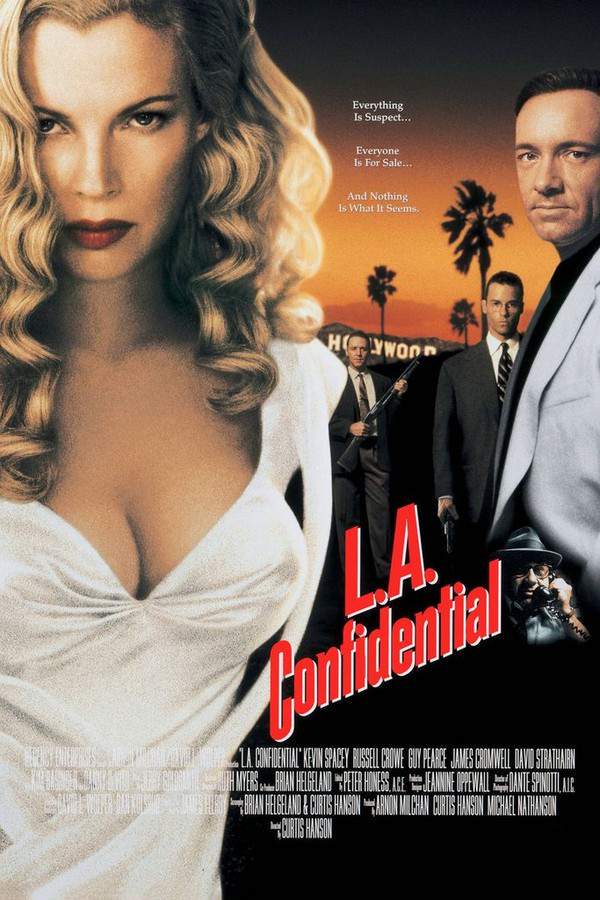
L.A. Confidential (2003) movie poster

Characters & Themes

L.A. Confidential (2003) Characters, Setting & Themes Explained

Release, runtime and language
2003 · 47 mins · English
Directed by
Eric Laneuville
Starring
David Hutchison, Robert Foxworth, Kiefer Sutherland, Pruitt Taylor Vince, Tom Nowicki, Anna Gunn

As corruption grows in 1950s LA, three policemen - one strait-laced, one brutal, and one sleazy - investigate a series of murders with their own brand of justice.

On this page (7)
  1. 1 Characters explained (3)
  2. 2 Where & when it takes place
  3. 3 Themes & meaning (3)
  4. 4 Character & meaning questions
  5. 5 Movie threads
  6. 6 Movies like L.A. Confidential
  7. 7 Every angle

3 main characters · contains spoilers

L.A. Confidential Characters Explained: Who Is Who

The main characters of L.A. Confidential (2003), heroes and villains: what drives them, how they change over the course of the story and what each of them reveals about the film's bigger ideas.

  • Ed Exley (David Conrad)

    Ed Exley is the straight-laced LAPD detective and son of a revered investigator. He is portrayed as a political climber who informs on colleagues in a brutality scandal, prioritizing reputation and career advancement over loyalty. His ambition to surpass his father's legacy drives much of his moral complexity, making him both principled and calculating.

    • 🧭 Ambition
    • 🕵️‍♂️ Detective
    • 💼 Politics
  • Jack Vincennes (Kiefer Sutherland)

    Detective Jack Vincennes is a celebrity cop who serves as a technical advisor for a police TV show and feeds tips to a scandal magazine. He embodies a persona-driven approach to policing, balancing public image with the gritty realities of crime. His detachment and willingness to monetize police work create tension with more principled colleagues.

    • 🎭 Celebrity
    • 🕵️‍♂️ Detective
    • 🎬 Media
  • Bud White (Josh Hopkins)

    Officer Bud White is an intimidating enforcer with a personal fixation on men who abuse women, rooted in his own mother's suffering. He embodies raw brutality tempered by a capacity for loyalty and moral judgment. His presence underscores the film’s exploration of gendered violence and the moral cost of violence as a tool of justice.

    • 💥 Violence
    • 🕵️‍♂️ Detective
    • 🧷 Trauma

Last updated: February 20, 2026 at 18:33

Was this helpful?

Setting

Where and When Does L.A. Confidential Take Place?

The setting of L.A. Confidential (2003): the year and time period, the places and locations, and how they shape the characters, the mood and the tension of the story.

Time period

1950s

Set in the 1950s, a period of rapid growth for Los Angeles and its film industry, the era is marked by postwar optimism shadowed by political corruption and organized crime. This decade features a media-saturated culture and a police force under pressure from sensationalism and scandal. The time frame helps frame the characters’ ambitions and the conspiracies they uncover as part of a broader struggle for control and influence.

Location

Los Angeles, Nite Owl coffee shop

The film unfolds in mid-20th century Los Angeles, a sprawling city where the glare of Hollywood sits alongside a murky underworld of crime and corruption. The Nite Owl coffee shop massacre acts as a focal point around which police, criminals, and the media become entangled. The setting blends glamorous entertainment with a dirty, real-world underside, showcasing a city where power and reputation can shield or expose rotten systems.

  • 📍 Los Angeles
  • 🕵️‍♂️ Crime
  • 🎬 Hollywood

Last updated: February 20, 2026 at 18:33

Was this helpful?

3 major themes

L.A. Confidential Meaning: Themes & Message Explained

What is L.A. Confidential (2003) really about? The emotional, social and philosophical themes the film keeps returning to, its symbolism and the message beneath the surface.

  • Crime & Corruption

    The story exposes deep-rooted corruption within the LAPD and its entanglement with organized crime. Personal ambition drives characters to bend rules, creating a web of deceit that reaches into politics and Hollywood. The massacre acts as a spark that reveals a larger conspiracy spanning multiple institutions. Truth is often eclipsed by power and self-preservation.

  • Media & Scandal

    Media culture and scandal play a pivotal role, with the Confidential/Hush-Hush dynamic driving public perception and police actions. A celebrity-tinged press and a TV-driven persona shape the officers’ reputations more than their deeds. The narrative shows how sensationalism can weaponize information, blurring lines between justice and entertainment. The investigation intertwines with tabloid fame and political leverage.

  • Power & Ambition

    Ambition drives the key players, especially Ed Exley, who pursues political advancement and makes calculated moves within the force. The pursuit of status clashes with ethical codes, highlighting the high cost of climbing the ladder in a corrupt system. The plot threads together personal loyalties, rivalries, and the lure of influence that ultimately governs outcomes. The result is a complex portrait of how power reshapes justice.

Last updated: February 20, 2026 at 18:33

Was this helpful?

Character & theme questions

L.A. Confidential Characters & Meaning: Your Questions Answered

The questions people ask about L.A. Confidential (2003): who the characters really are, their relationships, what the symbols mean, where it takes place and what the movie is really about. Each answer contains spoilers.

Q1

How does Los Angeles function as a setting in the film?

The film is set in 1950s Los Angeles, a city of stark contrasts where Hollywood glamour sits alongside a corrupt underworld. The Nite Owl coffee shop massacre serves as a pivotal location that draws police, criminals, and media into conflict. This setting exposes the duality of a city where reputation can shield powerful figures from accountability while the dirty underside of crime remains pervasive.

  • los angeles
  • 1950s
  • setting
  • nite owl
  • hollywood
Q2

Why is the 1950s time period important to the story?

The 1950s setting captures a post-war era marked by rapid urban growth alongside political corruption and organized crime. This decade's media-saturated culture, sensationalist press, and police force under pressure from scandal create the perfect environment for the film's exploration of power struggles. The era's cultural context shapes the characters' ambitions and the conspiracies they uncover.

  • 1950s
  • era
  • time period
  • post-war
  • los angeles history
Q3

How does the film explore police corruption?

L.A. Confidential depicts deep-rooted corruption within the LAPD, showing how personal ambition drives officers to bend rules and create webs of deceit reaching into politics and Hollywood. The Nite Owl massacre acts as a catalyst revealing a larger conspiracy that spans multiple institutions. The film illustrates how truth is often eclipsed by power and self-preservation within the force.

  • corruption
  • lapd
  • police
  • crime
  • conspiracy
Q4

What role does media culture play in the film?

Media and scandal drive much of the narrative through the Confidential and Hush-Hush tabloid magazines, which shape public perception and police actions. The film shows how a celebrity-tinged press and TV-driven personas influence officer reputations more than their actual deeds. Sensationalism becomes a weapon that blurs the lines between justice and entertainment.

  • media
  • scandal
  • tabloid
  • confidential
  • press
  • hollywood
Q5

What drives Ed Exley's character?

Ed Exley is a straight-laced LAPD detective and son of a revered investigator, motivated by ambition to surpass his father's legacy. He prioritizes reputation and career advancement, even informing on colleagues during a brutality scandal. This drive creates his moral complexity as both principled and calculating, making him a central figure in the film's exploration of power and ambition.

  • ed exley
  • ambition
  • detective
  • lapd
  • career
Q6

What defines Jack Vincennes as a character?

Jack Vincennes is a celebrity cop who serves as a technical advisor for a television police show while secretly feeding tips to a scandal magazine. He embodies a persona-driven approach to policing, balancing public image with gritty crime-fighting realities. His willingness to monetize police work creates tension with more principled colleagues.

  • jack vincennes
  • celebrity cop
  • tv show
  • scandal magazine
Q7

What motivates Bud White's approach to justice?

Bud White is an intimidating LAPD enforcer with a personal fixation on men who abuse women, a motivation rooted in his own mother's suffering. His brutal methods are tempered by loyalty and moral judgment. He represents the film's exploration of gendered violence and the ethical cost of using violence as a tool for justice.

  • bud white
  • violence
  • justice
  • enforcer
  • abuse
Q8

How does the film portray power and ambition?

The film illustrates how ambition drives key characters, particularly Ed Exley, to make calculated moves within the force. The pursuit of status clashes with ethical codes, highlighting the high cost of climbing the ladder in a corrupt system. Personal loyalties, rivalries, and the lure of influence govern outcomes, creating a complex portrait of how power reshapes justice.

  • power
  • ambition
  • corruption
  • status
  • career
Q9

How do the three main detectives differ in their methods?

The film centers on three contrasting LAPD detectives: Ed Exley as the strait-laced political climber, Jack Vincennes as the celebrity-focused persona cop, and Bud White as the brutal enforcer driven by personal trauma. Their differing approaches to justice create both collaboration and conflict as they investigate the Nite Owl murders.

  • detectives
  • ed exley
  • jack vincennes
  • bud white
  • lapd
  • methods
Q10

How does Hollywood factor into the film's world?

Hollywood operates as both a literal setting and symbolic element in the film. The entertainment industry's glamour exists alongside the city's criminal underworld, illustrating how power and reputation can shield rotten systems. The media culture connecting tabloids and television creates a world where image often matters more than truth.

  • hollywood
  • entertainment
  • celebrity
  • image
  • reputation

Movie threads

More Movies Like L.A. Confidential, by Mood & Story

Curated lists built around what makes L.A. Confidential tick: the same mood, the same kind of story or the same emotional payoff. Each list explains why these movies belong together.

Gritty Neo-Noir Police Corruption like in L.A. Confidential

Morally compromised detectives navigate a system rotten to its core. For viewers who liked the corrupt police force and dark atmosphere of L.A. Confidential, this list features movies with morally ambiguous detectives, systemic corruption, and a tense, neo-noir vibe. Find more complex crime dramas where the investigation exposes a rot deeper than any one criminal.

  • neo-noir
  • gritty
  • tense
  • cynical
  • corrupt
  • atmospheric
  • Tone: dark, cynical, tense
  • Pacing: steady, methodical
Why these movies?

The story pattern: The narrative typically follows a dogged investigation that peels back layers of a city-wide conspiracy, revealing that the real villains are often the ones in power. Protagonists face impossible moral choices, forcing them to decide whether to play by the rules of a broken system or become an outlaw to achieve a form of justice.

Why they belong together: Movies grouped here share a foundational cynicism about institutions, particularly law enforcement. They are united by a dark, atmospheric tone, complex plotting, and protagonists whose personal flaws are both a hindrance and the key to survival in a world devoid of clear-cut heroes.

Morally Complex Crime Investigations like in L.A. Confidential

Crime stories where the search for truth forces impossible ethical choices. If you were fascinated by the clashing methods and ethical dilemmas of the cops in L.A. Confidential, explore these movies. They feature investigations that delve into moral ambiguity, where the heroes are flawed and justice is never simple. Discover more films with heavy emotional weight and bittersweet resolutions.

  • moral ambiguity
  • complex
  • tense
  • heavy
  • gritty
  • psychological
  • Tone: dark, bittersweet, heavy
  • Pacing: steady, character-driven
Why these movies?

The story pattern: The plot revolves around a central mystery or crime that exposes the flawed morality of all involved. Multiple characters with conflicting perspectives—the by-the-book cop, the brutal enforcer, the opportunistic informant—collide, showcasing different facets of a corrupt world. The resolution rarely offers clean victory, instead delivering a sobering reckoning with the cost of achieving a compromised form of justice.

Why they belong together: These films are grouped by their shared focus on moral complexity within the crime genre. They prioritize character-driven narratives over simple action, featuring heavy emotional weight, steady pacing that allows for psychological depth, and endings that are more bittersweet than triumphant.

If you liked this

Movies Like L.A. Confidential

Similar movies to L.A. Confidential: the same genre, themes or kind of story. Each one comes with its own plot summary, timeline and ending explained.

Browse all movie summaries

Every angle

L.A. Confidential (2003) Explained: Plot, Timeline & Characters

Everything about L.A. Confidential in one place: what happens in the plot summary, the timeline in chronological order, the characters and meaning and a spoiler-free summary. What's After the Movie adds the cast, box office and post-credit scenes.

Coming soon on iOS and Android

The Plot Explained Movie Summary App

Plot summaries, endings explained and timelines on your phone. Catch up on any movie in minutes, save your favorites and never miss a twist again.

Be the first to know when we launch. Your email stays private, always.

Learn more about the app