Plot Explained Spoilers guaranteed!
Plot Explained

Browse by genre

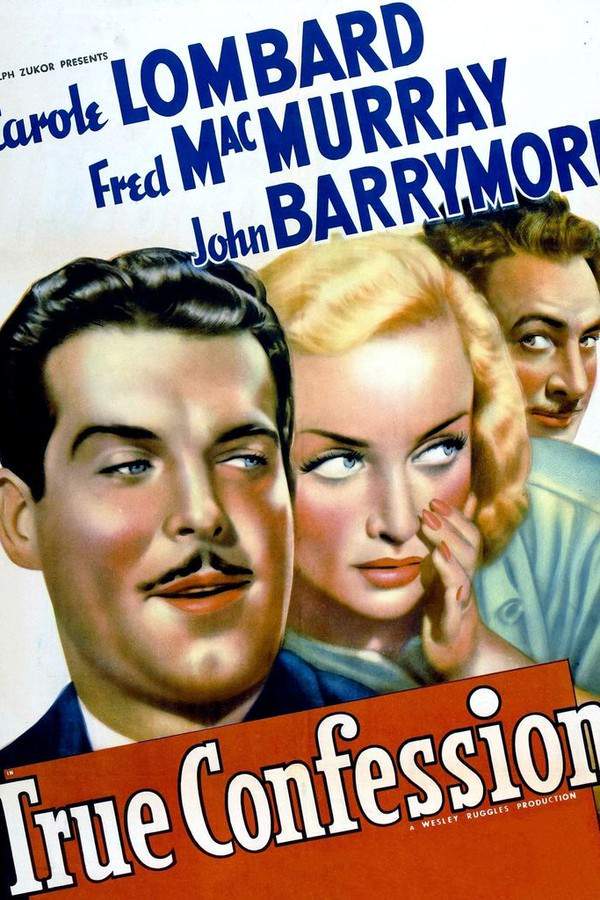
True Confession (1937) movie poster

Plot Summary

True Confession (1937) Plot Summary Explained

Release, runtime and language
1937 · 85 min · English
Loading streaming availability…
Directed by
Wesley Ruggles
Starring
Irving Bacon, Una Merkel, Porter Hall, Carole Lombard, Edgar Kennedy, Fritz Feld

A clever lawyer finds himself embroiled in a complex case when he defends his wife, who is accused of murder. As he investigates, he uncovers a web of lies and unexpected twists, questioning everything he thought he knew. Ultimately, he must confront a surprising truth and fight to prove her innocence, leading to a humorous and ultimately touching resolution.

On this page (5)
  1. 1 Where to watch
  2. 2 What happens: full plot
  3. 3 Plot questions answered
  4. 4 Movie threads
  5. 5 Every angle
Loading streaming availability…

Full plot summary · contains spoilers

What Happens in True Confession: Full Plot Summary

The whole story of True Confession (1937) explained, from the opening scene to the final frame: every key event, every twist and what it all adds up to. Read it as a quick recap before the sequel, to check a scene you missed, or to finally understand what really happened.

In 1948, the narrative unfolds around Rev. Desmond Spellacy, a young Roman Catholic monsignor strategically navigating the intricate web of the Los Angeles archdiocese. Unbeknownst to many, he has an older brother named Tom—a seasoned homicide detective with the Los Angeles Police Department. This juxtaposition of faith and law enforcement sets the stage for a thrilling yet tumultuous journey, where the lines between morality and corruption begin to blur.

Des, with a talent for implementing church initiatives while maintaining a tight grip on the budget, often finds himself compromised by the morally ambiguous dealings of Jack Amsterdam, a construction mogul who masquerades as a lay Catholic. While Jack outwardly positions himself as a benefactor for the congregation, it becomes increasingly apparent that his self-serving motivations far eclipse his genuine interest in the church's welfare.

The plot intensifies when the body of Lois Fazenda, a young woman, is discovered gruesomely severed in half in an abandoned lot, leading to a sensational media frenzy that labels her as "the Virgin Tramp." This unfortunate title encapsulates both her status as a Catholic and her alleged profession as a prostitute, further complicating the investigation as Tom and his partner, Frank Crotty, are thrust into a case that stirs public outrage and intrigue alike.

As Tom delves deeper into this baffling murder case, he crosses paths with Brenda Samuels, a notorious madam with whom he shares a strained past, stemming from his earlier days as a bagman for Amsterdam. Brenda, feeling the weight of past injustices, asserts that she is connected to the deceased priest, implicating both herself and the broader web of corruption stemming from Jack and his associates. Her revelation prompts Tom to blackmail Brenda into providing him with critical leads, notably tied to a stag film featuring Fazenda.

Convinced that he can unveil the layers of deceit surrounding her death, Tom's obsession grows. Alongside Frank, he discovers that Fazenda was a favored performer of Standard, a pornographic film director known for exploiting vulnerable women, driving the narrative deeper into a seedy underbelly of Los Angeles life. The investigation reveals hidden connections to corrupt community figures, laying bare the unsettling truth of power dynamics within the city.

Frustrations peak when a confrontation at a Catholic banquet meant to honor Amsterdam spirals out of control, leading to a dramatic showdown between Tom and Jack. Tom’s increasing desperation becomes evident as he seeks justice, unwilling to allow familial ties to deter him from unveiling the truth behind Brenda’s and Lois’s deaths.

As the noose of corruption tightens around Des, he finds himself at a crossroads; the very fabric of his faith is questioned amid swirling allegations and accusations. Caught between safeguarding his dignity as a clergy member and supporting his brother’s relentless pursuit of justice, the monk must navigate treacherous waters fraught with deceit.

When tragedy strikes again and Brenda is found suspected of suicide, Tom’s resolve only strengthens. He makes the bold decision to have Amsterdam detained, a choice that inadvertently ensnares Des in the unfolding storm. Their once-glimmering reputations are thrown into jeopardy, raising moral quandaries that resonate deeply.

Ultimately, with his career and credibility hanging by a thread, Des opts for seclusion in a remote desert parish—where he hopes to escape the suffocating shadow of betrayal and regret. Years later, a poignant reunion between the brothers occurs as Tom comes to reconcile with his brother, now facing his mortality. The encounter reveals a poignant layer of familial love and forgiveness, as Des offers absolution to Tom, lifting the burdens of guilt that have plagued their relationship.

Last updated: January 19, 2025 at 18:49

Was this helpful?

Plot questions answered

True Confession Plot Explained: Your Questions Answered

The questions people ask most about True Confession (1937): what happens in the confusing scenes, why the characters do what they do, the twists, hidden details and what the ending means. Each answer contains spoilers.

Q1

Why does Desmond move to a remote parish in the desert?

Desmond asks to be transferred to a remote desert parish after the investigation into Jack Amsterdam's corruption destroys his reputation within the Los Angeles archdiocese. Unable to continue serving in the city amid the scandal that implicates the church he loves, he chooses seclusion to escape the fallout and grapple with his fractured faith.

Foreshadowing: Earlier tensions at the Catholic banquet where Des publicly honors Amsterdam reveal his deepening discomfort with the church's compromises.

  • desmond spellacy
  • desert parish
  • transfer
  • church scandal
  • reputation
Q3

Why is Lois Fazenda called the "Virgin Tramp"?

The press dubs Lois Fazenda "the Virgin Tramp" because she represented a contradictory identity: she was a Catholic (the "virgin" reference to her faith) who also worked as a prostitute. This sensationalized nickname captured public fascination with her murder case and reflected the era's tendency to morallyjudge victims.

Foreshadowing: Her dual identity as both a church-connected woman and someone in Brenda's world foreshadows the broader theme of moral hypocrisy that runs through the entire story.

  • lois Fazenda
  • virgin tramp
  • murder
  • prostitute
  • media
Q4

Who killed Lois Fazenda?

The investigation reveals that Lois Fazenda was a performer in pornographic films directed by Standard. While investigating Standard's studio, Tom discovers evidence of violence, including blood on the floor and bathtub. However, Standard himself dies in a car accident shortly after Fazenda's murder, leaving the exact killer uncertain but linking her death to the dark underworld of exploitation Standard controlled.

Foreshadowing: Earlier discovery of Fazenda's involvement in a stag film and her connection to Brenda's brothel hints at her entanglement with Standard's operation.

  • lois Fazenda
  • Standard
  • murder
  • porn director
  • investigation
Q5

Why does Brenda Samuels die?

Brenda Samuels is found dead in what authorities rule a suicide. However, given the corrupt forces at play, including her knowledge of the priest's death and her accusations against Jack Amsterdam, her death is highly suspicious. Tom sees it as another consequence of the web of deception surrounding Amsterdam's criminal network, reinforcing his determination to bring Amsterdam to justice.

Foreshadowing: Brenda's earlier threats to expose Amsterdam and her claim of being connected to the dead priest establish her as a dangerous loose end.

  • brenda samuels
  • death
  • suicide
  • murder
  • amsterdam
Q6

What is Jack Amsterdam's connection to the church?

Jack Amsterdam is a construction mogul who poses as a devout lay Catholic to gain influence within the Los Angeles archdiocese. He financially supports church initiatives, allowing him to curry favor with clergy like Desmond. In reality, his self-serving motives far exceed any genuine religious devotion, and his corrupt dealings compromise the church's integrity.

Foreshadowing: Des's frequent compromises in overseeing Amsterdam's construction projects hint at the depth of their problematic relationship.

  • jack amsterdam
  • church
  • construction
  • corruption
  • lay catholic
Q7

Why do Des and Tom reconcile at the end?

Years after their lives diverged, Tom visits a dying Des at his desert parish. Overwhelmed by guilt over how his investigation destroyed his brother's career and reputation, Tom seeks forgiveness. Des, facing his own mortality, absolves Tom and offers him peace, symbolizing the enduring bond of brotherhood that transcends their conflicting paths.

Foreshadowing: Earlier moments of tension at the banquet and Des's support for Tom despite personal cost foreshadow this ultimate act of forgiveness.

  • reconciliation
  • brothers
  • forgiveness
  • dying
  • closure
Q8

What role does Standard play in the murder case?

Standard is a pornographic film director who exploits vulnerable women, including Lois Fazenda, who appeared in his stag films. Tom discovers that Fazenda was a favored performer of Standard, which connects her to the deeper criminal underworld the investigation uncovers. Standard's studio, located at a deserted army post, becomes a crucial crime scene where evidence of violence is found.

Foreshadowing: The discovery of the stag film earlier in the investigation directly leads Tom to Standard's operation.

  • Standard
  • porn director
  • stag film
  • Fazenda
  • exploitation
Q9

Why does Tom confront Jack Amsterdam at the banquet?

Tom publicly confronts Amsterdam during the "layman of the year" banquet Des organized to honor Amsterdam. Driven by desperation to expose Amsterdam's corruption and its connections to the murders, Tom uses this public setting to directly challenge him, knowing it will damage Des's position but unwilling to let the truth remain hidden.

Foreshadowing: Earlier tension at the lunch meeting where Tom confronts Amsterdam with knowledge of his dark dealings sets the stage for this explosive confrontation.

  • tom amsterdam confrontation
  • banquet
  • public
  • scandal
Q10

What does Brenda Samuels reveal about the dead priest?

Brenda Samuels contacts police to disclose that a Catholic priest was found dead while with one of her prostitutes. This revelation connects the priest's death to her brothel and links the broader corruption involving Jack Amsterdam, whom she accuses of having her imprisoned unfairly. Her accusation ties the murder of Lois Fazenda to the systemic corruption within both law enforcement and religious institutions.

Foreshadowing: Brenda's past as a victim of Amsterdam's manipulation as a bagman foreshadows her willingness to expose the truth.

  • brenda
  • priest dead
  • prostitute
  • revelation
  • amsterdam
Q11

Why is Desmond uncomfortable with Jack Amsterdam?

Desmond is uncomfortable because he knows Amsterdam's financial support for the church comes with moral compromises. While Des appreciates Amsterdam's ability to get projects built cheaply, he is aware that Amsterdam's self-serving motives tarnish the church's integrity. Ultimately, Des urges the Cardinal to sever ties with Amsterdam, recognizing the corruption their relationship has enabled.

Foreshadowing: Des's pattern of overlooking moral dilemmas in construction deals throughout the story builds toward his eventual breaking point.

  • desmond
  • amsterdam
  • discomfort
  • church
  • moral compromise

Movie threads

More Movies Like True Confession, by Mood & Story

Curated lists built around what makes True Confession tick: the same mood, the same kind of story or the same emotional payoff. Each list explains why these movies belong together.

Grim institutional investigations like in True Confession

Atmospheric crime stories revealing deep corruption within powerful institutions. Discover movies like True Confession that follow a tense investigation into systemic corruption. These stories often feature bleak atmospheres and characters confronting powerful, corrupt institutions, leading to heavy emotional journeys and bittersweet resolutions.

  • tense
  • grim
  • corrupt
  • atmospheric
  • frustrated
  • melancholic
  • Tone: dark, tense, grim
  • Pacing: steady, methodical
Why these movies?

The story pattern: Stories in this thread typically begin with an investigation that seems straightforward but quickly spirals, revealing layers of deceit and moral compromise within a trusted institution. The protagonist's journey is one of growing disillusionment, often culminating in a resolution that offers personal closure but fails to fully cleanse the corrupt system.

Why they belong together: These movies are grouped together because they share a core focus on exposing institutional decay through a methodical, tense investigation. They create a specific, heavy mood of futility and moral grayness, where justice is personal rather than systemic.

Bittersweet moral reckonings like in True Confession

Stories where seeking justice or truth comes at a devastating personal price. If you liked the heavy emotional cost and bittersweet ending of True Confession, explore these movies. They feature complex characters who pay a high personal price for their pursuit of truth, resulting in resolutions that are poignant rather than purely triumphant.

  • bittersweet
  • melancholic
  • heavy
  • moral complexity
  • frustrated
  • atmospheric
  • Tone: dark, bittersweet, melancholic
  • Pacing: steady, character-driven
Why these movies?

The story pattern: The narrative pattern involves a protagonist undertaking a morally complex quest that consumes them. While they may succeed in their immediate goal, the journey fundamentally changes or breaks them, leaving them with a hollow victory. The ending balances a note of hard-won personal resolution against the backdrop of profound loss.

Why they belong together: These films are united by their emotionally heavy journeys and their specific type of ending, which is more bittersweet than bleak. They appeal to viewers who appreciate complex moral dilemmas and conclusions that resonate with the real cost of truth and justice.

Every angle

True Confession (1937) Explained: Plot, Timeline & Characters

Everything about True Confession in one place: what happens in the plot summary, the timeline in chronological order, the characters and meaning and a spoiler-free summary. What's After the Movie adds the cast, box office and post-credit scenes.

Coming soon on iOS and Android

The Plot Explained Movie Summary App

Plot summaries, endings explained and timelines on your phone. Catch up on any movie in minutes, save your favorites and never miss a twist again.

Be the first to know when we launch. Your email stays private, always.

Learn more about the app