Plot Explained Spoilers guaranteed!
Plot Explained

Browse by genre

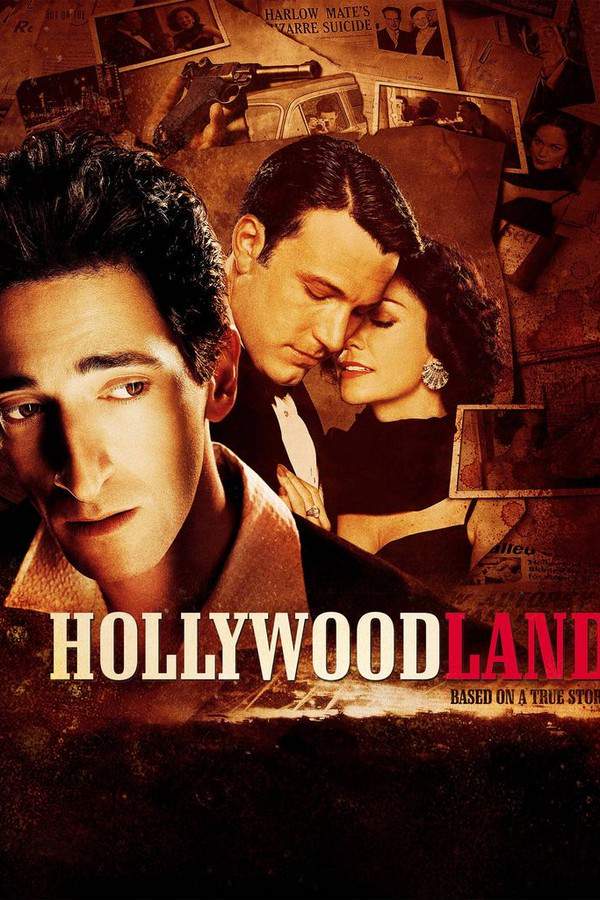
Hollywoodland (2006) movie poster

Plot Summary

Hollywoodland (2006) Plot Summary Explained

Release, runtime and language
2006 · 126 min · English
Directed by
Allen Coulter
Starring
Ben Affleck, Diane Lane, Adrien Brody, Bob Hoskins

In 1959, a private detective investigates the mysterious death of George Reeves, the actor who portrayed Superman on television. His inquiry reveals a complex network of secrets and lies connected to Reeves’s life and the studio behind the popular series. As the detective delves further, he finds his own past intertwined with the case, blurring the lines between truth and illusion. The investigation exposes a dark undercurrent of ambition, longing, and deception within Hollywood’s glamorous facade.

On this page (6)
  1. 1 Where to watch
  2. 2 What happens: full plot
  3. 3 Plot questions answered
  4. 4 Movie threads
  5. 5 Movies like Hollywoodland
  6. 6 Every angle

Where to watch

Where to Watch Hollywoodland (2006)

Where can you watch Hollywoodland? Stream, rent or buy it in the US, including on Amazon Video, Apple TV Store and Fandango At Home: current JustWatch availability with up-to-date prices.

Streaming availability powered by JustWatch

Full plot summary · contains spoilers

What Happens in Hollywoodland: Full Plot Summary

The whole story of Hollywoodland (2006) explained, from the opening scene to the final frame: every key event, every twist and what it all adds up to. Read it as a quick recap before the sequel, to check a scene you missed, or to finally understand what really happened.

As June 1959 arrives, Louis Simo, a crafty private investigator from Los Angeles, becomes intensely interested in discovering the truth behind Chester Sinclair's wife. Amidst his investigative pursuits, Simo grapples with his own chaotic life filled with marital strife and the overwhelming burden of fatherly guilt, especially as he struggles to bond with his son who is still mourning the unexpected passing of television legend George Reeves, famously known as Superman. While the official story suggests Reeves ended his own life, Simo suspects that deeper, more malevolent forces may be at play.

A fortuitous meeting with a former police colleague reignites Simo's curiosity about the circumstances surrounding Reeves' death and suggests possible ties to an LAPD investigation. As he digs further, he unearths a troubling web of inconsistencies that contradict the official version of events. Simultaneously, his relationship with his ex-wife Laurie is fraught with tension, as they argue about Simo's failings as a father, particularly with their son struggling to cope with the aftermath of Reeves’ demise.

In a flashback to 1951, we see George Reeves, who, despite experiencing a downturn in his acting career after Gone with the Wind, becomes involved in a clandestine romance with Toni Mannix, the wife of influential fixer Eddie Mannix. When a photograph exposes their affair, Reeves is sent into a tailspin, fearful that this scandal could unravel his professional life.

Despite his initial hesitation, Toni showers Reeves with extravagant gifts, including a new house and car, as well as expensive jewelry. Their relationship intensifies, and soon Reeves is cast as the lead in Adventures of Superman, propelling him to fame and providing financial stability. However, this new notoriety also leads to increasing dissatisfaction for Reeves, who feels trapped by the public's perception, longing for roles that truly showcase his talents.

His feelings of rejection soon manifest during a sneak preview of From Here to Eternity, where he witnesses audience members laughing at his performance. Film executives make it clear that they intend to reduce his screen time, deepening his feelings of disillusionment and uncertainty about his career trajectory.

Over the years, Reeves’ frustration grows, made worse by his resentment towards Toni, who he believes has failed to use her husband’s influence to help his career. This simmering anger culminates in a powerful act of defiance: he ceremoniously dismembers his Superman costume, a potent symbol of his disappointment with the show’s cancellation in 1958. A pivotal encounter with actress Leonore Lemmon in New York prompts him to leave Toni and seek a new path, a decision that devastates Toni and leaves her feeling betrayed.

As Simo begins to piece together the truth behind Reeves’ alleged murder, he speculates that Leonore may have unwittingly played a role in the actor’s untimely death, conjuring detailed scenarios of how events could have unfolded. However, as his investigation progresses, his attention shifts to Mannix, whose henchmen violently confront Simo at his home, reinforcing his belief that Mannix is implicated in Reeves' murder. With mounting evidence in hand, Simo starts to envision the true circumstances leading to Reeves’ tragic end.

The gravity of his findings is accentuated by the horrific news that Sinclair has succumbed to madness and killed his own wife. This revelation plunges Simo into a downward spiral of guilt and remorse, which he attempts to drown in alcohol. His visit to his son’s school while intoxicated starkly reminds him of his own shortcomings. A poignant conversation with Arthur Weissman, Reeves’ manager, leads Simo to a heart-wrenching home movie that captures Reeves' personal struggles and deep-seated disenchantment, leaving a profound impact on Simo, who becomes increasingly obsessed with unraveling the mystery of the actor's death.

Each of Simo's imaginative reenactments of Reeves' final moments begins with the actor strumming his guitar and singing “Green Eyes (Aquellos Ojos Verdes)" in Spanish for his guests. As the melancholic notes fade, Reeves bids his guests farewell before retreating to his bedroom, where the somber conclusion of his story awaits. This tragic scene plays out in Simo's mind multiple times, serving as a poignant reflection on the devastating toll that Reeves' pursuit of success took on his life.

The striking parallels between Reeves' struggles and Simo's own personal crises compel the detective to reassess his life choices. In search of healing, Simo views another home movie, this one capturing the happier days spent with Laurie and their son. Dressed in a suit and tie, he approaches Laurie's home, filled with hope as he endeavors to reconnect with his family and reclaim the joys that have slipped away.

Last updated: November 22, 2024 at 14:33

Was this helpful?

Plot questions answered

Hollywoodland Plot Explained: Your Questions Answered

The questions people ask most about Hollywoodland (2006): what happens in the confusing scenes, why the characters do what they do, the twists, hidden details and what the ending means. Each answer contains spoilers.

Q1

Why did George Reeves die in Hollywoodland?

George Reeves, the actor who played Superman on television, was found dead in his home in 1959. The official ruling was suicide, but the movie presents multiple theories through Simo's investigation, suggesting potential involvement from Eddie Mannix (whose wife Toni had an affair with Reeves) or others. The film ultimately leaves the exact cause ambiguous, reflecting the real uncertainty that still surrounds Reeves' death.

Foreshadowing: Earlier scenes show Reeves expressing deep dissatisfaction with his career and life, hinting at his emotional state before his death.

  • george reeves death
  • causes of death
  • mysterious death
  • hollywoodland ending
Q2

Why did Toni Mannix have an affair with George Reeves?

Toni Mannix, the wife of powerful Hollywood fixer Eddie Mannix, began a secret relationship with George Reeves in 1951 after his career declined following Gone with the Wind. The affair provided Reeves with financial support and eventually led to his casting as Superman, while Toni sought companionship and romance that she felt was missing in her marriage to the often-absent Eddie.

Foreshadowing: The film establishes early that Toni feels neglected by her husband and seeks emotional connection elsewhere.

  • toni mannix
  • george reeves affair
  • mannix marriage
  • secret relationship
Q3

Why did Eddie Mannix send henchmen after Louis Simo?

Eddie Mannix's men confronted Simo at his home because Simo was getting too close to the truth about George Reeves' death. As a powerful studio fixer, Mannix had motive to suppress any evidence linking him to Reeves' demise, especially since Reeves was having an affair with his wife Toni. The violent confrontation reinforced Simo's belief that Mannix was somehow implicated in the actor's death.

Foreshadowing: Earlier scenes establish Mannix as a powerful figure in Hollywood who controls information and silences those who threaten studio interests.

  • eddie mannix
  • louis simo
  • threat
  • hollywood corruption
  • studio fixer
Q4

Why did George Reeves leave Toni Mannix?

George Reeves ended his relationship with Toni Mannix after meeting actress Leonore Lemmon in New York in 1958. Reeves had grown resentful of Toni, believing she had failed to use her husband's influence to advance his film career beyond Superman. The chance to start fresh with Leonore represented what he saw as an escape from the limitations and resentment that had built up over years of being trapped in his typecast role.

Foreshadowing: Reeves' growing frustration with being typecast and his resentment toward Toni had been building throughout the flashback sequences.

  • george reeves leaving toni
  • leonore lemmon
  • relationship ending
  • career frustration
Q5

Why did Louis Simo become so obsessed with the Reeves case?

Louis Simo's obsession with George Reeves' death stemmed from personal parallels between their lives. Both men were struggling with feelings of failure, Simo as a father and husband, Reeves as an actor pigeonholed by one role. Watching Reeves' home movies revealed the actor's deep unhappiness, which mirrored Simo's own regrets. This connection drove Simo to pursue the truth beyond professional obligation, ultimately using the case to confront his own life choices.

Foreshadowing: The film repeatedly draws visual and thematic parallels between Simo's domestic struggles and Reeves' professional ones from the beginning.

  • louis simo obsession
  • personal motivation
  • investigation
  • parallel stories
Q6

Why was George Reeves unhappy with his Superman role?

George Reeves became increasingly unhappy playing Superman because the role typecast him, preventing him from taking on serious dramatic parts. During a sneak preview of From Here to Eternity, he was mortified when audiences laughed at his performance, and executives informed him they would reduce his screen time. This rejection, combined with years of being known only as the Man of Steel, left him feeling trapped and professionally unfulfilled.

Foreshadowing: Earlier scenes show Reeves receiving accolades for Superman while secretly feeling trapped by the character's shadow.

  • george reeves typecast
  • superman role
  • career frustration
  • acting dreams
Q7

What happened to Chester Sinclair's wife?

Chester Sinclair's wife was killed by Sinclair himself after he succumbed to madness. This tragic event deeply affected Louis Simo, who had been investigating Sinclair's wife at the start of the film. The news triggered Simo's own descent into guilt and alcoholism, as he began questioning the impact his investigations had on people's lives.

Foreshadowing: Simo's initial investigation into Sinclair's wife established the personal stakes and consequences of his work.

  • chester sinclair
  • wife death
  • murder
  • madness
  • simo guilt
Q8

Why did George Reeves destroy his Superman costume?

George Reeves dramatically dismembered his Superman costume in 1958 as a symbolic act of rebellion against the role that had defined his public identity. This act represented his years of frustration with being typecast and his belief that the role had destroyed his chances of being taken seriously as a dramatic actor. The cancellation of the show that same year made this act even more significant, it was both a release of pent-up anger and a declaration of independence.

Foreshadowing: Reeves had been shown resenting the limitations of the Superman role throughout the flashback sequences.

  • superman costume
  • symbolic act
  • rebellion
  • role frustration
  • costume destruction
Q9

Why did Louis Simo visit his son's school while intoxicated?

Louis Simo visited his son's school while drunk because he was spiraling into alcoholism following the emotional toll of the Reeves investigation and the news of Sinclair's tragic fate. This visit, which served as a painful reminder of his failures as a father, highlighted his personal collapse and reinforced the parallels between his life and Reeves' tragic story.

Foreshadowing: Earlier scenes established Simo's guilt about his strained relationship with his son and his marital troubles.

  • simo son
  • school visit
  • alcoholism
  • personal failure
  • family struggles
Q10

What did the home movies reveal about George Reeves?

The home movies Simo watched revealed George Reeves' personal struggles and deep dissatisfaction with his life and career. Arthur Weissman, Reeves' manager, showed Simo footage that captured the actor's unhappiness behind the public persona of Superman. These intimate recordings humanized Reeves for Simo and deepened his investment in uncovering the truth about the actor's death.

Foreshadowing: The home movies served as a bridge between Simo's investigation and the emotional reality of Reeves' life.

  • home movies
  • arthur weissman
  • reeves personal life
  • emotional revelation
Q11

Why was Leonore Lemmon suspected in George Reeves' death?

Louis Simo initially suspected Leonore Lemmon might have played a role in George Reeves' death because she was the last person he left Toni for, and her involvement could explain how the actor died. Simo constructed detailed scenarios in his mind connecting her to the tragedy, though the film leaves whether this theory is accurate ambiguous. Leonore represented the new life Reeves was pursuing when he died.

Foreshadowing: Reeves' decision to leave Toni for Leonore was shown as a pivotal moment that devastated Toni and represented Reeves' attempt to change his life.

  • leonore lemmon
  • suspicion
  • last relationship
  • potential involvement
Q12

Why did Toni Mannix give George Reeves expensive gifts?

Toni Mannix showered George Reeves with extravagant gifts including a house, car, and jewelry because she was deeply in love with him and wanted to keep him close. These gifts were also a way for her to compensate for the attention she lacked in her marriage to Eddie Mannix. The gifts helped launch Reeves' career by enabling him to live comfortably and eventually landing him the Superman role, though Reeves later resented being financially dependent on her.

Foreshadowing: The film establishes early that Toni uses material means to express and secure affection.

  • toni gifts
  • financial support
  • house
  • car
  • relationship dynamics
Q13

Why did Louis Simo watch the family home movie at the end?

At the end of Hollywoodland, Louis Simo watches a home movie of happier times with his ex-wife Laurie and their son as a catalyst for personal redemption. Reflecting on the tragic parallels between his life and George Reeves', Simo chooses to pursue reconciliation rather than continue his destructive path. He dresses in a suit and approaches Laurie's home with hope, symbolizing his attempt to reclaim what he's lost.

Foreshadowing: The film consistently built toward Simo's realization that he was repeating Reeves' patterns of failure.

  • family movie
  • redemption
  • simo Laurie
  • reconciliation
  • hopeful ending
Q14

What was Eddie Mannix's role in Hollywood?

Eddie Mannix was a powerful Hollywood fixer who worked behind the scenes to protect studio interests and manage scandals. As Toni's husband, he was a central figure in the Reeves mystery, Simo believed Mannix had both motive (protecting his reputation) and means (control over studio information) to potentially orchestrate Reeves' death. Mannix's henchmen violently intimidating Simo reinforced his dangerous level of influence.

Foreshadowing: The film establishes Mannix's power and willingness to use it throughout the investigation.

  • eddie mannix
  • studio fixer
  • power
  • scandal management
  • hollywood corruption

Movie threads

More Movies Like Hollywoodland, by Mood & Story

Curated lists built around what makes Hollywoodland tick: the same mood, the same kind of story or the same emotional payoff. Each list explains why these movies belong together.

Movies about the dark side of fame like Hollywoodland

Stories exposing the disillusionment and corruption behind the glamour of the entertainment industry. If you enjoyed Hollywoodland's exploration of ambition and disillusionment, discover similar movies that delve into the corruption and personal costs behind the glittering facade of fame and the entertainment industry.

  • disillusioned
  • melancholic
  • atmospheric
  • somber
  • gritty
  • nostalgic
  • Tone: melancholic, cynical, disillusioned
  • Pacing: steady, atmospheric
Why these movies?

The story pattern: Narratives in this thread typically follow characters grappling with the empty promises of success, often involving a fall from grace, ethical decay, or a tragic confrontation with the reality behind the illusion they helped create.

Why they belong together: They are grouped by their shared thematic focus on the corrosive nature of fame, a melancholic or cynical tone, and a steady pacing that allows for deep character study and atmospheric world-building.

Mystery thrillers with haunted detectives like Hollywoodland

Where a cold case investigation forces the detective to confront their own demons. Fans of Hollywoodland's dual narrative will appreciate these movies where a detective's personal life becomes intertwined with a complex investigation, leading to a bittersweet or heavy emotional conclusion.

  • gritty
  • introspective
  • suspenseful
  • somber
  • tense
  • regretful
  • Tone: somber, introspective, suspenseful
  • Pacing: steady, methodical
Why these movies?

The story pattern: The pattern involves a detective, often a private investigator, taking on a case that eerily reflects their own past traumas, failures, or regrets. The investigation unfolds in parallel with flashbacks or introspective moments, creating a layered narrative where solving the mystery offers a chance for personal reckoning.

Why they belong together: These films share a specific character arc—the haunted detective—combined with a moderate narrative complexity, a steady pacing that balances plot and character, and a heavy emotional weight stemming from the convergence of past and present.

If you liked this

Movies Like Hollywoodland

Similar movies to Hollywoodland: the same genre, themes or kind of story. Each one comes with its own plot summary, timeline and ending explained.

Browse all movie summaries

Every angle

Hollywoodland (2006) Explained: Plot, Timeline & Characters

Everything about Hollywoodland in one place: what happens in the plot summary, the timeline in chronological order, the characters and meaning and a spoiler-free summary. What's After the Movie adds the cast, box office and post-credit scenes.

Coming soon on iOS and Android

The Plot Explained Movie Summary App

Plot summaries, endings explained and timelines on your phone. Catch up on any movie in minutes, save your favorites and never miss a twist again.

Be the first to know when we launch. Your email stays private, always.

Learn more about the app