Plot Explained Spoilers guaranteed!
Plot Explained

Browse by genre

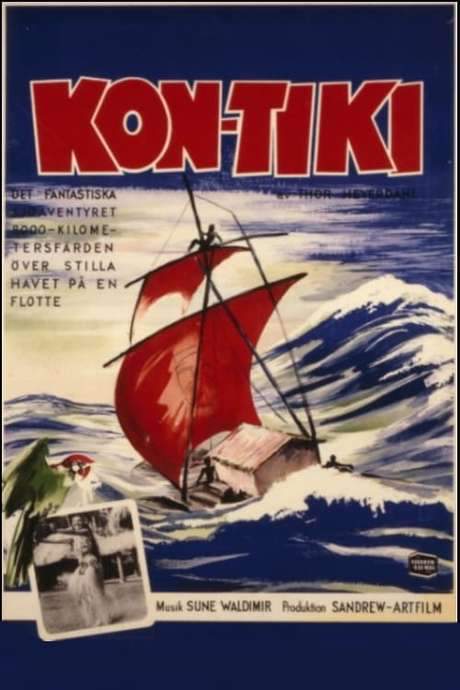
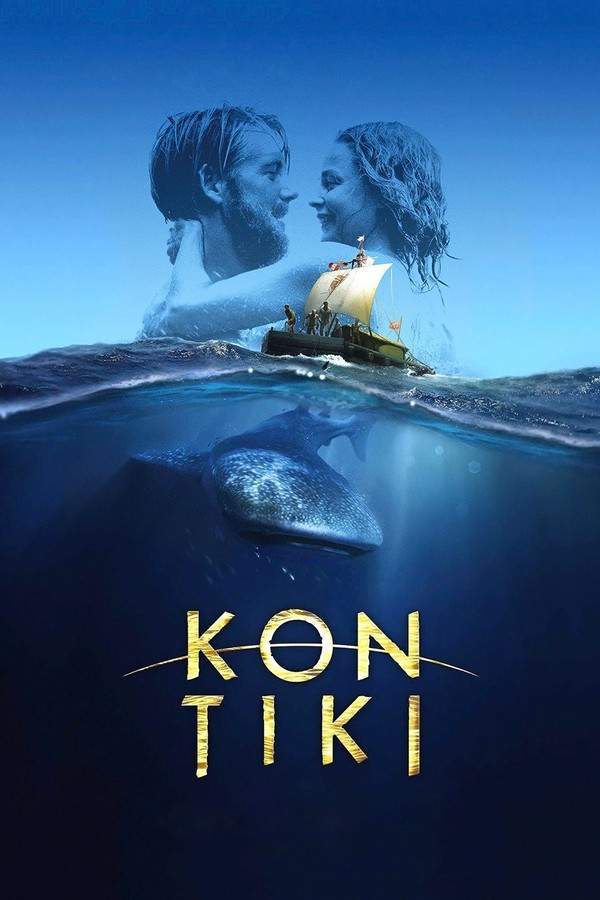
Kon-Tiki (2013) movie poster

Plot Summary

Kon-Tiki (2013) Plot Summary Explained

Release, runtime and language
2013 · 118 min · Norwegian
JustWatch #4,809 53
Directed by
Espen Sandberg, Joachim Rønning
Starring
Jakob Oftebro, Anders Baasmo Christiansen, Pål Sverre Valheim Hagen, Tobias Santelmann, Gustaf Skarsgård, Agnes Kittelsen

Driven by a belief that Polynesia was seeded by South Americans, Thor Heyerdahl and a small crew embark on a daring expedition. They construct a balsa wood raft named Kon-Tiki and set sail from Peru, intending to reach the Tuamotu Islands in French Polynesia. Facing immense challenges from the Pacific Ocean, the team navigates using only traditional methods, hoping to demonstrate the feasibility of ancient transoceanic contact. The journey tests their resilience and pushes them to their limits as they confront the raw power of nature.

On this page (6)
  1. 1 Where to watch
  2. 2 What happens: full plot
  3. 3 Plot questions answered
  4. 4 Movie threads
  5. 5 Movies like Kon-Tiki
  6. 6 Every angle

Where to watch

Where to Watch Kon-Tiki (2013)

Where can you watch Kon-Tiki? Stream, rent or buy it in the US, including on Hoopla, Kanopy and Fandango at Home Free: current JustWatch availability with up-to-date prices.

Streaming availability powered by JustWatch

Full plot summary · contains spoilers

What Happens in Kon-Tiki: Full Plot Summary

The whole story of Kon-Tiki (2013) explained, from the opening scene to the final frame: every key event, every twist and what it all adds up to. Read it as a quick recap before the sequel, to check a scene you missed, or to finally understand what really happened.

This dramatized account centers on Thor Heyerdahl Jakob Oftebro and his audacious 1947 Kon-Tiki expedition, a voyage conceived to test a bold challenge to the era’s prevailing ideas about how Polynesia was settled. While most scholars believed that Polynesia’s islands were peopled from Asia, Heyerdahl argues that ancient South Americans could have reached the Pacific islands long before Columbus set sail. To make his case tangible, he points to striking clues: shared features between South American statues and the Polynesian moai, and the echoes of Hanau epe folklore about an ancient people said to have inhabited Easter Island. He decides to prove that ancient technology could overcome the vast ocean, so he commissions and helps construct a balsawood raft named Kon-Tiki, built with the same techniques that indigenous builders might have used 1,500 years earlier.

Heyerdahl, who cannot swim or sail, does not undertake the journey alone. He gathers a small crew of five men and even a macaw named Lorita to accompany him. The team faces a grueling test of skill, endurance, and improvisation as they assemble the vessel and chart a course from the Peruvian coast toward the islands of Polynesia. The voyage spans roughly 4,300 nautical miles (about 8,000 km or 4,900 miles) and lasts three months, during which the raft is tossed by storms, battered by waves, and threatened by the ever-present dangers of the open sea. The crew must rely on simple, time-honored sailing techniques, close teamwork, and a stubborn determination to press onward despite fatigue, seasickness, and the constant fear that the fragile raft might fail at any moment.

As Kon-Tiki rides the Pacific, the men conduct a living experiment, attempting to recreate a journey that ancient mariners could have made with the resources available to them. The voyage becomes more than a search for evidence; it is a rigorous test of human endurance, faith, and the will to explore unknown horizons. The film underscores the fragile line between daring belief and scientific inquiry, showing how Heyerdahl’s theory, whether proven or not, pushes scholars to reexamine long-held assumptions about the movement of people across vast oceans.

Support from unexpected quarters, including backing from the United States government, helps sustain the mission as the crew nears its destination. Upon reaching Polynesia, Heyerdahl’s long-held ideas receive both attention and skepticism from the broader scientific community, fueling ongoing debates about the peopling of the Pacific. The narrative then follows Heyerdahl back home, where personal life has changed in his absence: he divorces from his wife and makes a new beginning by conceiving the Kon-Tiki Museum in Oslo, a testament to the voyage and the questions it provoked.

Throughout the journey, the film blends historical detail with human drama, portraying not only the scientific curiosities driving Heyerdahl but also the interpersonal dynamics among the crew, the strains of isolation at sea, and the enduring allure of adventure. The story invites viewers to weigh the allure of bold hypotheses against the rigorous demands of evidence, all while delivering a vivid portrait of a man driven to seek connections across oceans, cultures, and time. It is a story about curiosity, courage, and the enduring impulse to push beyond the known limits of technology and belief, even when the risks are immense and the outcome remains uncertain.
Last updated: October 09, 2025 at 16:21

Was this helpful?

Plot questions answered

Kon-Tiki Plot Explained: Your Questions Answered

The questions people ask most about Kon-Tiki (2013): what happens in the confusing scenes, why the characters do what they do, the twists, hidden details and what the ending means. Each answer contains spoilers.

Q1

Why does Thor Heyerdahl believe Polynesia was settled by South Americans instead of Asians?

Thor Heyerdahl developed his theory after noticing striking similarities between South American stone statues and the Polynesian moai on Easter Island. He also drew inspiration from Polynesian folklore about the Hanau epe, an ancient tribe said to have inhabited Easter Island. These cultural and physical connections led him to hypothesize that ancient South Americans could have crossed the Pacific long before European explorers arrived, contradicting the prevailing academic view that Polynesia was settled solely by migrations from Asia.

  • thor heyerdahl
  • polynesian migration
  • south american origin
  • easter island
  • moai
  • hanau epe
Q2

Why did Thor Heyerdahl choose to build a balsawood raft for the expedition?

Heyerdahl deliberately chose balsa wood because he wanted to replicate the technology that ancient indigenous builders might have used around 1,500 years ago. The raft was constructed using traditional techniques, without modern nails, engines, or synthetic materials, to prove that such a crossing was technically feasible with period-appropriate resources. This living experiment was central to his goal of demonstrating that ancient South Americans could have made the same journey.

  • balsa wood raft
  • ancient seafaring
  • pacific crossing
  • indigenous technology
  • kon-tiki construction
Q3

Why does Thor Heyerdahl lead the expedition despite not knowing how to swim?

Heyerdahl's lack of swimming ability was well-known, yet he considered himself a planner and theorist rather than a traditional sailor. His role was to lead the scientific mission and navigate using celestial methods and his research, while relying on his experienced crew for the practical seamanship. His courage came from intellectual conviction rather than physical aquatic skill, demonstrating how his determination to prove his theory outweighed personal limitations.

  • thor heyerdahl
  • cannot swim
  • expedition leader
  • crew members
Q4

Why does Thor Heyerdahl divorce after completing the Kon-Tiki voyage?

The three-month journey at sea kept Heyerdahl away from his wife, and the intense focus on his expedition took a significant toll on his personal life. Upon returning to Norway in the late 1940s, he discovers his marriage had deteriorated during his absence. While the voyage was a scientific triumph, it came with the personal cost of divorce, highlighting the sacrifice required for such an all-consuming endeavor.

  • divorce
  • personal cost
  • return to norway
  • family
Q5

How did the United States government support the Kon-Tiki expedition?

During the expedition, Heyerdahl received material and political backing from the United States government, which provided resources and legitimacy to the project. This support helped sustain the crew throughout the grueling three-month voyage and underlined the scientific importance of the mission. American backing gave Heyerdahl credibility and enabled him to pursue the ambitious crossing that might otherwise have lacked funding.

  • us government
  • funding
  • scientific support
  • legitimacy
Q6

What was the scientific purpose of the Kon-Tiki expedition?

The Kon-Tiki expedition was designed as a hands-on experiment to test whether ancient South Americans could have crossed the Pacific and settled Polynesia using pre-Columbian technology. Heyerdahl aimed to challenge the academic consensus that Polynesia was settled exclusively by Asian migrations. By successfully recreating the voyage with only ancient techniques, he sought to prove that such a crossing was physically possible, even if his theory remained controversial.

  • scientific experiment
  • polynesian settlement
  • transoceanic contact
  • theory proof
Q7

What dangers did the Kon-Tiki crew face during the Pacific crossing?

The crew confronted numerous life-threatening hazards throughout their three-month journey, including violent storms that battered the fragile raft with enormous waves, sharks that circled the vessel constantly, and the ever-present risk that the balsawood construction would simply fall apart. They also dealt with exhaustion, seasickness, and the psychological toll of isolation on the vast open ocean. Each day required intense improvisation and teamwork to survive.

  • storms
  • sharks
  • waves
  • danger
  • exhaustion
  • pacific ocean
  • survival
Q8

How long was the Kon-Tiki voyage and how far did they travel?

The Kon-Tiki expedition lasted approximately three months and covered roughly 4,300 nautical miles (about 8,000 kilometers or 4,900 miles) across the Pacific Ocean. The journey proceeded from the Peruvian coast toward the Tuamotu Islands in French Polynesia, relying entirely on traditional sailing methods and the trade winds to propel the primitive raft.

  • three months
  • 4300 nautical miles
  • pacific voyage
  • peru to polynesia
Q9

Why is the raft named Kon-Tiki?

The raft was christened Kon-Tiki as a reference to the Inca sun god of storm and light. Heyerdahl chose this name to connect the expedition to ancient South American mythology and to reflect the mythic ambitions of the voyage. The name symbolically linked the experimental journey to the cultural heritage of the civilization Heyerdahl believed had crossed the Pacific.

  • kon-tiki name
  • inca sun god
  • mythology
  • raft name
Q10

Was Thor Heyerdahl's theory about South American settlement of Polynesia proven correct?

While the Kon-Tiki voyage successfully demonstrated that a crossing was technically feasible using ancient technology, the scientific community largely rejected Heyerdahl's theory. Modern genetic and linguistic evidence strongly supports the prevailing view that Polynesia was settled by migrations from Asia, not South America. However, the expedition proved that contact between the two regions was possible and sparked ongoing debate about prehistoric transoceanic journeys.

  • theory proven
  • scientific skepticism
  • genetics
  • polynesian migration debate
  • legacy
Q11

Why did Thor Heyerdahl create the Kon-Tiki Museum in Oslo?

After returning from the expedition, Heyerdahl founded the Kon-Tiki Museum in Oslo to preserve and showcase the actual raft and artifacts from the voyage. The museum serves as a tribute to the crew's achievement and ensures the expedition's scientific and cultural significance remains accessible to future generations. It also allows Heyerdahl to continue sharing the questions and discoveries that emerged from his controversial but historically significant experiment.

  • kon-tiki museum
  • oslo
  • legacy
  • artifacts
  • exhibition

Movie threads

More Movies Like Kon-Tiki, by Mood & Story

Curated lists built around what makes Kon-Tiki tick: the same mood, the same kind of story or the same emotional payoff. Each list explains why these movies belong together.

Epic Historical Expeditions like Kon-Tiki

Gripping stories of real-life adventurers pushing human limits on monumental journeys. If you enjoyed the high-stakes adventure of Kon-Tiki, explore other movies about real-life historical expeditions. These films capture the tension, courage, and sheer human endurance of monumental journeys, often pitting a small crew against the vast forces of nature in a fight for survival.

  • epic
  • tense
  • determined
  • methodical
  • courageous
  • enduring
  • Tone: tense, determined, epic
  • Pacing: steady, methodical
Why these movies?

The story pattern: Narratives in this thread follow a linear, goal-oriented structure centered on a specific historical mission. The journey is the story, with conflict arising from external challenges—extreme environments, weather, and logistical hurdles—rather than complex internal drama. The emotional arc is one of determined endurance and the tension between success and catastrophic failure.

Why they belong together: These movies are grouped by their shared foundation in true historical events, their focus on a clear, physical goal, and the pervasive tension of a high-risk endeavor. They deliver an intense, immersive experience that celebrates human tenacity while acknowledging the high cost of ambition.

Methodical Survival Stories like Kon-Tiki

Stories where meticulous process and teamwork are the only defense against an immense, isolating environment. For viewers who appreciated the steady tension and focus on endurance in Kon-Tiki, this collection highlights movies with a similar vibe. These films explore survival as a test of process and perseverance, where the primary antagonist is a vast, unforgiving environment that demands constant, careful effort.

  • methodical
  • tense
  • isolated
  • enduring
  • survival
  • teamwork
  • Tone: tense, isolated, enduring
  • Pacing: steady, deliberate
Why these movies?

The story pattern: The narrative pattern is one of sustained tension rather than a series of explosive events. The plot unfolds at a steady pace, emphasizing the characters' adaptation to their environment through routine, problem-solving, and teamwork. The central conflict is 'man vs. nature' in its purest form, focusing on logistical and psychological endurance over a long duration.

Why they belong together: These films share a specific mood: a tense, obsessive focus on survival technique within an epic-scale setting. The similarity lies in the controlled pacing, high intensity from perpetual risk, and the emotional experience of watching human ingenuity strained to its limit by an overwhelming natural force.

If you liked this

Movies Like Kon-Tiki

Similar movies to Kon-Tiki: the same genre, themes or kind of story. Each one comes with its own plot summary, timeline and ending explained.

Browse all movie summaries

Every angle

Kon-Tiki (2013) Explained: Plot, Timeline & Characters

Everything about Kon-Tiki in one place: what happens in the plot summary, the timeline in chronological order, the characters and meaning and a spoiler-free summary. What's After the Movie adds the cast, box office and post-credit scenes.

Coming soon on iOS and Android

The Plot Explained Movie Summary App

Plot summaries, endings explained and timelines on your phone. Catch up on any movie in minutes, save your favorites and never miss a twist again.

Be the first to know when we launch. Your email stays private, always.

Learn more about the app