











Plot Explained Spoilers guaranteed!
Plot Explained

Browse by genre

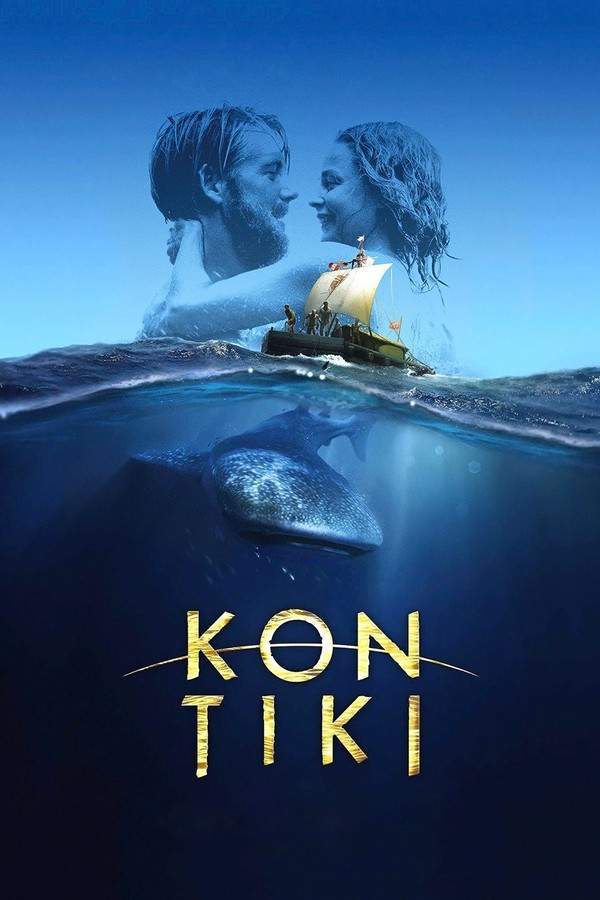
Kon-Tiki (2013) movie poster

Characters & Themes

Kon-Tiki (2013) Characters, Setting & Themes Explained

Release, runtime and language
2013 · 118 min · Norwegian
JustWatch #4,810 15
Directed by
Espen Sandberg, Joachim Rønning
Starring
Jakob Oftebro, Anders Baasmo Christiansen, Pål Sverre Valheim Hagen, Tobias Santelmann, Gustaf Skarsgård, Agnes Kittelsen

Driven by a belief that Polynesia was seeded by South Americans, Thor Heyerdahl and a small crew embark on a daring expedition. They construct a balsa wood raft named Kon-Tiki and set sail from Peru, intending to reach the Tuamotu Islands in French Polynesia. Facing immense challenges from the Pacific Ocean, the team navigates using only traditional methods, hoping to demonstrate the feasibility of ancient transoceanic contact. The journey tests their resilience and pushes them to their limits as they confront the raw power of nature.

On this page (8)
  1. 1 Where to watch
  2. 2 Characters explained (7)
  3. 3 Where & when it takes place
  4. 4 Themes & meaning (3)
  5. 5 Character & meaning questions
  6. 6 Movie threads
  7. 7 Movies like Kon-Tiki
  8. 8 Every angle

Where to watch

Where to Watch Kon-Tiki (2013)

Where can you watch Kon-Tiki? Stream, rent or buy it in the US, including on Hoopla, Kanopy and Fandango at Home Free: current JustWatch availability with up-to-date prices.

Streaming availability powered by JustWatch

7 main characters · contains spoilers

Kon-Tiki Characters Explained: Who Is Who

The main characters of Kon-Tiki (2013), heroes and villains: what drives them, how they change over the course of the story and what each of them reveals about the film's bigger ideas.

  • Thor Heyerdahl

    An experimental ethnographer and adventurer who drives the Kon-Tiki mission to test a bold theory about Polynesian settlement. He designs and builds the balsawood raft and leads the crew through months at sea, despite not being an accomplished swimmer or sailor himself. His relentless curiosity and leadership push the expedition forward, even as personal risks mount.

    • 🧭 Explorer
    • 🌊 Leader
    • 🛶 Maritime pioneer
  • Lorita (macaw)

    The macaw Lorita accompanies the crew on the Kon-Tiki, providing companionship amid the isolation of the open ocean. The bird's presence adds a touch of life and morale to the voyage, reminding the crew of nature beyond their raft. Lorita symbolizes resilience and the human need for connection during extreme journeys.

    • 🐦 Companion
    • 🧭 Symbol of morale
    • 🌈 Hope
  • Crew Member A

    One of the five men aboard Kon-Tiki, contributing practical seamanship and a steadying presence during the voyage. He faces long watches and the strain of isolation, helping to maintain discipline and order on the raft. His role exemplifies teamwork and resilience under pressure.

    • ⚓️ Crew
    • 🌊 Survival
    • 🧭 Navigator
  • Crew Member B

    A member responsible for the raft’s handling and ropework, balancing caution with the need to push forward through rough seas. He shares in the crew’s risks and contributes to the overall durability of the voyage. His vigilance helps avert crises and keeps the journey on course.

    • ⚓️ Crew
    • 🌊 Survival
    • 🧭 Navigator
  • Crew Member C

    participant in the voyage who helps sustain morale and supports leadership during tense moments. He engages with the scientific observations and adds to the group’s sense of purpose. His presence reinforces the human element of exploration.

    • ⚓️ Crew
    • 🧭 Explorer
    • 🌊 Survival
  • Crew Member D

    A crew member who contributes to raft maintenance and on-deck repairs, ensuring the Kon-Tiki remains seaworthy despite the beating of waves. He tackles technical challenges with practical problem-solving. His work is crucial to the mission’s continuation.

    • ⚓️ Crew
    • 🧰 Engineer
    • 🌊 Survival
  • Crew Member E

    One of the five crew members who records observations and participates in the experimental aspects of the journey. His contributions help document the voyage's progress and validate or challenge the expedition’s hypotheses. He embodies the blend of curiosity and discipline essential to exploratory science.

    • ⚓️ Crew
    • 🧭 Researcher
    • 🧪 Observer

Last updated: October 03, 2025 at 19:46

Was this helpful?

Setting

Where and When Does Kon-Tiki Take Place?

The setting of Kon-Tiki (2013): the year and time period, the places and locations, and how they shape the characters, the mood and the tension of the story.

Time period

1947

The voyage is set in 1947, in the early postwar era when curiosity about human roots and global exploration ran high. It spans roughly three months, highlighting the era's penchant for ambitious, hands-on experiments. The period framing emphasizes the blend of science and daring characteristic of mid-20th-century exploration.

Location

Peru, Pacific Ocean, Polynesia (Easter Island), Oslo

The story unfolds starting from the Peruvian coast and travels across the vast Pacific aboard a balsawood raft. Much of the action takes place at sea, battling storms and the elements as the crew pursues their bold test. The journey culminates in Polynesia and ends with the crew's return and the establishment of the Kon-Tiki Museum in Oslo.

  • 🗺️ Ocean voyage
  • ⚓️ Maritime history
  • 🧭 Exploration

Last updated: October 03, 2025 at 19:46

Was this helpful?

3 major themes

Kon-Tiki Meaning: Themes & Message Explained

What is Kon-Tiki (2013) really about? The emotional, social and philosophical themes the film keeps returning to, its symbolism and the message beneath the surface.

  • Survival

    The expedition tests the crew's endurance against relentless seas, storms, and the isolation of the open ocean. They rely on primitive techniques and collective discipline to keep the raft afloat. Survival becomes a measure of character, leadership, and mutual trust under extreme conditions.

  • Discovery

    Heyerdahl's voyage is framed as a direct test of a controversial theory about Polynesian origins. It presents exploration as a blend of empirical evidence-gathering and myth-making, as the crew observes and records every anomaly. The voyage demonstrates that long sea crossings with ancient technology were plausibly achievable, challenging prevailing narratives.

  • Science and Belief

    The project merges ethnography, archaeology, and engineering into a living experiment. Practical experimentation informs theoretical questions, illustrating how hands-on inquiry can shape or reshape belief. The narrative shows how data collected at sea feeds back into scientific argument and public understanding.

Last updated: October 03, 2025 at 19:46

Was this helpful?

Character & theme questions

Kon-Tiki Characters & Meaning: Your Questions Answered

The questions people ask about Kon-Tiki (2013): who the characters really are, their relationships, what the symbols mean, where it takes place and what the movie is really about. Each answer contains spoilers.

Q1

Where does the Kon-Tiki voyage take place?

The expedition sets sail from the Peruvian coast and journeys across the vast Pacific Ocean. The voyage culminates in Polynesia, specifically reaching the Tuamotu Islands in French Polynesia, with the story also returning to Oslo where the Kon-Tiki Museum is now established.

  • peru
  • pacific ocean
  • polynesia
  • south america
  • oslo
Q2

What time period is Kon-Tiki set in?

The voyage takes place in 1947, during the early postwar era. The journey spans approximately three months, capturing a period when curiosity about human roots and global exploration was particularly high.

  • 1947
  • postwar
  • 20th century
  • historical
Q3

Who is Thor Heyerdahl in the film?

Thor Heyerdahl is an experimental ethnographer and adventurer who conceives and leads the Kon-Tiki expedition. Despite not being an accomplished swimmer or sailor, he designs and constructs the balsa wood raft and drives the mission to test his controversial theory that Polynesia was originally settled by South Americans.

  • thor heyerdal
  • leader
  • ethnographer
  • explorer
  • raft builder
Q4

What does the Survival theme explore in Kon-Tiki?

The Survival theme examines the crew's endurance against relentless seas, storms, and the isolation of the open ocean. They rely on primitive techniques and collective discipline to keep the raft afloat, with survival becoming a measure of character, leadership, and mutual trust under extreme conditions.

  • survival
  • endurance
  • storms
  • ocean
  • teamwork
  • leadership
Q5

What is the Discovery theme about in Kon-Tiki?

The Discovery theme frames Heyerdahl's voyage as a direct test of a controversial theory about Polynesian origins. The expedition demonstrates that long sea crossings with ancient technology were plausibly achievable, challenging prevailing academic narratives about how Pacific islands were settled.

  • discovery
  • polynesian origins
  • theory
  • exploration
  • 迁移
Q6

What does the Science and Belief theme represent in Kon-Tiki?

The Science and Belief theme shows how the project merges ethnography, archaeology, and engineering into a living experiment. Hands-on inquiry at sea feeds back into scientific argument and public understanding, illustrating how practical experimentation can shape or reshape accepted beliefs.

  • science
  • belief
  • experimentation
  • ethnography
  • archaeology
Q7

What kind of vessel is the Kon-Tiki?

The Kon-Tiki is a balsa wood raft constructed specifically for the expedition. Built using traditional methods and materials, it serves as both the vessel for the crossing and a practical test of whether ancient South Americans could have made similar ocean voyages to settle Polynesia.

  • balsa raft
  • vessel
  • boat
  • construction
  • traditional methods
Q8

What motivated Thor Heyerdahl to attempt the Kon-Tiki expedition?

Heyerdahl was driven by a belief that Polynesia was originally seeded by South Americans, contrary to the prevailing academic view. His relentless curiosity pushed him to test this bold theory through a real-world experiment, risking his personal safety to gather empirical evidence that could challenge established narratives about human migration.

  • motivation
  • theory
  • migration
  • curiosity
  • proof
Q9

What is the Kon-Tiki Museum?

The Kon-Tiki Museum is located in Oslo and houses the original raft after the expedition's completion. It serves as a testament to the voyage's success and preserves the historical evidence gathered during the crossing, allowing visitors to experience the actual vessel that crossed the Pacific.

  • kon-tiki museum
  • oslo
  • exhibit
  • history
Q10

What is the role of Lorita the macaw in Kon-Tiki?

Lorita the macaw accompanies the crew aboard the Kon-Tiki, providing companionship amid the isolation of the open ocean. The bird's presence symbolizes resilience and the human need for connection during extreme journeys, adding morale and a touch of life to the voyage.

  • lorita
  • macaw
  • companion
  • morale
  • symbol
Q11

Why is 1947 significant for the Kon-Tiki expedition?

1947 was the early postwar period, a time when curiosity about human roots and global exploration ran high. The era was characterized by a blend of science and daring typical of mid-20th-century exploration, making it a fitting backdrop for ambitious, hands-on experiments like Heyerdahl's voyage.

  • postwar era
  • exploration history
  • 1947 significance
Q12

What does the Kon-Tiki voyage symbolize?

The Kon-Tiki voyage symbolizes the human drive to challenge accepted beliefs through practical experimentation. It represents determination, scientific curiosity, and the willingness to risk everything to prove a theory, while also highlighting the tension between empirical evidence and established academic consensus.

  • symbolism
  • determination
  • proof
  • experiment
  • challenge

Movie threads

More Movies Like Kon-Tiki, by Mood & Story

Curated lists built around what makes Kon-Tiki tick: the same mood, the same kind of story or the same emotional payoff. Each list explains why these movies belong together.

Epic Historical Expeditions like Kon-Tiki

Gripping stories of real-life adventurers pushing human limits on monumental journeys. If you enjoyed the high-stakes adventure of Kon-Tiki, explore other movies about real-life historical expeditions. These films capture the tension, courage, and sheer human endurance of monumental journeys, often pitting a small crew against the vast forces of nature in a fight for survival.

  • epic
  • tense
  • determined
  • methodical
  • courageous
  • enduring
  • Tone: tense, determined, epic
  • Pacing: steady, methodical
Why these movies?

The story pattern: Narratives in this thread follow a linear, goal-oriented structure centered on a specific historical mission. The journey is the story, with conflict arising from external challenges—extreme environments, weather, and logistical hurdles—rather than complex internal drama. The emotional arc is one of determined endurance and the tension between success and catastrophic failure.

Why they belong together: These movies are grouped by their shared foundation in true historical events, their focus on a clear, physical goal, and the pervasive tension of a high-risk endeavor. They deliver an intense, immersive experience that celebrates human tenacity while acknowledging the high cost of ambition.
Methodical Survival Stories like Kon-Tiki

Stories where meticulous process and teamwork are the only defense against an immense, isolating environment. For viewers who appreciated the steady tension and focus on endurance in Kon-Tiki, this collection highlights movies with a similar vibe. These films explore survival as a test of process and perseverance, where the primary antagonist is a vast, unforgiving environment that demands constant, careful effort.

  • methodical
  • tense
  • isolated
  • enduring
  • survival
  • teamwork
  • Tone: tense, isolated, enduring
  • Pacing: steady, deliberate
Why these movies?

The story pattern: The narrative pattern is one of sustained tension rather than a series of explosive events. The plot unfolds at a steady pace, emphasizing the characters' adaptation to their environment through routine, problem-solving, and teamwork. The central conflict is 'man vs. nature' in its purest form, focusing on logistical and psychological endurance over a long duration.

Why they belong together: These films share a specific mood: a tense, obsessive focus on survival technique within an epic-scale setting. The similarity lies in the controlled pacing, high intensity from perpetual risk, and the emotional experience of watching human ingenuity strained to its limit by an overwhelming natural force.

If you liked this

Movies Like Kon-Tiki

Similar movies to Kon-Tiki: the same genre, themes or kind of story. Each one comes with its own plot summary, timeline and ending explained.

Browse all movie summaries

Every angle

Kon-Tiki (2013) Explained: Plot, Timeline & Characters

Everything about Kon-Tiki in one place: what happens in the plot summary, the timeline in chronological order, the characters and meaning and a spoiler-free summary. What's After the Movie adds the cast, box office and post-credit scenes.

Coming soon on iOS and Android

The Plot Explained Movie Summary App

Plot summaries, endings explained and timelines on your phone. Catch up on any movie in minutes, save your favorites and never miss a twist again.

Be the first to know when we launch. Your email stays private, always.

Learn more about the app