Plot Explained Spoilers guaranteed!
Plot Explained

Browse by genre

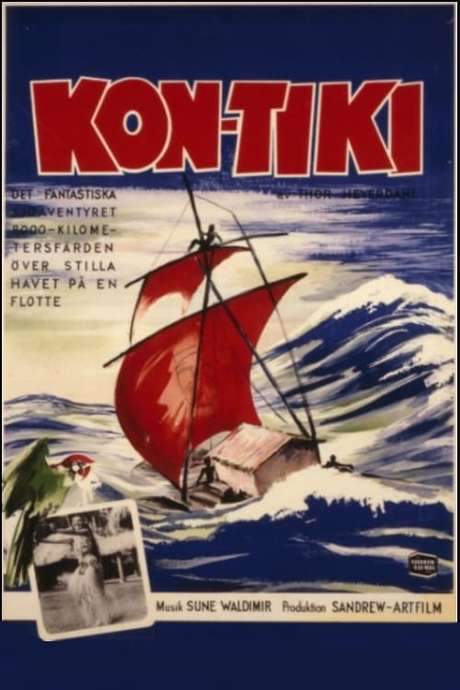
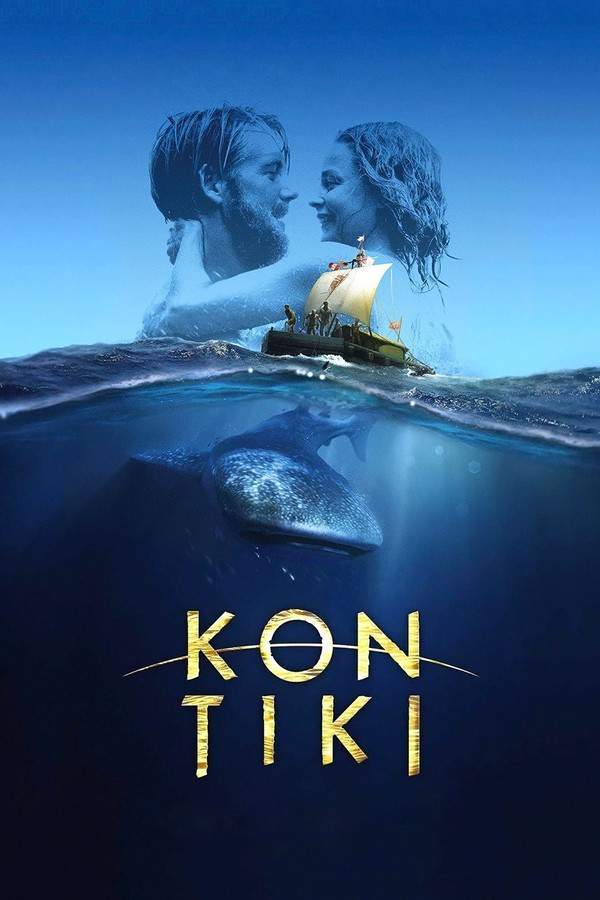
Kon-Tiki (2013) movie poster

Timeline

Kon-Tiki (2013) Timeline Explained – Every Event in Order

Release, runtime and language
2013 · 118 min · Norwegian
Loading streaming availability…
Directed by
Espen Sandberg, Joachim Rønning
Starring
Jakob Oftebro, Anders Baasmo Christiansen, Pål Sverre Valheim Hagen, Tobias Santelmann, Gustaf Skarsgård, Agnes Kittelsen

Driven by a belief that Polynesia was seeded by South Americans, Thor Heyerdahl and a small crew embark on a daring expedition. They construct a balsa wood raft named Kon-Tiki and set sail from Peru, intending to reach the Tuamotu Islands in French Polynesia. Facing immense challenges from the Pacific Ocean, the team navigates using only traditional methods, hoping to demonstrate the feasibility of ancient transoceanic contact. The journey tests their resilience and pushes them to their limits as they confront the raw power of nature.

On this page (6)
  1. 1 Where to watch
  2. 2 Events in order (12)
  3. 3 Timeline questions answered
  4. 4 Movie threads
  5. 5 Movies like Kon-Tiki
  6. 6 Every angle
Loading streaming availability…

12 events in order · contains spoilers

Kon-Tiki Timeline: Events in Chronological Order

Every key event of Kon-Tiki (2013) in order, scene by scene, with when and where it takes place. Use it to untangle flashbacks, time jumps and parallel storylines, to refresh your memory before the sequel or to find the exact scene you are thinking of.

  1. Heyerdahl articulates the theory of a South American origin for Polynesia

    Thor Heyerdahl articulates a bold hypothesis: that Polynesia could have been populated by peoples from South America in pre-Columbian times. He aims to test this theory by undertaking a hands-on experiment that replicates ancient seafaring methods. The purpose is to challenge the prevailing belief that Polynesia was settled only by Asian migrations.

    When
    1947
    Where
    Lima, Peru
  2. Folklore and statues bolster his theory

    Heyerdahl notes apparent similarities between South American statues and Polynesian moai, suggesting possible links across the Pacific. Polynesian folklore also mentions the Hanau epe, an ancient tribe said to have inhabited Easter Island. These observations support his experimental approach and motivate the voyage.

    When
    1947
  3. Construction of the balsawood raft Kon-Tiki

    A raft is built using techniques thought to have been used 1,500 years ago by indigenous Pacific peoples. The team uses simple, sturdy materials to create Kon-Tiki, the vessel that will carry their journey. The project becomes a physical test of whether ancient crossing was feasible.

    When
    1947
    Where
    Peru
  4. Kon-Tiki named after Inca sun god

    The raft is christened Kon-Tiki, a nod to the Inca sun god of storm and light. The name signals the expedition's mythic and historical ambitions. The choice reflects Heyerdahl's intent to echo ancient maritime practice.

    When
    1947
    Where
    Peru
  5. Crew assembled and Lorita the macaw joins

    Heyerdahl gathers a crew of five men to sail with him, and a macaw named Lorita becomes the expedition's mascot. The diverse group shares a sense of adventure and a willingness to undertake a dangerous reenactment. Their companionship anchors the voyage as much as the raft itself.

    When
    1947
    Where
    Peru
  6. Launch from the Peruvian coast

    Kon-Tiki is launched from the Peruvian coast, setting off on a treacherous Pacific crossing. The crew faces the uncertainties of the open sea with limited onboard technology. The voyage is framed as a test of what ancient mariners could achieve with basic tools.

    When
    1947
    Where
    Peru coast
  7. Three months at sea

    The journey spans roughly three months aboard the primitive raft, a grueling test of endurance. The crew contends with the monotony, weather, and the isolation of the vast ocean. The voyage progresses slowly, yet purposefully toward the target Polynesian islands.

    When
    Three months after departure (1947)
    Where
    Pacific Ocean
  8. Storms and oceanic perils

    Storms lash Kon-Tiki, testing its seaworthiness against towering waves and powerful winds. The crew battles fatigue and fear as sharks circle the raft, underscoring the hazards of ancient sea travel. The perilous conditions force the crew to rely on discipline and seamanship.

    When
    During voyage (1947)
    Where
    Pacific Ocean
  9. U.S. government support

    During the expedition, Heyerdahl receives support from the United States government, providing resources and legitimacy to the project. This backing helps sustain the crew and underlines the voyage's scientific aims.

    When
    1947-1948
    Where
    United States
  10. Arrival in Polynesia

    After crossing the vast Pacific, the Kon-Tiki voyage reaches Polynesia, validating a major component of Heyerdahl's theory. The crew experiences a sense of accomplishment and demonstrates that such a crossing was feasible with ancient techniques. The encounter marks the practical culmination of years of planning.

    When
    Late 1947
    Where
    Polynesia
  11. Return home and personal consequences

    Return to his homeland follows the voyage, during which Heyerdahl divorces from his wife. The expedition's success elevates his public profile and cements his reputation as an intrepid explorer. The personal cost of the journey becomes part of his story as well.

    When
    Late 1940s
    Where
    Oslo, Norway
  12. Kon-Tiki Museum in Oslo

    Motivated by the expedition's enduring legacy, Heyerdahl opens the Kon-Tiki Museum in Oslo to preserve and showcase the voyage. The museum serves both as a tribute to the crew and as a demonstration of the voyage's scientific and cultural implications. It ensures the Kon-Tiki's story remains accessible to future generations.

    When
    Late 1940s
    Where
    Oslo, Norway

Last updated: October 09, 2025 at 16:21

Was this helpful?

Timeline questions answered

Kon-Tiki Timeline Explained: Your Questions Answered

When does it happen, and why in that order? The questions people ask about the chronology of Kon-Tiki (2013): time jumps, flashbacks, cause and effect between scenes and the correct order of events, each answered with spoilers.

Q1

Why does Thor Heyerdahl believe Polynesia was settled by South Americans instead of Asians?

Thor Heyerdahl developed his theory after noticing striking similarities between South American stone statues and the Polynesian moai on Easter Island. He also drew inspiration from Polynesian folklore about the Hanau epe, an ancient tribe said to have inhabited Easter Island. These cultural and physical connections led him to hypothesize that ancient South Americans could have crossed the Pacific long before European explorers arrived, contradicting the prevailing academic view that Polynesia was settled solely by migrations from Asia.

  • thor heyerdahl
  • polynesian migration
  • south american origin
  • easter island
  • moai
  • hanau epe
Q2

Why did Thor Heyerdahl choose to build a balsawood raft for the expedition?

Heyerdahl deliberately chose balsa wood because he wanted to replicate the technology that ancient indigenous builders might have used around 1,500 years ago. The raft was constructed using traditional techniques, without modern nails, engines, or synthetic materials, to prove that such a crossing was technically feasible with period-appropriate resources. This living experiment was central to his goal of demonstrating that ancient South Americans could have made the same journey.

  • balsa wood raft
  • ancient seafaring
  • pacific crossing
  • indigenous technology
  • kon-tiki construction
Q3

Why does Thor Heyerdahl lead the expedition despite not knowing how to swim?

Heyerdahl's lack of swimming ability was well-known, yet he considered himself a planner and theorist rather than a traditional sailor. His role was to lead the scientific mission and navigate using celestial methods and his research, while relying on his experienced crew for the practical seamanship. His courage came from intellectual conviction rather than physical aquatic skill, demonstrating how his determination to prove his theory outweighed personal limitations.

  • thor heyerdahl
  • cannot swim
  • expedition leader
  • crew members
Q4

Why does Thor Heyerdahl divorce after completing the Kon-Tiki voyage?

The three-month journey at sea kept Heyerdahl away from his wife, and the intense focus on his expedition took a significant toll on his personal life. Upon returning to Norway in the late 1940s, he discovers his marriage had deteriorated during his absence. While the voyage was a scientific triumph, it came with the personal cost of divorce, highlighting the sacrifice required for such an all-consuming endeavor.

  • divorce
  • personal cost
  • return to norway
  • family
Q5

How did the United States government support the Kon-Tiki expedition?

During the expedition, Heyerdahl received material and political backing from the United States government, which provided resources and legitimacy to the project. This support helped sustain the crew throughout the grueling three-month voyage and underlined the scientific importance of the mission. American backing gave Heyerdahl credibility and enabled him to pursue the ambitious crossing that might otherwise have lacked funding.

  • us government
  • funding
  • scientific support
  • legitimacy
Q6

What was the scientific purpose of the Kon-Tiki expedition?

The Kon-Tiki expedition was designed as a hands-on experiment to test whether ancient South Americans could have crossed the Pacific and settled Polynesia using pre-Columbian technology. Heyerdahl aimed to challenge the academic consensus that Polynesia was settled exclusively by Asian migrations. By successfully recreating the voyage with only ancient techniques, he sought to prove that such a crossing was physically possible, even if his theory remained controversial.

  • scientific experiment
  • polynesian settlement
  • transoceanic contact
  • theory proof
Q7

What dangers did the Kon-Tiki crew face during the Pacific crossing?

The crew confronted numerous life-threatening hazards throughout their three-month journey, including violent storms that battered the fragile raft with enormous waves, sharks that circled the vessel constantly, and the ever-present risk that the balsawood construction would simply fall apart. They also dealt with exhaustion, seasickness, and the psychological toll of isolation on the vast open ocean. Each day required intense improvisation and teamwork to survive.

  • storms
  • sharks
  • waves
  • danger
  • exhaustion
  • pacific ocean
  • survival
Q8

How long was the Kon-Tiki voyage and how far did they travel?

The Kon-Tiki expedition lasted approximately three months and covered roughly 4,300 nautical miles (about 8,000 kilometers or 4,900 miles) across the Pacific Ocean. The journey proceeded from the Peruvian coast toward the Tuamotu Islands in French Polynesia, relying entirely on traditional sailing methods and the trade winds to propel the primitive raft.

  • three months
  • 4300 nautical miles
  • pacific voyage
  • peru to polynesia
Q9

Why is the raft named Kon-Tiki?

The raft was christened Kon-Tiki as a reference to the Inca sun god of storm and light. Heyerdahl chose this name to connect the expedition to ancient South American mythology and to reflect the mythic ambitions of the voyage. The name symbolically linked the experimental journey to the cultural heritage of the civilization Heyerdahl believed had crossed the Pacific.

  • kon-tiki name
  • inca sun god
  • mythology
  • raft name
Q10

Was Thor Heyerdahl's theory about South American settlement of Polynesia proven correct?

While the Kon-Tiki voyage successfully demonstrated that a crossing was technically feasible using ancient technology, the scientific community largely rejected Heyerdahl's theory. Modern genetic and linguistic evidence strongly supports the prevailing view that Polynesia was settled by migrations from Asia, not South America. However, the expedition proved that contact between the two regions was possible and sparked ongoing debate about prehistoric transoceanic journeys.

  • theory proven
  • scientific skepticism
  • genetics
  • polynesian migration debate
  • legacy
Q11

Why did Thor Heyerdahl create the Kon-Tiki Museum in Oslo?

After returning from the expedition, Heyerdahl founded the Kon-Tiki Museum in Oslo to preserve and showcase the actual raft and artifacts from the voyage. The museum serves as a tribute to the crew's achievement and ensures the expedition's scientific and cultural significance remains accessible to future generations. It also allows Heyerdahl to continue sharing the questions and discoveries that emerged from his controversial but historically significant experiment.

  • kon-tiki museum
  • oslo
  • legacy
  • artifacts
  • exhibition

Movie threads

More Movies Like Kon-Tiki, by Mood & Story

Curated lists built around what makes Kon-Tiki tick: the same mood, the same kind of story or the same emotional payoff. Each list explains why these movies belong together.

Epic Historical Expeditions like Kon-Tiki

Gripping stories of real-life adventurers pushing human limits on monumental journeys. If you enjoyed the high-stakes adventure of Kon-Tiki, explore other movies about real-life historical expeditions. These films capture the tension, courage, and sheer human endurance of monumental journeys, often pitting a small crew against the vast forces of nature in a fight for survival.

  • epic
  • tense
  • determined
  • methodical
  • courageous
  • enduring
  • Tone: tense, determined, epic
  • Pacing: steady, methodical
Why these movies?

The story pattern: Narratives in this thread follow a linear, goal-oriented structure centered on a specific historical mission. The journey is the story, with conflict arising from external challenges—extreme environments, weather, and logistical hurdles—rather than complex internal drama. The emotional arc is one of determined endurance and the tension between success and catastrophic failure.

Why they belong together: These movies are grouped by their shared foundation in true historical events, their focus on a clear, physical goal, and the pervasive tension of a high-risk endeavor. They deliver an intense, immersive experience that celebrates human tenacity while acknowledging the high cost of ambition.
Methodical Survival Stories like Kon-Tiki

Stories where meticulous process and teamwork are the only defense against an immense, isolating environment. For viewers who appreciated the steady tension and focus on endurance in Kon-Tiki, this collection highlights movies with a similar vibe. These films explore survival as a test of process and perseverance, where the primary antagonist is a vast, unforgiving environment that demands constant, careful effort.

  • methodical
  • tense
  • isolated
  • enduring
  • survival
  • teamwork
  • Tone: tense, isolated, enduring
  • Pacing: steady, deliberate
Why these movies?

The story pattern: The narrative pattern is one of sustained tension rather than a series of explosive events. The plot unfolds at a steady pace, emphasizing the characters' adaptation to their environment through routine, problem-solving, and teamwork. The central conflict is 'man vs. nature' in its purest form, focusing on logistical and psychological endurance over a long duration.

Why they belong together: These films share a specific mood: a tense, obsessive focus on survival technique within an epic-scale setting. The similarity lies in the controlled pacing, high intensity from perpetual risk, and the emotional experience of watching human ingenuity strained to its limit by an overwhelming natural force.

If you liked this

Movies Like Kon-Tiki

Similar movies to Kon-Tiki: the same genre, themes or kind of story. Each one comes with its own plot summary, timeline and ending explained.

Browse all movie summaries

Every angle

Kon-Tiki (2013) Explained: Plot, Timeline & Characters

Everything about Kon-Tiki in one place: what happens in the plot summary, the timeline in chronological order, the characters and meaning and a spoiler-free summary. What's After the Movie adds the cast, box office and post-credit scenes.

Coming soon on iOS and Android

The Plot Explained Movie Summary App

Plot summaries, endings explained and timelines on your phone. Catch up on any movie in minutes, save your favorites and never miss a twist again.

Be the first to know when we launch. Your email stays private, always.

Learn more about the app