Plot Explained Spoilers guaranteed!
Plot Explained

Browse by genre

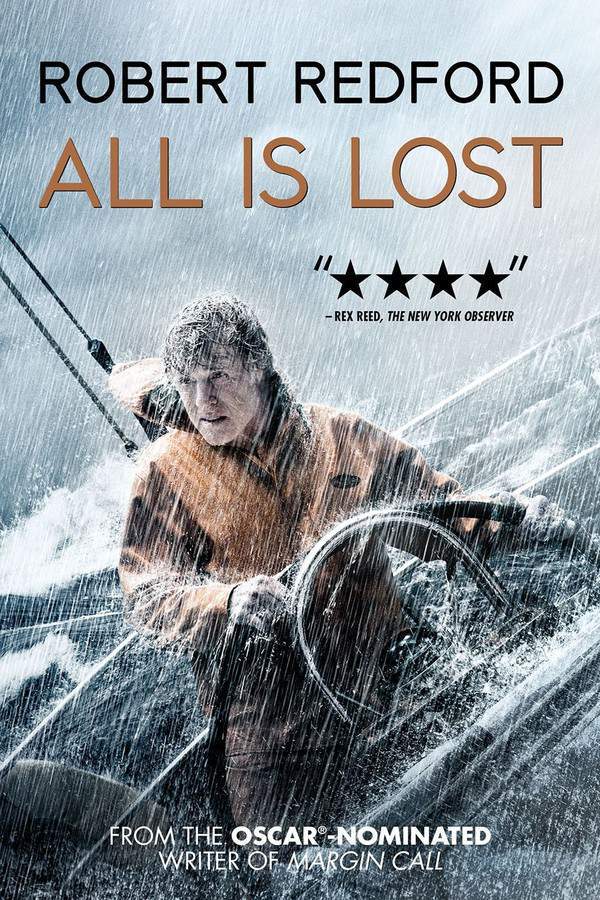
All Is Lost (2013) movie poster

Plot Summary

All Is Lost (2013) Plot Summary Explained

Release, runtime and language
2013 · 106 min · English
JustWatch #8,930 17
Directed by
J.C. Chandor
Starring
Robert Redford

A lone sailor attempts a solo voyage across the Indian Ocean when his yacht is struck by a drifting container. With his navigation tools and communication systems destroyed, he must use his resourcefulness and sailing expertise to survive. A looming storm further complicates his struggle against the vast and dangerous sea, pushing him to his physical and mental limits as he fights to keep his damaged vessel afloat.

On this page (6)
  1. 1 Where to watch
  2. 2 What happens: full plot
  3. 3 Plot questions answered
  4. 4 Movie threads
  5. 5 Movies like All Is Lost
  6. 6 Every angle

Where to watch

Where to Watch All Is Lost (2013)

Where can you watch All Is Lost? Stream, rent or buy it in the US, including on Philo, Starz and Fawesome: current JustWatch availability with up-to-date prices.

Streaming availability powered by JustWatch

Full plot summary · contains spoilers

What Happens in All Is Lost: Full Plot Summary

The whole story of All Is Lost (2013) explained, from the opening scene to the final frame: every key event, every twist and what it all adds up to. Read it as a quick recap before the sequel, to check a scene you missed, or to finally understand what really happened.

Somewhere in the vast Indian Ocean, 1700 nautical miles from the Sumatra Straits, a man, played by Robert Redford, finds himself in a dire situation. He reflects, “I’m sorry. I know that means little at this point, but I am. I tried. I think you would all agree that I tried. To be true, to be strong, to be kind, to love, to be right, but I wasn’t.” With urgency and despair, he admits, “All is lost.” His meager supplies have dwindled down to just half a day of rations.

The tale begins eight days prior when this man awakens to discover water flooding his boat, the Virginia Jean, a Cal 39 yacht. Venturing onto the deck, he realizes that his vessel has collided with a rogue shipping container, which has created a gash in the hull. He promptly lowers the sails to minimize further damage. The container is too heavy for him to remove with just a lever.

With serious damage near the waterline, even the slightest tilt results in more water entering the boat. He goes below deck to retrieve a sea anchor and manages to tie it to the container, successfully dislodging it. However, repairing the hole becomes a grueling task. Utilizing a resin kit on his yacht, he attempts to create a makeshift patch while desperately using a manual bilge pump to remove water from the cabin. With the boat's electrical systems rendered useless, he finds himself sleeping in a makeshift hammock inside the flooded cabin.

The patching and pumping extend into the following day, as the hole remains far too large. After some extensive labor, he discovers that all navigational and communication systems have succumbed to saltwater damage. In a bid to repair his radio, he rinses it with fresh water and sets it under the sun to dry, but his efforts prove futile, as the brief moments of functionality offer no means of communication with the outside world.

By the second night post-collision, although the cabin is now dry and the hole patched, it’s still not very secure. He continues drying navigational charts and rationing supplies, settling into a semi-normal routine—savoring drinks and dinner, followed by reading a book before sleep.

The next day is pivotal: while climbing the mast to fix an antenna, he spots an advancing tropical storm. Panicked yet determined, he descends to secure the boat. He stows supplies inside, fills fresh water containers, and even manages a quick shave while donning bright orange overalls to shield himself from impending storm conditions.

As the tempest strikes fiercely, he tries to navigate the boat under bare poles, but soon realizes that this tactic is too exhausting and risks collision. When attempting to hoist the storm jib from the bow, he is violently thrown overboard, barely managing to claw his way back onto the deck. Moments later, disaster strikes as the boat capsizes, rolls 180 degrees, loses its mast, and sustains catastrophic damage.

Now in a fight for survival, he resolves to abandon the sinking ship for an inflatable life raft. The following morning, with the storm's rage subsided, he finds the raft tethered to the yacht and makes a desperate attempt to salvage whatever supplies remain: fresh water, canned food, navigational charts, a sextant, and essentials from the medicine cabinet for treatment of his head injury sustained during the storm. Eventually, the yacht succumbs to the sea, leaving him adrift.

Once in the life raft, he finds it spacious and equipped with a protective cover against the searing sun. As he learns to utilize the sextant, he realizes he is drifting near major shipping lanes, and a day or two later, he begins to feel the pull of ocean currents. Yet, survival challenges grow: He faces yet another storm that nearly capsizes the raft, and when his supplies start dwindling, he discovers too late that his water has become contaminated with saltwater.

In a moment of ingenuity, he builds a solar still from his container and plastic bag to procure fresh water. He attempts to reel in a fish, but the feeding frenzy of sharks claims his meal before he can grasp it. After tirelessly floating in the shipping lanes with no sight of help, he is passed by two container ships, oblivious to his flares and signals, eventually drifting back into the vast, unforgiving ocean.

On the eighth day, with desperation mounting, he writes a heartfelt letter, places it into a jar, and releases it as a message in a bottle, hoping for a miracle. That evening, he notices a distant light—possibly another ship. However, in a moment of despair, he opts not to use his last signaling device and instead tears pages from his journal and charts to ignite a signal fire.

Tragedy strikes again when the fire spirals out of control, engulfing the raft, causing him to plunge into the sea. As he struggles to swim, weariness overtakes him, and he lets himself sink, catching a glimpse of a searchlight illuminating the surface, an approaching vessel, just as he sees the hull of a boat above him. With sheer will, he swims toward the light, grasping an outstretched hand, as the scene fades into white, leaving the fate of this epic struggle to the imagination.
Last updated: November 03, 2024 at 22:26

Was this helpful?

Plot questions answered

All Is Lost Plot Explained: Your Questions Answered

The questions people ask most about All Is Lost (2013): what happens in the confusing scenes, why the characters do what they do, the twists, hidden details and what the ending means. Each answer contains spoilers.

Q1

Why was the sailor thrown overboard during the storm?

He was thrown overboard while attempting to hoist the storm jib from the bow. The violent forces of the storm made this task extremely dangerous, and he was dragged off the deck by the rigging. He barely managed to claw his way back onto the vessel before the catastrophic capsize occurred.

  • storm
  • thrown overboard
  • storm jib
  • capsize
Q2

Why didn't he use his last signaling device when he saw the ship?

The film leaves this decision deliberately ambiguous. When he sees the distant light, he chooses instead to tear pages from his journal and charts to ignite a signal fire. This desperate choice ultimately backfires, as the fire spirals out of control and destroys his raft. The decision may reflect his deteriorated mental state after eight days of survival, or a split-second misjudgment under extreme duress.

  • signal device
  • flare
  • ship
  • rescue
  • fire
Q3

How did he dislodge the shipping container from his yacht?

He retrieved a sea anchor and managed to tie it to the container. By using the sea anchor's drag in the water, he was able to pull the container free from the hull, allowing it to drift away from the yacht. This clever solution required significant effort and technical knowledge of maritime equipment.

  • sea anchor
  • container
  • hull
  • dislodge
  • repair
Q4

What caused the yacht to capsize?

The combination of extreme weather conditions and structural damage proved catastrophic. After being thrown overboard and barely returning to deck, the yacht rolled 180 degrees and lost its mast. The severe damage from the storm, combined with the earlier hull breach, made the vessel unstable and unable to withstand the violent waves, leading to the capsize.

  • capsize
  • mast
  • storm
  • yacht
  • rolled
Q5

Why did his signal fire get out of control?

He tore pages from his journal and navigational charts to create a signal fire, likely hoping for quick ignition. However, the fire rapidly escalated beyond his control in the enclosed space of the life raft. The rapid spread destroyed the raft itself, forcing him into the water and nearly drowning him. This desperate act backfired catastrophically.

  • signal fire
  • raft
  • destroyed
  • desperation
Q6

How did he survive after abandoning the yacht?

He escaped to an inflatable life raft that was tied to the yacht. Once the storm passed, he salvaged essential supplies including fresh water, canned food, navigational charts, a sextant, and medical supplies for his head injury. He then learned to navigate using the sextant and utilized the available materials to survive, including building a solar still to produce fresh water.

  • life raft
  • supplies
  • sextant
  • survival
  • abandoned ship
Q7

What happened at the end - did he get rescued?

After his signal fire destroyed the raft and he plunged into the sea, he caught sight of a searchlight from an approaching vessel. With sheer determination, he swam toward the light and reached out for an outstretched hand from the rescue crew. The scene fades to white, leaving his fate ambiguous - though reaching for the hand suggests he was rescued.

  • rescue
  • ending
  • ship
  • searchlight
  • survived
Q8

Why couldn't he repair the hull properly?

The hole created by the shipping container was far too large for his makeshift repairs. Despite using a resin kit to create a patch and continuously pumping water from the cabin, the damage near the waterline meant even slight tilting caused more water to enter. The repair was only temporary and never fully secured the vessel against the relentless ocean conditions.

  • hull
  • repair
  • resin
  • patch
  • damage
Q9

Why did the container ships pass him without helping?

Two container ships passed by while he was drifting in the shipping lanes. Despite his flares and signals, the ships did not notice or respond to his distress calls. This is a realistic depiction of the vastness of the ocean and the difficulty of spotting a small life raft from a large vessel, especially in open water conditions.

  • container ship
  • passed
  • ignored
  • shipping lanes
  • flares
Q10

Why did his fresh water become contaminated with saltwater?

After days of drifting and enduring another storm that nearly capsized the raft, his fresh water supply became contaminated with saltwater. The exact mechanism isn't specified - it could have been due to a compromised container, the storm conditions, or improper sealing. This forced him to build a solar still to produce new fresh water.

  • fresh water
  • contaminated
  • saltwater
  • solar still
  • dehydration
Q11

Why couldn't he catch any fish to eat?

When he attempted to reel in a fish, a feeding frenzy of sharks surrounded his line and devoured the catch before he could pull it in. The sharks were attracted by the struggling fish and their feeding activity prevented him from securing any food source, adding to his desperation.
  • sharks
  • fish
  • feeding frenzy
  • food
  • caught

Movie threads

More Movies Like All Is Lost, by Mood & Story

Curated lists built around what makes All Is Lost tick: the same mood, the same kind of story or the same emotional payoff. Each list explains why these movies belong together.

Solitary survival movies like All Is Lost

One person's desperate, resourceful fight for life against an unforgiving natural world. Find more movies like All Is Lost that focus on a single character's desperate struggle for survival against overwhelming natural forces. These films often feature minimal dialogue, intense realism, and a profound examination of human resilience in the face of existential danger.

  • desperate
  • isolated
  • gritty
  • survivalist
  • unforgiving
  • tense
  • Tone: tense, bleak, unforgiving
  • Pacing: steady, methodical, grueling
Why these movies?

The story pattern: Narratives in this thread typically follow a linear, cause-and-effect structure where a single catastrophic event triggers a series of escalating challenges. The character arc is one of pure perseverance, often moving from competence and control to sheer, primal will to live as their resources and options dwindle.

Why they belong together: Movies are grouped here for their shared focus on a solo protagonist, the central conflict of 'man vs. nature', and a tone of high-stakes, gritty realism. They deliver a similar viewing experience of tense, methodical problem-solving and heavy emotional weight stemming from mortal peril.

Minimalist high-tension thrillers similar to All Is Lost

Stripped-down narratives where visual storytelling and relentless tension replace complex plots. If you liked the focused, nerve-wracking tension of All Is Lost, explore these similar movies that use a minimalist approach. They rely on visual storytelling, a steady pace, and a straightforward plot to create an immersive and heavy experience of sustained crisis and survival.

  • tense
  • immersive
  • claustrophobic
  • methodical
  • nerve-wracking
  • focused
  • Tone: tense, focused, immersive
  • Pacing: steady, relentless, immersive
Why these movies?

The story pattern: These stories often unfold in real-time or over a compressed timeline, avoiding subplots or large casts. The narrative pattern is a sequence of escalating physical crises that test the protagonist's skill and resolve. The emotional journey is one of mounting pressure and psychological strain, conveyed largely through action and environment rather than exposition.

Why they belong together: These films are united by their minimalist approach to storytelling, steady pacing that builds unbearable tension, and a straightforward narrative complexity that heightens focus on the immediate danger. They share a high-intensity, heavy vibe that is more experiential than explanatory.

If you liked this

Movies Like All Is Lost

Similar movies to All Is Lost: the same genre, themes or kind of story. Each one comes with its own plot summary, timeline and ending explained.

Browse all movie summaries

Every angle

All Is Lost (2013) Explained: Plot, Timeline & Characters

Everything about All Is Lost in one place: what happens in the plot summary, the timeline in chronological order, the characters and meaning and a spoiler-free summary. What's After the Movie adds the cast, box office and post-credit scenes.

Coming soon on iOS and Android

The Plot Explained Movie Summary App

Plot summaries, endings explained and timelines on your phone. Catch up on any movie in minutes, save your favorites and never miss a twist again.
Be the first to know when we launch. Your email stays private, always.
Learn more about the app