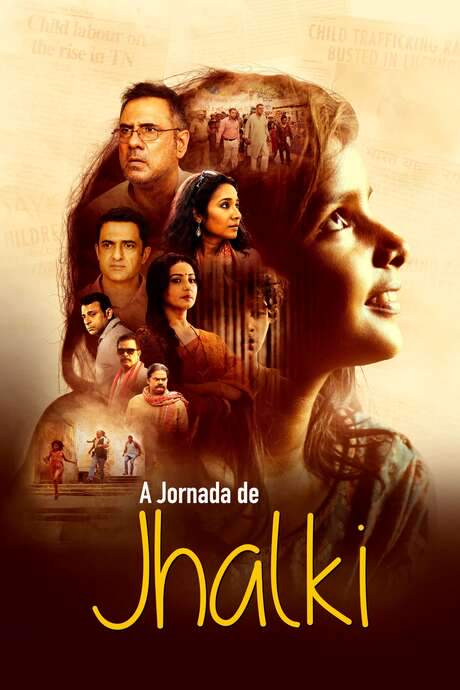
Ganga is a widow trying to keep her family's future afloat. She is quietly stacking up every available rupee to fund her daughter’s health operation, navigating a world where money is scarce and every small setback can feel overwhelming. The film follows her daily battles—the sleepless nights, the careful budgeting, and the unspoken fear of what will happen if the operation cannot go ahead. Her resolve is framed against a backdrop of systemic neglect, where even the most urgent need can be swept aside if larger, grander plans take precedence.
Bala is introduced as a street performer whose natural athleticism shines in the open spaces of the city. She dances, leaps, and performs stunts for passersby, earning enough to get by while keeping a quiet eye on bigger dreams. The arc hints at the potential she holds beyond the immediate hustle—a potential that could lift her from the edges of poverty if given the chance or resources she lacks. Her story speaks to the balance between grit in the present and the opportunities that could open up with support.
Jyothi is a student whose life takes a drastic turn when she elopes with Siddhu, a tea stall boy. The decision is driven by the circumstances surrounding her mother’s past, described as a prostitute in the narrative. The couple’s choices ripple outward, touching family expectations, social stigma, and the long shadow of those decisions. Their path illustrates how personal desperation and the pressure to escape a constrained environment can lead to fateful, irreversible choices.
Bose runs a hostel for orphans and keeps faith with the young residents who depend on him. He waits for government funds that would sustain the shelter, cover meals, education, and basic care. The story around Bose emphasizes a different kind of daily struggle—the slow-moving gears of bureaucracy that can delay relief for the most vulnerable, even when the need is urgent and the impact clear.
Vijay Varma is the son of the chief minister who eventually rises to become chief minister himself after his father’s death. He imagines a monumental tribute to his father—a statue that he hopes will be the largest in the world. In pursuing this grand project, he diverts attention and funds away from pressing social needs, effectively freezing or withdrawing support for the widow whose crop was ruined by rain (preventing her from paying for her daughter’s operation), for the scholarship that could help another girl, for a loan that might enable a tea stall entrepreneur to start a business, for Bala’s athletic ambitions, and for Bose’s hostel. The statue becomes a symbol of priority and power, while those dependent on these funds see their chances shrink.
Reporter serves as the narrative lens through which the audience learns of these intertwined fates. The journalist recounts the sequence of events to the chief minister, weaving together the threads of each story and offering a searing, chain-like indictment of how policy priorities shape lives. As the stories converge, the reporter’s voice grounds the film in accountability, framing the accumulation of misfortune as a result of choice and consequence rather than random misfortune.
In the climactic moment, the chief minister faces the consequences of the decisions that redirected resources away from vulnerable families and communities. Guilt and acknowledgment emerge as the statue is finally unveiled, a gesture that the film presents as both a political display and a moment of reckoning. The closing turn leaves viewers contemplating the costs of grand public works when human needs are left exposed, inviting reflection on responsibility, justice, and the price of unchecked ambition. Johaar accomplishes this through multiple voices, each rooted in a tangible, contemporary struggle, all contributing to a larger meditation on power, priority, and the fragility of ordinary lives.