Plot Explained Spoilers guaranteed!
Plot Explained

Browse by genre

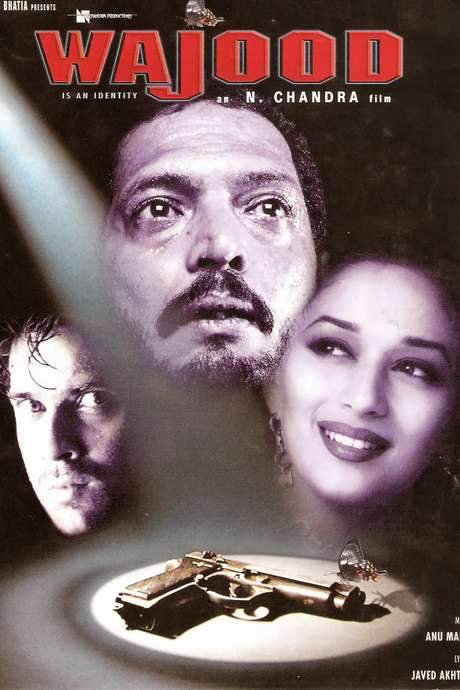
Wajood (1998) movie poster

Plot Summary

Wajood (1998) Plot Summary Explained

Release, runtime and language
1998 · 145 mins · Hindi
Loading streaming availability…
Directed by
N. Chandra
Starring
Parikshat Sahni, Ramya Krishnan, Johnny Lever, Madhuri Dixit, Sanjay Mishra, Mukul Dev

Malhar, the son of a modest typist, excels in college drama, winning trophies but never gaining his father's approval. While writing and directing productions he meets the affluent student Apoorva and falls deeply in love. When Apoorva wins the Best Actress award, she publicly praises Malhar on stage, a gesture he mistakenly takes as a declaration of her love.

On this page (6)
  1. 1 Where to watch
  2. 2 What happens: full plot
  3. 3 Plot questions answered
  4. 4 Movie threads
  5. 5 Movies like Wajood
  6. 6 Every angle
Loading streaming availability…

Full plot summary · contains spoilers

What Happens in Wajood: Full Plot Summary

The whole story of Wajood (1998) explained, from the opening scene to the final frame: every key event, every twist and what it all adds up to. Read it as a quick recap before the sequel, to check a scene you missed, or to finally understand what really happened.

Malhar, born to a poor typist clerk, is a versatile character Nana Patekar who wins trophies in dramas but remains unseen by his father. While writing and directing plays in college, he meets Apoorva Madhuri Dixit, a wealthy young woman, and falls deeply in love. When she wins the Best Actress Award, she calls him up on stage and credits him for the work; Malhar reads this gesture as a real confession of love, and his world tilts on its axis.

Meanwhile, Apoorva and Nihal Mukul Dev Joshi fall for each other. Nihal’s father, a powerful bureaucrat, wants them to marry, which fuels Malhar’s suspicions that Apoorva’s heart truly belongs to someone else. A tragic turn comes when Nihal’s father dies in a confrontation that Malhar inadvertently becomes part of, sending Malhar to jail. The consequence is devastating: Nihal loses his status, Apoorva’s father ends their engagement with Nihal, and Malhar’s dreams of a shared future crumble into a long stretch of imprisonment.

Behind bars, Malhar’s thoughts turn to Apoorva—dreams of a life together, a child, and a home that never quite existed. He escapes and embraces a dangerous path, preying on the affluent while lining his pockets. An accomplice, Sofia Ramya Krishnan, joins him in these crimes; she becomes entangled in a dangerous love triangle as she falls for him, even as he remains true to Apoorva in his heart.

Nihal, now a police officer, tracks a mysterious “stranger murderer” while Apoorva, now a journalist, covers the story. The city’s Police Commissioner Shivaji Satham comes under pressure from political forces and public demand to bring the culprit to heel, forcing Nihal to act quickly—arrest Malhar within a day or face consequences himself. Malhar’s past kindness toward Nihal—saving him after a prior encounter—collides with Apoorva’s confession that she has always loved Nihal from the start.

As the tension builds, Malhar invites Apoorva to the old theater where they once rehearsed, asking her to witness the “One Last Play” he plans for his father. Sofia, realizing Malhar’s heart truly lies elsewhere, cannot bear the pain and takes her own life. Malhar watches the tragedy with quiet gravity, then returns to his father with a plan that will blur the lines between performance and reality.

In a dramatic turn, Malhar has his father type an apology that reads like a son’s eulogy, dressed in fine clothes and brought to a restaurant and then to the theater. On stage with Apoorva, he stages a vivid, almost lifelike play, using a prop gun that unsettles her. He pushes Apoorva to smile through fear, echoing a past moment where he had begged her to cry. Just as Nihal, tipped off by a hotel waiter, arrives, the tension erupts: he shoots Malhar to protect Apoorva, leaving her shattered and terrified.

A fatal misstep reveals itself when Nihal steps on a loose gun on the stage, and the truth is laid bare. Malhar dies with a smile on his lips, a final lesson for Apoorva. His father reappears on stage, accepting that his son was a remarkable actor, and coaxing him to wake and join him beyond the curtain.

The film closes on a somber note: Apoorva and Nihal sit together on the theater stairs, crying and seeking solace in each other’s arms, while a silhouette—Malhar’s head resting on his father’s lap—lingers over the closed curtain, a haunting reminder of a life lived as art and a love that could not be.

Last updated: October 05, 2025 at 11:51

Was this helpful?

Plot questions answered

Wajood Plot Explained: Your Questions Answered

The questions people ask most about Wajood (1998): what happens in the confusing scenes, why the characters do what they do, the twists, hidden details and what the ending means. Each answer contains spoilers.

Q1

Why does Malhar believe Apoorva loves him after she thanks him on stage?

Malhar misinterprets Apoorva's public thank-you at the awards ceremony as a romantic confession. Having never received recognition or love from his father, Malhar desperately seeks validation. When Apoorva calls him onstage and credits his work, he projects his own longing onto her gesture, convincing himself she returns his feelings despite no explicit declaration.

Foreshadowing: Earlier, the film establishes that Malhar's father never acknowledges his drama achievements, leaving him starving for appreciation that he seeks in Apoorva.

  • malhar
  • apoorva
  • misunderstanding
  • love
  • awards ceremony
Q2

How does Malhar get imprisoned for Nihal's father's death?

During a confrontation at Nihal's home over Apoorva and Nihal's engagement, a chaotic struggle ensues. Nihal's father dies in the melee, though it's presented as accidental. Malhar is blamed and jailed for the incident, though the exact circumstances of who caused the death remain ambiguous.

  • malhar
  • jail
  • nihal
  • father
  • imprisonment
  • death
Q3

Why does Malhar turn to crime after escaping from prison?

Malhar's criminal turn stems from shattered dreams and years of imprisonment. While jailed, he fantasyzed about a life with Apoorva, marriage, children, happiness, but returns to find her with Nihal. Desperate and bitter, he abandons his theatrical dreams and becomes a predatory thief targeting wealthy women, using their wealth to fill the void left by his lost future.

Foreshadowing: In prison, Malhar's fantasies of family life with Apoorva reveal his obsessive fixation, which later curdles into destructive ambition.

  • malhar
  • crime
  • prison
  • escaped
  • robbery
Q4

Why does Sofia kill herself in the film?

Sofia, Malhar's crime partner, falls deeply in love with him and helps him rob wealthy women. However, she realizes Malhar's heart remains fixated on Apoorva despite everything. When Malhar brings Apoorva to witness his final 'play' and still pursues her affection, Sofia cannot bear the emotional pain and takes her own life.

  • sofia
  • suicide
  • malhar
  • love triangle
  • despair
Q5

What is the final performance Malhar stages at the theater?

Malhar stages a final theatrical piece at the old theater where he and Apoorva once rehearsed. He arranges for his father to type an apology-eulogy, dresses him in fine clothes, and uses a prop gun during the performance. The play blurs reality and performance, Malhar wants his father to finally witness his talent while also confronting Apoorva with his pain.

  • malhar
  • final play
  • theater
  • father
  • apoorva
  • performance
Q6

Why does Nihal shoot and kill Malhar at the theater?

Nihal arrives at the theater intending to protect Apoorva, believing she is in danger from the dangerous 'stranger murderer' (Malhar). When he sees Malhar on stage with a gun and Apoorva appearing frightened, Nihal acts to save her and shoots Malhar. The shooting is both an act of protection and the tragic culmination of their love triangle.

  • nihal
  • shoot
  • malhar
  • theater
  • protection
  • death
Q7

What does the final image of Malhar's head on his father's lap signify?

The closing shot shows the silhouette of Malhar's head resting on his father's lap behind the theater curtain, the first time they share such an intimate, tender moment. This visual represents Malhar finally receiving the love and acceptance from his father that he craved throughout his life, though it comes only after his death. The father strokes his son's hair in death what he never did in life.

  • ending
  • father
  • curtain
  • death
  • acceptance
  • silhouette
Q8

Why does Apoorva reject Malhar and choose Nihal?

Apoorva's heart belonged to Nihal from the beginning, long before Malhar met her. She never promised Malhar love, she only thanked him professionally for his direction. Malhar's obsession stemmed from his own misinterpretation and desperate need to believe someone could love him. When she finally tells Malhar directly that she never loved him, it shatters his remaining delusions.

  • apoorva
  • nihal
  • love
  • rejection
  • malhar
Q9

What is revealed when Nihal steps on the hidden gun on stage?

After Nihal shoots Malhar, he steps on another prop gun hidden on the stage, revealing the entire 'attack' was staged as part of Malhar's final performance. This moment exposes that Malhar never intended to harm Apoorva; his final play was meant to blur reality and theater, not commit violence. The revelation comes too late as Malhar dies with a smile, having achieved his theatrical masterpiece.

  • prop gun
  • stage
  • truth
  • revealed
  • performance
  • theater
Q10

Why does Malhar's father accept him at the end?

Malhar orchestrates his father's presence at the final performance by having him type what reads as a son's eulogy and bringing him to the theater in fine clothes. Through this elaborate staging, the father finally witnesses his son's extraordinary talent and the depth of his artistic vision. At the moment of Malhar's death, the father accepts him, calling him a brilliant actor and urging him to wake and leave with him, symbolizing reconciliation.

  • father
  • acceptance
  • theater
  • talent
  • reconciliation
  • death

Movie threads

More Movies Like Wajood, by Mood & Story

Curated lists built around what makes Wajood tick: the same mood, the same kind of story or the same emotional payoff. Each list explains why these movies belong together.

Movies about obsessive love leading to tragedy like Wajood

Stories of all-consuming passion that spirals into crime and despair. If you liked the intense, tragic love story in Wajood, you'll appreciate these films about obsessive relationships that spiral into darkness. These movies feature characters whose overwhelming passion leads them to make desperate choices, often ending in bleak consequences. They share a similar mood of fatalistic romance and heavy emotional weight.

  • obsessive
  • tragic
  • desperate
  • melancholic
  • fatalistic
  • dramatic
  • Tone: dark, tragic, desperate
  • Pacing: variable, building to climax
Why these movies?

The story pattern: These narratives typically follow a character who becomes consumed by an intense, often unreciprocated, love. Their fixation drives the plot forward, leading them to increasingly desperate actions that ultimately result in their moral or physical downfall. The journey is marked by a gradual loss of rationality as obsession overpowers reason.

Why they belong together: Movies are grouped here for their shared exploration of love's destructive potential when it becomes an obsession. They feature high emotional intensity, dark tones, and protagonists whose single-minded focus on their object of affection leads to tragic outcomes, creating a coherent experience of romantic despair.

Dramas about artistic ambition and tragedy similar to Wajood

Where the line between performance and reality blurs with fatal consequences. Fans of Wajood's exploration of performance and reality will enjoy these movies about artists whose creative ambitions lead to personal tragedy. These films feature protagonists involved in theater, writing, or performance arts, where their artistic endeavors become entangled with their real-life dramas, often culminating in bleak, theatrical finales.

  • theatrical
  • tragic
  • dramatic
  • melancholic
  • meta-narrative
  • artistic
  • Tone: dramatic, melancholic, fatalistic
  • Pacing: variable, with deliberate final acts
Why these movies?

The story pattern: The pattern follows creative individuals whose artistic pursuits initially bring them success or recognition, but ultimately contribute to their unraveling. The narrative often features a pivotal performance or creative work that becomes ironically prophetic or directly causes the tragedy. There's a constant tension between the artifice of art and the brutal truth of reality.

Why they belong together: These films share a focus on artists and performers whose creative lives become metaphors for their personal destruction. They combine elements of performance art with dramatic storytelling, often featuring high-stakes emotional journeys where the boundaries between acting and living become dangerously blurred.

If you liked this

Movies Like Wajood

Similar movies to Wajood: the same genre, themes or kind of story. Each one comes with its own plot summary, timeline and ending explained.

Browse all movie summaries

Every angle

Wajood (1998) Explained: Plot, Timeline & Characters

Everything about Wajood in one place: what happens in the plot summary, the timeline in chronological order, the characters and meaning and a spoiler-free summary. What's After the Movie adds the cast, box office and post-credit scenes.

Coming soon on iOS and Android

The Plot Explained Movie Summary App

Plot summaries, endings explained and timelines on your phone. Catch up on any movie in minutes, save your favorites and never miss a twist again.

Be the first to know when we launch. Your email stays private, always.

Learn more about the app