Plot Explained Spoilers guaranteed!
Plot Explained

Browse by genre

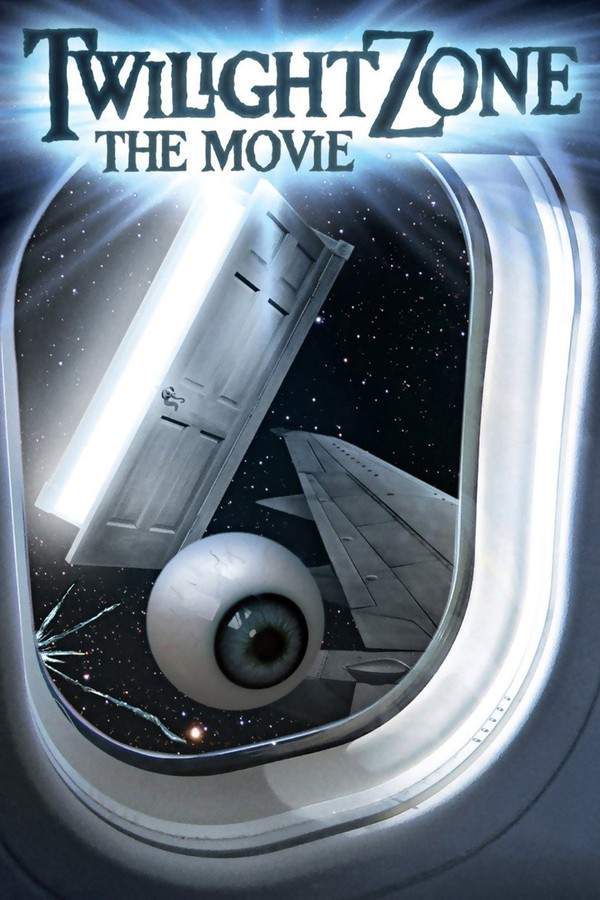
Twilight Zone: The Movie (1983) movie poster

Plot Summary

Twilight Zone: The Movie (1983) Plot Summary Explained

Release, runtime and language
1983 · 101 min · English
Loading streaming availability…
Directed by
Steven Spielberg, John Landis, George Miller, Joe Dante
Starring
Dan Aykroyd, Albert Brooks

Four interconnected stories pay tribute to the iconic television series. A bigoted soldier experiences a startling lesson about tolerance, while residents of a nursing home discover a surprising path to immortality. A teacher investigates a student with a hidden identity, and a terrified passenger battles mischievous gremlins aboard an airplane. Each story delves into themes of morality, perception, and the unexpected twists of fate.

On this page (7)
  1. 1 Where to watch
  2. 2 What happens: full plot
  3. 3 Plot questions answered
  4. 4 Movie threads
  5. 5 Movies like Twilight Zone: The Movie
  6. 6 Categories
  7. 7 Every angle
Loading streaming availability…

Full plot summary · contains spoilers

What Happens in Twilight Zone: The Movie: Full Plot Summary

The whole story of Twilight Zone: The Movie (1983) explained, from the opening scene to the final frame: every key event, every twist and what it all adds up to. Read it as a quick recap before the sequel, to check a scene you missed, or to finally understand what really happened.

The film opens with a prologue showcasing two men riding in a car on a desolate rural road late at night. The driver, Albert Brooks, and his passenger, Dan Aykroyd, engage in a light-hearted sing-along to Creedence Clearwater Revival's cover of "Midnight Special," until the tape unexpectedly breaks. They embark on a game centered around TV theme songs, eventually revealing their fears as they reminisce about unsettling episodes of The Twilight Zone. Suddenly, the passenger poses a chilling question: "Do you want to see something really scary?" With some reluctance, the driver pulls over, only to face a shocking transformation as the passenger removes a mask to reveal a monstrous visage, before fatally attacking him.

The narrative then transitions into the iconic opening of The Twilight Zone, narrated by Burgess Meredith, encapsulating the eerie essence of the series: "You unlock this door with the key of imagination... You've just crossed over into... The Twilight Zone."

The first segment, titled "Time Out," introduces Mr. William Connor—a man burdened by bitterness and prejudice, portrayed by Vic Morrow. As he reels from being overlooked for a promotion, Bill's hostile nature surfaces during a drunken night out with friends, where he hurls derogatory remarks at people of various backgrounds. His hatefulness catches the attention of a group of men nearby, leading to his confrontation with them. Bill's reality shatters when he finds himself transported to Vichy France during World War II, where he is mistaken for a Jew and chased by Nazi officers. His desperate attempts to escape transitions through several harrowing eras that mirror his prejudices, eventually culminating in his capture alongside Holocaust victims, leaving him screaming hopelessly for help—his fate intertwined with the consequences of his biases.

In the second segment, "Kick the Can," directed by Steven Spielberg, we meet Mr. Bloom, a hopeful resident at Sunnyvale Rest Home. Bloom, played by Scatman Crothers, believes that age should not diminish one’s joy for life. With an invitation to play a game of kick the can, he rekindles the spirits of the elderly residents. As they partake in the game, a miraculous transformation occurs; they revert to their youthful selves. However, they soon realize that being young again comes with the complexities of life. With newfound wisdom, they opt to return to their aged selves, understanding that true vitality lies within the heart. The segment concludes with Mr. Bloom departing for a new journey, hinting at his magical role in rejuvenating the elderly.

The third segment, "It's a Good Life," features Helen Foley, played by Kathleen Quinlan, who embarks on a seemingly mundane road trip. A fateful encounter with a peculiar boy named Anthony leads her into a surreal nightmare, where it becomes evident that Anthony wields terrifying powers of creation. After discovering that the people around Anthony are not his real family but rather prisoners in his dominion, Helen navigates a perilous landscape of fantasy and control, ultimately striking a bargain to become his true friend, escaping into a reality filled with bright meadows.

Finally, "Nightmare at 20,000 Feet," introduces us to John Valentine, played by John Lithgow, whose anxiety surfaces spectacularly during a tumultuous flight. His fear of flying manifests in a bizarre confrontation with a gremlin-like creature wreaking havoc on the airplane's wing. As panic grips him, he takes desperate measures to fend off the creature, resulting in chaotic consequences. The segment ends ambiguously as Valentine is carted away, deemed insane, while the aircraft maintenance crew uncovers terrifying damage that hints at the truth of his experience.

In the epilogue, the ambulance driver, portrayed by Dan Aykroyd, plays "Midnight Special" and humorously inquires about Valentine's terrifying journey, closing with the iconic nod to the show’s overarching themes, setting the stage for another journey into the unknown realms of The Twilight Zone.
Last updated: October 27, 2024 at 19:56

Was this helpful?

Plot questions answered

Twilight Zone: The Movie Plot Explained: Your Questions Answered

The questions people ask most about Twilight Zone: The Movie (1983): what happens in the confusing scenes, why the characters do what they do, the twists, hidden details and what the ending means. Each answer contains spoilers.

Q1

Why does the passenger attack the driver in the opening scene?

The prologue serves as a dark framing device for the anthology. The passenger's unprovoked attack appears to be random violence, establishing the eerie, menacing tone that carries through the film. The reveal of the monster mask emphasizes that what seemed like a normal situation has a terrifying twist, setting up the Twilight Zone theme that appearances can be deceiving and danger lurks in unexpected places.

Foreshadowing: The prologue's violence previews the moral lessons and consequences that unfold in each segment, particularly Time Out where Bill faces the consequences of his own prejudices.

  • prologue attack
  • albert brooks
  • dan aykroyd
  • opening scene
  • twlight zone movie prologue
Q2

Why is Bill transported to Vichy France in Time Out?

Bill is transported to Vichy France as a supernatural consequence of his bigoted behavior. After his drunken outburst of prejudice, he finds himself in Nazi-occupied France where he is mistaken for a Jew, the very group he despise. The transportation appears to be a moral lesson or punishment, forcing him to experience the persecution he would have inflicted on others.

Foreshadowing: Bill's hatred earlier in the evening directly leads to his persecution in the past, showing that his prejudices become his undoing.

  • bill connor
  • vic morrow
  • vichy france
  • time out segment
  • transported
  • ww2
  • prejudice
Q3

Does Bill ever return to his own time in Time Out?

No, Bill does not return to his own time. After being captured by Nazi officers alongside Holocaust victims, he is left screaming hopelessly for help. His fate remains sealed in the past, trapped with those he bigotedly despised. The segment ends with him sharing the tragic fate of the very people he hated.

Foreshadowing: The segment opens with Bill's promotion denial and prejudice, which directly leads to his irreversible punishment.

  • bill return home
  • time out ending
  • vic morrow
  • stuck in past
  • holocause victims
Q4

Why does playing kick the can restore the elderly to youth in Kick the Can?

Mr. Bloom possesses magical abilities that allow him to restore the elderly residents to their youthful forms through the simple act of playing kick the can. The game serves as a conduit for his supernatural power. Bloom seems to be either a magical figure or someone who understands that joy and play can literally reverse aging, at least temporarily.

Foreshadowing: Bloom's insistence that age shouldn't diminish one's joy for life foreshadows the magical restoration he brings.

  • scatman crothers
  • mr bloom
  • kick the can
  • elderly become young
  • magic
  • sunnyvale rest home
Q5

Why do the elderly choose to return to their old selves in Kick the Can?

After experiencing youth again, the elderly residents realize that being young comes with new complexities, problems, and responsibilities they no longer want to face. With newfound wisdom from their second youth, they understand that true vitality comes from within, not from physical age. They consciously choose to return to their aged forms, embracing the peace and wisdom they've gained.

Foreshadowing: Bloom's belief that age is a state of mind sets up their informed choice to return to their older selves.

  • elderly choose old age
  • kick the can ending
  • return to aging
  • wisdom
  • youth complications
Q6

What are Anthony's powers in It's a Good Life?

Anthony possesses terrifying reality-warping powers that allow him to create and control everything around him. He can reshape reality, trap people in his constructed world, and alter circumstances with mere thought. His powers are depicted as god-like, making him an extremely dangerous and unpredictable entity. Anyone in his domain is at his complete mercy.

Foreshadowing: The encounter begins innocuously with Helen picking up the boy on the road, but quickly escalates into a nightmare when his true nature emerges.

  • anthony powers
  • kathleen quinlan
  • reality warping
  • It's a Good Life
  • child with powers
  • create reality
Q7

Who are the people living with Anthony in It's a Good Life?

The people Helen sees with Anthony are not his real family, they are prisoners trapped in his reality. Anthony has created or captured these individuals to serve as companions in his domain. They live in a constructed world where Anthony's whims become law, and they cannot escape without his permission.

Foreshadowing: Helen initially believes she's encountered a lost child and his family, but the unsettling atmosphere hints at something darker.

  • anthony family
  • prisoners
  • It's a Good Life
  • not real family
  • trapped people
Q8

How does Helen escape Anthony's world in It's a Good Life?

Helen escapes by making a bargain with Anthony to become his 'true friend.' This deal appears to grant her release from his domain into what is described as bright meadows, a seemingly better reality. The bargain suggests that Anthony, despite his terrifying power, craves genuine companionship, which Helen uses as her pathway to freedom.

Foreshadowing: Anthony's loneliness is hinted at when he creates people around him, revealing his desire for real connection.

  • helen escape
  • anthony bargain
  • become friend
  • It's a Good Life ending
  • bright meadows
Q9

Is the gremlin on the plane real in Nightmare at 20,000 Feet?

The gremlin's existence remains ambiguously ambiguous. John Valentine clearly sees a creature damaging the airplane wing, and his desperate actions cause chaos on board. However, he's carted away as insane. The key twist is that the aircraft maintenance crew discovers real, terrifying damage to the wing, suggesting the gremlin was actually real and John was telling the truth all along.

Foreshadowing: John's intense fear of flying from the beginning establishes his anxiety as a plot element that makes viewers question his perception.

  • john lithgow
  • gremlin real
  • airplane wing
  • Nightmare at 20
  • 000 Feet
  • damage found
  • sanity
Q10

What happens to John Valentine at the end of Nightmare at 20,000 Feet?

John Valentine is taken off the plane in restraints, presumed to be insane by the other passengers and crew. His frantic attempts to fight the gremlin and alert the plane's crew are viewed as a mental breakdown. However, the discovery of actual wing damage by maintenance suggests his experience was genuine, leaving his fate ambiguous, was he a prophet of truth or a man who lost his mind?

Foreshadowing: John's severe fear of flying was established early, making his extreme reaction believable to others but tragic for him.

  • john valentine taken away
  • insane
  • psychiatric evaluation
  • airplane
  • removed from flight
Q11

How do the prologue and epilogue connect in Twilight Zone: The Movie?

The prologue and epilogue are connected through the same characters and situation. The film opens with Dan Aykroyd's character as the passenger who attacks Albert Brooks' driver. In the epilogue, Dan Aykroyd's character is now the ambulance driver, playing "Midnight Special" and asking about John Valentine's flight experience. This creates a cyclical framing that ties the four segments together within the Twilight Zone universe.

  • prologue epilogue connection
  • dan aykroyd
  • albert brooks
  • ambulance driver
  • midnight special
Q12

What is the unifying theme across all four Twilight Zone segments?

Each segment explores moral lessons and the consequences of one's actions or beliefs. Time Out shows prejudice leading to persecution. Kick the Can demonstrates that wisdom comes from life's journey, not youth. It's a Good Life examines power and companionship. Nightmare at 20,000 Feet deals with fear and perception of reality. Together, they echo the original series' themes of morality, perception, and unexpected twists of fate.

  • unifying theme
  • four segments
  • anthology
  • morality
  • consequences
  • twilight zone themes

Movie threads

More Movies Like Twilight Zone: The Movie, by Mood & Story

Curated lists built around what makes Twilight Zone: The Movie tick: the same mood, the same kind of story or the same emotional payoff. Each list explains why these movies belong together.

Supernatural Morality Tales like Twilight Zone: The Movie

Stories where otherworldly forces expose human flaws and deliver unsettling justice. If you liked the eerie justice and thought-provoking dilemmas in Twilight Zone: The Movie, explore these movies with similar supernatural morality tales. These films use uncanny events to test characters and explore deep themes of consequence, making for a tense and intellectually engaging watch.

  • uneasy
  • morality-driven
  • supernatural
  • suspenseful
  • thought-provoking
  • uncanny
  • Tone: tense, unsettling, thought-provoking
  • Pacing: variable, often building to a climax
Why these movies?

The story pattern: Narratives in this thread typically involve an intrusion of the uncanny into the mundane world, which functions as a test or punishment for characters. The plot revolves around characters being forced to confront their own flaws, with the supernatural element acting as a direct mirror or judge of their morality, leading to an inevitable and often unsettling resolution.

Why they belong together: These movies are grouped by their shared use of supernatural frameworks to explore human ethics. They create a specific type of suspense rooted not just in fear, but in the anticipation of moral reckoning, resulting in a heavy emotional weight and a thought-provoking tone.

Anthology Horror Movies like Twilight Zone: The Movie

Collections of unnerving short stories that build a pervasive sense of dread. Fans of the episodic, anxious horror in Twilight Zone: The Movie will enjoy these similar anthology films. These movies feature multiple short stories connected by a dark theme, delivering a variety of scares and a pervasive sense of dread, perfect for viewers who love bite-sized terror.

  • anthology
  • anxious
  • suspenseful
  • episodic
  • eerie
  • nightmarish
  • Tone: tense, dark, eerie
  • Pacing: variable, segmented
Why these movies?

The story pattern: The narrative pattern is defined by its structure: multiple self-contained stories presented within a single film. Each segment explores a different facet of horror or suspense, often with a twist ending or a dark revelation. The overall journey is one of accumulated tension and variety, rather than a linear character arc.

Why they belong together: These films are grouped by their unique anthology format and their focus on creating a vibe of pervasive anxiety. They share a complex structure, a tense tone, and a high intensity that comes from presenting multiple high-impact horror scenarios in succession.

If you liked this

Movies Like Twilight Zone: The Movie

Similar movies to Twilight Zone: The Movie: the same genre, themes or kind of story. Each one comes with its own plot summary, timeline and ending explained.

Browse all movie summaries

Categories

Movie Lists Featuring Twilight Zone: The Movie

Twilight Zone: The Movie appears in these hand-built movie categories. Each one groups movies by a specific mood, theme or story type, with their plot summaries and endings explained.

View all movie categories

Every angle

Twilight Zone: The Movie (1983) Explained: Plot, Timeline & Characters

Everything about Twilight Zone: The Movie in one place: what happens in the plot summary, the timeline in chronological order, the characters and meaning and a spoiler-free summary. What's After the Movie adds the cast, box office and post-credit scenes.

Coming soon on iOS and Android

The Plot Explained Movie Summary App

Plot summaries, endings explained and timelines on your phone. Catch up on any movie in minutes, save your favorites and never miss a twist again.

Be the first to know when we launch. Your email stays private, always.

Learn more about the app