Plot Explained Spoilers guaranteed!
Plot Explained

Browse by genre

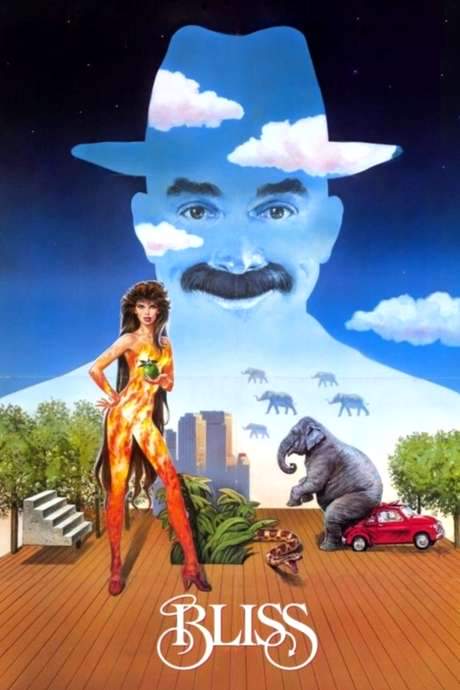
Bliss (2022) movie poster

Plot Summary

Bliss (2022) Plot Summary Explained

Release, runtime and language
2022 · 91 min · English
Echo score 55
JustWatch #12,180 5
Directed by
Henrika Kull
Starring
Eva Collé, Bence Máté, Christina-Madalina David, Dennis Singert, Jean-Luc Bubert, Katharina Behrens

Recently divorced and unemployed, Greg meets Isabel, a captivating woman who claims their world is a simulated reality. Drawn into her unconventional perspective, Greg begins to question everything he thought he knew, blurring the lines between dreams and reality. He embarks on a journey of self-discovery and love, seeking answers about the nature of existence and the possibility of a deeper truth.

On this page (7)
  1. 1 Where to watch
  2. 2 What happens: full plot
  3. 3 Plot questions answered
  4. 4 Movie threads
  5. 5 Movies like Bliss
  6. 6 Categories
  7. 7 Every angle

Where to watch

Where to Watch Bliss (2022)

Where can you watch Bliss? Stream, rent or buy it in the US, including on Amazon Prime Video, Amazon MX Player and Amazon Prime Video Free: current JustWatch availability with up-to-date prices.

Streaming availability powered by JustWatch

Full plot summary · contains spoilers

What Happens in Bliss: Full Plot Summary

The whole story of Bliss (2022) explained, from the opening scene to the final frame: every key event, every twist and what it all adds up to. Read it as a quick recap before the sequel, to check a scene you missed, or to finally understand what really happened.

In the mundane routine of his office job, Greg Wittle, portrayed by Owen Wilson, receives a surprising call from his daughter, Emily, played by Nesta Cooper, inviting him to her graduation celebration. As he contemplates attending, he grapples with the tension in his relationship with his ex-wife. Meanwhile, a sketch of a beautiful woman emerges on his desk, serving as a temporary distraction from the pain of an injury that has left him dependent on prescription medication. A trip to the pharmacy unveils a startling reality: his refills are depleted.

With his anxiety escalating, Greg is summoned to Bjorn's office, where he receives the shocking news of his termination. Although his response is calm on the surface, a growing desperation simmers within him. In a fit of frustration, he lashes out at Bjorn, resulting in Bjorn's accidental and fatal fall. Overcome by panic, Greg conceals the body behind the curtain and makes a hasty escape.

Seeking comfort at a nearby bar, he finds himself under the keen gaze of Isabel Clemens, brought to life by Salma Hayek. Her mysterious presence seems to penetrate his very being. As she reaches out, a bewildering phenomenon occurs: objects around them respond to her slightest movements, leading Greg into a world where the physical laws seem malleable. Isabel reveals her knowledge of Bjorn's fate in unnervingly precise detail and proposes an audacious plan to help Greg out of his predicament.

Isabel needs Greg to retrieve a cherished amulet necklace from her ex-lover, who exists in a comatose state, making the task deceptively simple. After successfully acquiring the amulet, Isabel unveils the greater truth of their surroundings – nothing is as it appears, and she has intricately shaped this reality over centuries. Empowered by the amulet, Isabel executes a clever ruse, making it look as if Bjorn's death was a suicide.

Now free from suspicion, Isabel weaves a complex web of deception, artfully covering their tracks as they navigate the topsy-turvy landscape where the line between reality and fantasy blurs. As tensions rise, Greg finds himself caught in a surreal escapade, confronting the very essence of existence alongside the enigmatic Isabel, whose abilities threaten the delicate balance of their world.

As Isabel immerses Greg in her unconventional community, she reveals that Bjorn had only been a figment of their imagination. Initially troubled by taking a life, Greg finds solace in Isabel’s insights, beginning to comprehend the fluid nature of reality. The bond between them intensifies as they share profound moments, with Greg expressing his artistic inclinations and Isabel acknowledging the photograph as a mirror of their surreal existence.

Meanwhile, Emily seeks guidance from Arthur in her quest to locate her father, only to learn unsettling truths about Greg's chronic injuries and his reliance on painkillers. At the encampment, Isabel and Greg indulge in yellow crystals, embarking on a rollerblading adventure that obscures the boundaries of reality and fantasy while they manipulate the world around them.

As they prepare to exit, a bizarre scene unfolds: their own arrests, quickly followed by an unexpected release. Emily’s search for her father continues amid her growing desperation. Isabel’s teachings resonate with Greg, who starts to internalize her philosophy that in a world where nothing is genuinely real, consequences lose their weight.

However, Greg’s newly found freedom is fleeting as he witnesses Isabel's troubling descent into a life reliant on prostitution, prompting him to confront the grim realities of her existence. When Emily implores him to return to the real world, Greg fixates on waiting for Isabel's return.

Upon her arrival, they find themselves in an unremarkable building, where Isabel exposes the source of their yellow crystals: a shrouded figure crafting these potent substances. As Emily catches up with Greg and begs him to leave, he opts to remain, oblivious to how graduation has drifted away, a sentiment Isabel poignantly communicates.

Their joyful reunion is swiftly interrupted by a menacing stranger, driving Greg to consume a dangerous excess of yellow crystals. His latent telekinetic powers surge forth, culminating in a chaotic display of energy that leaves him disoriented. When he reaches out to Emily, only to find her voicemail greeting, the eerie silence underscores the weight of his actions. Back at the encampment, Isabel’s worries explode as she confronts Greg about his clandestine visit to Emily. Her fury is palpable, as she fears he is on the brink of succumbing to the allure of their fabricated reality.

In a furious exchange, she accuses him of forsaking logic for an illusory existence. Greg asserts that her dominance over truth has left him entirely reliant on her, fueling his craving for certainty. In a moment of quiet tension, Isabel reveals a collection of rare blue crystals, claiming they will liberate them from simulation. Though Greg is anxious about this bold move, he accepts the crystals, bolstered by the desire to uncover their reality.

Their journey culminates in a sterile scientific facility where Isabel has transformed into a detached scientist, flipping their narrative on its head. As they step into the breathtaking world beyond the facility – a utopia birthed from the remnants of a once dying planet – Greg finds his senses overwhelmed by the sublime beauty surrounding him.

Amidst holographic apparitions, Isabel guides him through a realization of how synthetic biology has resurrected this world. She explains that the duality of good and evil is essential to understand the spectrum of existence, and their simulation was purposefully created to reinforce this lesson. As Emily's holographic presence flutters around them, a sense of urgency washes over Greg, who remains deeply influenced by Isabel's teachings.

The couple attends a scientific gathering where whispers circulate regarding the ethical ramifications of Isabel's studies. Stirred by the criticisms, Isabel lashes out, incensed by the perception of betrayal among her peers. Greg stays steadfast, reiterating his belief in her work, but Emily's hologram re-emerges, warning Greg about the unpredictable nature of this shifting reality.

As the evening progresses, Isabel captivates the audience with her findings on bliss and its connection to its polar opposite, inviting Greg to share his thoughts, which reflect his newfound contentment. However, the jubilant atmosphere collapses when chaos erupts as angry protesters storm the venue. Amid the turmoil, Greg’s disorientation increases, drawing him closer to Emily's hologram, which begins to materialize into somber clarity urging against impulsive choices.

Seizing control amid the chaos, Greg harnesses his powers to quell the unrest. Together with Isabel, they race back to the lab, where she theorizes their actions have inadvertently merged reality and simulation. Their solution lies in returning to the simulated realm to utilize the blue crystals, restoring harmony to both dimensions.

As they delve back into the simulation, Greg and Isabel find themselves in the harsh reality of a homeless encampment, battered by relentless storms. Their frantic pursuit for the blue crystals unveils a shock: Bjorn's apparition manifests, driving Greg into a panic. In a monumental moment, they commandeer a vehicle which snaps their escape plan into motion. Yet, destiny takes a dark turn when Isabel draws a gun, eliminating her accomplice to seize the precious crystals.

While Emily seeks Arthur, urgently conveying her father's plight seen panhandling outside his workplace, the grim truth arises – he was spotted by none other than Bjorn. With the simulation beginning to unravel, Isabel’s meticulously crafted plans collapse as police converge upon their location. In a heart-wrenching realization, Isabel understands their dire predicament – one crystal too few to ensure both of their escapes, leaving one of them to remain imprisoned within the digital prison.

With heavy hearts, Greg pleads with Isabel to "kill" him within the simulation to allow her a chance of freedom. Though torn by the aching choice, Isabel hesitates, grappling with the implications of her action. But ultimately, she succumbs to a harsh reality.

Emily's desperate arrival makes the scene even more tragic. In a moment of clarity, Greg acknowledges his bond with her, tenderly entrusting her with the blue crystals as a means for her to secure their freedom while staying behind. In a twist of fate, Isabel claims the crystals for herself.

The fallout of their digital journey sees Greg finding solace in a rehabilitation center, where he poignantly holds a photograph of Emily, declaring, "This woman says she's my daughter, and I believe her." His subsequent encounter with Emily blossoms with tenderness, revealing that even amid fractured realities, love has the power to mend the deepest of wounds, igniting hope in the beautiful mystery of the unknown.

Last updated: November 17, 2024 at 13:12

Was this helpful?

Plot questions answered

Bliss Plot Explained: Your Questions Answered

The questions people ask most about Bliss (2022): what happens in the confusing scenes, why the characters do what they do, the twists, hidden details and what the ending means. Each answer contains spoilers.

Q1

Why does Greg kill his boss Bjorn?

Greg doesn't intend to kill Bjorn. After being unexpectedly fired and learning his prescription refills are depleted, Greg confronts Bjorn in a fit of frustration. During the confrontation, Bjorn trips and falls fatally, possibly because Greg pushed him or shoved him in anger. Greg panics and conceals the body before fleeing, making it look like a suicide with Isabel's help.

  • bjorn death
  • greg fired
  • workplace accident
  • manslaughter
Q2

What are the yellow crystals in the movie?

The yellow crystals are mind-altering substances used within Isabel's simulation that create euphoric, hallucinogenic effects. When consumed, they allow users to manipulate reality around them, objects move, physical laws bend, and users experience heightened perceptions. Greg and Isabel use these crystals throughout their journey, with the yellow crystals representing the pleasures and illusions of the simulated world.

Foreshadowing: Isabel demonstrates strange powers over objects before introducing Greg to the crystals.

  • yellow crystals
  • hallucinations
  • simulation drugs
  • mind altering
Q3

What are the blue crystals and what do they do?

The blue crystals are rare substances that can actually liberate someone from Isabel's simulation, allowing them to return to the real world. Unlike the yellow crystals which keep users trapped in the illusion, the blue crystals represent the path to true freedom. Greg ultimately gives these crystals to his daughter Emily to escape, though Isabel ends up taking them for herself.

Foreshadowing: Isabel mentions wanting to find something more powerful than the yellow crystals.

  • blue crystals
  • escape simulation
  • real world
  • freedom
Q4

Who is Isabel really?

Isabel Clemens is actually a scientist who created the simulation using synthetic biology. In the real world, she is a researcher working at a facility on a post-apocalyptic Earth. She designed the simulation as an experiment to explore human consciousness and the duality of good and evil. The entire world Greg experiences, including the office, the bar, and the homeless encampment, is her creation.

Foreshadowing: Isabel knows details about Bjorn's death before Greg tells anyone and can manipulate physical reality.

  • isabel scientist
  • simulation creator
  • dr clemens
  • synthetic biology
Q5

Why does Greg choose to stay in the simulation instead of leaving with Emily?

Greg becomes increasingly disillusioned with reality after losing his job, his health, and his sense of purpose. Through Isabel's philosophy, he comes to believe that nothing is genuinely real and that consequences don't matter in a constructed world. When Emily tries to pull him back to reality, Greg is already seduced by the freedom and meaning he finds in the simulation, choosing the illusion over the painful real world.

Foreshadowing: Isabel teaches Greg that 'nothing is real' and consequences lose weight in a simulation.

  • greg chooses simulation
  • reality vs illusion
  • isabel influence
Q6

What is the relationship between the homeless encampment and the scientific utopia?

Both locations exist within Isabel's simulation but represent different layers of her created reality. The homeless encampment is a darker, more chaotic simulation that reflects the harshness of what humans can create. The scientific utopia is a beautiful, advanced world Isabel designed to show what humanity could become. Both are fabrications, and the final revelation shows that the real world is actually a dying planet outside both simulations.

Foreshadowing: Greg experiences reality shifting throughout the film, with scenes becoming more surreal after taking crystals.

  • nested simulation
  • homeless camp
  • utopia
  • multiple realities
Q7

What happens to Isabel at the end of the movie?

In the final moments within the simulation, Greg pleads with Isabel to 'kill' him so she can escape with the blue crystals. She ultimately shoots him. When Emily arrives, Isabel takes the crystals for herself and presumably escapes to the real world, leaving Greg trapped in the dying simulation. The aftermath shows Greg in rehabilitation, having apparently been rescued by Emily, but it's ambiguous whether this is another layer of simulation.

Foreshadowing: Isabel explains there aren't enough crystals for both of them to escape.

  • isabel escapes
  • greg shot
  • blue crystals taken
  • ending ambiguity
Q8

Why is Greg in rehabilitation at the end?

After the chaotic events of the simulation collapse, Greg ends up in a rehabilitation center in what appears to be the real world. This follows his journey of addiction, first to prescription painkillers, then to the yellow crystals within the simulation. His recovery represents his return to reality, though the film leaves ambiguity about whether this is truly the 'real' world or another simulation layer.

Foreshadowing: Throughout the film, Greg struggles with dependency on painkillers and later the yellow crystals.

  • rehabilitation
  • addiction recovery
  • real world
  • healing
Q9

What happens at the scientific gathering?

At a scientific presentation, Isabel reveals her findings about 'bliss' and its connection to its opposite, capturing the audience's attention. However, the event descends into chaos when angry protesters storm the venue, opposed to Isabel's research. Greg uses his telekinetic powers (gained from consuming too many crystals) to help control the crowd. This chaos triggers the breakdown of the simulation's boundaries.

Foreshadowing: Earlier, whispers circulate about the ethical implications of Isabel's work.

  • scientific presentation
  • bliss research
  • protest
  • chaos
Q10

Why does Greg give the blue crystals to Emily?

Greg gives the blue crystals to Emily because he wants her to have the chance to escape the simulation and return to the real world. Recognizing that he's too attached to the simulation and influenced by Isabel, Greg entrusts his daughter with the only means of true escape. This act represents Greg's final real connection to genuine love and paternal instinct, even as he remains trapped.

Foreshadowing: Emily has been searching for Greg throughout the film, trying to bring him back to reality.

  • emily crystals
  • father daughter
  • escape attempt
  • sacrifice
Q11

Is the final rehabilitation scene actually real?

The ending is deliberately ambiguous. Greg appears in a rehabilitation center with a photo of Emily, stating he believes the woman claiming to be his daughter. This could represent genuine recovery in the real world, or it could be another simulation layer that Isabel or Greg has created. The film's final line, 'This is beautiful', mirrors the utopian world Isabel showed him, leaving open whether Greg has truly escaped or simply found peace within another illusion.

Foreshadowing: Emily's hologram previously warned Greg about the unpredictable nature of the shifting reality.

  • ending ambiguity
  • is it real
  • simulation twist
  • final scene

Movie threads

More Movies Like Bliss, by Mood & Story

Curated lists built around what makes Bliss tick: the same mood, the same kind of story or the same emotional payoff. Each list explains why these movies belong together.

Mind-bending movies that question reality like Bliss

Protagonists who question their reality, losing grip on what is true. If you enjoyed the disorienting reality breakdown in Bliss, explore these movies where characters face a similar crisis of perception. These films blend psychological drama and existential themes, creating an unsettling and thought-provoking viewing experience similar to Bliss.

  • disorienting
  • unsettling
  • psychological
  • existential
  • dreamlike
  • anxious
  • Tone: tense, unsettling, melancholic
  • Pacing: variable, often building to chaos
Why these movies?

The story pattern: The narrative follows a protagonist who, often through an outside catalyst, begins to doubt the fundamental nature of their existence. The story structure intentionally creates confusion for the viewer, mirroring the character's experience as they navigate shifting realities and grapple with profound existential questions.

Why they belong together: These films are grouped by their shared focus on psychological unease stemming from a collapsing reality. They prioritize mood over clear answers, using variable pacing and complex narratives to immerse the viewer in a disorienting, introspective, and often melancholic experience.

Movies about toxic and captivating relationships like in Bliss

A dangerous romance that offers escape at a terrible cost. Fans of the intense, toxic dynamic between Greg and Isabel in Bliss will appreciate these films. Discover similar stories of characters seduced by a captivating partner into a dangerous world of shared delusion, leading to a heavy emotional journey and a bittersweet conclusion.

  • toxic relationship
  • captivating
  • melancholic
  • destructive
  • intense romance
  • codependency
  • Tone: tense, heavy, bittersweet
  • Pacing: variable, from slow seduction to frantic collapse
Why these movies?

The story pattern: The narrative arc follows a vulnerable protagonist who meets a magnetic but unstable figure. This new relationship offers an escape from their mundane or painful existence, but the price is complicity in a destructive fantasy. The journey explores the allure of the toxic bond and the painful process of disillusionment.

Why they belong together: These movies share a core focus on the dynamics of a relationship built on a dangerous, shared fantasy. They blend heavy romance with psychological drama, creating a tense atmosphere where the boundary between love and manipulation is constantly blurred, often culminating in a bittersweet or bleak resolution.

If you liked this

Movies Like Bliss

Similar movies to Bliss: the same genre, themes or kind of story. Each one comes with its own plot summary, timeline and ending explained.

Browse all movie summaries

Categories

Movie Lists Featuring Bliss

Bliss appears in these hand-built movie categories. Each one groups movies by a specific mood, theme or story type, with their plot summaries and endings explained.

View all movie categories

Every angle

Bliss (2022) Explained: Plot, Timeline & Characters

Everything about Bliss in one place: what happens in the plot summary, the timeline in chronological order, the characters and meaning and a spoiler-free summary. What's After the Movie adds the cast, box office and post-credit scenes.

Coming soon on iOS and Android

The Plot Explained Movie Summary App

Plot summaries, endings explained and timelines on your phone. Catch up on any movie in minutes, save your favorites and never miss a twist again.

Be the first to know when we launch. Your email stays private, always.

Learn more about the app