Plot Explained Spoilers guaranteed!
Plot Explained

Browse by genre

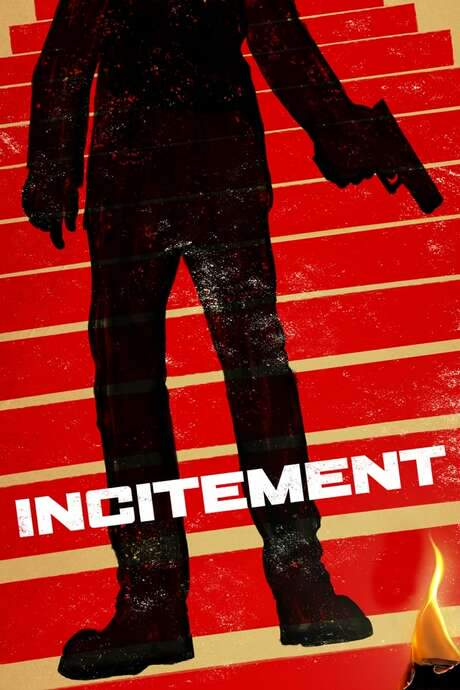
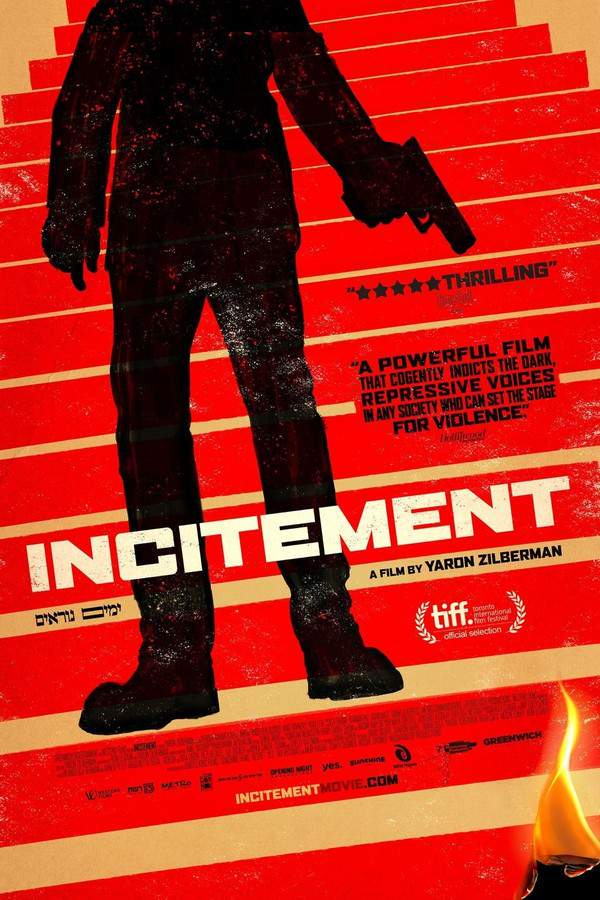
Incitement (2019) movie poster

Timeline

Incitement (2019) Timeline Explained – Every Event in Order

Release, runtime and language
2019 · 123 mins · Hebrew
Echo score 63
Loading streaming availability…
Directed by
Yaron Zilberman
Starring
Dolev Ohana, Amitay Yaish Ben Ousilio, Daniella Kertesz, Raanan Paz, Sivan Mast, Yoav Levi

A depiction of the lead-up to the 1995 assassination of Israeli Prime Minister Yitzhak Rabin through the worldview of his assassin, Yigal Amir.

On this page (6)
  1. 1 Where to watch
  2. 2 Events in order (14)
  3. 3 Timeline questions answered
  4. 4 Movie threads
  5. 5 Movies like Incitement
  6. 6 Every angle
Loading streaming availability…

14 events in order · contains spoilers

Incitement Timeline: Events in Chronological Order

Every key event of Incitement (2019) in order, scene by scene, with when and where it takes place. Use it to untangle flashbacks, time jumps and parallel storylines, to refresh your memory before the sequel or to find the exact scene you are thinking of.

  1. The Oslo Accords Are Signed

    Israeli Prime Minister Yitzhak Rabin and Yasser Arafat sign the Oslo Accords, a landmark peace agreement between Israel and the Palestinians. The deal ignites fury among right-wing Israelis, including Yigal Amir, who sees it as a betrayal. This political turmoil sets the stage for everything that follows in the film.

    When
    1993
    Where
    Washington, D.C.
  2. Night Funeral of Baruch Goldstein

    Amir attends the night funeral of Baruch Goldstein in Kiryat Arba, near Hebron. Goldstein, responsible for the massacre at a mosque, is regarded by Amir as someone who carried out God's will. The event reveals the depth of Amir's admiration for religiously motivated violence and offers an early glimpse of his extremist mindset.

    When
    February 1994 (night)
    Where
    Kiryat Arba, near Hebron
  3. Violence Continues After the Accords

    Despite the peace process, violence and terrorist attacks continue in Hebron and Kiryat Arba, resulting in deaths. The ongoing bloodshed strengthens Amir's conviction that the Oslo Accords have failed and that Rabin's government endangers Jewish lives. Each attack feeds the anger that pushes him further toward radical action.

    Where
    Hebron and Kiryat Arba
  4. Right-Wing Leaders Call Rabin a Traitor

    Secular leaders of the right-wing opposition, including Ariel Sharon and Benjamin Netanyahu, publicly describe Rabin as a "traitor". The inflammatory rhetoric from senior political figures normalizes hatred toward the prime minister. It helps create a climate in which violence against Rabin begins to seem conceivable.

  5. Rabbis Debate the 'Rodef' Question

    Religious authorities debate whether Rabin can be considered a rodef, a "persecutor" under Jewish law. They stop short of directly calling for his assassination but make suggestive statements such as, "Those who understand will understand." The ambiguous halachic discussion leaves dangerous room for interpretation by extremists.

  6. Amir Seeks Religious Approval for Murder

    As the film's title suggests, Amir repeatedly visits various rabbis in search of religious approval for killing Rabin. Each visit brings him closer to convincing himself that assassination is a righteous act. These encounters show how incitement dressed in religious language can enable violence.

  7. Settlement Tours for Fellow Students

    Amir, a student at Bar-Ilan University, organizes free Saturday tours of Israeli settlements for his fellow students. The trips serve as a tool for ideological persuasion, drawing young people into the settler cause. They also help Amir surround himself with like-minded peers who share his hardline views.

    Where
    Bar-Ilan University and Israeli settlements
  8. His Father's Humanism Fails to Reach Him

    Amir's father, portrayed as one of the film's most sympathetic and intelligent characters, holds humanistic views. He tries to reason with his son, but his arguments fail to change Amir's beliefs. The failed intervention shows how far Amir has drifted from his own family's values.

  9. Amir Courts Nava in Psagot

    Amir courts Nava, an Ashkenazi student who lives in the settlement of Psagot. Their interaction exposes the polite but condescending attitude of her family toward Yemeni Jews. The subtle prejudice deepens Amir's sense of social exclusion within the very circles he wants to belong to.

    Where
    Psagot settlement
  10. Amir Plans a Militia Against Palestinians

    Even before his romantic rejection, Amir has already planned to form a militia against Palestinians. His intentions are driven by political anger combined with dangerous racist beliefs. The film makes clear that his violent trajectory does not depend on personal disappointment.

  11. Nava Rejects Amir and Marries Another

    Nava rejects Amir's advances and soon marries his best friend, who comes from a privileged Ashkenazi family. The rejection adds a personal sting to Amir's sense of marginalization as a Yemeni Jew. However, the film insists that this is not the main reason for his decision to become an assassin.

  12. His Brother Proposes an Explosives Scheme

    Amir's brother, a plumber, suggests an unconventional plan to use water pressure to propel explosives into Rabin's apartment. The idea reflects the family's practical resourcefulness but proves overly complicated. Amir weighs the elaborate scheme as he edges closer to action against the prime minister.

  13. Amir Chooses the Simplest Plan

    Ultimately, Amir discards the explosive scheme in favor of the simplest, most frightening, and most effective plan: to assassinate Rabin himself. The decision marks his final transformation from agitator to killer. Alone and resolute, he commits to pulling the trigger with his own hands.

  14. The Assassination of Yitzhak Rabin

    The yearlong descent fueled by hateful rhetoric and religious justification culminates in Amir's assassination of Prime Minister Yitzhak Rabin. The murder stuns the nation and closes the film's account of a fatal year in Amir's life. It stands as the chilling conclusion of the climate of incitement the movie documents.

    When
    November 4, 1995
    Where
    Tel Aviv, Israel

Last updated: October 03, 2026 at 14:50

Was this helpful?

Timeline questions answered

Incitement Timeline Explained: Your Questions Answered

When does it happen, and why in that order? The questions people ask about the chronology of Incitement (2019): time jumps, flashbacks, cause and effect between scenes and the correct order of events, each answered with spoilers.

Q1

Why did Yigal Amir assassinate Yitzhak Rabin?

Yigal Amir assassinated Prime Minister Rabin because he believed Rabin had betrayed the Jewish people by signing the Oslo Accords and endangering Israeli lives. His decision was driven by a mixture of political rage over the peace process, racist ideologies toward Palestinians, and a conviction that killing Rabin was a religiously sanctioned act. The film shows that this violent conviction developed over an entire year of escalating incitement rather than from a single trigger.

Foreshadowing: Amir's early attendance at Baruch Goldstein's funeral, where he viewed a mass murderer as a man who fulfilled God's will, foreshadows his willingness to commit ideologically motivated killing.

  • yigal amir motivation
  • rabin assassination reason
  • oslo accords backlash
  • incitement 2019 film
Q2

What does 'rodef' mean and why is it important to the plot?

In Jewish law, a 'rodef' is a 'persecutor' whose killing is considered permissible under certain interpretations of halacha. In Incitement, rabbis debate whether Rabin qualifies as a rodef for his role in the Oslo Accords, and while they stop short of explicitly ordering violence, they make suggestive statements like 'Those who understand will understand.' This ambiguous religious framing gives Amir the moral cover he needs to view assassination as a righteous duty rather than a crime.

Foreshadowing: The rabbinic debates about the rodef concept early in the film lay the ideological foundation for Amir's later certainty that the killing is religiously justified.

  • rodef definition
  • jewish law persecutor
  • rabbinic justification rabin
  • halacha assassination
Q3

How did right-wing politicians contribute to the incitement against Rabin?

Secular right-wing leaders, most notably Ariel Sharon and Benjamin Netanyahu, publicly branded Rabin a 'traitor' for signing the Oslo Accords. This inflammatory language from mainstream political figures normalized hatred of the sitting Prime Minister and helped create a climate in which violence against him became thinkable. The film presents their rhetoric as a critical stepping stone in the chain of incitement that ultimately made Amir's act possible.

Foreshadowing: The early scenes of large right-wing protests where Rabin is labeled a traitor establish the public normalization of hostility before Amir begins his private planning.

  • netanyahu sharon traitor
  • right wing rhetoric rabin
  • political incitement 1990s israel
Q4

Why does the film open with Yigal Amir at Baruch Goldstein's funeral?

Opening with Amir at the night funeral of Baruch Goldstein, who perpetrated the Cave of the Patriarchs massacre, immediately establishes Amir's extremist worldview. The film makes clear that Amir does not view Goldstein as a criminal but as a man who fulfilled God's will. The scene is crucial because it shows how Amir already reveres religiously motivated mass violence before any of the political events in the film unfold, framing the rest of the story as a continuation of an already-formed ideology rather than its origin.

Foreshadowing: Amir's reverence at Goldstein's funeral foreshadows his belief that the assassination of Rabin is a sacred, not criminal, act.

  • baruch goldstein funeral
  • kiryat arba massacre
  • cave of the patriarchs
  • amir radicalization origin
Q5

Why couldn't Amir's father change his mind?

Amir's father is portrayed as one of the most intelligent and humanistic characters in the film, presenting deeply reasoned moral arguments against his son's path. Despite this, he is unable to sway Amir because Amir's commitment has moved beyond family reasoning into a realm of religious certainty, political conviction, and ideological belonging. The father represents the limits of private moral persuasion against a person who has been validated by religious authorities, political rhetoric, and a surrounding community.

Foreshadowing: Early dinner-table arguments between Amir and his father establish a widening ideological gap that no later conversation can close.

  • amir father
  • family conflict radicalization
  • humanism vs extremism
  • bar ilan student
Q7

What was the water pressure plan Amir's brother proposed?

Amir's brother, who works as a plumber, suggested using water pressure to propel explosives into Rabin's private apartment as a way to carry out the killing at a distance. The plan was unconventional and reflected the brother's practical technical skills, but Amir ultimately found it too complicated and unreliable. The scheme is included to show that the family was aware of Amir's intentions and that other methods were considered before Amir chose the simplest approach of all: acting alone with a firearm.

Foreshadowing: Amir's willingness to discuss the assassination openly with his brother foreshadows that he has fully committed to the act long before he chooses the final method.

  • amir brother plumber
  • water pressure explosives plan
  • assassination method
  • yoav levi
Q8

Why did Amir decide to shoot Rabin himself instead of using another method?

Amir rejected the complex water pressure scheme because he wanted a method that was certain, direct, and entirely under his own control. After a year of ideological preparation, he saw the killing as a personal religious and political mission that could not be delegated or left to chance. By choosing to act alone with a handgun, Amir transformed himself from an agitator and organizer into the actual instrument of the assassination, completing the radical journey the film documents.

Foreshadowing: Amir's habit of personally leading settlement tours and taking charge of militia plans foreshadows his refusal to let anyone else carry out the killing.

  • amir shooting rabin
  • why he acted alone
  • assassination decision
  • direct method
Q9

What was the purpose of the Saturday settlement tours Amir organized?

Amir, a student at Bar-Ilan University, organized free Saturday tours of Israeli settlements to draw his peers into the settler cause and surround himself with like-minded young people. The tours functioned as ideological recruitment, allowing Amir to spread hardline political views under the guise of educational visits. They also served his personal need to build a community that validated his increasingly extreme beliefs, isolating him further from dissenting voices like his father's.

Foreshadowing: Amir's smooth recruitment of fellow students on the tours foreshadows his later ability to convince himself, and nearly others, that violence is justified.

  • settlement tours
  • bar ilan university
  • amir recruitment
  • ideological persuasion
Q10

How does Amir's background as a Yemeni Jew factor into the story?

Amir is of Yemeni Jewish descent, and the film uses his relationship with Nava's family to expose the polite but condescending prejudice Ashkenazi settlers held toward Yemeni Jews. Nava's family treats him as socially inferior despite his ideological commitment to the settlement movement they all share. This layered marginalization, as a Yemeni Jew inside a movement dominated by Ashkenazi culture, deepens Amir's sense of exclusion and helps explain the intensity of his need to prove his belonging through radical action.

Foreshadowing: Small slights from Nava's family during early visits foreshadow the eventual rejection that will compound Amir's sense of being an outsider.

  • yemeni jews ashkenazi prejudice
  • amir background
  • social marginalization
  • mizrahi racism
Q11

Did Amir plan violence before or after Nava rejected him?

Amir's violent intentions predated the rejection. The film makes clear that he had already been planning to form a militia to fight Palestinians before his romance with Nava collapsed. His radicalization was already well underway through his visits to rabbis, his admiration for Goldstein, and his involvement in right-wing activism. The timeline is important because it shows that personal disappointment only intensified a plan that was already in motion, rather than being its origin.

Foreshadowing: Early references to Amir's militia discussions with peers appear well before the romantic subplot concludes, signaling his commitment to violence is independent.

  • amir militia plan
  • pre-existing radicalization
  • timeline of assassination plot
Q12

What does the title 'Incitement' refer to in the film?

The title 'Incitement' refers to the cumulative climate of political and religious provocation that made Rabin's assassination possible. The film traces a chain of incitement running from mainstream politicians branding Rabin a traitor, to rabbis debating the rodef concept without explicitly forbidding violence, to extremist communities that revered figures like Goldstein. The movie argues that Amir did not act alone but emerged from a society in which language, authority, and ideology combined to make assassination seem righteous to those willing to listen.

Foreshadowing: The phrase 'Those who understand will understand,' spoken by a rabbi early in the film, encapsulates the entire incitement the title refers to and reverberates through every later scene.

  • incitement meaning
  • film title explained
  • climate of hatred
  • 1995 israel assassination context

Movie threads

More Movies Like Incitement, by Mood & Story

Curated lists built around what makes Incitement tick: the same mood, the same kind of story or the same emotional payoff. Each list explains why these movies belong together.

Radicalization and extremist descent like in Incitement

Watching belief curdle into violence, one quiet step at a time. Movies like Incitement that follow a character's psychological slide from ordinary citizen to political or religious extremist. These films examine ideological grooming, family conflict, and the rationalizations that lead toward violence, often ending without redemption. If you liked Incitement's sober study of a would-be assassin, these complex political thrillers and character studies offer a similarly disturbing, bleak, and deeply uncomfortable experience.

  • radicalization
  • ideological
  • psychological descent
  • unsettling
  • tragic inevitability
  • moral erosion
  • Tone: dark, somber, morally heavy
  • Pacing: steady, methodical
Why these movies?

The story pattern: The arc usually begins with a person in moral uncertainty, often a young man, who encounters an ideology promising clarity. Through escalating conversations, scripture, community pressure, and personal grievance, the worldview hardens. Romantic subplots are abandoned, family ties fray, and the protagonist begins mapping the world in binary terms. By the final act, violence is felt as sacred duty rather than transgression. There is rarely revelation or salvation; the story ends at the threshold or the aftermath of the act, leaving viewers with the weight of inevitability and no catharsis.

Why they belong together: These films share a commitment to psychological realism in depicting extremism, a refusal to flatten their subjects into monsters, and bleak, non-redemptive endings. They pair methodical pacing with heavy emotional weight and complex ideological worldbuilding, so the dread sits inside the character as much as in the plot. The result is a viewer experience that is sober, unsettling, and politically literate.
Oppressive historical political thrillers like in Incitement

Real history pressing down with the weight of an ending you already know. Movies like Incitement that treat real political history with sober, oppressive weight. These complex thrillers and dramas unfold with methodical pacing, dark tones, and bleak conclusions, immersing viewers in the slow lead-up to tragedy. If you liked how Incitement builds dread around a real political event, these heavy historical films about ideology, conflict, and inevitable disaster will match that feeling.

  • oppressive
  • historical weight
  • foreboding
  • somber
  • slow burn
  • political dread
  • Tone: somber, foreboding, oppressive
  • Pacing: slow burn, steady
Why these movies?

The story pattern: Stories typically focus on a narrow slice of history, often a year or a season, and follow key actors inside a system under pressure. Side threads, like family life, neighborhood tensions, or quiet romantic subplots, anchor the political stakes in personal terms and are often the first things sacrificed. The narrative accumulates detail rather than rushing toward climax, so that when violence or catastrophe finally arrives it lands with the full weight of everything that preceded it, without easy consolation.

Why they belong together: These films are grouped for their shared atmospheric dread, commitment to historical fidelity, and willingness to end without catharsis. They tend to be politically literate, narratively complex, and emotionally heavy, with high tension and almost no humor. The mood stays consistently somber, foreboding, and oppressive, and the pacing feels measured rather than rushed, even when events are accelerating toward disaster.

If you liked this

Movies Like Incitement

Similar movies to Incitement: the same genre, themes or kind of story. Each one comes with its own plot summary, timeline and ending explained.

Browse all movie summaries

Every angle

Incitement (2019) Explained: Plot, Timeline & Characters

Everything about Incitement in one place: what happens in the plot summary, the timeline in chronological order, the characters and meaning and a spoiler-free summary. What's After the Movie adds the cast, box office and post-credit scenes.

Coming soon on iOS and Android

The Plot Explained Movie Summary App

Plot summaries, endings explained and timelines on your phone. Catch up on any movie in minutes, save your favorites and never miss a twist again.

Be the first to know when we launch. Your email stays private, always.

Learn more about the app