Plot Explained Spoilers guaranteed!
Plot Explained

Browse by genre

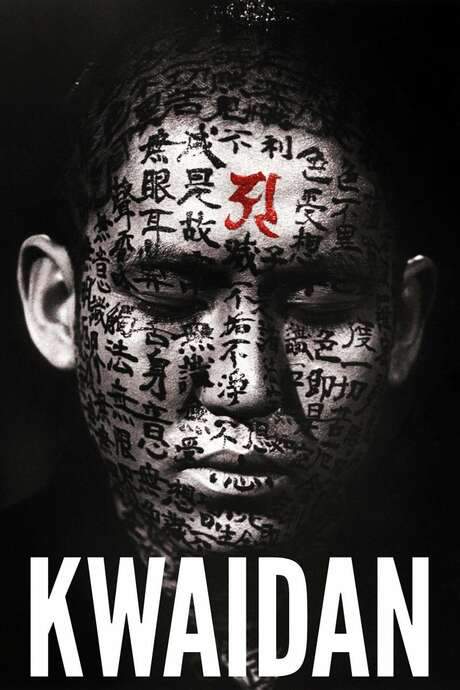
Wuthering Heights (1988) movie poster

Plot Summary

Wuthering Heights (1988) Plot Summary Explained

Release, runtime and language
1988 · 143 mins · Japanese
Directed by
Yoshishige Yoshida
Starring
Yûsaku Matsuda, Eri Ishida, Rentaro Mikuni, Yuko Tanaka, Tatsuo Nadaka, Tarō Shigaki

"When I go to hell, you will be with me," declares Kinu Yamabe, a young woman from the Sacred Mountain. She becomes irresistibly drawn to the low‑born, charismatic Onimaru, whom his father regards as a demon. After Kinu experiences her first period, custom forces her to leave the mountain and take up the duty of a priestess, sealing her fate.

On this page (5)
  1. 1 What happens: full plot
  2. 2 Plot questions answered
  3. 3 Movie threads
  4. 4 Movies like Wuthering Heights
  5. 5 Every angle

Full plot summary · contains spoilers

What Happens in Wuthering Heights: Full Plot Summary

The whole story of Wuthering Heights (1988) explained, from the opening scene to the final frame: every key event, every twist and what it all adds up to. Read it as a quick recap before the sequel, to check a scene you missed, or to finally understand what really happened.

A homeless orphan is found under a bridge by Lord Takamaru Rentaro Mikuni, the patriarch of the wealthy Yamabe family, and is named Onimaru Yûsaku Matsuda. Takamaru brings the boy to Higashi-no-sho, a desolate estate near the volcanic Fire Mountain, where a long tradition of Shinto ritual is led by a priest who worships a serpent god. The estate itself is split into two feuding clans, with the east mansion controlled by Takamaru and the west by Nishinosho, each side vying for influence and prestige within the family’s tightly wound world.

Onimaru grows up alongside Takamaru’s two children, Hidemaru Nagare Hagiwara and Kinu Yuko Tanaka. Hidemaru, entitled and elitist, treats the adopted boy with contempt, resenting the favored status he receives from their father. Kinu, by contrast, forms a bond with Onimaru that blossoms into a complicated affection as the years pass. Onimaru becomes a brooding but charismatic figure, and his intense presence casts a shadow over the family’s already fraught dynamics.

As the children come of age, the family’s world grows more rigid and dangerous. Takamaru reveals a brutal fork in their lineage’s fate: the women of their clan who reach maturity must serve as priestesses at the mountain shrine. Kinu rejects this fate, craving freedom, and in a bid to escape, she marries Mitsuhiko Tatsuo Nadaka, a man from the west mansion who fits her social standing. The night before her wedding, she nonetheless gives in to a moment of temptation with Onimaru, a betrayal that fuels his rising fury and longing. This reckless passion becomes a defining wound in the house’s history, and Onimaru sets out to secure Higashi-no-sho for himself and to win back Kinu.

Hidemaru leaves for the city, where he carves out a life, marries Shino Keiko Itō, and starts a family whose son is Yoshimaru Masato Furuoya. The peace of the estate is shattered when Takamaru is murdered right before Onimaru’s eyes by a band of trespassers, an event that triggers a violent scramble for power and inheritance. In the wake of Takamaru’s death, Hidemaru returns with a new sense of purpose, determined to reclaim his birthright, and his arrival disrupts the fragile balance of Higashi-no-sho as Onimaru’s hold on the estate is challenged.

A few years later, Kinu bears a child while Onimaru has risen in skill and ambition, gaining the favor of the Shogun and a local lordship. Yet for Kinu, love has grown complicated: she remains torn between Mitsuhiko’s gentleness and Onimaru’s consuming obsession. Tragedy deepens when Shino is murdered after a brutal assault by bandits, and Hidemaru melts into a broken alcoholic, eventually wandering into a forbidden village where he is killed. With these losses, Onimaru tightens his grip on Higashi-no-sho, treating Yoshimaru as little more than an indentured pawn under his control.

Tae Eri Ishida, Mitsuhiko’s sister, comes to work at the east mansion and confronts Onimaru with a ruthless honesty, suggesting that his jealousy proves he is “more man than demon.” Her words light a fuse, and Onimaru’s violent response culminates in Tae’s suicide. Simultaneously, the Nishinosho clan is attacked by the same force of bandits that were hired by Onimaru, revealing his complicity in their assault. Mitsuhiko is killed in the ensuing conflict, and Kinu gives birth to their daughter, then dies after a difficult labor. In her final act, she entrusts her daughter with her name, and Onimaru, haunted by the memory of Kinu, exhumed her body to hold on to the past.

Twelve years pass, and the once-demonized Onimaru rules Higashi-no-sho with a heavy, unhinged control. The young Kinu Tomoko Takabe, now grown into a capable if disillusioned young woman, works as an orphaned servant under the increasingly erratic estate lord. She falls for Yoshimaru, now grown and furious at his uncle’s oppression, and the pair secretly plot to overturn Onimaru’s autocratic rule. Yet Onimaru remains haunted by the mother who gave him life and the girl he could never truly possess.

The feud comes to a fever pitch when Onimaru drags the coffin of Kinu’s mother—the body of the elder Kinu—into Higashi-no-sho, intending to desecrate it as part of a final, reckless act. Enraged, the younger Kinu rises against him, and Yoshimaru draws his sword, severing Onimaru’s right hand. The pair expel the tyrant from the estate as Fire Mountain trembles and finally erupts. In the climactic blaze, Onimaru takes the coffin into the crater’s molten maw and vanishes, leaving the future of Higashi-no-sho uncertain as the mountain roars in the background.


Last updated: March 05, 2026 at 18:39

Was this helpful?

Plot questions answered

Wuthering Heights Plot Explained: Your Questions Answered

The questions people ask most about Wuthering Heights (1988): what happens in the confusing scenes, why the characters do what they do, the twists, hidden details and what the ending means. Each answer contains spoilers.

Q1

Why does Kinu marry Mitsuhiko when she loves Onimaru?

Kinu marries Mitsuhiko to escape her predetermined fate as a priestess at the mountain shrine. When she comes of age, her father Takamaru declares that women of their clan must serve as priestesses, a duty Kinu strongly rejects. By marrying Mitsuhiko from the west mansion, she gains a socially acceptable way to leave the estate and avoid this religious obligation. However, her passion for Onimaru remains unresolved, leading her to seduce him the night before her wedding.

Foreshadowing: Earlier in the story, Onimaru and Kinu formed a deep bond during their childhood, establishing the emotional foundation for their complicated relationship.

  • kinu
  • mitsuhiko
  • onimaru
  • marriage
  • priestess
  • escape
Q2

Why does Onimaru exhume Kinu's body after she dies?

Onimaru exhumes Kinu's corpse because his obsession with her transcends death itself. Haunted by the memory of the woman he could never fully possess, Onimaru cannot accept her loss. His consuming love for Kinu has twisted into something destructive and unhealthy, and holding onto her physical remains represents his final, desperate attempt to keep some part of her with him. This act reveals the depth of his psychological torment and unrequited passion.

Foreshadowing: Onimaru's obsession with Kinu began years earlier when she was the only person who showed him warmth, making her loss unbearable for him.

  • onimaru
  • kinu
  • exhume
  • corpse
  • obsession
  • death
Q3

What drives Onimaru's transformation into a ruthless lord?

Onimaru's transformation is driven by multiple factors: his burning desire to win Kinu back after she marries Mitsuhiko, his resentment toward Hidemaru who always treated him with contempt, and his ambition to secure power and respectability within the Yamabe family. When Takamaru is murdered and Hidemaru returns to drive him off the estate, Onimaru's wounded pride and obsessive love harden into ruthless determination. He gains favor with the Shogun and rises to lordship, then returns to seize control of Higashi-no-sho.

Foreshadowing: As a child, Onimaru grew up aware of his lower status as an adopted orphan, while Kinu was the only one who accepted him, creating both his vulnerability and his fierce attachment to her.

  • onimaru
  • transformation
  • power
  • ambition
  • kinu
  • resentment
Q4

What causes the ongoing conflict between the east and west mansions?

The feud between the east and west mansions stems from the estate's division between Takamaru and his brother Nishinosho, who each control one side. Both branches compete for influence and prestige within the Yamabe family. The rivalry intensifies when Onimaru, an adopted outsider, begins vying for control. Ultimately, Onimaru hires bandits to attack the Nishinosho clan, resulting in Mitsuhiko's death and the complete destruction of the west mansion's lineage.

Foreshadowing: The adoption of Onimaru itself began the long bitter feud, as his uncertain status and Takamaru's favor created tension between the houses.

  • east mansion
  • west mansion
  • feud
  • nishinosho
  • takamaru
  • conflict
Q5

Why does Tae commit suicide after confronting Onimaru?

Tae commits suicide after Onimaru assaults her following her direct challenge to his masculinity and authority. As Mitsuhiko's sister, Tae comes to work at the east mansion and confronts Onimaru with ruthless honesty, telling him his jealousy proves he is "more man than demon", suggesting his violent emotions reveal human weakness beneath his demonic reputation. This provocation triggers Onimaru's violent response, and the subsequent shame and trauma lead Tae to take her own life.

Foreshadowing: Tae's words intentionally provoke Onimaru, suggesting she understands exactly which buttons to push to destabilize him.

  • tae
  • suicide
  • onimaru
  • mitsuhiko
  • confrontation
  • assault
Q6

Why does Kinu give her daughter her own name?

Kinu names her daughter after herself in her final act before dying in childbirth, entrusting the child with her identity. This reflects both her desperate desire to preserve some part of herself beyond death and her hope that the daughter might inherit her spirit or freedom. The daughter grows up as an orphan serving under Onimaru's tyrannical rule, eventually becoming a central figure in the rebellion against him.

Foreshadowing: Kinu fought throughout her life against the constraints placed on women of her clan, and passing her name represents one final assertion of identity.

  • kinu
  • daughter
  • naming
  • childbirth
  • identity
  • legacy
Q7

Why does Onimaru bring Kinu's coffin back to Higashi-no-sho?

Onimaru brings Kinu's coffin to Higashi-no-sho as a final, perverse act of possession and desecration. Haunted by his obsessive memory of her, he cannot let go of even her physical remains. This act of dragging the coffin into the estate represents the ultimate violation and the breaking point for the younger Kinu and Yoshimaru, directly triggering the final rebellion.

Foreshadowing: Earlier, Onimaru exhumed Kinu's body, showing he was already incapable of letting her go even in death.

  • onimaru
  • coffin
  • kinu
  • desecration
  • rebellion
  • final confrontation
Q8

What is the significance of the priestess duty at the mountain shrine?

The priestess duty is a central constraint on the women of the Yamabe clan, those who reach maturity must serve at the mountain shrine, effectively giving up their freedom to a religious role. This tradition represents the oppressive, patriarchal structure of the family. Kinu strongly rejects this fate, seeing it as a loss of autonomy, which drives her to marry Mitsuhiko as an escape mechanism. The duty symbolizes the limited roles available to women in this society.

Foreshadowing: Takamaru reveals this tradition when Kinu comes of age, directly prompting her desperate choice to marry and flee.

  • priestess
  • shrine
  • duty
  • freedom
  • tradition
  • kinu
Q9

Why does Hidemaru return to Higashi-no-sho after establishing a life in the city?

Hidemaru returns to Higashi-no-sho after learning of his father Takamaru's murder, driven by a sense of duty to claim his birthright and restore his family's honor. Having left the estate as a younger man to build a life in the city with his wife Shino and son Yoshimaru, the news of his father's death and Onimaru's rising influence prompts him to reclaim his position as the legitimate heir.

Foreshadowing: Hidemaru always resented Onimaru's favored status with their father, making the idea of Onimaru controlling the estate intolerable to him.

  • hidemaru
  • return
  • city
  • birthright
  • inheritance
  • takamaru
Q10

What is the significance of Fire Mountain erupting at the end?

Fire Mountain's eruption serves as the apocalyptic backdrop for Onimaru's final defeat and death. As the young Kinu and Yoshimaru rise against him and sever his hand, the volcano erupts simultaneously, a literal manifestation of the family's turbulent history. Onimaru carries the coffin into the crater's molten maw, disappearing into the volcanic fire, symbolizing his complete destruction and the end of the cursed lineage.

Foreshadowing: The estate is located near Fire Mountain, and the earlier description establishes it as a place of volcanic activity and danger.

  • fire mountain
  • eruption
  • onimaru
  • defeat
  • climax
  • volcanic
Q11

Why does Onimaru hire bandits to attack Nishinosho?

Onimaru hires the same bandits who previously murdered Takamaru to destroy the Nishinosho clan and eliminate Mitsuhiko. This calculated move removes his romantic rival and consolidates his power over the entire estate. By wiping out the west mansion, Onimaru removes the competing branch of the family and gains complete control over Higashi-no-sho, though the violence further cementing his ruthlessness.

Foreshadowing: The bandits who killed Takamaru were established as violent outsiders willing to kill for money, making them available for Onimaru's schemes.

  • onimaru
  • bandits
  • nishinosho
  • mitsuhiko
  • attack
  • conspiracy
Q12

Why does Yoshimaru turn against his uncle Onimaru?

Yoshimaru rebels against Onimaru because he has grown up under his oppressive rule, treated as little more than an indentured servant. Having witnessed and suffered from Onimaru's tyrannical control of Higashi-no-sho for twelve years, Yoshimaru harbors deep anger and resentment. When the final provocation comes, Onimaru desecrating Kinu's coffin, Yoshimaru joins the younger Kinu in the rebellion, drawing his sword to sever Onimaru's hand and expel him from the estate.

Foreshadowing: Onimaru consolidated power after Hidemaru's death by treating Yoshimaru as a pawn, creating the resentment that fuels the rebellion.

  • yoshimaru
  • onimaru
  • rebellion
  • nephew
  • uncle
  • oppression

Movie threads

More Movies Like Wuthering Heights, by Mood & Story

Curated lists built around what makes Wuthering Heights tick: the same mood, the same kind of story or the same emotional payoff. Each list explains why these movies belong together.

Obsessive Gothic Tragedies like Wuthering Heights

Stories where passionate love becomes a destructive, all-consuming curse. Explore movies like Wuthering Heights featuring dark, obsessive love stories set in gothic environments. If you enjoyed the themes of fated passion, class conflict, and tragic outcomes in Wuthering Heights, you'll find similar brooding romance films here.

  • obsessive
  • gothic
  • tragic
  • brooding
  • melancholic
  • fated
  • Tone: dark, tragic, brooding
  • Pacing: steady, methodical
Why these movies?

The story pattern: Narratives in this thread typically follow characters bound by a powerful, often supernatural, attraction that defies reason and societal constraints. The plot unfolds as this obsession spirals into jealousy, vengeance, and violence, culminating in a tragic ending that feels both inevitable and devastating.

Why they belong together: Movies are grouped together based on their shared focus on a specific type of dark, obsessive romance, a gothic atmosphere, and a narrative arc that leads to bleak consequences. They create a similar viewing experience of intense emotional turmoil and tragic grandeur.

Claustrophobic Family Curse Movies like Wuthering Heights

Tales of characters trapped by ancestral legacies they cannot escape. Find films similar to Wuthering Heights that explore themes of inherited duty and inescapable family curses. If you were drawn to the oppressive atmosphere and generational conflict in Wuthering Heights, this collection of tragic family dramas is for you.

  • oppressive
  • claustrophobic
  • tragic
  • fated
  • familial
  • gothic
  • Tone: oppressive, bleak, tragic
  • Pacing: steady, deliberate
Why these movies?

The story pattern: The narrative pattern revolves around a protagonist struggling against a predetermined fate tied to their family name or a specific obligation. The conflict intensifies as attempts to break free only tighten the bonds of the curse, often leading to violence, madness, and the destruction of the family line.

Why they belong together: These films share a deep focus on the theme of inheritance—be it a feud, a duty, or a literal curse—that creates a claustrophobic, oppressive mood. They are united by a sense of inevitability and the tragic consequences of fighting one's ordained path.

If you liked this

Movies Like Wuthering Heights

Similar movies to Wuthering Heights: the same genre, themes or kind of story. Each one comes with its own plot summary, timeline and ending explained.

Browse all movie summaries

Every angle

Wuthering Heights (1988) Explained: Plot, Timeline & Characters

Everything about Wuthering Heights in one place: what happens in the plot summary, the timeline in chronological order, the characters and meaning and a spoiler-free summary. What's After the Movie adds the cast, box office and post-credit scenes.

Coming soon on iOS and Android

The Plot Explained Movie Summary App

Plot summaries, endings explained and timelines on your phone. Catch up on any movie in minutes, save your favorites and never miss a twist again.

Be the first to know when we launch. Your email stays private, always.

Learn more about the app