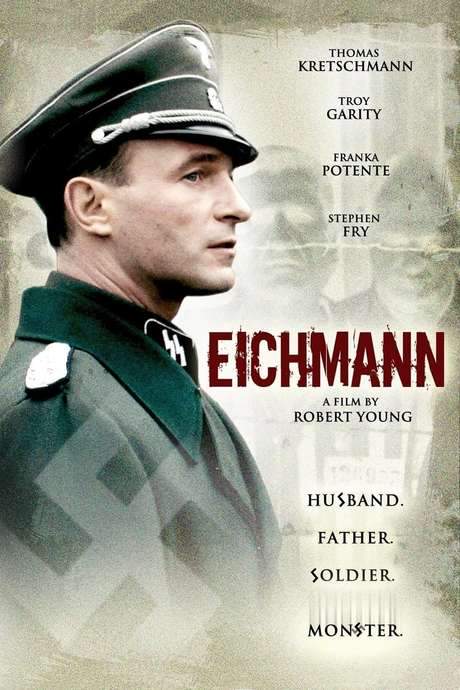
Somewhere in the near future, the action unfolds entirely in the Golan Heights in the days after a peace agreement between Israel and Syria, setting a stage that feels both intimate and isolating. Two parallel assassination teams, driven by a reward and a public trial for the last Nazi, operate under the direction of Danni Hoffman, the handler who connects the missions to a larger, haunting motive. The plot threads run in tandem, offering a patient, rueful march toward a moment of reckoning that never feels linear.
The first pair is led by Vitali and his partner Dudu, a duo drawn from a shared past and bound by a complicated, if tacit, intimacy. [Vitali] is a highly experienced contract killer who carried the burden of war in the Red Army at the same period when Hoffman was in service, a detail that threads their fates together with hidden echoes of history. Dudu, a counterpart in the chase, remains firmly grounded in the practical demands of the mission, their dynamic a quiet counterpoint to the other team’s approach.
In contrast, the second pair consists of Perach and Tik-Tik. Perach brings a steadier hand with weapons and a cooler, more deliberate presence, while Tik-Tik’s involvement in the pursuit intensifies the chase in ways that tilt between stubborn persistence and impulsive risk. The balance between these two figures creates a tension that mirrors the film’s broader mood—a blend of calculation and caprice that never settles into familiar genre rhythms.
As the two pairs press on, the police enter the frame with their own objective: to bring the Nazi to trial before the public eye. They imprison him, only to watch the situation shift as the suspect escapes from the vehicle, the escape unfolding through a moment of inattention that feels almost anticlimactic yet devastating in its consequence. The clash between vigilant pursuit and unpredictable odds becomes a through-line that threads the human elements of pursuit, memory, and justice across the landscape.
The film’s tone leans into the surreal, even within a near-future setting. Characters don’t always speak or act like ordinary people, and the overall atmosphere slips toward something apocalyptic. The world feels sparse and enigmatic: very few people appear on screen, and the environments—tools, vehicles, and buildings—don’t anchor themselves to any clear 21st-century Israel. This deliberate ambiguity invites scrutiny of how memory, ideology, and revenge coexist when the usual signposts of time and place are deliberately de-emphasized.
In this dreamlike, almost otherworldly texture, the story keeps its heart in the mystery of what motivates each team, how the pursuit of the Nazi becomes a measure of the characters themselves, and whether the promise of a public trial can ever truly capture a past that refuses to stay confined. The result is a film that feels both intimate and grotesquely expansive, a quiet meditation on history's shadows and the uneasy moral weather of a region trying to navigate peace.
> "The past has a stubborn way of returning," a line that could sit beside the film’s mood, if one were to quote it, but the story resists simple answers and invites viewers to linger in the uncertainty.