Plot Explained Spoilers guaranteed!
Plot Explained

Browse by genre

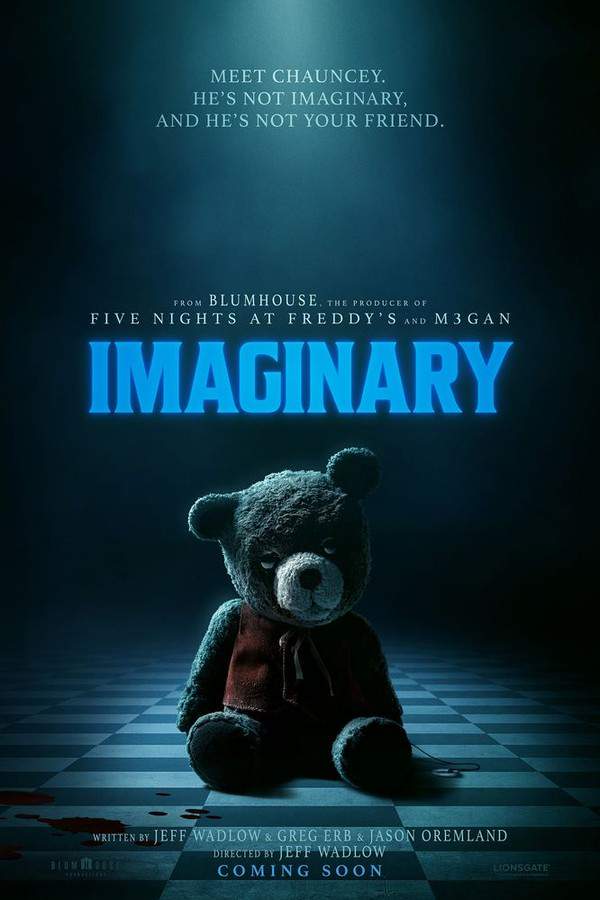
Imaginary (2024) movie poster

Ending Explained

Imaginary (2024) Ending Explained – Final Scene & Meaning

Release, runtime and language
2024 · 1 h 44 m · English
Echo score 30
Loading streaming availability…
Directed by
Jeff Wadlow
Starring
DeWanda Wise, Veronica Falcón, Tom Payne, Betty Buckley, Dane DiLiegro, Taegen Burns
Budget
$13M

A family’s return to their childhood home stirs up a dark past when a young girl becomes captivated by an antique teddy bear named Chauncey. As she spends more time playing with him, playtime takes a sinister turn, blurring the lines between reality and nightmare. The family finds themselves facing a descent into madness as the boundaries of what is real become increasingly unclear.

On this page (7)
  1. 1 Where to watch
  2. 2 What happens at the end
  3. 3 Final events in order
  4. 4 Ending questions answered
  5. 5 Movie threads
  6. 6 Movies like Imaginary
  7. 7 Every angle
Loading streaming availability…

Ending explained · contains spoilers

What Happens at the End of Imaginary?

How Imaginary (2024) ends, what the final scene means, which earlier moments set it up and how to read the ending if the film leaves it open. The full ending explained, with every spoiler.

At the end of The Imaginary, Amanda and Rudger share a heartfelt reunion, knowing that their bond is strong, even if it is fragile and temporary. Throughout the story, Rudger, an imaginary friend born from Amanda’s loneliness and sadness, fights to stay with her as she begins to forget him. When Amanda wakes up in the hospital and starts to remember her friend, she gradually reclaims her imagination. Rudger, empowered by her renewed memories, confronts Mr. Bunting—an evil Imaginary hunter—who has been trying to capture and eliminate Imaginaires like Rudger. As Amanda’s mind opens up to her imagination once more, she uses her vivid creativity to fight Bunting, who, in turn, tries to trap them both in his dark, imagination-consuming world. In the final moments, Elizabeth, Amanda’s mother, joins the battle, recalling her own childhood Imaginary friend, Fridge, with whom she had lost contact. Elizabeth calls upon Fridge for help, and together with Rudger, they manage to weaken Bunting’s grip. Fridge’s intervention causes him to turn to dust, symbolizing the destruction of Bunting’s corrupted power over imagination. The film concludes with Amanda and Rudger reconnecting emotionally, their bond still alive despite the knowledge that Rudger will eventually disappear as Amanda’s memories fade. Yet, they promise to cherish the time they have left, knowing that their love and friendship will remain forever in their hearts, even if Rudger’s form eventually dissolves. It’s a touching reminder of the transient yet timeless nature of imagination and the importance of holding onto what truly matters in the moment.

Last updated: June 25, 2025 at 08:44

Was this helpful?

The last 4 events

How Imaginary Ends: The Final Events in Order

The last events of Imaginary (2024) in chronological order, the run-up to the ending explained above. The complete timeline has all 15 events, scene by scene.

Open the full timeline
  1. Exploring Chauncey's Origins

    In a pivotal moment, Gloria reveals to Taylor that Chauncey was once Jessica’s imaginary friend, shedding light on the dangers of imaginary companions when neglected or abandoned. This revelation prompts Jessica to delve deeper into her past.

  2. Entering the Never Ever Realm

    Jessica, Alice, and Taylor journey into the eerie Never Ever realm, where they confront Jessica's concealed memories. It is here they learn about Jessica’s past encounter with Chauncey and the tragic fate of her father.

    Where
    Never Ever realm
  3. Jessica's Desperate Encounter

    In a terrifying climax, Jessica must evade Chauncey’s lethal grasp. In a moment of instinct and desperation, she stabs Chauncey in the eye, managing to protect her daughter albeit temporarily.

  4. Aftermath and Seeking Safety

    After their traumatic experiences, the family seeks refuge in a hotel for safety. However, their relief is short-lived when they encounter a child with a teddy bear resembling Chauncey, triggering a decision to move again in search of a semblance of normalcy.

Ending questions answered

Imaginary Ending: Your Questions Answered

The questions people ask most about the ending of Imaginary (2024): what the final scene means, how the twist works, what happens to each character and how to read the ending. Each answer contains spoilers.

Q1

What happens to Rudger at the end of the movie?

Rudger survives the battle with Mr. Bunting but remains aware that he will eventually fade away as Amanda's memories of him naturally diminish over time. Despite this inevitable fate, he and Amanda share a emotional reunion, choosing to cherish the time they have left together rather than grieve the future loss. Their bond remains strong, and they promise to hold onto their love and friendship forever, even as Rudger's physical form may eventually dissolve.

Foreshadowing: Earlier scenes establish that Imaginaires only exist as long as children remember them, setting up this bittersweet resolution.

  • rudger
  • amanda
  • imaginary friend
  • ending
  • death
  • fade away
Q2

Who is Mr. Bunting and what happens to him?

Mr. Bunting is revealed to be an evil Imaginaire hunter who has spent his existence capturing and eliminating Imaginaires, imaginary friends created by lonely children. He tries to trap Amanda and Rudger in his dark, imagination-consuming world. However, when Elizabeth recalls her own childhood Imaginaire Fridge, the combined power of Rudger and Fridge weakens Bunting's grip, causing him to turn to dust and destroying his corrupted power over imagination.

Foreshadowing: Bunting's presence throughout the film as a mysterious, threatening figure foreshadows his role as the primary antagonist.

  • mr bunting
  • antagonist
  • villain
  • imaginaire hunter
  • defeated
Q3

Why does Amanda's mother Elizabeth join the fight against Bunting?

Elizabeth joins the battle because she remembers her own childhood Imaginaire friend named Fridge, whom she had forgotten for decades. When Amanda's imagination opens up and reconnects with Rudger, Elizabeth's repressed memories of Fridge are also triggered. This personal connection to the world of Imaginaires motivates her to actively participate in the fight, calling upon Fridge for assistance against Bunting.

Foreshadowing: The film hints at Elizabeth's connection to the imaginary world when she shows familiarity with the concept of Imaginaires and appears emotionally affected by Amanda's situation.

  • elizabeth
  • mother
  • fridge
  • childhood memory
  • imaginaire
Q4

What does the final scene with the new child and teddy bear mean?

The final scene shows a new child arriving at the same house with a similar teddy bear, implying that the cycle of horror is not truly broken. This suggests that the sinister force represented by Chauncey and the predatory Imaginaires like Bunting will continue to target vulnerable children in this location. The ambiguity leaves viewers with a lingering sense of unease, hinting that the horror may begin again with a new victim.

Foreshadowing: The opening scenes establish the house as a place where dark imaginative forces lurk, making the final callback to a new child a deliberate narrative loop.

  • final scene
  • new child
  • teddy bear
  • cycle
  • horror continues
  • ambiguous ending
Q5

Why does Amanda forget Rudger in the story?

Amanda begins to forget Rudger naturally as children outgrow their imaginary friends, a core rule established about Imaginaires in the film. As she spends less time in her imaginative world and more in reality, her memories of Rudger fade, causing him to become weak and translucent. This forgetting is not intentional but a normal part of growing up that threatens Rudger's very existence.

Foreshadowing: The film establishes early on that Imaginaires fade when children stop believing or remembering them, explaining Amanda's gradual forgetting.

  • amanda forgets rudger
  • memories
  • imagination
  • growing up
Q6

What happens to Chauncey the teddy bear in the end?

The ending focuses more on Rudger's fate and the defeat of Mr. Bunting rather than specifically showing Chauncey's ultimate fate. Chauncey represents the sinister side of imagination that preys on children, but the film's conclusion prioritizes the emotional reunion between Amanda and Rudger while leaving the broader threat of Chauncey and similar evil Imaginaires unresolved.

Foreshadowing: Chauncey's sinister behavior throughout the film establishes him as a representation of corrupted imagination, making his ambiguous fate consistent with the film's unresolved horror elements.

  • chauncey
  • teddy bear
  • villain
  • sinister
  • imagination
Q7

Why is Rudger considered an Imaginaire and what does that mean?

Rudger is an Imaginaire, a supernatural being created from a child's loneliness and imagination. Specifically, he was born from Amanda's sadness and isolation when she was struggling emotionally. Unlike regular imaginary friends that fade naturally, Imaginaires are more tangible and can be hunted and destroyed by beings like Mr. Bunting. Their existence is tied directly to the child's memory and emotional connection.

Foreshadowing: The film's mythology establishes that Imaginaires are born from children's emotional needs, particularly loneliness and sadness.

  • imaginaire
  • rudger
  • supernatural
  • born from loneliness
Q8

What is the overall message or meaning of the ending?

The ending delivers a poignant message about the transient yet meaningful nature of childhood imagination and friendship. It suggests that while imaginary friends eventually fade as children grow up, the emotional bonds and love created through imagination remain forever valuable. The film encourages embracing the present and treasuring meaningful connections, even when knowing they may not last forever. However, the lingering final scene also warns that childhood vulnerability to dark forces remains an ongoing cycle.

Foreshadowing: Throughout the film, the theme of cherishing temporary but meaningful connections is reinforced through Rudger's struggle to survive against fading.

  • meaning
  • message
  • theme
  • imagination
  • love
  • friendship
  • transient
Q9

Is Rudger dead at the end or does he survive?

Rudger does not die in the traditional sense. He survives the battle with Mr. Bunting and remains alive at the film's conclusion. However, his existence remains temporary because he knows he will eventually fade as Amanda's childhood memories naturally over time. The ending shows him choosing to diminish focus on the present moment with Amanda rather than grieving his inevitable future disappearance.

Foreshadowing: The film's mythology about Imaginaires fading as children grow establishes that Rudger's eventual disappearance is a natural process, not a death from the battle.

  • rudger alive
  • survives
  • fate
  • alive or dead
Q10

Why does Mr. Bunting hunt and capture Imaginaires?

Mr. Bunting is portrayed as an evil Imaginaire hunter whose purpose is to eliminate Imaginaires from existence. The film suggests he feeds on or gains power from consuming imagination itself. His motivation appears to be the destruction of childhood imagination and innocence, positioning him as a dark force that preys on the special bond between children and their imaginary friends.

Foreshadowing: Bunting's menacing presence and his attempts to trap Amanda and Rudger in his dark world establish his predatory nature toward Imaginaires.

  • mr bunting
  • motivation
  • hunt
  • eliminate
  • imagination hunter

Movie threads

More Movies Like Imaginary, by Mood & Story

Curated lists built around what makes Imaginary tick: the same mood, the same kind of story or the same emotional payoff. Each list explains why these movies belong together.

Movies with evil toys like Imaginary

Stories where an innocent childhood toy or object becomes a conduit for sinister evil. If you liked Imaginary and its sinister teddy bear Chauncey, you'll find more chills here. This list features movies where childhood toys and objects become sources of supernatural horror, creating an unsettling blend of innocence and evil. Discover similar stories of haunted dolls, malevolent games, and playthings that turn deadly.

  • sinister
  • unsettling
  • paranoid
  • childlike horror
  • supernatural threat
  • oppressive
  • Tone: dark, sinister, unsettling
  • Pacing: steady, escalating
Why these movies?

The story pattern: These narratives typically center on a family, often with a child at the heart of the mystery. The plot unfolds as a seemingly benign object reveals its dark nature, leading to a investigation into a haunted past or a malevolent entity. The conflict often tests the sanity of the adults while the child remains dangerously enthralled.

Why they belong together: Movies in this thread are grouped by their core premise: a childhood object as the antagonist. They share a specific kind of dread that comes from the corruption of innocence, a steady pacing that builds paranoia, and a tone that is dark, sinister, and psychologically unsettling.

Psychological horror movies about blurred reality like Imaginary

Character-driven horror where the boundaries between nightmare and reality completely dissolve. Fans of Imaginary's descent into madness and its ambiguous nightmare sequences will appreciate this selection. These films explore similar themes of fractured sanity, where reality becomes unreliable and characters face supernatural or psychological threats that are difficult to define. Find more movies that challenge perception and create deep, lingering unease.

  • psychological
  • unsettling
  • paranoid
  • nightmarish
  • anxious
  • claustrophobic
  • Tone: dark, tense, ambiguous
  • Pacing: steady, methodical
Why these movies?

The story pattern: The narrative follows a protagonist or family group as they confront a phenomenon that challenges their grasp on reality. The story methodically dismantles the character's sense of security, often involving repressed memories, mental illness, or a subtle supernatural influence. The journey is inward, focusing on the psychological degradation of the characters as much as the external threat.

Why they belong together: These films are united by their core thematic focus on the fragility of reality. They share a high-tension, heavy emotional weight, and a dark tone that prioritizes psychological dread over visceral horror. The pacing is typically steady, building a profound sense of anxiety and paranoia that leaves a lasting impact.

If you liked this

Movies Like Imaginary

Similar movies to Imaginary: the same genre, themes or kind of story. Each one comes with its own plot summary, timeline and ending explained.

Browse all movie summaries

Every angle

Imaginary (2024) Explained: Plot, Ending, Timeline & Characters

Everything about Imaginary in one place: what happens in the plot summary, the timeline in chronological order, the characters and meaning, the ending explained and a spoiler-free summary. What's After the Movie adds the cast, box office and post-credit scenes.

Coming soon on iOS and Android

The Plot Explained Movie Summary App

Plot summaries, endings explained and timelines on your phone. Catch up on any movie in minutes, save your favorites and never miss a twist again.

Be the first to know when we launch. Your email stays private, always.

Learn more about the app