Plot Explained Spoilers guaranteed!
Plot Explained

Browse by genre

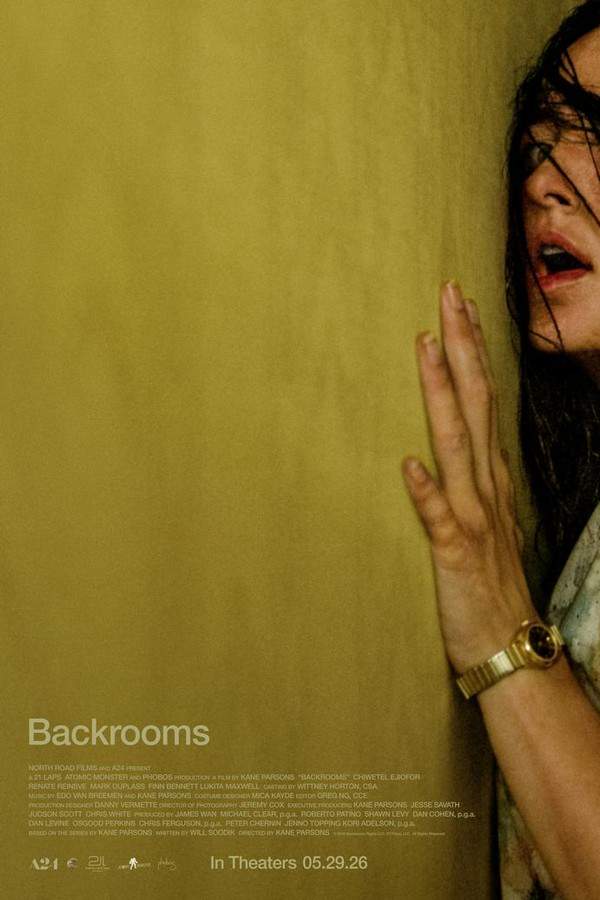
Backrooms (2026) movie poster

Plot Summary

Backrooms (2026) Plot Summary & Ending Explained

Release, runtime and language
2026 · 1 h 30 m · English
Echo score 75
Directed by
Kane Parsons
Starring
Chiwetel Ejiofor, Avan Jogia, Renate Reinsve, Mark Duplass, Katharine Isabelle, Finn Bennett
Budget
$10M

When furniture salesman Clark uncovers a hidden portal in his store’s basement, he becomes trapped in an alternate reality known as the Backrooms. His therapist ventures in to rescue him, only to find a shifting, seemingly infinite maze of abandoned office spaces. As time blurs, a nameless, inhuman presence lurks just beyond sight.

On this page (5)
  1. 1 What happens: full plot
  2. 2 Plot questions answered
  3. 3 How it ends
  4. 4 Movie threads
  5. 5 Every angle

Full plot summary · contains spoilers

What Happens in Backrooms: Full Plot Summary

The whole story of Backrooms (2026) explained, from the opening scene to the final frame: every key event, every twist and what it all adds up to. Read it as a quick recap before the sequel, to check a scene you missed, or to finally understand what really happened.

In June 1990, a researcher named Naren Warne from the Async Research Institute becomes separated from his group and vanishes into a parallel dimension known as the Backrooms—a labyrinth of dull yellow rooms, flickering fluorescent lights, endless hallways, and oddly malformed furniture. The footage of his ordeal is recovered and later shown to Async scientists on monitors, hinting at something real yet unknowable beyond ordinary reality.

Clark, a failed architect and the owner of a struggling furniture store, is trying to cope with his alcoholism and a crumbling marriage. [Chiwetel Ejiofor] plays him with quiet weariness, giving weight to a life that seems to circle around unfinished plans and missed chances. He begins sessions with a therapist, Mary Kline, who is portrayed by [Renate Reinsve]. Mary is a professional grappling with her own past—trauma from the demolition of her childhood home and her agoraphobic mother’s institutionalization—and she becomes a counterpoint to Clark’s stubborn fear of facing responsibility. At home and at work, Clark’s world grows increasingly unstable: the store’s nights feel charged with a strange energy, the lights flicker without mercy, and Clark’s television behaves as if it has a will of its own.

Clark’s routine is further destabilized when his assistant manager Kat and her boyfriend Bobby record a television commercial featuring Clark in the store’s pirate mascot costume. The seemingly low-key stunt spirals into a doorway to the extraordinary: one night, after inspecting a mysterious glowing slit in the wall near the breaker box, Clark falls through and lands back in the Backrooms. He finds Naren Warne’s belongings and narrowly escapes back to the store as an unseen entity closes in, with an Async scientist, Phil, watching the whole sequence through a surveillance camera.

Seeking proof, Clark brings Kat and Bobby into the Backrooms to document their discoveries. Bobby ventures down a steep, treacherously tilted corridor and is seized by an unseen force; Clark and Kat chase after him, and the two become separated in a maze of disorienting spaces. Clark moves through increasingly disordered and uncanny environments and is eventually pursued by two humanoid figures that force him into a dead end. He hears Kat calling for him and, in a desperate moment, places the camera down to search for her, only for something to lift the camera away as Kat screams behind him.

Meanwhile, Mary receives a cryptic answering machine message from Clark, who explains that he’s choosing to stay in the Backrooms and will not be returning. Back in the living room, Phil watches a family TV and recognizes Clark in the furniture-store commercial. Driven by concern, Mary goes to the store and steps into the Backrooms herself, drawn by a need to understand what Clark has become and whether there is any chance of help. Inside, she discovers a crude mural with enigmatic text and a presence resembling the one that dragged Bobby away. An apparently unstable Clark arrives, trying to calm Mary before choking her unconscious when he fears the approaching entity.

Mary awakens to find herself tied to a chair in a dining-room-like space, opposite Clark and three motionless, imperfect simulacra of humans. They sit impassively as Clark cuts open the scene with a brutal display—stabbing one figure and revealing they’re made of an edible white substance—before unveiling Kat’s severed head in a refrigerator. Clark demands that Mary continue their therapy sessions, but she confronts him with the truth that his wife left him because he cannot take responsibility for his failures. Just as she starts to free herself, a towering, deformed simulacrum of Clark—dressed as the pirate mascot—arrives. The creature attacks, mortality collides with memory, and Mary is forced to flee through the chaotic, surreal spaces toward a compromised replica of the furniture store. Cornered, she fights back with a chunk of concrete from her childhood, stunning the monster long enough for an Async gas trap to activate. The creature is subdued, and Mary is taken to a research facility for examination.

Recovered and resilient, Mary is placed in an interrogation room where she meets Phil. He explains that Async originally built magnetic resonance imaging machines and, in their pursuit of knowledge, discovered the Backrooms, which have since become their main research focus. When she asks if she can go home, Phil’s response is deliberately noncommittal, suggesting that the decision is not his to make. Inside the Backrooms, the spaces are shaped by Mary’s memories and trauma, culminating in a final, eerily similar interrogation room where a deformed version of Mary sits, still and silent.

This story unfolds with a measured, observational tone that highlights the fragility of ordinary life when confronted with a realm that tests the boundaries of perception, memory, and control. The film weaves together personal crisis, theoretical mystery, and a creeping sense of inevitability as its characters confront what happens when reality itself frays and the line between therapy, science, and nightmare becomes dangerously thin.
Last updated: July 09, 2026 at 10:33

Was this helpful?

Plot questions answered

Backrooms Plot Explained: Your Questions Answered

The questions people ask most about Backrooms (2026): what happens in the confusing scenes, why the characters do what they do, the twists, hidden details and what the ending means. Each answer contains spoilers.

Q1

Why does Clark decide to stay in the Backrooms instead of returning?

Clark chooses to stay because he has given up on his failing life outside. His marriage has crumbled, his furniture store is struggling, and he cannot face taking responsibility for his failures. In the Backrooms, he escapes the consequences of his reality. Mary confronts him directly about this during their final therapy session in the alternate space, telling him his wife left because he cannot take responsibility for his mistakes.

Foreshadowing: Earlier scenes show Clark's mounting instability at home and work, with flickering lights and a television that seems to behave erratically, hinting at his psychological detachment from reality.

  • clark
  • backrooms
  • choice
  • trapped
  • escape
Q2

What happens to Bobby when he's dragged away in the Backrooms?

Bobby is seized by an unseen entity while exploring a steeply tilted corridor. Clark and Kat chase after him, but they become separated in the disorienting maze. The camera Bobby was carrying is later lifted away by something as Kat's scream is heard, suggesting he was taken or killed by one of the Backrooms' entities.

Foreshadowing: The earlier discovery of Naren Warne's belongings establishes that others have been attacked and unable to escape the Backrooms.

  • bobby
  • entity
  • dragged
  • backrooms
  • death
Q3

What are the human-like figures Clark shows Mary in the Backrooms?

Clark shows Mary three motionless, imperfect human simulacra sitting at a dining table. These are warped creations of the Backrooms itself, distorted humanoid forms that Clark has somehow accumulated or that the space has generated. He stabs one to prove they're made of an edible white substance, demonstrating how the Backrooms warps and replicates human forms into grotesque approximations.

Foreshadowing: The narrative establishes that the Backrooms can create distorted versions of reality, with spaces shaped by memory and perception.

  • simulacra
  • figures
  • humans
  • backrooms
  • distorted
Q4

Why does Clark attack Mary after she enters the Backrooms to find him?

Clark attempts to calm Mary when he arrives, but then chokes her unconscious when he senses an approaching entity. However, his behavior also reflects his deteriorating mental state, he has fully embraced the Backrooms as his new reality and becomes paranoid and aggressive. He later demands Mary continue their therapy sessions, showing he tries to maintain control over her even in this distorted space.

Foreshadowing: Clark's earlier sessions with Mary established his pattern of avoiding responsibility and truth, which escalates as he becomes more detached from reality.

  • clark
  • mary
  • attack
  • choke
  • violent
Q5

What is Async and why are they studying the Backrooms?

Async is a research institute that originally built magnetic resonance imaging machines. While developing that technology, they discovered the Backrooms, a parallel dimension that has since become their primary research focus. They monitor the Backrooms through surveillance and have developed tools like gas traps to capture entities. Their scientist Phil watches events unfold and eventually helps rescue Mary, though he remains vague about whether she can ever leave.

Foreshadowing: The opening scene with Naren Warne's 1990 footage establishes that Async has been studying the Backrooms for decades.

  • async
  • research
  • mri
  • facility
  • scientists
Q6

Is Mary still trapped in the Backrooms at the end of the movie?

The ending strongly implies Mary remains trapped. After being rescued by Async and interrogated, the final scene shows the Backrooms producing a space shaped by Mary's memories and trauma, a copied interrogation room with a deformed version of Mary sitting silently. This suggests the version of Mary that escaped was either not real or the real Mary is now trapped in her own personalized section of the Backrooms.

Foreshadowing: Phil's vague, noncommittal response when Mary asks if she can go home hints that her fate is sealed.

  • mary
  • ending
  • trapped
  • backrooms
  • fate
Q7

Why does the pirate mascot costume become a monster in the Backrooms?

The pirate mascot costume transforms into a towering, deformed creature because the Backrooms manifests its spaces based on memory and perception. Clark associates the costume with his failing business and personal humiliation, so the Backrooms warps it into a monstrous version, a distorted reflection of his shame and inadequacy. The creature attacks and bites Clark before pursuing Mary through the chaotic spaces.

Foreshadowing: The commercial filming scene establishes Clark's embarrassment and resentment about wearing the mascot costume for his struggling store.

  • pirate
  • mascot
  • monster
  • creature
  • transformed
Q8

Why does the Backrooms look like Mary's childhood home at the end?

The Backrooms is revealed to be shaped by the memories and trauma of the people inside it. Earlier spaces reflected Clark's alcoholism and failed life. At the end, the environment shifts to reflect Mary's trauma, specifically her childhood home being demolished and her agoraphobic mother's institutionalization. The space creates a copy of her childhood, complete with the concrete chunk she uses to fight the monster, which originates from those memories.

Foreshadowing: Mary's sessions reveal her trauma about her childhood home being torn down and her mother's institutionalization, establishing the Backrooms' connection to personal memory.

  • mary
  • memories
  • childhood
  • home
  • backrooms
Q9

What happens to Kat after she gets separated from Clark in the Backrooms?

After separating from Clark during the chase, Kat is never seen alive again. Clark later reveals her severed head in a refrigerator to Mary during their twisted therapy session, showing she was killed by one of the Backrooms' entities. This confirms Kat's fate is death, along with Bobby's earlier capture.

Foreshadowing: Kat's scream heard as the camera is lifted away foreshadows her death.

  • kat
  • severed head
  • death
  • refrigerator
  • killed
Q10

Why is Naren Warne's 1990 footage important to the story?

Naren Warne's 1990 footage serves as proof that the Backrooms is real and has existed for decades. As an Async researcher, his recorded ordeal establishes that Async has known about the Backrooms long before Clark's experience and has been studying it. His belongings found by Clark provide a connection between the two timelines, showing the entities and dangers have persisted across years of exploration.

Foreshadowing: The opening scene deliberately presents this footage to establish the Backrooms as a documented phenomenon, grounding the horror in pseudo-scientific reality.

  • naren
  • warne
  • footage
  • 1990
  • async

Ending explained

What Happens at the End of Backrooms?

How Backrooms (2026) ends, in short: the final scene, the last twist and what it means for the characters. The full ending explained, with every spoiler, lives on its own page.

Read the full ending explained

The ending of Backrooms reveals the terrifying true nature of the labyrinthine dimension that has trapped Clark and Mary. When Mary finally locates Clark, he has been fundamentally changed by his time in the Backrooms, and he reveals that this place is essentially "everything that has ever been"—an imperfect copy of the real world. This revelation explains the unsettling beings known as the Still Life, human-like figures that appear almost real but possess wrong, disturbing details. The Backrooms mimics locations from the real world, including Clark's furniture store and Mary's childhood home, creating a twisted reflection of reality.

The climax sees Mary trapped at a dinner table with Clark and several Still Life, forced to participate in a tense role-play of Clark's failed marriage. The situation escalates when a grotesque, ten-foot-tall Still Life version of Clark himself—wearing a pirate suit—appears and brutally kills the original Clark. Mary flees deeper into the Backrooms, eventually stumbling into what she believes is the real-world furniture store, only to realize it is another imitation. Just as Pirate Clark closes in, Mary encounters scientists from Async, the mysterious company that has been studying the Backrooms. They rescue her and capture the monstrous Still Life, bringing both back to the real world.

Continue reading the ending (1 more paragraphs)

In the film's final moments, Mary meets with Phil, an Async scientist who admits he does not know what will happen to her now that she has experienced the Backrooms. The movie closes with a haunting shot of a Still Life version of Mary sitting in a poorly replicated version of the same room, suggesting that the Backrooms has already begun copying her. Director Sam Parsons has confirmed that the events are not a dream, but he intentionally leaves the ending ambiguous, inviting audiences to interpret the meaning for themselves while setting up potential sequels involving the captured Pirate Clark and the newly formed Still Life Mary.

Backrooms ending explained in full

Movie threads

More Movies Like Backrooms, by Mood & Story

Curated lists built around what makes Backrooms tick: the same mood, the same kind of story or the same emotional payoff. Each list explains why these movies belong together.

Liminal horror movies like Backrooms

Characters trapped in endless, unnatural places that defy reality. Discover movies like Backrooms that trap characters in endless, unnatural spaces. If you enjoyed the psychological dread of the Backrooms' shifting maze, you'll find similar stories of disorientation and existential terror in these recommended films.

  • claustrophobic
  • disorienting
  • paranoid
  • unsettling
  • existential dread
  • tense
  • Tone: dark, unsettling
  • Pacing: steady, deliberate
Why these movies?

The story pattern: Stories typically follow characters who become lost or trapped in a vast, unnatural environment that should not exist. The narrative unfolds as a desperate struggle for survival and sanity against an uncaring, maze-like setting, often with a mysterious force or entity lurking within.

Why they belong together: These films are grouped by their shared setting—a liminal space that is both mundane and terrifyingly infinite. They create a cohesive experience of psychological dread, claustrophobia, and the unsettling feeling of being watched in a place that defies all logic.

Psychological descent stories like Backrooms

Stories where characters unravel under extreme psychological pressure and trauma. Explore movies similar to Backrooms where characters face a complete psychological breakdown. If you liked Clark and Mary's mental unraveling in the Backrooms, you'll find more intense stories of trauma, addiction, and reality collapse here.

  • psychological horror
  • tense
  • unsettling
  • existential dread
  • paranoid
  • oppressive
  • Tone: dark, tense
  • Pacing: steady
Why these movies?

The story pattern: The narrative follows a protagonist's journey into madness, often starting from a point of stability that quickly erodes. The story structure mirrors their mental collapse, becoming increasingly disjointed and unreliable as they confront past traumas and unbearable present circumstances.

Why they belong together: These films share a core focus on a character's psychological destruction. They are united by heavy emotional weight, dark tones, and complex narratives that prioritize the internal horror of losing one's mind over external threats.

Every angle

Backrooms (2026) Explained: Plot, Ending, Timeline & Characters

Everything about Backrooms in one place: what happens in the plot summary, the timeline in chronological order, the characters and meaning, the ending explained and a spoiler-free summary. What's After the Movie adds the cast, box office and post-credit scenes.

Coming soon on iOS and Android

The Plot Explained Movie Summary App

Plot summaries, endings explained and timelines on your phone. Catch up on any movie in minutes, save your favorites and never miss a twist again.

Be the first to know when we launch. Your email stays private, always.

Learn more about the app