Plot Explained Spoilers guaranteed!
Plot Explained

Browse by genre

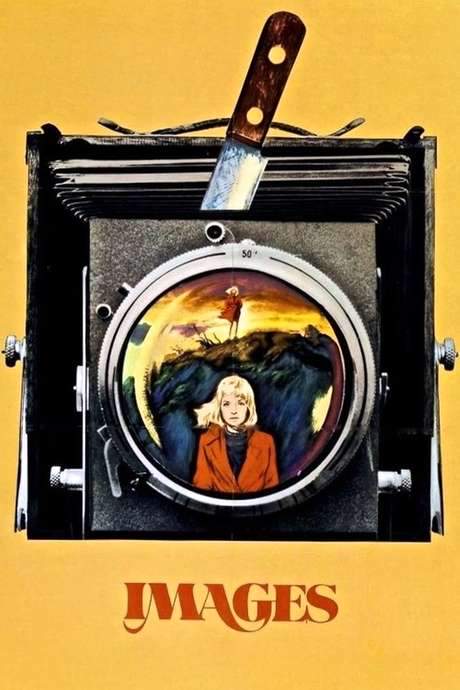
Images (1972) movie poster

Plot Summary

Images (1972) Plot Summary Explained

Release, runtime and language
1972 · 101 mins · English
Directed by
Robert Altman
Starring
Marcel Bozzuffi, René Auberjonois, Susannah York, Barbara Baxley, Hugh Millais, Cathryn Harrison

During a holiday in Ireland, a pregnant children’s author begins to experience unsettling extra‑sensory phenomena. As her mental state unravels, she becomes increasingly paranoid, hallucinates, and sees a doppelgänger that threatens her perception of reality. The film explores the blurred line between imagination and madness, immersing the viewer in her disorienting visions and the tension between what is real and what is imagined.

On this page (6)
  1. 1 Where to watch
  2. 2 What happens: full plot
  3. 3 Plot questions answered
  4. 4 Movie threads
  5. 5 Movies like Images
  6. 6 Every angle

Where to watch

Where to Watch Images (1972)

Where can you watch Images? Stream, rent or buy it in the US, including on Amazon Video: current JustWatch availability with up-to-date prices.

Streaming availability powered by JustWatch

Full plot summary · contains spoilers

What Happens in Images: Full Plot Summary

The whole story of Images (1972) explained, from the opening scene to the final frame: every key event, every twist and what it all adds up to. Read it as a quick recap before the sequel, to check a scene you missed, or to finally understand what really happened.

Cathryn, Susannah York a wealthy children's author living in a London home, is jolted one night by a series of disturbing phone calls. A mocking female voice insinuates that her husband, Hugh, is having an affair. When Hugh returns, he tries to comfort her, but Cathryn is confronted by a figure who seems to be his double, only to watch this visitor morph back into Hugh. The encounter leaves her shaken and increasingly convinced that unseen forces are invading her life, destabilizing both her marriage and her grip on reality.

Seeking respite, the weary couple escape to an isolated cottage in the Irish countryside. Cathryn hopes the quiet will let her finish her book and shoot illustrations, yet the nightmare follows her. As they settle in, she hears her name whispered and sees apparitions that blur the line between the living and the dead. One lunchtime, she watches Hugh pass through the kitchen and transform into René, her late lover, a figure who continues to speak to her and haunt the rooms they share. The boundary between friend, lover, and husband becomes a shifting mirage that Cathryn cannot quite trust.

The tension deepens when Marcel, the neighbor and ex-lover, arrives with his adolescent daughter Susannah Cathryn Harrison for a visit. Cathryn finds herself slipping between reality and fantasy as the men—Hugh, René, and Marcel—seem to interchange before her eyes. René taunts her, handing her a shotgun and urging her to kill him if she truly wants him gone; in a confrontation that turns deadly, she shoots him in the abdomen. Susannah, startled by the scene, discovers Cathryn standing over the ruined camera and bones of a life she thought she understood, insisting the gun fired by accident as she moved it.

Seeking solace, Cathryn wanders to a nearby waterfall, a place where her doppelgänger appears with unsettling regularity. She returns to the cottage to find Marcel waiting inside and soon learns the shocking truth: the old pattern repeats itself, and Marcel is killed in a brutal moment when Cathryn stabs him with a kitchen knife. An elderly manwalking his dog passes by, and Cathryn invites him in for coffee, even as the living room seems to replay with Marcel’s corpse. The old man declines and leaves, while Susannah later visits and hints that Marcel was not home when she woke, deepening Cathryn’s anxiety that she may have killed Marcel.

That night, Susannah remarks that she will grow to be just like Cathryn, and the two share a quiet tea before Cathryn drives Susannah home. On a desolate stretch of road, Cathryn sees her doppelgänger again, trying to signal for a ride. When she returns to the house, both René and Marcel’s bodies have reappeared in the living room. Cathryn drives away from the cottage, but the encounter with the spectral double continues to haunt her. At a bend in the road, the doppelgänger pleads to be let into the car, and the two women speak in unison before Cathryn rams the car into the cliff, sending her doppelgänger plummeting into the waterfall below.

Back in London, Cathryn steps into the shower, only to have the bathroom door swing open. The doppelgänger enters, and Cathryn screams, “I killed you,” while the figure calmly retorts, “Not me.” The final image reveals Hugh’s body lying at the bottom of the falls, implying that the person Cathryn thought she had defeated in the car was the man she believed she had saved—leaving the truth of what happened on that stormy night tangled in illusion and memory.

- Marcel Bozzuffi as René, Marcel Bozzuffi

- René Auberjonois as Hugh, René Auberjonois

- Susannah York as Cathryn, Susannah York

- Barbara Baxley as Voice On Telephone (uncredited), Barbara Baxley

- Hugh Millais as Marcel, Hugh Millais

- Cathryn Harrison as Susannah, Cathryn Harrison

- John Morley as The Old Man, John Morley
Last updated: October 09, 2025 at 11:24

Was this helpful?

Plot questions answered

Images Plot Explained: Your Questions Answered

The questions people ask most about Images (1972): what happens in the confusing scenes, why the characters do what they do, the twists, hidden details and what the ending means. Each answer contains spoilers.

Q1

Why does Cathryn see René if he's dead?

René was Cathryn's former lover who died before the film begins. His appearance as a doppelgänger represents Cathryn's fractured psyche projecting her guilt and unresolved feelings about his death. She experiences hallucinations where René appears in place of Hugh, blurring the line between past and present, living and dead.

Foreshadowing: Earlier in London, Cathryn first sees a figure that shifts between René and Hugh, establishing that her perception of identity is already unstable.

  • rené
  • doppelganger
  • hallucinations
  • dead lover
  • cathryn
Q2

What causes Cathryn's mental breakdown?

Multiple factors contribute to Cathryn's unraveling: the mysterious phone calls suggesting her husband's infidelity, her pregnancy, grief over René's death, and possibly pre-existing psychological vulnerability. The isolated Irish setting removes her familiar anchors, allowing paranoia and delusion to escalate unchecked.

Foreshadowing: The unsettling phone calls in London that hint at Hugh's affair are the first sign that Cathryn's grip on reality is slipping.

  • mental breakdown
  • paranoia
  • pregnancy
  • hallucinations
  • cathryn
Q3

Who does Cathryn actually kill at the end - the doppelgänger or Hugh?

The film reveals that the person Cathryn drove off the cliff was not her spectral double but her husband Hugh. The final scene shows Hugh's body at the bottom of the waterfall, while the doppelgänger appears in the bathroom afterward, suggesting the 'victory' Cathryn thought she achieved was an illusion. She has killed her husband while believing she was defeating her hallucination.

Foreshadowing: Throughout the film, Cathryn cannot distinguish between the men in her life, and René taunts her about killing him, blurring whether her violent actions target real people or imagined figures.

  • hugh
  • ending twist
  • waterfall
  • killed
  • doppelganger
Q4

Why does Cathryn shoot René during the confrontation?

René appears and taunts Cathryn, handing her a shotgun and daring her to kill him if she wants him gone. In a state of paranoid delusion, Cathryn fires the gun, hitting him in the abdomen. She later claims the gun fired accidentally while she was moving it, but the incident escalates the film's descent into violence and uncertainty about what is real.

Foreshadowing: René's previous appearances have been increasingly intrusive and manipulative, building to this confrontational moment where he directly provokes Cathryn.

  • rené
  • shooting
  • shotgun
  • confrontation
  • violence
Q5

What does the doppelgänger represent in Images?

The doppelgänger serves as a visual manifestation of Cathryn's shattered identity and inability to distinguish between reality and imagination. It represents her inner turmoil, guilt, betrayal, and madness, taking physical form. The double also blurs the boundaries between her past (René), present (Hugh), and potential future (Marcel), reflecting her psychological disintegration.

Foreshadowing: Cathryn first sees her double shortly after arriving at the Irish cottage, where her isolation accelerates her mental decline.

  • doppelganger
  • symbolism
  • identity
  • madness
  • psychological
Q6

Why does Cathryn kill Marcel in the film?

When Marcel visits the cottage, he attempts to seduce Cathryn and makes advances on her. In a moment of fragmented reality where she cannot determine if he is truly Marcel or another manifestation, Cathryn stabs him with a kitchen knife. Like the shooting of René, this act raises questions about whether she is responding to actual threat or hallucinated danger.

Foreshadowing: Marcel's arrival was already causing Cathryn's perception of the men to blur further, as he represents yet another male figure whose identity she cannot trust.

  • marcel
  • stabbing
  • kitchen knife
  • violence
  • seduction
Q7

What happens when Cathryn drives the doppelgänger off the cliff?

Cathryn encounters her doppelgänger on a desolate road near the cottage. The double pleads to be let into the car, and the two women speak in unison, suggesting they may be two aspects of the same fractured self. Cathryn then rams the car into the cliff, sending the doppelgänger plummeting into the waterfall below. She believes she has defeated the manifestation threatening her sanity.

Foreshadowing: The waterfall has been a recurring location throughout the film, appearing as a place where the doppelgänger manifests and where Cathryn seeks solace, establishing it as the symbolic site of final confrontation.

  • waterfall
  • car crash
  • cliff
  • final confrontation
  • doppelganger
Q8

Is Hugh dead at the end of Images?

Yes, Hugh is dead. The film's final twist reveals his body lying at the bottom of the waterfall, the same location where Cathryn drove her doppelgänger off the cliff. This implies that the person she killed was actually Hugh, not her hallucination. The doppelgänger then appears in the London bathroom, suggesting Cathryn remains trapped in her madness with no resolution.

Foreshadowing: The ambiguity of whether the men Cathryn sees are real or imagined has been building throughout, and the revelation that Hugh died at the same waterfall where she attacked her double confirms the tragedy.

  • hugh
  • death
  • ending
  • waterfall
  • twist
Q9

Why can't Cathryn tell the difference between Hugh, René, and Marcel?

Cathryn's perception becomes so corrupted by paranoia and hallucination that the men in her life appear to interchange before her eyes. René, as her dead lover, is already a hallucination. Hugh and Marcel become indistinguishable because Cathryn's mind cannot anchor their identities. The film suggests her pregnancy, grief, and potential pre-existing mental illness have eroded her ability to separate memory from present reality.

Foreshadowing: From the first vision in London where a figure shifts between René and Hugh, the audience understands Cathryn's identity recognition is fundamentally broken.

  • hugh
  • rené
  • marcel
  • identity confusion
  • perception
Q10

Why does Cathryn's doppelgänger keep appearing throughout the film?

The doppelgänger appears as Cathryn's mental state deteriorates, serving as a physical embodiment of her unstable identity and guilt. It manifests most prominently at the waterfall, a location that becomes symbolic of her psychological descent. Each appearance marks another stage in her journey from paranoia to full psychotic break, until the final confrontation where she believes she can destroy it.

Foreshadowing: Cathryn first glimpses apparitions immediately upon arriving at the isolated cottage, where the lack of external reality anchors accelerates her internal disintegration.

  • doppelganger
  • appearances
  • waterfall
  • psychological
  • manifestation

Movie threads

More Movies Like Images, by Mood & Story

Curated lists built around what makes Images tick: the same mood, the same kind of story or the same emotional payoff. Each list explains why these movies belong together.

Psychological Thrillers with Unreliable Narrators Like Images

Psychological thrillers where the protagonist's grip on reality is the central mystery. For viewers who enjoyed the ambiguous reality of Images, this list features movies like it where the protagonist's sanity is in question. These similar psychological thrillers explore themes of mental illness and paranoia, creating a disorienting experience. If you liked questioning what was real in Images, you'll find more unsettling stories here.

  • unreliable narrator
  • disorienting
  • paranoid
  • psychological
  • ambiguous
  • unsettling
  • Tone: dark, paranoid, unsettling
  • Pacing: slow, deliberate, atmospheric
Why these movies?

The story pattern: Stories in this thread are typically told from the perspective of a character whose mental state is fragile or actively breaking down. The narrative structure mirrors their confusion, presenting events that may be real, imagined, or a distorted combination of both. The central conflict is often internal, as the character struggles to discern truth from delusion while the audience shares in their uncertainty.

Why they belong together: These films are grouped by their shared commitment to an unreliable point-of-view. They create a cohesive, paranoid atmosphere by limiting the audience's knowledge to the protagonist's skewed perspective, resulting in a similar feeling of psychological unease and narrative ambiguity.

Slow Burn Psychological Horror Movies Like Images

Atmospheric films where tension builds gradually through psychological unease. If you liked the slow-building tension and claustrophobic atmosphere of Images, this collection features similar slow burn thrillers and horror films. These movies like Images use a deliberate pace to create profound psychological dread and unsettling moods. Fans of atmospheric, character-driven horror will find more recommendations here.

  • slow burn
  • claustrophobic
  • atmospheric
  • dread
  • psychological
  • unsettling
  • Tone: dark, tense, nightmarish
  • Pacing: slow, atmospheric, gradual
Why these movies?

The story pattern: The narrative pattern involves a gradual, almost imperceptible, escalation of threat. The story unfolds patiently, focusing on the internal state of a character as their environment or mind becomes increasingly hostile. The horror or thriller elements are derived from sustained atmospheric pressure and psychological unraveling rather than frequent jump scares or events.

Why they belong together: These films share a specific mix of slow pacing, high psychological intensity, and a dark, claustrophobic tone. This combination creates a uniquely stressful and immersive viewing experience defined by a pervasive sense of dread that creeps in rather than shocks.

If you liked this

Movies Like Images

Similar movies to Images: the same genre, themes or kind of story. Each one comes with its own plot summary, timeline and ending explained.

Browse all movie summaries

Every angle

Images (1972) Explained: Plot, Timeline & Characters

Everything about Images in one place: what happens in the plot summary, the timeline in chronological order, the characters and meaning and a spoiler-free summary. What's After the Movie adds the cast, box office and post-credit scenes.

Coming soon on iOS and Android

The Plot Explained Movie Summary App

Plot summaries, endings explained and timelines on your phone. Catch up on any movie in minutes, save your favorites and never miss a twist again.

Be the first to know when we launch. Your email stays private, always.

Learn more about the app